 11

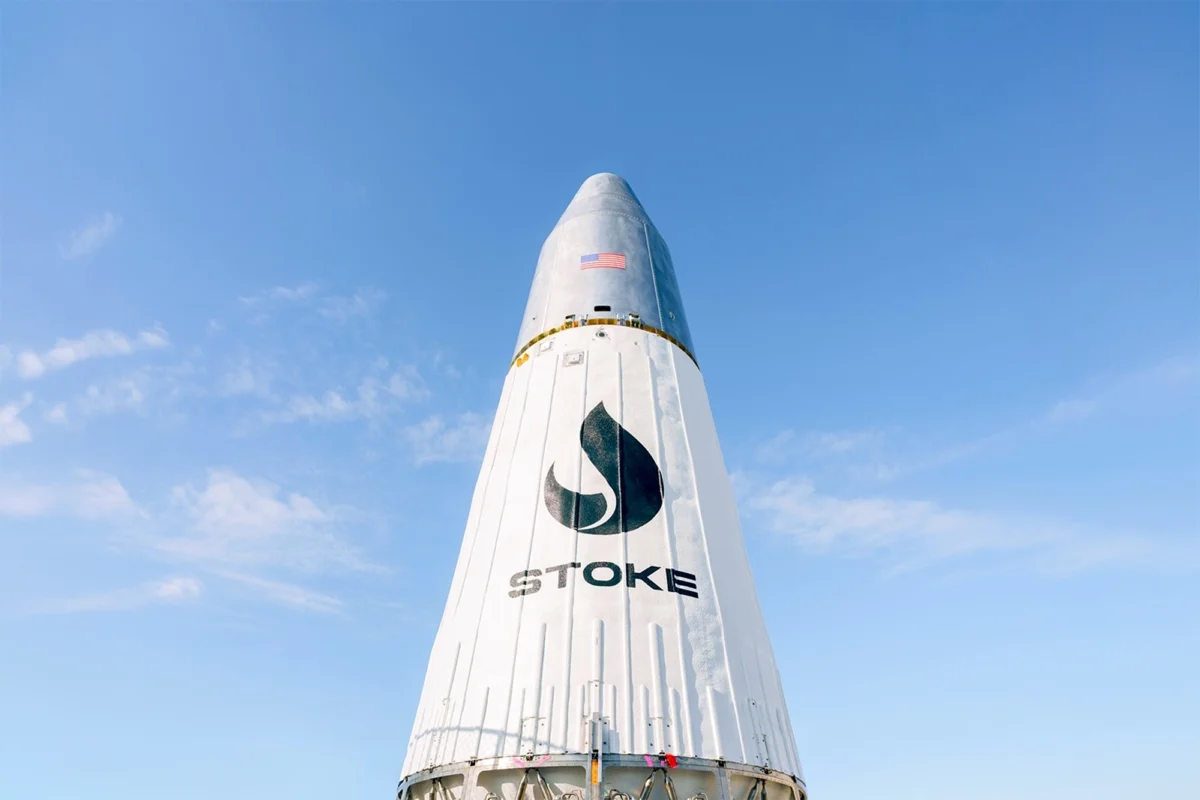
Stoke Space Technologies, a pioneering force in the burgeoning private space industry, has announced the successful initial closing of a monumental $1 billion Series E funding round. This substantial capital injection is earmarked to fuel the company’s ambitious vision: developing and deploying a fully reusable rocket system designed to revolutionize access to space by drastically reducing launch costs. The funding round underscores the significant investor confidence in Stoke’s innovative approach and its potential to disrupt the launch market.
The massive Series E round was spearheaded by prominent investors Point72 Ventures, the technology investment arm of hedge fund billionaire Steve Cohen, and Spark Capital. Further bolstering the round was participation from a diverse group of high-profile investors, including General Innovation, Glade Brook Capital, US Innovation Technology, Washington Harbour Partners, Woven Capital, and Y Combinator, among others. This latest infusion of capital brings Stoke Space Technologies’ total funding raised to an impressive $2.3 billion, solidifying its financial position to execute on its long-term strategic goals.
According to Andy Lapsa, CEO of Stoke Space Technologies, this funding is critical for a multi-faceted expansion. "This round is really to scale," Lapsa articulated to TechCrunch, emphasizing the comprehensive nature of the investment. The capital will be strategically deployed to "lay the infrastructure, to scale in production and flight frequency, and importantly to fund the development of the second generation vehicle." This strategic allocation highlights a commitment not just to reaching orbit, but to establishing a robust, high-cadence launch operation and continuously advancing their vehicle technology.
Stoke Space Technologies operates within a highly competitive landscape, striving to carve out its niche alongside industry giants like Elon Musk’s SpaceX and other ambitious startups such as Rocket Lab, Relativity Space, and Firefly Aerospace. While many competitors focus on partially reusable systems, Stoke is singularly focused on achieving the "holy grail" of spaceflight: a rocket where both the primary booster stage and the payload-carrying second stage return to Earth intact and are capable of cheap, rapid reuse. This level of reusability has never been successfully achieved, presenting both an immense technical challenge and a transformative economic opportunity.
SpaceX, a leader in reusability with its Falcon 9’s reusable booster stage, is also pursuing full reusability with its colossal Starship vehicle. However, Starship has faced considerable developmental hurdles, having consumed well over $10 billion in investment over the past decade without yet reaching orbital flight, although this milestone is anticipated in its upcoming attempts. The sheer scale of investment required for such groundbreaking space endeavors is evident, and Stoke’s substantial funding positions it to tackle these challenges head-on.
A key differentiator for Stoke lies in its innovative solution for the extreme heat encountered by the second stage during atmospheric reentry. SpaceX, for instance, has grappled with identifying the optimal materials and configurations for thermal shielding on Starship’s second stage. Stoke, conversely, has engineered a unique active cooling system that circulates super-cooled liquid hydrogen through its thermal shielding. This novel approach, according to Lapsa, has undergone exhaustive ground testing, validating its efficacy and preparing it for deployment on the Nova Pathfinder’s inaugural flight. Lapsa expressed confidence in their conservative deployment strategy, stating, "We can flow excess coolant — more than we think we need in order to overcool the surface of the vehicle — and take a conservative stance from that perspective in early flights."
Looking ahead, Stoke Space Technologies has set an ambitious target for the maiden flight of its first vehicle, the Nova Pathfinder, in early 2027. Despite the space industry’s notorious reputation for delays, Lapsa expresses confidence in this timeline, a sentiment bolstered by a series of successful structural and operational tests conducted on the rocket’s first stage at the company’s Moses Lake facility. The next critical steps involve ground test-firing each stage of the rocket independently, followed by integrated tests to ensure all systems are flight-ready. Lapsa outlined the meticulous testing regimen: "The ground system is checked out to the extent that we can do it without the rocket, and the rocket’s checked out to the extent that we can do it without the launch pad. So the next step is to do them together."
The Nova Pathfinder, designed to carry three metric tons to low-Earth orbit (LEO), is poised to make a significant impact. Stoke has already secured launch contracts for the vehicle, and Lapsa believes it will debut as the largest vehicle ever launched by a U.S. rocket manufacturer. While acknowledging the inherent risks and challenges in rocket development, where on-time launches and complete success are rare, Lapsa affirmed the company’s commitment: "We have multiple Pathfinder vehicles in production, and we have confidence that we will bring Pathfinder to market and into orbit regardless of this round." Simply reaching orbit would represent a monumental achievement for the startup.
Beyond the Pathfinder, Stoke Space Technologies has also unveiled plans for an even more formidable rocket, the Nova Block 2. This larger, second-generation vehicle has been under development for several years, leveraging the same foundational technologies as the Pathfinder, including Stoke’s proprietary engines and its unique active heat shield. The Nova Block 2 is projected to boast a payload capacity of 15 metric tons to low-Earth orbit, surpassing the lifting capability of the highly successful Falcon 9.
The target deployment for Nova Block 2 is 2029, a timeframe that strategically aligns with SpaceX’s stated intention to phase out its Falcon 9 rockets. This potential market shift presents a significant opportunity for Stoke. Lapsa acknowledged the strategic implications, admitting, "It amplifies the mismatch between launch supply and demand for launch, there’s no question about that." He further elaborated on the broader industry impact: "Regardless of Falcon 9 retiring or not retiring, the space industry and the space economy scales exactly as fast as rockets get off the ground, particularly rockets that serve third-party customers."
This emphasis on "third-party customers" is a crucial distinction. As SpaceX’s Starship becomes operational, companies and government agencies seeking launch services may find themselves competing with SpaceX’s extensive internal projects, potentially leading to increased costs or limited availability. In contrast, Stoke Space Technologies has not disclosed any plans to operate its own space assets, positioning itself as a dedicated launch service provider focused solely on external clients. This commitment could prove highly attractive to a market increasingly hungry for reliable and cost-effective access to space.
Lapsa underscored the urgency and necessity of this investment, stating, "Now is the time to get moving […] so that we can finally start deploying a lot of the constellations and applications that we aspire to as an industry but have been stuck on the ground." With this substantial funding, Stoke Space Technologies is well-positioned to accelerate its development, scale its operations, and potentially unlock a new era of truly low-cost, frequent access to space, fundamentally transforming the global space economy.
When you purchase through links in our articles, we may earn a small commission. This doesn’t affect our editorial independence.
About the Author:
Tim Fernholz is a journalist who writes about technology, finance, and public policy. He has closely covered the rise of the private space industry and is the author of Rocket Billionaires: Elon Musk, Jeff Bezos and the New Space Race. Formerly, he was a senior reporter at Quartz, the global business news site, for more than a decade, and began his career as a political reporter in Washington, D.C.
You can contact or verify outreach from Tim by emailing [email protected] or via an encrypted message to tim_fernholz.21 on Signal.






