 11
11
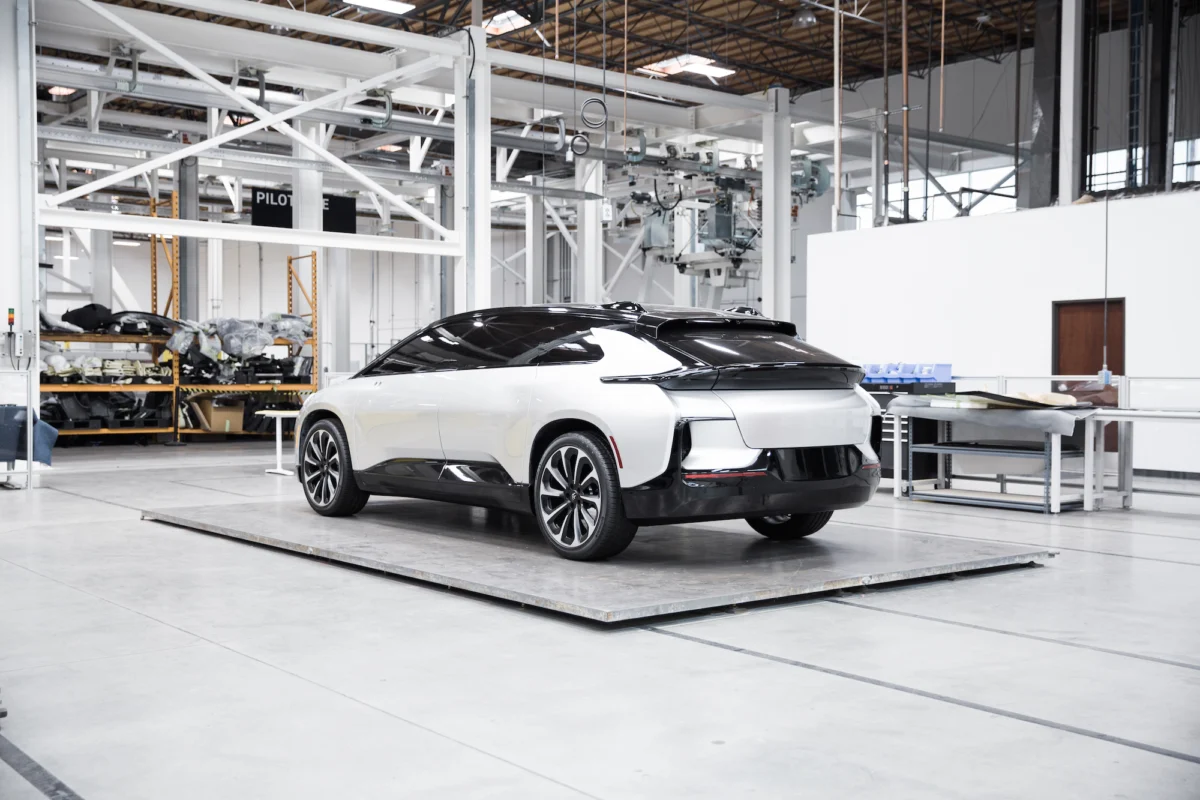
The U.S. Securities and Exchange Commission (SEC) has officially concluded its extensive investigation into the electric vehicle (EV) startup Faraday Future, a decision made despite the agency’s own staff recommending an enforcement action last year. TechCrunch has confirmed this development through four anonymous sources familiar with the probe, who revealed that the SEC communicated the closure to the company and individuals involved in the investigation this past week.
This dismissal of a high-profile case coincides with a notable decline in overall enforcement actions initiated by the SEC. According to a recent report, the financial regulator launched only four cases against publicly-traded companies in its 2025 fiscal year. The SEC did not respond to an after-hours request for comment regarding the Faraday Future decision.
The investigation into Faraday Future spanned nearly four years, focusing primarily on two critical allegations. Firstly, the SEC scrutinized whether the EV startup had made "false and misleading statements" during its 2021 public listing through a merger with a special purpose acquisition company (SPAC). Secondly, the probe examined claims that Faraday Future had fabricated the sales of its initial electric vehicles in 2023, an accusation made by at least three former employee whistleblowers.
Throughout the investigation, Faraday Future received multiple subpoenas from the financial regulator, as evidenced by its regulatory filings. The SEC also conducted extensive depositions of numerous former employees and executives in 2024 and 2025, according to three individuals familiar with the case proceedings.
A significant turning point occurred in July 2025 when Faraday Future publicly disclosed that the SEC had issued "Wells Notices" to the company and several executives, including its founder, Jia Yueting. Wells Notices are formal communications from the SEC indicating that staff working on a case have made a preliminary determination to recommend that the agency take enforcement action. This typically signals an impending legal battle or settlement.
The immediate response from Faraday Future regarding these Wells Notices remains unclear. As recently as February of this year, the company’s regulatory filings indicated that it had not yet formally responded. Faraday Future stated in a filing last month, "The Company and executives plan to engage with the SEC to explain why enforcement action is not warranted." A company spokesperson later stated that Faraday Future would provide further information.
The Department of Justice (DOJ) also became involved, sending requests for information to Faraday Future after the SEC initiated its investigation in 2022. While Faraday Future has consistently referred to this as an "investigation" in its regulatory filings, the DOJ has never officially confirmed opening a full probe and did not respond to an after-hours request for comment.
The decision by the SEC to close the investigation without pursuing an enforcement action is highly unusual, especially after the issuance of Wells Notices. A 2020 study conducted by the Wharton School revealed that approximately 85% of targets who receive a Wells Notice ultimately face legal action from the SEC. This statistic underscores the rarity of Faraday Future’s outcome.
The SEC’s scrutiny of Faraday Future was part of a broader trend, as the agency investigated nearly every electric vehicle startup that went public via a SPAC merger over the past six years. In the majority of these instances, the agency reached settlements with the companies. However, there have been other cases of dismissal: the SEC closed an investigation into Lucid Motors in 2023, and as TechCrunch first reported in February, the agency also ended its probe into the now-bankrupt EV startup Fisker late last year.
Origins of the Investigation
Faraday Future was established in California in 2014 by Jia Yueting, a businessman who at the time presided over the rapidly expanding tech conglomerate LeEco in China. The company emerged amidst a wave of ambitious startups aiming to emulate the success of Tesla, or even to become a "Tesla killer." Faraday Future aggressively recruited talent from Tesla, other established automakers, and prominent tech giants like Apple, eventually employing around 1,400 individuals at its peak.
The company made a significant splash, both positive and controversial, at the 2016 Consumer Electronics Show, unveiling a flashy concept car and articulating an ambitious vision to be as disruptive to the automotive industry as the iPhone was to mobile technology. The following year, Faraday Future introduced its first production vehicle, the luxury electric SUV known as the FF91. However, by the end of 2017, the company faced severe financial distress, nearing insolvency and implementing significant layoffs or furloughs for hundreds of employees. Concurrently, Jia’s LeEco empire in China collapsed, leading to his self-exile in California as the Chinese government placed him on a "debtor blacklist" due to unpaid debts. It was during this turbulent period that a close business associate of Jeffrey Epstein reportedly pitched the convicted sex offender on investing in Faraday Future, alongside other EV startups, though Epstein ultimately did not invest, as recently revealed by TechCrunch.
Faraday Future found a temporary reprieve in 2018 through a substantial investment from the major Chinese real estate conglomerate Evergrande. However, this partnership quickly deteriorated, with Evergrande withdrawing its support by the end of 2018, leading to further employee layoffs at Faraday Future.
In 2019, Jia nominally stepped down as CEO and also filed for personal bankruptcy to resolve billions of dollars in LeEco debt for which he had provided personal guarantees. Despite these official changes, he reportedly maintained significant behind-the-scenes control over the company’s operations.
This underlying control became a critical issue when Faraday Future went public in 2021 through a SPAC merger, raising approximately $1 billion. Members of the newly appointed public company board grew concerned that Faraday Future’s executives had misrepresented Jia’s actual influence over daily operations, particularly after a short seller report emerged scrutinizing the company. In response, the board formed a special committee to investigate these concerns.
This committee engaged an independent outside law firm and a forensic accounting firm. Within its first few months, the committee began reporting its findings directly to the SEC, according to three sources familiar with the investigation. The committee’s work resulted in significant internal changes between January and April 2022. Jia was sidelined from his operational role, senior VP Matthias Aydt (now co-CEO with Jia) was placed on probation for six months, and another VP, Jerry Wang (Jia’s nephew), was suspended. Wang eventually resigned due to "failure to cooperate with the investigation," as per company filings, though he has since returned to Faraday Future.
The committee’s findings also brought to light that, in the two years leading up to its public offering, Faraday Future had relied significantly on multi-million-dollar loans from low-level employees who had connections to Jia. These arrangements are legally termed "related party transactions" and became a point of concern for regulators. On March 31, 2022, Faraday Future officially disclosed that the SEC had launched its investigation. Two months later, in June, the company further revealed that it had received requests for information from the Department of Justice.
Dodging Another Bullet
Throughout the remainder of 2022, amid the initial phase of the SEC investigation, a concerted campaign was waged by employees and individuals close to Jia to reassert control over the company’s board. This struggle escalated to include death threats against some directors, who ultimately resigned, effectively clearing the path for Jia’s associates to regain leadership of the company.
Faraday Future finally commenced deliveries of the first few FF91 SUVs in early 2023. However, these deliveries quickly became the subject of controversy, with former employees filing lawsuits alleging that these were not genuine sales and that the company had misled investors. Regulatory filings indicate that SEC investigators subsequently subpoenaed Faraday Future regarding issues related to these alleged "faked sales."
Former executives and employees initially underwent depositions by the SEC in 2024. These individuals were later called for more extensive depositions in the first half of 2025, according to those familiar with the investigation.
The Wells Notice sent in July 2025 explicitly stated that SEC staff had reached "a preliminary determination to recommend that the Commission file an enforcement action against the Company alleging violations of various anti-fraud provisions of the federal securities laws." Specifically, the Wells Notice referenced "purported false or misleading statements" made during the SPAC merger process concerning "related party transactions" and Jia’s "role in the Company." In addition to the company, Jia, his nephew Wang, and two other unnamed employees were also recipients of Wells Notices.
Despite the conclusion of the SEC investigation, Faraday Future continues to grapple with significant challenges. While still attempting to sell the FF91, the company has recently diversified its business model. It has begun importing more affordable hybrid and electric vans from China. Furthermore, it appears to be marketing re-badged versions of Chinese robots and has transformed a publicly-traded biotechnology company, Qualigen Therapeutics Inc., into a firm focused on cryptocurrency through a strategic investment.
These new endeavors have yet to stabilize the company’s precarious financial position. Just last Friday, Faraday Future announced that it had received a warning from the Nasdaq stock exchange, indicating that its stock price had fallen below the minimum $1 threshold. This notice grants the company 180 days to regain compliance, failing which it could face de-listing from the exchange, highlighting the ongoing struggles of the ambitious EV startup.