11
11
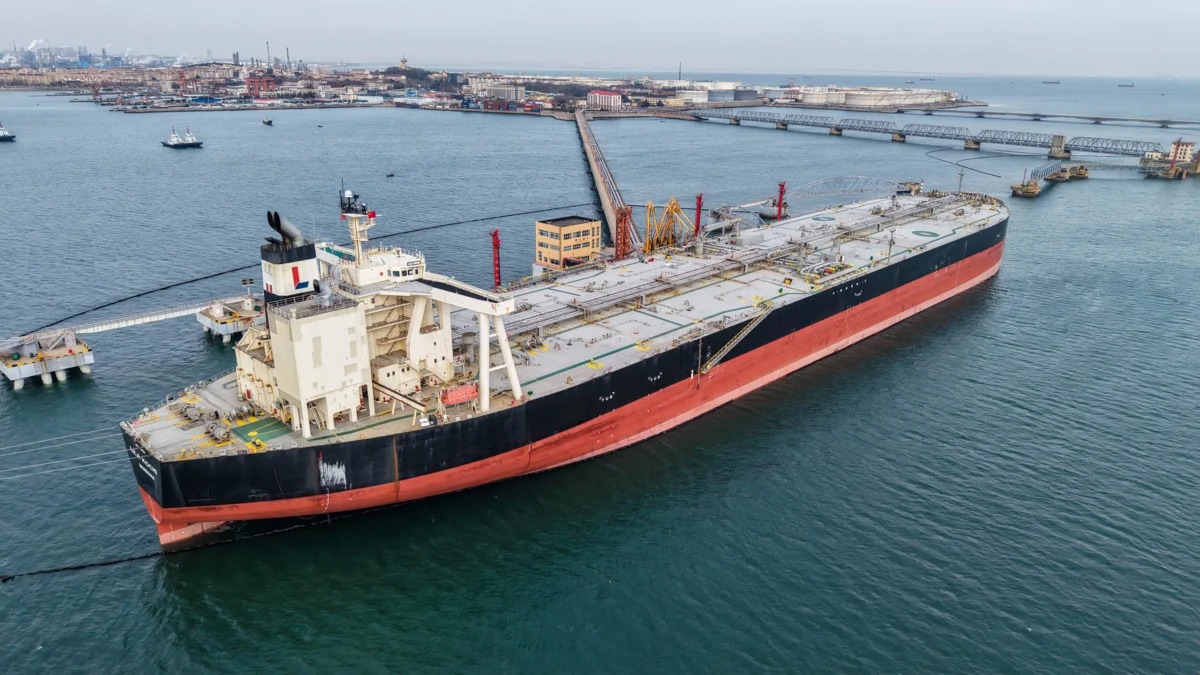
BEIJING – As the escalating conflict in Iran pushes oil prices past the significant $100 a barrel mark for the first time in four years, China appears poised to weather the storm with less economic disruption than in previous global energy crises. This enhanced resilience is attributed to a combination of substantial crude oil stockpiles, a strategic diversification of its energy portfolio, and a notable shift towards renewable energy sources and electric vehicles.
Analysts at OCBC have indicated that China’s reduced sensitivity to a prolonged closure of the Strait of Hormuz, a critical chokepoint for global oil shipments, stems from its proactive energy strategies. The nation has diligently accumulated one of the world’s largest reserves of both strategic and commercial crude oil. As of January, China held an estimated 1.2 billion barrels of onshore crude stockpiles. This substantial reserve is equivalent to approximately three to four months of supply, providing a critical buffer against immediate supply disruptions and delaying any significant economic repercussions, according to Rush Doshi, director of the China Strategy Initiative at the Council on Foreign Relations.
Over the past two decades, China has strategically reduced its reliance on maritime oil flows. This has been achieved through the development of new overland oil pipelines and a concerted effort to diversify its energy sources. Consequently, the country now depends on the Strait of Hormuz for only about 40% to 50% of its seaborne oil imports, a significant decrease from previous levels. This diversification strategy is further bolstered by China’s ambitious renewable energy targets. By 2030, the nation aims to increase the share of non-fossil fuels in its total energy consumption to 25%, a notable increase from the 21.7% recorded in 2025.

The Strait of Hormuz, a narrow passage connecting the Persian Gulf to the Arabian Sea, is a vital artery for global energy trade. Last year, approximately 31% of the world’s seaborne oil, around 13 million barrels per day, transited through this critical waterway, according to data from Kpler. However, for China, the reliance on this route is comparatively lower. Ting Lu, chief China economist at Nomura, noted that oil shipments through the Strait of Hormuz constitute only about 6.6% of China’s overall energy consumption. Natural gas imports via this route add another 0.6% to this figure. This strategic shift underscores two decades of deliberate transition in China’s energy policy, positioning the nation uniquely within the global energy landscape.
Globally, the United States remains the largest consumer of oil, followed by China and India, as per data from the Organization of the Petroleum Exporting Countries (OPEC). However, China stands as the world’s largest crude importer, purchasing nearly double the volume imported by the U.S., with India ranking third. Among these three major energy consumers, India exhibits the highest dependence on petroleum imports, with these imports accounting for a quarter of its total energy consumption, according to an analysis of U.S. Energy Information Administration data for 2023. In contrast, China’s petroleum imports represented 14% of its consumption, while the U.S. produced the majority of its petroleum needs.
The contrasting energy strategies between the U.S. and China are evident. While the U.S. has significantly ramped up its domestic oil production over the past decade, China has pursued a rapid diversification of its energy sources. Renewables, excluding nuclear and hydropower, accounted for 1.2% of China’s total energy consumption in 2023, a substantial increase from 0.2% two decades prior, according to CNBC calculations based on International Energy Agency data. India and the U.S. recorded a much lower share of renewables in 2023, at 0.2% each.
The growing share of renewables in China’s energy mix is having significant global implications. The country’s aggressive push towards electric vehicles (EVs), particularly in the commercial trucking sector, has already displaced over one million barrels per day of implied oil demand, as reported by Rhodium Group in July 2025. This figure was projected to increase by an additional 600,000 barrels per day in the subsequent 12 months. Currently, more than half of new passenger vehicles sold in China are new-energy vehicles, which rely primarily on battery power rather than gasoline. The OCBC analysts highlighted that with road fuel demand showing signs of peaking and renewable capacity expanding rapidly, China’s sensitivity to oil price fluctuations is diminishing on a year-on-year basis. The ongoing electrification of transportation and the expansion of renewable power generation are expected to further insulate the Chinese economy from oil-related shocks. Notably, oil and natural gas collectively represent only 4% of China’s power generation mix, a considerably lower figure compared to the 40% to 50% share observed in many other Asian economies. Electricity, generated predominantly from coal and an increasing volume of renewables, now constitutes a growing proportion of China’s total energy consumption, according to energy think tank Ember.

Despite the significant strides in renewable energy, fossil fuels continue to play a substantial role in China’s energy landscape. Renewables provided approximately 80% of China’s new electric power demand in 2024, according to Ember. However, coal remains a significant, albeit stagnating, energy source within the country. In 2023, China was the world’s largest producer and consumer of coal, despite ongoing efforts to reduce carbon emissions. The impact of U.S. sanctions on Iran has also positioned China as one of the few remaining significant buyers of Iranian oil. While Iran previously accounted for about 20% of China’s oil imports, this volume could potentially be substituted by increased oil imports from Russia, according to Ano Kuhanathan, Head of Corporate Research at Allianz Trade. The more significant concern lies with the approximately 5 million barrels per day of oil that China imports from other Middle Eastern countries that transit through the Strait of Hormuz.
As the Iran war enters its second week, the duration of the conflict remains uncertain. Analysts suggest that such a geopolitical shock is likely to reinforce China’s existing energy transition trajectory rather than alter it. Muyi Yang, senior energy analyst for Asia at Ember, stated that the conflict underscores the inherent risks of heavy reliance on imported oil and gas, thus reinforcing the imperative for a comprehensive decarbonization effort that extends beyond building more wind and solar capacity. However, the transition is not without its challenges. China’s fossil fuel industry is dominated by state-owned corporations, which are often perceived as less agile than their private-sector counterparts.
Looking ahead, China is expected to continue expanding its crude oil reserves. The U.S. Energy Information Administration projected in February that China would increase its strategic stockpiles by around 1 million barrels per day in 2026. While China’s crude oil imports experienced a slight decline of nearly 2% in 2024, according to Wind Information, a surge in imports of 4.6% to a record approximately 580 million metric tons was observed last year as Middle East tensions began to escalate. Go Katayama, principal insight analyst at Kpler, previously commented to CNBC that China is "materially exposed but more flexible," highlighting its capacity to navigate the complexities of global energy market volatility.