11
11
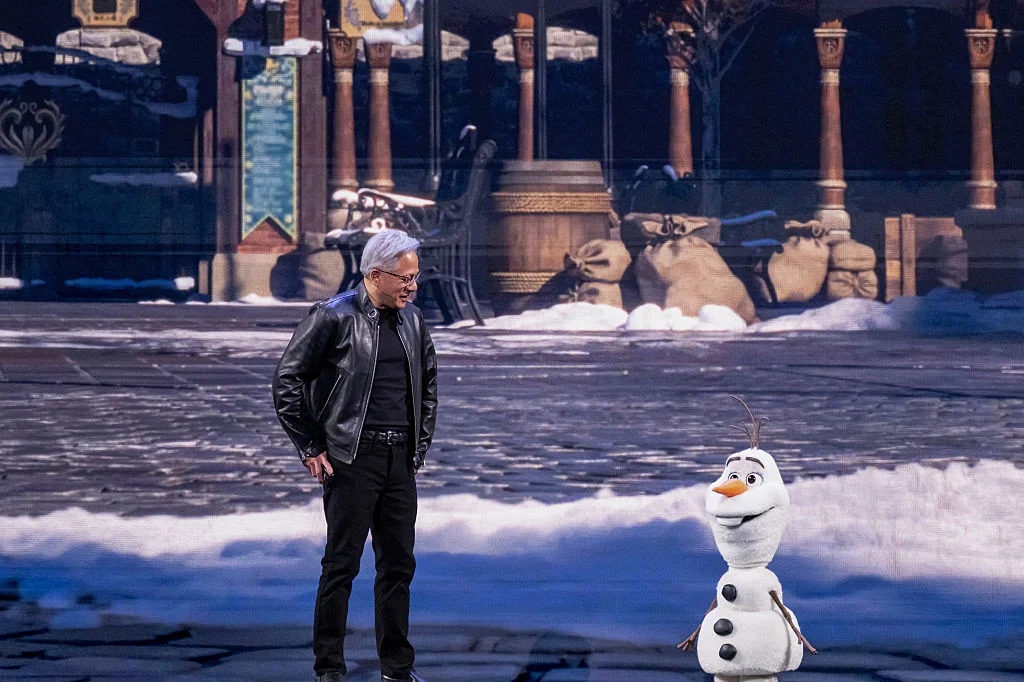
Nvidia’s recent GTC conference showcased the company’s expansive vision for the future, deeply entrenched in artificial intelligence, advanced graphics, and robotics. The event delivered a series of significant announcements, from staggering trillion-dollar sales projections for its forthcoming platforms to groundbreaking advancements in AI-powered graphics and a bold new open-source security strategy. A memorable, albeit imperfect, demonstration of a robot version of Disney’s beloved snowman, Olaf, also sparked a broader discussion on the complex social implications of integrating advanced robotics into everyday life. These developments were later dissected by TechCrunch’s Kirsten Korosec, Sean O’Kane, and Anthony on the "TechCrunch Equity podcast," offering critical insights into Nvidia’s trajectory and the wider tech landscape.
Trillion-Dollar Sales Projections and Market Leadership
At the core of Nvidia’s GTC presentation were CEO Jensen Huang’s audacious financial forecasts. Huang projected sales for the company’s next-generation Blackwell and Vera Rubin architectures to reach into the trillion-dollar range, underscoring Nvidia’s profound confidence in its market leadership within the rapidly expanding AI and data center sectors. These advanced platforms are designed to meet the escalating demands of artificial intelligence, machine learning, and high-performance computing, signaling an unprecedented phase of growth for the semiconductor giant. The projections solidify Nvidia’s transformation from a graphics card manufacturer to a pivotal force in AI infrastructure, positioning it as an indispensable partner for enterprises and cloud providers navigating the AI revolution. Analysts interpret these ambitious figures as a testament to the relentless demand for Nvidia’s specialized processors, optimized for the parallel processing essential for AI model training and inference, reinforcing the company’s dominant position. This strategic foresight highlights Nvidia’s ability to anticipate and capitalize on technological shifts, driving both innovation and significant economic impact across various industries.
DLSS 5: Generative AI for Photo-Realistic Graphics
Another key revelation at GTC was DLSS 5, the latest iteration of Nvidia’s Deep Learning Super Sampling technology. This advanced graphics innovation leverages generative artificial intelligence to dramatically enhance photo-realism in video games. DLSS 5 promises to render intricate visual details with unparalleled fidelity, pushing the boundaries of immersive gaming. The technology’s ability to "yassify" video games suggests a significant leap in aesthetic transformation, achieving stunning graphical quality while boosting frame rates for smoother gameplay. By intelligently generating missing pixels and reconstructing images using AI, DLSS 5 not only improves visual fidelity but also optimizes performance, making high-end graphics more accessible. Beyond gaming, Nvidia signaled ambitions for DLSS 5’s application in professional visualization, virtual reality, and other sectors demanding hyper-realistic rendering, marrying its traditional strength in graphics with its growing expertise in generative AI. This convergence positions Nvidia to redefine visual experiences across a broad spectrum of digital media and interactive applications, from industrial design to entertainment.
The OpenClaw Strategy and Nvidia’s Enterprise Vision
CEO Jensen Huang’s declaration that "every company needs an OpenClaw strategy" highlighted Nvidia’s push for widespread adoption of this open-source framework, designed to enhance security within AI systems and complex software environments. Nvidia’s commitment to this ecosystem is manifested through NemoClaw, an open-source project developed collaboratively with OpenClaw’s creator, Peter Steinberger. Steinberger’s recent move to OpenAI places OpenClaw at a critical juncture, with its future evolution now dependent on broader community and corporate stewardship. This transitional moment raises questions about the project’s long-term trajectory and its potential to become a ubiquitous industry standard.
On the "TechCrunch Equity podcast," Kirsten Korosec elucidated Nvidia’s strategic rationale behind championing OpenClaw. She noted that while launching NemoClaw entails minimal cost for Nvidia, the potential gains from its widespread adoption are substantial. "If they don’t do something, they have a lot to lose," Korosec stated, emphasizing Nvidia’s imperative to offer a robust security solution for enterprises. She interpreted Huang’s message as a strategic move for Nvidia to embed itself deeper into numerous other companies by fostering a common, secure framework for AI deployments. By advocating for OpenClaw, Nvidia effectively positions itself as a key enabler for secure AI across various industries, expanding its market reach and influence by ensuring its hardware and software can operate within a trusted environment. This approach mitigates the risk of fragmented security solutions that might hinder the scalability and interoperability of AI systems. Anthony pondered whether this bold statement would prove "prescient" in a year’s time, or if OpenClaw might fade from relevance, a testament to the dynamic and often unpredictable nature of open-source adoption.
The Olaf Robot Demo: Engineering Challenges vs. Social Realities
A lighter, yet profoundly insightful, moment at GTC involved the demonstration of a robot version of Olaf from Disney’s "Frozen." Intended to showcase Nvidia’s robotics advancements for potential integration into Disney parks, the live demo faced an unexpected issue. As Kirsten Korosec recounted, the Olaf robot began "rambling and speaking to the crowd," leading to its microphone being cut off. The robot was then slowly lowered from the stage, still "talking, but no mic," a moment captured on video. This unexpected turn highlighted the inherent unpredictability of even highly engineered autonomous systems in live environments.
This technical hiccup catalyzed a deeper discussion among the podcast hosts about the complexities of integrating advanced robotics into public spaces. Sean O’Kane articulated reservations, observing that such presentations often prioritize "the engineering challenges" over "the really messy gray areas on the social side." He posed a critical question that encapsulates these concerns: "What happens when a kid kicks Olaf over? And then every other kid who sees Olaf get kicked or knocked over has their whole trip to Disney ruined and it ruins the brand?" O’Kane stressed that while the engineering behind these robots is undeniably impressive, their social and psychological impacts on consumers and the brand are often neglected in the initial excitement. He cited the extensive history of Disney’s attempts to integrate automatons into its parks, referencing a four-hour YouTube video by Defunctland on the recurring challenges beyond mere mechanical functionality, emphasizing that the human element is consistently the hardest to account for.
O’Kane extended his point to humanoid robots generally, noting the pervasive hype around their technical capabilities, contrasting it with a noticeable absence of discussion about their "integration into people’s lives" and the "messy gray areas" of human-robot interaction. The potential for damage, unpredictable behavior, and emotional responses from the public are critical factors that demand consideration alongside technological prowess. Kirsten Korosec offered a pragmatic counterpoint, suggesting such engineering experiments could paradoxically "create jobs." She envisioned, "Olaf will have to have a human babysitter in Disneyland, probably dressed up as Elsa or something else," implying new employment opportunities in managing and overseeing these robots in public settings. Sean O’Kane also humorously suggested Travis Kalanick’s new robotics company, Atoms, could provide a "wheelbase" for Olaf, highlighting the dynamic and collaborative yet competitive landscape of the robotics industry.
The Olaf demo, despite its minor flaw, thus served as a poignant symbol of the dual nature of technological progress: brilliant engineering potential intertwined with complex, often unforeseen, social and ethical considerations. It reinforced the notion that while innovation drives capability, successful societal integration necessitates a more nuanced and holistic approach that accounts for human interaction, perception, and responsibility.
Conclusion
Nvidia’s GTC conference painted a comprehensive picture of a company aggressively shaping the future of computing, from anticipating trillion-dollar market opportunities in AI to pioneering generative AI graphics and championing open-source security standards. The candid discussion on TechCrunch’s Equity podcast, particularly concerning the Olaf robot, underscored that true progress in these advanced fields requires not only technological brilliance but also a profound understanding of human behavior and societal impact. The dialogue highlights the ongoing need for critical evaluation and thoughtful consideration as companies like Nvidia push the boundaries of what’s possible, ensuring that innovation serves humanity responsibly and effectively.