 11
11
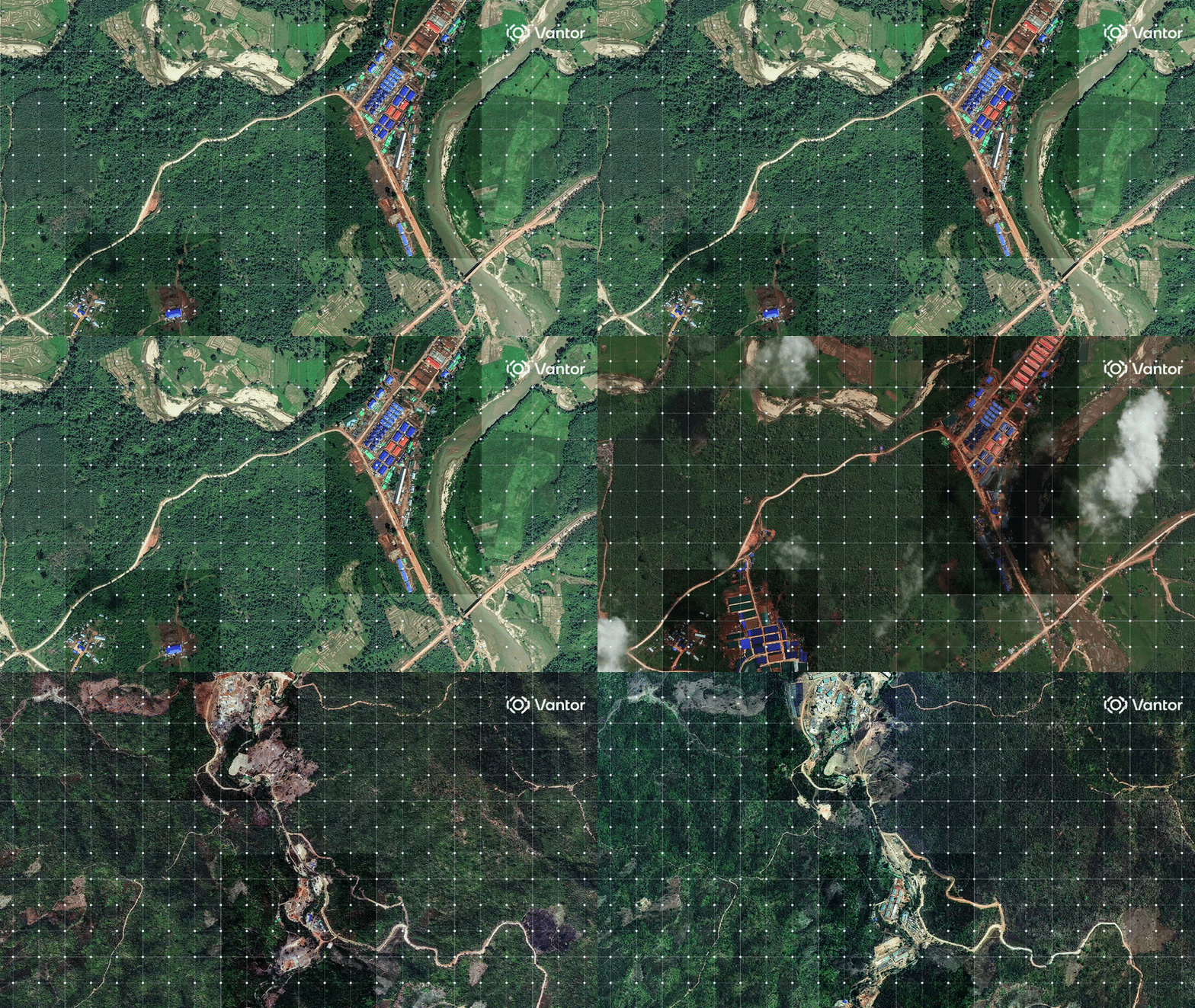
More than two dozen suspected new scam compounds have been built or significantly expanded in war-torn Myanmar over the past six months, particularly in the Myawaddy region, near the country’s border with Thailand. This alarming development, confirmed by satellite images and expert analysis reviewed by WIRED, starkly indicates that a purported crackdown on these illicit sites last year has done little to halt the highly lucrative and globally destructive scamming industry.
The International Justice Mission (IJM), an anti-human-trafficking nonprofit, conducted a meticulous analysis of satellite images, revealing at least 25 alleged scamming sites that have emerged in the Myawaddy area since approximately the beginning of the year. These images provide undeniable evidence of extensive land transformation: vast swathes of forest have been razed, ground flattened, and subsequently replaced by dozens of new buildings and the sophisticated infrastructure necessary to operate large-scale criminal enterprises. This rapid construction points to a determined and unhindered expansion of criminal networks within a region already plagued by instability.
Eric Heintz, a global analyst at the IJM who specializes in the impact of scam compounds, articulated the sentiment of many observers. "Some were skeptical that the crackdowns last year were genuine, and this imagery shows that was correct," Heintz stated, emphasizing the performative nature of previous efforts. While acknowledging that the earlier crackdown did cause some disruption to operations, he added, "the scale of these new developments appears to be more than enough to absorb what was destroyed last year." This suggests that any temporary setbacks were swiftly overcome by the resilience and adaptability of the criminal organizations.
For over a decade, scam compounds have proliferated across Southeast Asian nations, with Myanmar, Cambodia, and Laos becoming notorious hubs. These sprawling, often fortified complexes are typically run by Chinese organized crime groups and are responsible for a significant portion of global online fraud. They orchestrate elaborate schemes, including complex cryptocurrency scams and manipulative romance scams, infamously known as "pig butchering," which target victims in the United States and worldwide, siphoning billions of dollars annually. The industrial scale and international reach of these operations underscore their profound economic and social impact.
At the heart of these illicit operations lies a devastating human tragedy: human trafficking. While criminal bosses orchestrate the schemes, the day-to-day scamming activities are carried out by victims of human trafficking. Individuals from more than 60 countries have been lured to the region under false pretenses, often promised legitimate, well-paying jobs. Upon arrival, their passports are confiscated, and they are forced into relentless 24/7 work cycles, compelled to cold-contact thousands of potential victims via social media, build trust over time, and ultimately defraud them of their savings. Refusal to work often results in severe beatings, and escape attempts are met with brutal force, leaving victims with little hope. In recent years, hundreds of thousands of trafficking victims have been tricked or coerced into these compounds, trapped in a cycle of forced labor and abuse.
The proliferation of these industrial-scale scam operations has escalated into a global crisis, prompting a wave of international condemnation and sanctions. Last year, several international sanctions were issued against individuals and entities allegedly involved in or linked to operations in Myanmar and Cambodia. In an apparent response, Myanmar’s military junta initiated raids on some known compounds around October, ahead of national elections. These efforts were often highly publicized, featuring dramatic images of exploding buildings and the destruction of phones and computers used in the scamming operations, seemingly demonstrating a commitment to eradicating the problem.
However, these eye-catching and widely reported efforts appear to have been largely superficial, doing little to deter or dismantle the vast scamming enterprises. Mechelle B. Moore, CEO of Global Alms Incorporated, an anti-trafficking nonprofit based in Thailand near the Myanmar border, confirmed this grim assessment. Her group has identified at least a dozen new sites, and, critically, some previously raided areas have been repopulated with new victims. "There’s some that have stayed empty, but there’s a lot of construction that was happening toward the end of last year that no one saw," Moore revealed, indicating that new construction was underway even as crackdowns were being publicized.
The new and expanding compounds identified by Heintz, which were first highlighted by the Associated Press in June, show varying timelines of development. Some appeared to be in their early stages around the time of the crackdown, while other construction projects commenced around January. The pace of this development is particularly striking. "The pace of construction is significant—some of these are going from empty fields to operational compounds in a couple months," Heintz observed, illustrating the immense resources and organization behind these criminal endeavors. Despite multiple attempts, the Embassy of Myanmar in London did not immediately respond to WIRED’s request for comment on these findings.
Satellite images reviewed by WIRED offer a stark visual narrative of this expansion. They show clearings carved out of dense forest, where approximately 24 new buildings materialized at a single site between January and April. Other images depict extensive tree clearance to create space for these structures, accompanied by the construction of new roads and what appear to be housing units surrounding the main operational sites. Clusters of large buildings, which are highly likely to be accommodation facilities for the trafficked scamming victims, are a common feature across many of these newly established locations, signaling their primary purpose.
"The layout of these compounds match what we’ve seen in the 30-plus other larger compounds in the area," Heintz explained, reinforcing the consistent modus operandi of these criminal groups. While the IJM has not yet directly interviewed individuals who have escaped from these specific new sites, Heintz confirmed they are aware of people currently trapped inside them. He further elaborated that many of the newly identified locations are situated in remote areas, making it highly improbable that they would serve any legitimate purpose. "That, combined with the tech data showing a variety of foreign internet service providers associated with the locations, make me think that these locations are scam-related," he concluded.
The researcher’s methodology includes leveraging data from the mobile advertising industry to analyze the types of devices and internet service providers (ISPs) being utilized at known scam compounds in Myanmar. This analysis has previously identified the use of Elon Musk’s satellite internet system, Starlink, operated by SpaceX. A WIRED investigation last year uncovered at least eight compounds in the Myawaddy region that appeared to be using Starlink devices, with antennas visibly positioned on their rooftops. Following this expose, US law enforcement officials subsequently issued seizure warrants for Starlink terminals found at some of these compounds, highlighting the complicity, however unintentional, of advanced technology in these criminal operations.
Despite these efforts, the problem persists. "We continue to see Starlink being used, with at least half of these new locations using their terminals," Heintz revealed, underscoring the ongoing challenge. "We know exactly where these compounds are, and in some cases know the IPs used by Starlink connections from these compounds, and it remains unclear why the company can’t shut these off," he added, raising critical questions about Starlink’s responsibility and its ability to enforce its terms of service. Starlink did not immediately respond to a request for comment regarding its current actions, though it has previously stated to the BBC that it had severed connections to 2,500 devices linked to scam compounds in Myanmar.
Moore, from Global Alms, expressed profound disappointment, reiterating that despite the highly publicized crackdowns last year, the fundamental criminal entities behind these operations remain largely untouched. She explained that when a compound is raided, the masterminds simply relocate their victims and operations to other existing or newly constructed compounds. "We have drone footage, so we’ve confirmed eyes on for nine of the different sites that we thought had been emptied, and they’re all populated, and new victims in there," Moore stated with grim finality. "Nothing has changed, unfortunately. It’s just growing." Her words paint a stark picture of a crisis deepening, with criminal networks adapting and expanding with impunity, continuing to exploit human vulnerability and perpetrate global fraud on an ever-increasing scale.