11
11
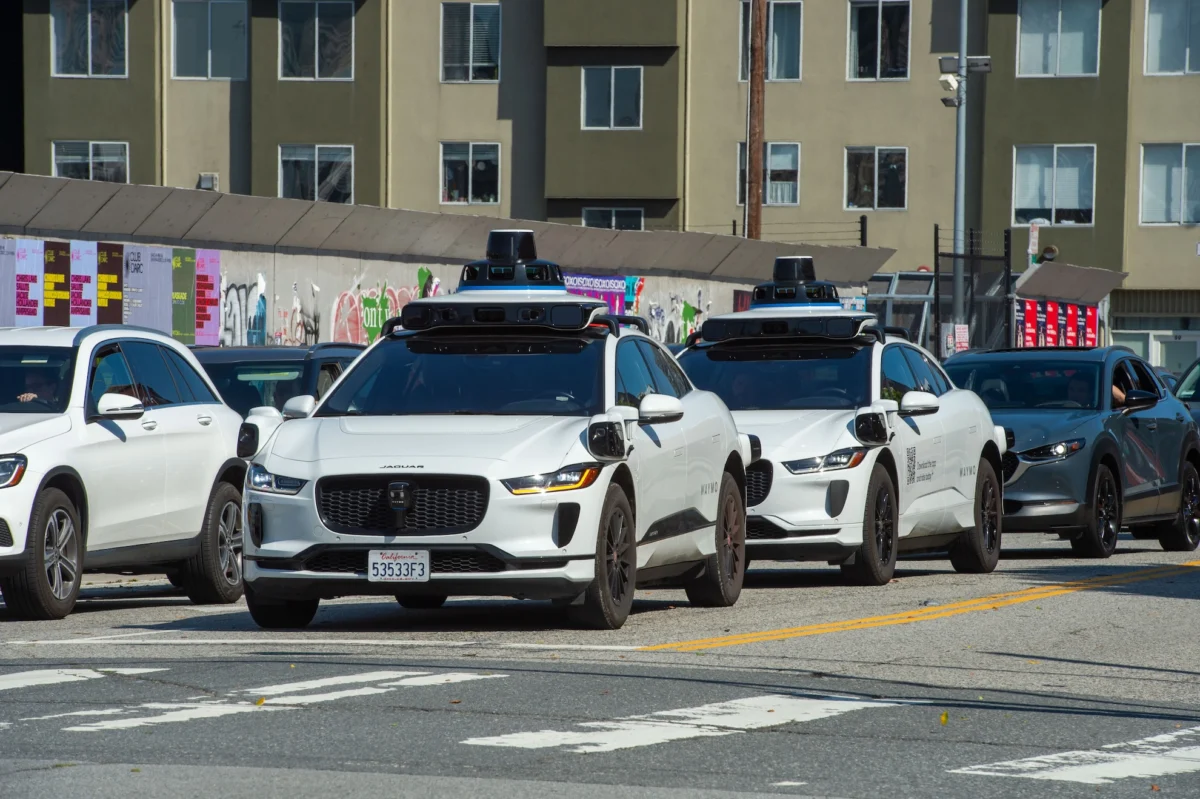
San Francisco, a city once championed by Mayor Daniel Lurie as a premier "testbed for emerging tech," is now grappling with the practical limitations of that vision, particularly when advanced technology leads to significant urban disruption. Mayor Lurie has formally requested state regulators to significantly bolster rules governing autonomous vehicles (AVs), following a series of incidents where Waymo robotaxis became immobilized, exacerbating severe traffic congestion and impacting thousands of residents. This decisive move comes nearly two weeks after a particularly chaotic July 4th, when Waymo vehicles, caught in heavy holiday traffic, ran out of power and blocked critical thoroughfares, compounding an already monumental gridlock. The resulting traffic snarl not only trapped countless private vehicles but also stalled municipal shuttles, escalating into a citywide emergency that underscored the urgent need for a more robust regulatory framework.
In a comprehensive letter addressed to the state Department of Transportation, a copy of which was reviewed by TechCrunch, Mayor Lurie detailed two specific events that highlighted the deficiencies in the current AV operational guidelines. The first was a widespread power outage in December, which saw numerous Waymo vehicles become stranded and contribute to traffic paralysis across various parts of the city. The second, and more recent, was the aforementioned July 4th Golden Gate Bridge fireworks show, an event that drew an estimated 100,000 spectators to the waterfront. During both these high-stress scenarios, dozens of Waymo vehicles reportedly ceased functioning effectively, further intensifying gridlock and demonstrating a critical vulnerability in their deployment. The San Francisco Chronicle was the first to report on the contents of this pivotal letter.
Lurie articulated his concerns clearly in the letter, stating, "These events have demonstrated that California’s current regulatory framework does not adequately address how autonomous vehicles operate during major incidents, planned or not." He further emphasized a crucial paradigm shift, arguing, "California’s challenge now is not just whether autonomous vehicles can operate safely under normal conditions, but also whether they can perform reliably during extraordinary ones." This statement underscores a growing recognition among city officials that the expansion of AV services necessitates a regulatory approach that accounts for unforeseen circumstances and large-scale public events, rather than solely focusing on day-to-day operational safety.
To proactively mitigate future disruptions and ensure the reliability of autonomous fleets, Mayor Lurie outlined a vision for enhanced operational standards. He called upon the California Department of Transportation to establish statewide mandates requiring autonomous vehicle manufacturers to demonstrate four "core operational capabilities." These proposed standards are designed to prevent recurrences of incidents like the July 4th gridlock, which exposed critical gaps in the existing system.
Under Lurie’s proposed framework, AV companies would face stringent new requirements. Firstly, they would be obligated to possess the capability to immediately remove or relocate robotaxis from active travel lanes in the event of an operational failure or obstruction. This critical measure aims to prevent inert AVs from becoming impediments to traffic flow and emergency services. Secondly, companies would need to prove their ability to adapt in real time to dynamic urban conditions, including adjusting their routes, modifying service areas, and repositioning pick-up and drop-off locations as necessary to respond to unforeseen events or congestion. This adaptive capability is essential for seamless integration into complex urban environments.
Thirdly, Lurie’s plan mandates that AV operators share real-time operations data with local agencies. This crucial data would encompass details on service disruptions, precise locations of any immobile robotaxis, and ongoing recovery efforts. Such transparency and data sharing are vital for city authorities to coordinate emergency responses, manage traffic effectively, and allocate resources efficiently during incidents. Finally, companies would be required to demonstrate, through rigorous testing, that their autonomous systems can competently handle large influxes of people and traffic, simulating conditions akin to major public events or unforeseen urban surges. This would ensure that AVs do not become a liability during peak demand or emergency situations.
TechCrunch has reached out to Waymo for official comment on Mayor Lurie’s demands and awaits a response, which will be incorporated into future updates of this report.
The current regulatory environment for autonomous vehicle operations in California is already considered among the most stringent nationwide, surpassing frameworks found in states like Texas and Arizona. Any company aspiring to launch a robotaxi service in California must successfully navigate a two-tiered permit process. This involves securing testing and deployment permits from both the state’s Department of Motor Vehicles (DMV), which primarily oversees vehicle safety and registration, and the Public Utilities Commission (CPUC), which regulates commercial transportation services. Despite the rigorous nature of these requirements, California, particularly the San Francisco Bay Area and its southern extension into Silicon Valley, has historically served as a fertile ground and crucial proving ground for autonomous vehicle technology.
Today, the region hosts numerous players in the AV space. Six companies, including prominent names such as Nuro, Waymo, and Amazon-owned Zoox, currently hold driverless testing permits, enabling them to operate vehicles on public roads without a human safety operator present behind the wheel. Beyond testing, the Bay Area has also emerged as a significant launch point for commercial AV services, which necessitate additional permits from the DMV and CPUC, signifying a shift from experimental deployment to public-facing operations.
Waymo, a subsidiary of Alphabet, stands out as the largest and most prominent operator in the Bay Area, with an estimated fleet of 1,000 robotaxis actively servicing the region. Its extensive footprint in San Francisco has made it a focal point for both public enthusiasm and regulatory scrutiny. The company has rapidly scaled its operations, reporting over 500,000 paid rides weekly across 11 cities where it operates. Other significant players are either testing or on the cusp of launching commercial services, including Zoox and a forthcoming premium robotaxi service operated by Uber, in partnership with Nuro. Tesla also operates a branded robotaxi service, though it distinctively relies on human drivers utilizing its advanced driver-assistance system (ADAS) rather than fully autonomous software, and thus does not hold the specific permits required for driverless operations. Instead, Tesla operates under a charter transportation permit, allowing its drivers to provide ride services throughout San Francisco.
Waymo’s unparalleled scale and market presence in San Francisco have undeniably positioned it as the primary focus for regulators, both within the city and at the state level. Mayor Lurie acknowledged Waymo’s voluntary efforts on July 4th, noting that the company had agreed to restrict its service near the waterfront and had even assigned a representative to the city’s emergency operations center. However, these voluntary actions ultimately proved insufficient to prevent Waymo vehicles from becoming entangled in the heavy traffic that extended beyond the designated restriction zone, leading to the widespread disruption.
Mayor Lurie’s current stance reflects a critical evolution: he now deems these voluntary actions inadequate given the sheer size and impact of Waymo’s burgeoning fleet. He firmly believes that the four proposed requirements are not intended to impede the progress of autonomous vehicles but rather to ensure their responsible and reliable integration into urban infrastructure. As he stated, these measures "will not undermine autonomous vehicles; they will strengthen them," fostering a future where technological innovation coexists harmoniously with public safety and urban efficiency.