 11

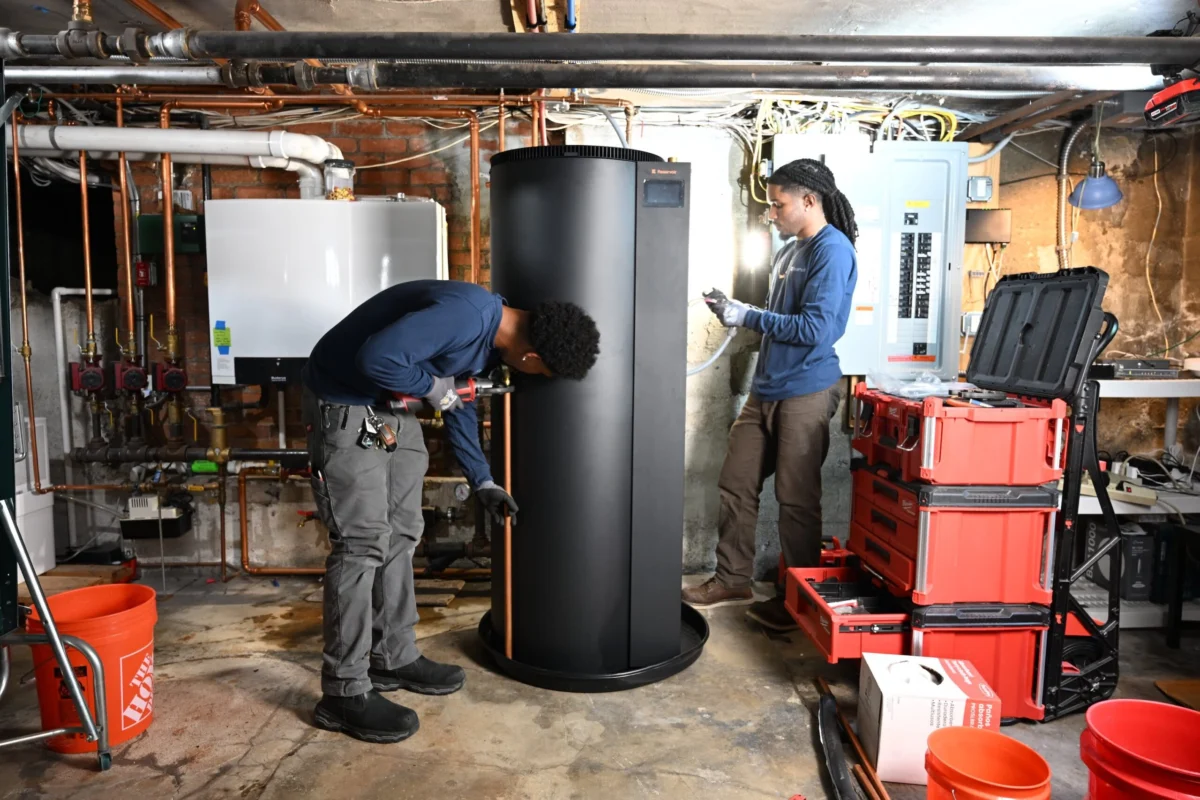
Often relegated to basements and utility closets, the water heater stands as one of the most underappreciated yet critically important home appliances. For many, it remains an out-of-sight, out-of-mind device until the jarring reality of a cold shower forces it into consciousness. However, this unassuming appliance carries a significant environmental and financial footprint, consuming approximately 18% of a typical household’s total energy budget, according to data from the U.S. Energy Information Administration (EIA). Beyond its energy demands, the water heater is also a leading culprit in residential water damage, causing substantial property loss and insurance claims annually. Despite its profound impact on daily life and household economics, innovation in this sector has largely stagnated, leaving consumers with what Luke Winston-Almanzar describes as devices "devoid of intelligence" and "using a god-awful amount of energy." He starkly highlights the inefficiency, stating, "My air fryer is smarter than it," and recounts, "I was using more energy to heat my water than it takes to drive my electric car."
This glaring gap in innovation spurred Winston-Almanzar, formerly the chief business officer at the pioneering 3D printing startup Formlabs, to co-found Reservoir. Collaborating with Gabriel Parisi-Amon and Jake Felser, their mission was clear: to engineer a water heater that transcends the limitations of existing models, one they themselves would enthusiastically purchase. Their vision culminates in a smart, energy-efficient, and feature-rich appliance designed not only to heat water but also to contribute to grid stability and prevent costly home damage.
Reservoir recently announced a significant milestone, securing an $8 million seed funding round. The investment was led by Asymmetric Capital Partners, a firm known for backing companies with disruptive technologies, and saw participation from prominent venture capital firms Founder Collective and MCJ. This substantial capital infusion underscores investor confidence in Reservoir’s innovative approach and its potential to transform a foundational home utility. The funding will be instrumental in accelerating the company’s operational expansion, particularly in its initial target market of the Boston metropolitan area.
To date, Reservoir has successfully installed approximately 100 of its advanced water heaters in homes across the region. With the new capital, Winston-Almanzar outlined ambitious plans, aiming to deploy around 1,000 units by the close of the next year. This scaling effort is not merely about increasing sales; it represents a strategic step towards achieving "megawatt-scale capacity" in terms of energy storage. The ability to store significant amounts of energy in the form of hot water could profoundly impact grid resilience and efficiency, transforming individual homes into distributed energy resources.
The potential for storing megawatt-hours of energy as hot water offers a compelling solution for stabilizing electrical grids increasingly reliant on intermittent renewable sources. Traditional water heaters operate as "dumb" devices, reacting only to temperature drops within their tanks. Reservoir’s technology, however, introduces a paradigm shift. By leveraging sophisticated predictive analytics, the system intelligently anticipates household hot water demand. This foresight allows the unit to optimize its heating cycles, primarily activating its heat pump when electricity demand is low and prices are most favorable. This not only benefits the homeowner through reduced energy costs but also helps to balance grid loads during off-peak hours, making better use of available energy, particularly from renewables.
At the core of Reservoir’s energy efficiency is its advanced heat pump technology. This system boasts impressive performance metrics, being nearly four times more efficient than a conventional electric resistance water heater and an astounding five times more efficient than a natural gas version. This substantial improvement in energy conversion drastically reduces the energy required to provide hot water, translating directly into lower utility bills and a reduced carbon footprint for homeowners.
Furthermore, Reservoir’s innovative approach extends beyond individual household benefits to broader grid management. Winston-Almanzar revealed that the startup has already demonstrated its capability to alleviate strain on the local grid at the neighborhood level, validating its potential as a decentralized energy solution. The long-term vision includes aggregating its growing fleet of smart water heaters to participate in utility demand response programs. These programs offer financial incentives to large energy consumers for voluntarily reducing or shifting their electricity consumption during periods of high grid stress. By integrating with these programs, Reservoir aims to create a mutually beneficial ecosystem where utilities gain valuable flexibility, and the cost savings generated can be passed on to consumers, helping to keep the smart water heaters affordable and accessible.
While the technical merits of energy storage and grid stabilization excite energy experts, the Reservoir team recognized that such features alone would not drive widespread consumer adoption. Most homeowners replace their water heaters out of necessity, typically opting for whatever model their plumber has readily available. To truly disrupt the market, Reservoir understood that its sustainable product needed to be unequivocally "the better product" in terms of features, convenience, and overall value. This philosophy guided the integration of a suite of user-centric features not found in standard water heaters.
One of the cornerstone features is the intelligent predictive heating system, which directly ties into the energy storage capabilities. During its initial month of operation in a new home, the Reservoir water heater dedicates itself to passively collecting comprehensive data on the household’s water usage patterns. This information is then used to train an internal predictive model, allowing the system to accurately forecast when hot water will be needed. Once trained, the unit’s heat pump operates at optimal times, ensuring a continuous and ample supply of hot water while simultaneously maximizing efficiency and minimizing operating costs. This proactive approach eliminates the common dilemma of running out of hot water during peak usage times while preventing unnecessary energy consumption during periods of inactivity.
Beyond hot water delivery, Reservoir has incorporated advanced safety and convenience features. An ultrasonic flow sensor, for example, is integrated into the system to continuously monitor water flow throughout the home. This innovative sensor can detect subtle anomalies that indicate plumbing leaks, sending immediate alerts to homeowners via a dedicated mobile application. This proactive leak detection can prevent extensive and costly water damage, offering significant peace of mind and potentially reducing insurance claims.
For those seeking an elevated experience, Reservoir offers a "Max" version of its smart water heater, which includes additional premium features. This model incorporates a recirculation valve, providing instant hot water to faucets and showers without the typical waiting period, a significant convenience upgrade. It also features a mixing valve, a crucial addition for homes in colder climates, designed to prevent pipes from freezing during cold snaps, thereby mitigating another common cause of home damage. In its "party mode," the Max version’s 50-gallon tank can deliver an impressive 150 gallons of hot water, ensuring an abundant supply even during periods of unusually high demand, a setting easily activated through the device’s integrated touchscreen or the mobile app.
To streamline the sales process and ensure a high-quality installation experience, Reservoir made a strategic decision to establish its own plumbing company. Winston-Almanzar explained that this direct-to-consumer model was inspired by his previous experience at Formlabs, where "we built direct relationships [there] because, in a lot of cases, distributors weren’t embracing the new technology." This integrated approach allows Reservoir to maintain strict quality control over installation, provide expert service, and gather direct customer feedback, circumventing potential hurdles posed by traditional distribution channels that might be slow to adopt new, complex technologies.
Regarding pricing, the "Max" version of the Reservoir smart water heater is offered at $6,500, while the base "Core" version costs $5,000, with both prices inclusive of installation. For residents in Massachusetts, where Reservoir is currently focused, a substantial $1,050 rebate is available, significantly reducing the out-of-pocket cost. After factoring in the rebate, the Core model comes down to $3,950, positioning it competitively, and often more affordably, than existing heat pump water heaters on the market. For comparison, a high-end 80-gallon AO Smith heat pump water heater might cost around $3,500 for the unit alone, with an additional $1,000 or more for professional installation, pushing its total cost higher than Reservoir’s Core model. While traditional electric resistance water heaters typically have a lower upfront cost, often around $1,700 for an 80-gallon tank, Winston-Almanzar projects that a Reservoir unit could save typical Boston homeowners up to $1,000 annually in energy costs. This substantial operational saving means that the investment in a Reservoir unit would likely reach its breakeven point well within the product’s lifespan, which is further supported by the company’s generous 10-year warranty.
Winston-Almanzar emphasized the company’s commitment to accessibility, stating, "We don’t think it’s enough just to have great technology. We think it needs to be affordable." This ethos underpins Reservoir’s pricing strategy and its pursuit of utility partnerships to further reduce costs for consumers.
The water heating industry is undeniably ripe for technological disruption. Despite their superior efficiency, heat pump water heaters have struggled to gain significant market share, remaining a niche product. If Reservoir succeeds in its mission to deliver a technologically advanced, user-friendly, and affordable solution, it has the potential to finally push heat pump water heaters into the mainstream. In doing so, Reservoir could not only enhance home comfort and reduce household expenses but also play a pivotal role in alleviating pressure on electrical grids, contributing significantly to a more sustainable and resilient energy future.






