 11
11
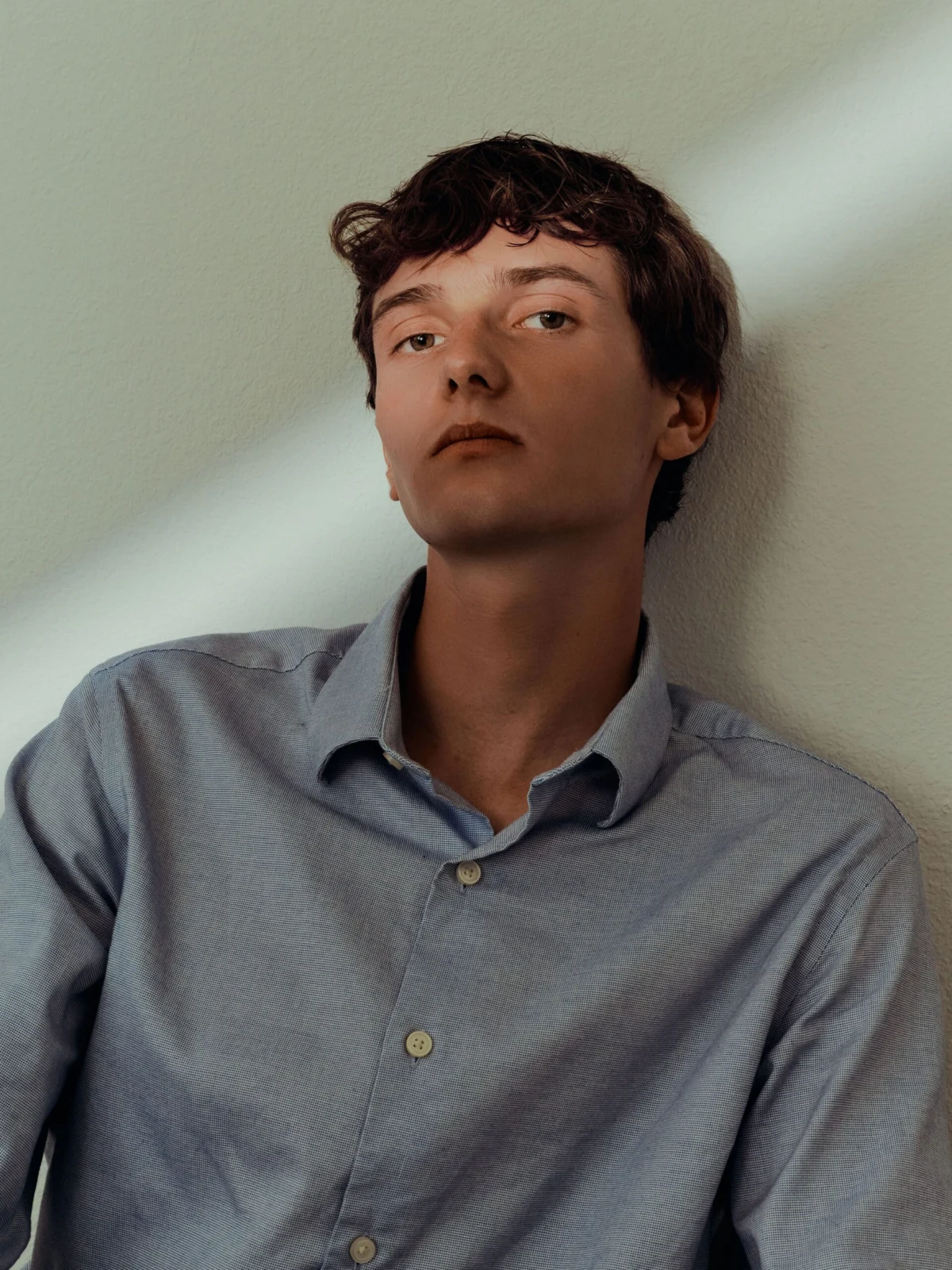
Ben Mueller, a senior at Redwood High School, embarked on a journalism assignment in February 2026 that would unexpectedly propel him and his school’s student newspaper, the Redwood Bark, into the national spotlight, challenging established notions of journalistic autonomy and administrative oversight. Tasked with presenting a news story through an extended Instagram slideshow, Mueller, on the afternoon of February 10, settled into his bedroom, a space offering comfort with its beanbag chair and a serene view of Marin County’s sun-dappled waterways. After a brief diversion scouting college campuses on Google Earth, his attention turned to the Department of Justice’s publicly accessible Epstein Library portal. Confirming he was over 18, Mueller delved into the vast repository of 3 million pages of Epstein files, which had been released just eleven days prior.
Living in one of America’s wealthiest enclaves, Mueller harbored a conviction that his affluent Marin County community likely held connections, however indirect, to Jeffrey Epstein’s illicit network. "I think it’s very difficult to get an immense amount of money without—this is my opinion—without doing something a little shady," Mueller reflected. This hypothesis guided his five-hour deep dive into the federal database, meticulously searching for links to Marin’s towns and cities. His efforts yielded thousands of mentions. While many were innocuous, such as Epstein’s online shopping habits at Restoration Hardware, headquartered in nearby Corte Madera, several entries immediately caught his journalistic eye. These included Epstein’s involvement in a 2014 art gala in Sausalito, a meeting with Woody Allen in Tiburon, and, most disturbingly, a 2013 email exchange with Gisele Attias Bonnouvrier, representing a modeling agency called Mill Valley Connection. One message from Bonnouvrier was particularly chilling: "Regarding Hannah, my Austrian model, we can come and see you this evening if you are interested, and in that case let me know how I can get my fees."
Two days later, on February 12, Mueller’s investigative piece went live on the Redwood Bark’s Instagram feed. Presented as a carousel-style slideshow designed for county-wide readership, its opening panel posed a direct question: "Which Marin towns were mentioned in the Epstein files? Scroll to see how many times your town was mentioned." Conscious of the sensitive nature of his findings, Mueller opted for concise and general descriptions, avoiding direct quotes from the most alarming documents. The slide concerning Mill Valley read: "Mill Valley was mentioned in the context of providing models to Epstein from a woman named Gisele Attias Bonnouvrier."
The Instagram post quickly went viral within the local community and beyond, garnering over 4,000 likes. The comments section overflowed with praise, with readers commending the high schoolers for their initiative and quality of reporting. "This is the kind of journalism we need," one user wrote. Another added, "Higher quality reporting than local outlets." Many echoed sentiments like, "High schoolers doing better reporting than national news," and "Didn’t think I’d be following a random CA HS newspaper in 2026 for their breaking reporting but here we are." Despite the widespread acclaim, Mueller himself felt a degree of perplexity. "I didn’t really think I was doing groundbreaking journalism," he confessed. "I was just like, this is another piece of homework that I have to do today, and I’ve just got to get it done—but also be thorough, because people are going to see it on the internet."
The initial excitement soon gave way to apprehension. Approximately a week and a half after the post, Mueller, home sick with a mild fever, received a call from his journalism teacher, Erin Schneider, bearing unsettling news. "This person mentioned in your post is now threatening to sue the district," Schneider informed him. On Monday, February 23, Bonnouvrier had sent a stern email to the principal of Redwood High School, labeling Mueller’s post as defamatory and demanding its immediate removal within 48 hours, threatening legal action if the school failed to comply. The district superintendent subsequently instructed the Bark to either redact Bonnouvrier’s name or delete the entire slide.

The Redwood Bark, a nationally recognized and award-winning high school newspaper, boasting an eighth-place finish in the National Scholastic Press Association’s major national competition the previous year, found itself at a critical juncture. Madison Bishop, a poised and articulate 18-year-old and Mueller’s colleague, serving as the Bark’s social media manager, reflected on the publication’s esteemed reputation. "It was just such a well-known student paper," she noted, having been an avid reader even before her older sister’s tenure as editor-in-chief in 2022. Both Bishop and Mueller joined the Bark staff during a period of significant innovation. Over the preceding decade, Schneider had guided her students in expanding the Bark’s reach beyond traditional print and basic web articles, embracing platforms like Instagram, Facebook, TikTok, LinkedIn, and even launching a podcast. At the start of the current school year, Schneider initiated a "social-media first" approach, integrating full stories directly onto these platforms.
Bishop championed this transition, viewing it as a strategic empowerment of student voices. She recognized that social media was not only where the Bark’s student audience consumed news but also a domain where young people held inherent authority. "It gives us a space to have a leg up from adults," Bishop explained. "It really lets them sit down and listen and absorb what we have to say, because we are the quote-unquote professionals." This digital fluency proved crucial when the superintendent’s demands arrived. The student leaders immediately understood that Instagram’s platform architecture prevented them from editing an already published carousel slide, making a simple redaction impossible. Further complicating matters, Redwood High’s principal was out of the country, unavailable for immediate consultation. With the 48-hour legal ultimatum looming, the students faced the daunting task of formulating their response to the district largely on their own.
Upon their return to school on Tuesday, the high school journalists wasted no time, using their lunch hour to seek legal counsel. Gathered around a speakerphone in Schneider’s office, Bishop and Mueller consulted an attorney from the national Student Press Law Center. Schneider vividly recalled the lawyer’s reaction, which was a chuckle. "If this woman thinks she’s going to sue your school district, she’s got another thing coming," he asserted. "Her name is in the Epstein files—no lawyer is going to represent her in this case." The students also sought advice from Mueller’s parents, both practicing lawyers, and another independent attorney, all of whom unequivocally concluded that the Bark had committed no wrongdoing.
Bolstered by these legal opinions and increasingly convinced of their journalistic integrity, the Bark staffers deliberated their next steps. After school, Mueller, Schneider, Bishop, and another Bark editor convened on the blue couches of their newsroom for a grueling four-hour debate. They meticulously scrutinized every word on Mueller’s controversial slide, cross-referencing it with the federal documents to ensure absolute accuracy. Despite being on the verge of deciding to leave the Instagram post untouched, the students, after Schneider’s departure for the evening, continued to second-guess themselves. Ultimately, they opted to temporarily archive Mueller’s most contested slide, aiming to discuss the matter further with school officials in person. Schneider, who had experienced several clashes with administrators that year over the Bark’s content (and who had a prior professional relationship with the reporting journalist), suspected the students felt immense pressure. "I think at the end of the day, the kids felt such pressure from the administration that they were almost looking for a reason to get out from under it," she observed, framing the administrative demand as a clear instance of censorship.
That evening, the students drafted a note to Schneider, outlining their desired message to the principal. They carefully framed the temporary removal of Mueller’s slide as an exercise of their own prerogative, explicitly stating: "We want to be clear that the removal was not in response to your request. Our choice was based on our own ethical considerations and editorial standards." This distinction was puzzling to Schneider, who viewed the administrative demand as censorship, but the Bark reporters firmly believed they had not capitulated.
The decisive meeting finally took place that Thursday, with Mueller and Bishop sitting across from Principal Barnaby Payne and Courtney Goode, the superintendent of the Tamalpais Union High School District. Schneider attended solely to take notes, recalling a tense beginning. Goode initiated the discussion by emphasizing the district’s inability to afford a costly legal battle. Mueller and Bishop maintained their composure, allowing the administrators to present their concerns before calmly requesting clarification on what specifically was deemed libelous in the post.

It became evident that the administrators’ primary concern stemmed from a belief that Mueller had published inaccurate information. Goode explained that the district’s own research had found no evidence linking Bonnouvrier to providing models to Epstein. "You need to link your source to this," Goode asserted, implying a lack of verifiable evidence. Realizing the adults had likely relied on a basic Google search, which would not access the deeper layers of the federal Epstein database, Mueller retrieved his phone. He navigated directly to the specific government document, displaying it on his screen. "The source is just the Epstein files," Mueller stated simply. "It is true, because it says it right here in a government document." The on-screen display of Bonnouvrier’s email, explicitly mentioning her "Austrian model," visibly took both administrators aback.
The high schoolers then launched into a confident exposition of California Education Code 48907, a statute that grants student journalists significant freedom of expression. They reminded the administrators that, unless content is obscene, incites violence or illegal activity, or is demonstrably false or libelous, student journalists operate with total freedom from administrative oversight. "Well, you know, I just had to make sure that we weren’t going to get sued," Goode conceded, according to Schneider’s detailed notes. Bishop, seizing the moment, delivered a powerful rejoinder: "With all due respect, under California’s student press law, being afraid of a lawsuit or backlash is not a valid reason to call for the takedown of content."
Bishop characterized the 30-minute meeting as "a very open conversation," concluding with everyone "on the same page that the post legally does not have to be taken down." In a subsequent statement to WIRED, Superintendent Goode confirmed that the post had been "briefly paused" until "it was determined that the information referenced was factual and publicly available." The following day, Mueller and Bishop returned to the newsroom and promptly restored the archived Instagram slide.
Bonnouvrier, who declined to comment on the story, never pursued her legal threat. However, the repercussions extended far beyond the immediate dispute. Approximately two weeks after the meeting, Schneider sent an email to all Bark students and their parents. "I am writing to let you know that I will be stepping away on a leave from the journalism program effective today, Monday, March 9," she announced. For Schneider, the conflict over Mueller’s post had been the culmination of a year-long struggle against what she perceived as persistent administrative interference. In a separate incident earlier that year, the Bark had published a cover image depicting a student protest against the Trump administration in San Francisco. The photo featured demonstrators holding a banner that declared "Students Fight Back," with smaller text including "Against Zionism." Following reader complaints, including an Instagram comment comparing the Bark to the Ku Klux Klan, the school district initiated a mandatory investigation, citing board policy requiring such action in response to public grievances.
In her farewell email, Schneider articulated her profound commitment to her role, stating, "The work of defending First Amendment rights and helping young journalists report responsibly on real-world topics is work I believe in deeply. It is also work that has met significant resistance." Her unexpected departure stunned the Bark staff, who received the news through tears during a newsroom meeting that morning.
Over a month later, after emotions had somewhat subsided and the Redwood students had returned from spring break, the story of Mueller’s Instagram post escalated beyond Marin County, captivating a national audience. Headlines such as "Small High School Sparks Fury Over Witch Hunt Into Student Paper for Exposing Woman’s Link to Epstein" appeared in publications like the News Corp.-owned California Post. The Foundation for Individual Rights and Expression (FIRE), a prominent campus free-speech watchdog, issued a statement condemning the incident: "High school administrators censored a student newspaper," accompanied by a social media video detailing the events. Further coverage emerged from California Public Radio and the educational news site EdSource.

Commentators interpreted the Redwood High dispute through various lenses. For some, it represented a clear instance of "liberal elite corruption" within Governor Gavin Newsom’s California, himself a Redwood alumnus. For others, it mirrored a broader national climate of intimidation and administrative crackdowns affecting diverse facets of American life. Indeed, the Student Press Law Center reported a significant 42 percent increase in legal defense requests to its hotline over the preceding two years. This surge reflected a growing trend of student journalists using confidential sources to report on contentious issues—from immigration raids and campus protests to the Gaza conflict and the Epstein files—often met with efforts by administrators to minimize controversy by imposing restrictions.
Despite the widespread attention, the Redwood High students largely found much of the external coverage to be annoying. Mueller and the Bark staff expressed discomfort with being portrayed as victims. "Calling it censorship really convolutes the story," Mueller asserted, disliking the depiction of himself as "weak and submissive" or intimidated by a principal. In an editorial note published on May 27, the Bark staff reiterated that their brief removal of the slide was a voluntary decision, characterizing the standoff with administrators as a "simple misunderstanding" rather than a blatant abuse of power.
As AP classes, Bark assignments, and graduation loomed, Mueller primarily wished to put the entire ordeal behind him. "It was a little tiring just to see it come back up," he remarked. "People are making a big deal about this because it feels like something more serious than it is." Coincidentally, Bishop had dedicated much of her school year to reporting on student journalism controversies. Her portfolio included a short documentary on the censorship-driven collapse of Novato High’s newspaper, coverage of the forced reassignment of a journalism adviser at Lowell High School in San Francisco, and a report on a Virginia student newsroom that successfully resisted administrative control. This extensive body of work earned her third place in a competition for California Student Journalist of the Year. Yet, she viewed the Bark’s own controversy differently. In her mind, the students had consistently maintained control, navigating through various adult interventions. "At the end of the day, all decisions are final by the students," Bishop affirmed that spring. "I know sometimes it can get distracting with external, adult conflicts. They disagree. They want this taken down. They’re leaving. But it is a student-run class, and students are the voice of the paper."
In June, both Mueller and Bishop crossed a significant threshold, graduating on the 11th and moving closer to the adult world, where they hope to continue their commitment to journalistic integrity. Bishop is set to attend the University of Southern California to study journalism, while Mueller will head to William and Mary in Virginia, keeping his options open but considering joining the college newspaper.