 11

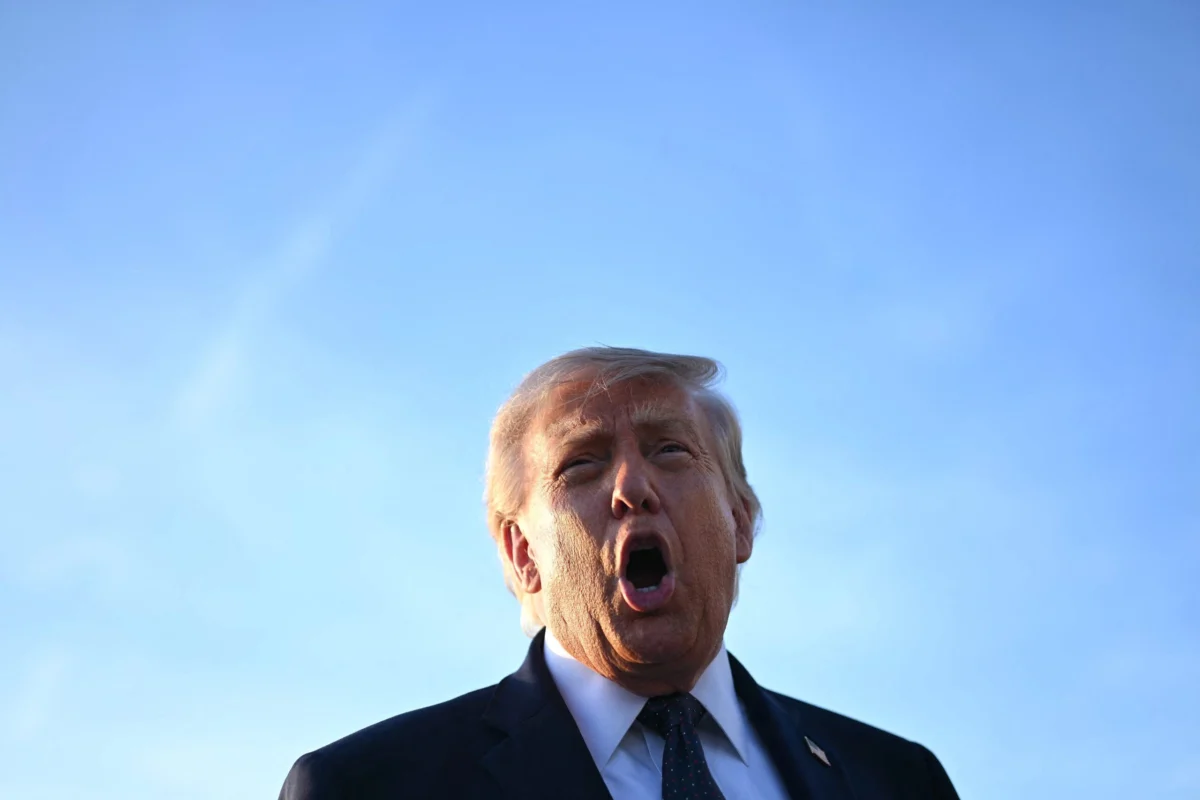
President Donald Trump has characteristically responded to the escalating debate surrounding artificial intelligence (AI) safety, unequivocally dismissing these concerns as a protracted series of hoaxes. He attributed these purported fabrications to the "Radical Left Dumocrats," claiming they are "generated… for purposes of destroying our Country." This declaration marks a significant intervention into a global discussion increasingly fraught with ethical, existential, and economic implications.
On Saturday, Trump initiated his commentary on the burgeoning field of AI through his social networking platform, Truth Social. His initial post questioned the very nomenclature of the technology, stating that "many people think that the words ‘Artificial Intelligence’ are inaccurate, and very ineloquent, relative to AI, or Artificial Intelligence." Seeking public input, he then launched a poll, inviting his followers to vote on alternative designations for the technology. The options presented were "Superior Intelligence," "Extreme Intelligence," or "Supreme Intelligence," with the poll reportedly still active at the time of publication. This engagement tactic aimed to reframe the public perception of AI, moving away from a term he perceived as inadequate.
Mere hours after his initial musings, Trump followed up with a more assertive post, directly linking the growing apprehension around AI to partisan political machinations. He asserted that attempts at "the decimation, or destruction, of AI" constitute one of "many" Democratic-orchestrated hoaxes. To underscore his point, Trump drew parallels to a range of past and ongoing political controversies, which he similarly labeled as hoaxes. These included the investigations into alleged Russian interference in US elections, which he termed "RUSSIA, RUSSIA, RUSSIA," and the inquiries into his dealings with Ukraine, referred to as "UKRAINE, UKRAINE, UKRAINE." He further categorized the scientific consensus on climate change as "Global Warming," his two impeachment proceedings as "Impeachment Hoax #1" and "Impeachment Hoax #2," and contemporary debates around gender identity and sports as "Men in Women’s Sports" and "Transgender for Everyone." By lumping AI safety concerns with these disparate issues, Trump aimed to paint a picture of a consistent, politically motivated effort to undermine various aspects of American progress and society.
Trump emphatically stated that he "will not stand by and let this happen." He further elaborated on what he perceived as the origins and evolution of this alleged campaign against advanced technology. According to his narrative, this so-called hoax initially "began with an attack on our Data Centers." Data centers, the physical infrastructure housing vast amounts of computing power and information crucial for AI and other digital technologies, have faced scrutiny over their environmental impact, energy consumption, and local community effects. However, Trump claimed that these initial "crazed Data Center attack[s]" largely failed, implying that public and political resistance to their development had diminished. Consequently, he argued, critics had now shifted their focus "straight at AI" itself, escalating their perceived campaign against technological advancement.
Notably, President Trump did not provide any specific evidence or data to substantiate his assertion that widespread skepticism and concerns regarding AI and data centers are not organic or sincere, but rather politically manufactured. This claim stands in contrast to observable trends and public discourse. For instance, concerns about data centers are not confined to a single political ideology; both Republicans and Democrats have raised questions and taken action regarding their proliferation. A prominent example of this bipartisan apprehension is New York’s recent legislative action, which saw the state become the first to halt permits for large data center construction projects, citing environmental and resource concerns. Such actions suggest a broader, more nuanced public and governmental engagement with the implications of these technologies than Trump’s "hoax" narrative implies. The article also referenced that concerns about AI are not always about existential threats, but more immediate harms, implying a diversity of viewpoints.
Trump’s latest comments on AI echo sentiments he expressed previously at a golf tournament the preceding weekend. During that event, he indicated an openness to implementing "guardrails" for AI development, acknowledging the need for some form of regulation or safety measures. However, he concurrently voiced suspicion, arguing that "a lot of negative forces that are bringing it up that shouldn’t be bringing it up." This earlier statement set the stage for his more direct accusation of a politically motivated "hoax" against AI.
Looking ahead, Trump outlined his commitment to fostering the growth of the AI industry. He declared that he would "cherish [the AI industry,] help it, and watch over it, as it grows." To realize this vision and safeguard what he views as a vital national asset, he announced his intention to establish an "AI Force." This proposed entity would parallel the Space Force, a new branch of the U.S. armed forces dedicated to space warfare and operations, which he successfully established during his first presidential term. This move signals his intent to elevate AI to a matter of national strategic importance, akin to defense and space exploration.
Further solidifying his plans, Trump added that he would "be announcing, in the near future, the AI ‘Czar’ – Only High I.Q. individuals need apply!" This announcement indicates his desire for a dedicated, high-level official to oversee the development and regulation of AI within his administration, emphasizing a meritocratic selection process. The specific duties and scope of authority for this prospective AI Force and AI Czar, however, were not detailed in his posts. It is worth noting that venture capitalist David Sacks previously served as Trump’s AI and crypto czar earlier in the year, before stepping down to co-chair the President’s Council of Advisors on Science and Technology. The search for a new "czar" suggests a renewed focus on direct oversight.
The broader AI safety debate, which Trump is now actively engaging, has intensified significantly in recent months. A pivotal moment occurred with the resignation of a prominent AI researcher from Anthropic, a leading AI development company. The researcher publicly stated his departure was driven by profound concerns that major AI companies "earnestly believe it could kill us all by the end of the decade" and are, in his view, "gambling with our lives." This stark warning from an insider amplified calls for more stringent safety protocols and regulatory frameworks. In response to mounting concerns, Anthropic CEO Dario Amodei subsequently released a comprehensive plan to "pace the frontier," outlining strategies for responsible AI development and deployment. This plan seemingly garnered endorsement from other influential figures in the tech world, including OpenAI CEO Sam Altman and SpaceX CEO Elon Musk, highlighting a degree of industry acknowledgment of the need for caution.
However, the debate is multifaceted. Critics of the AI industry have posited that much of the discourse surrounding the technology’s potential existential threat serves as "a distraction from AI’s more immediate harms." These immediate harms often refer to issues such as algorithmic bias, job displacement, misinformation, surveillance, and the concentration of power in a few large tech companies. This perspective suggests that focusing solely on far-future, catastrophic scenarios might divert attention and resources from addressing tangible and present societal challenges posed by AI.
Adding another layer to the discussion, Nvidia CEO Jensen Huang publicly sided with Trump’s stance. During the All-In Summit, an event co-hosted by former AI czar David Sacks, Huang engaged in a call with Trump on stage. During their exchange, Huang concurred with the president that the backlash against AI is indeed a "hoax" and firmly asserted, "we’re not going to let" a slowdown in AI development happen. Nvidia, a dominant force in the AI hardware market due to its advanced graphics processing units (GPUs), has a significant vested interest in the rapid and unhindered growth of the AI industry. Huang’s endorsement provides a powerful industry voice supporting Trump’s narrative and opposing regulatory measures that might impede innovation or market expansion.
The president’s comments and subsequent actions, including the proposed AI Force and Czar, underscore a developing political battleground around artificial intelligence. As the technology continues its rapid advancement, the interplay between innovation, regulation, national strategy, and partisan politics is set to define its future trajectory. Trump’s position clearly favors accelerated development, viewing safety concerns as a politically motivated impediment, while a segment of the tech industry and political landscape continues to advocate for more cautious, regulated growth.






