11

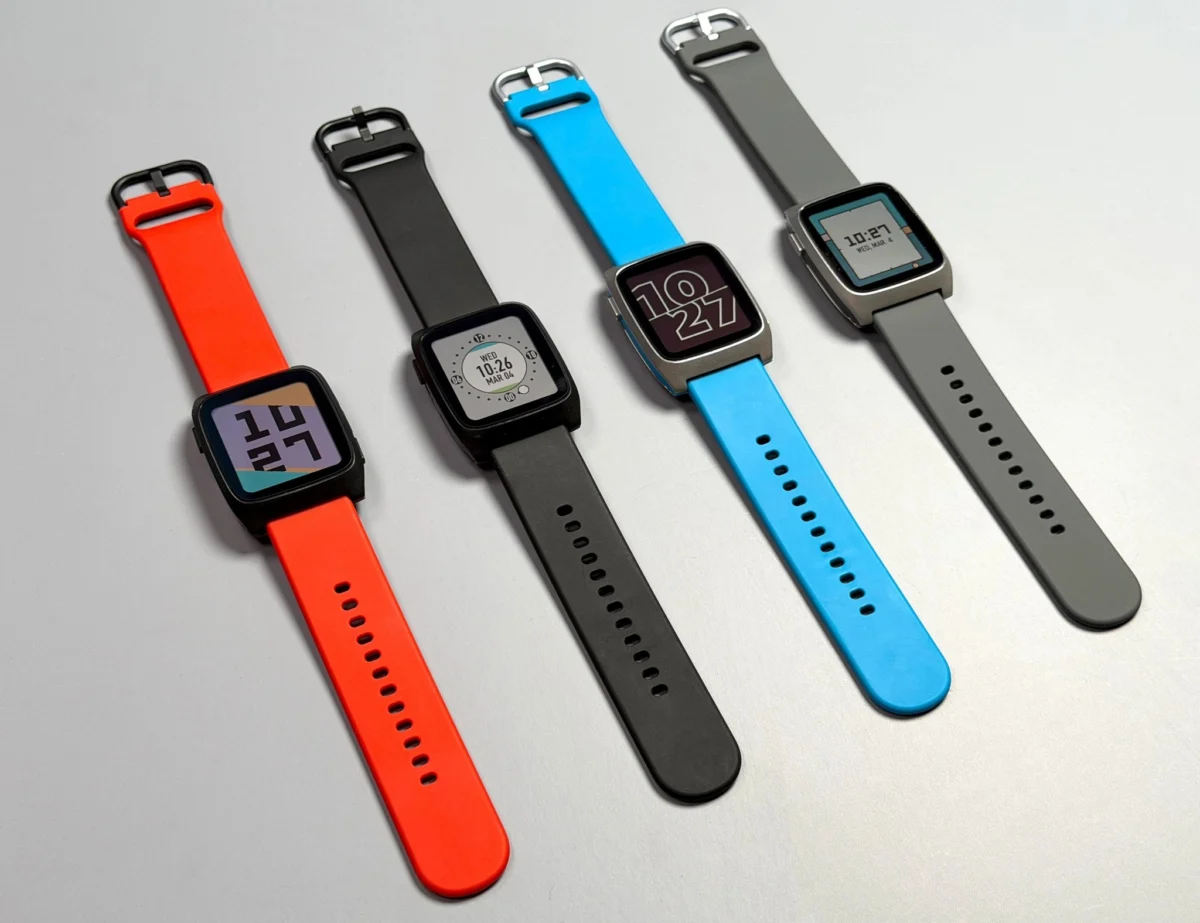
The newly re-released $225 Pebble Time 2 smartwatch offers a refreshingly casual and playful experience, deliberately designed to feel more like a fun gadget than a miniature computer on the wrist. Rebooted by its original founder, this updated version of the indie smartwatch brand leans into quirky watchfaces, simple applications, and engaging games, cultivating a distinct "hacker energy." Its physical buttons, power-efficient e-paper screen, and extended battery life further enhance its retro appeal, setting it apart in a market dominated by more complex, high-tech wearables.
Upon first glance, the Pebble Time 2 immediately distinguishes itself from its primary competitor, the Apple Watch. Where Apple’s flagship smartwatch boasts a vibrant OLED touchscreen display, the Pebble opts for a color e-paper screen. This choice is fundamental to its design philosophy and functionality. Furthermore, while the Apple Watch offers a diverse array of band types, from performance-oriented sports straps to luxurious metal and leather options, the Pebble Time 2 comes equipped with a straightforward silicone watch band. This detail reinforces its positioning as a charming Swatch rival rather than a high-end fashion accessory. Customization for the Pebble Time 2 focuses on its robust stainless steel frame, available in silver or black, which can be paired with silicone bands offered in blue, red, silver, or black, providing a distinct aesthetic choice from the aluminum finishes of its competitor.

The watch’s 64-color e-paper screen is engineered for constant visibility, ensuring that the time and other key information are always accessible. For low-light conditions, the display can be illuminated by an RGB LED backlight, activated either by a flick of the wrist or a simple tap. Reflecting the watch’s customizable nature, users can personalize this feature, for instance, setting the backlight to activate with a single tap rather than the default two.
While the Pebble Time 2’s e-paper display offers a more muted color palette compared to the Apple Watch’s Retina display, this trade-off comes with significant advantages. Its excellent readability in bright sunlight is a standout feature, making it practical for outdoor use. Crucially, this display technology contributes to the watch’s exceptional battery life, which can last approximately 21 days on a single charge, depending on usage patterns. A charger is conveniently included in the box, facilitating its long-term usability without frequent recharges.
However, the true distinction of the Pebble Time 2 lies not just in its hardware, but profoundly in its software ecosystem and the vibrant community that sustains it. This loyal community is, in fact, the very reason the Pebble brand has been able to make such a remarkable comeback after the original company’s closure.

Pebble’s Resurgence: A Community-Powered Comeback
Pebble’s journey began as a groundbreaking Kickstarter project, quickly gaining traction and eventually evolving into a successful company. Before its eventual acquisition by Fitbit, Pebble had sold an impressive 2 million watches, generating a substantial $230 million in sales. Despite this commercial success, the company faced significant financial challenges that ultimately proved unsustainable, leading to its sale. Eric Migicovsky, Pebble’s original founder (who later co-founded the messaging app Beeper), openly detailed the financial difficulties that necessitated this strategic move in a candid blog post, providing transparency into the complexities of scaling a hardware startup.
Following the acquisition, Fitbit maintained Pebble’s servers and app store for a period, but eventually ceased support in mid-2018. In an extraordinary demonstration of brand loyalty and collective effort, Pebble’s dedicated user community stepped in. Operating under the name Rebble.io, this grassroots initiative took over the maintenance of the watch’s essential services, effectively keeping the product on life support through volunteer efforts and donations. This unusual show of community dedication prevented the Pebble ecosystem from fading into obsolescence.

The turning point for a full-fledged revival came in 2025. Eric Migicovsky, leveraging his industry connections and collaborating with former Pebble and Fitbit employees now at Google, successfully convinced the tech giant to open-source the original Pebble operating system. This pivotal decision paved the way for Migicovsky to re-enter the smartwatch market. Under his new company, Core Devices, he embarked on a mission to build new Pebble watches, aiming to rectify past business challenges while preserving the beloved "Pebble spirit."
Core Devices has since demonstrated significant progress, starting with the release of a limited edition Pebble 2 Duo. The company has successfully sold over 25,000 Pebble Time 2 watches across 93 countries, indicating strong global demand for the resurrected brand. Looking ahead, Core Devices has announced its third device, the Pebble Round 2, which is slated to begin shipping in September. Migicovsky’s ambition for this second chapter of Pebble is not just about commercial success, but also about reinforcing the community-driven ethos that saved the brand.
Watchfaces: A Canvas for Creativity

The Pebble Time 2’s deep connection to its hacker community is most vividly expressed through its extensive collection of watchfaces. The device ships with an astonishing array of over 2,120 watch faces and applications, all developed by the dedicated Pebble community. This includes more than 500 new creations stemming from a recent spring developer contest. This vast and whimsical selection immediately highlights the playful and creative spirit of the community, as customizing the watch face is often the first interaction users have with their device.
Users can opt for conventional, simple analog or digital displays if they prefer a minimalist aesthetic. However, the true fun begins with the more imaginative offerings. The selection includes watchfaces featuring silly characters such as cartoon dogs, cats, or even axolotls, alongside various imaginative backgrounds and scenes. Pixelated retro displays evoke nostalgia, while giant, brightly colored numbers and text styled in creative fonts—reminiscent of comic books or science fiction—add a unique flair.
The community’s playful disregard for traditional licensing agreements is evident in watchfaces that transform the screen into popular memes, like Nyan Cat, or feature beloved characters from classic video games such as Mario, Kirby, and Pokémon. This adds a layer of fun and personalization, though users are implicitly encouraged to "enjoy it while it lasts" given the unofficial nature of these creations.

Apps & Games: Niche, Useful, and Playful
Despite operating with a significantly smaller user base compared to giants like the Apple Watch, the Pebble app store is a treasure trove of creative and often highly niche applications. These span various categories, including health and fitness, games, tools and utilities, remotes, and more. The store is replete with genuinely useful tools, such as timers, Spotify controls, weather apps, to-do lists, calculators, navigation aids, stock trackers, Strava activity trackers, medication reminders, comprehensive health apps, and calendars. Beyond utility, a multitude of fun, frequently retro-inspired, games further enrich the experience.
What makes this app selection truly remarkable is its origin: many of these applications were created by individuals simply to fulfill a specific personal need or interest. This ethos allows for a vast array of niche functionalities that would typically not be commercially viable for larger developers. Examples include apps for tracking local train schedules, personal tennis scores, Claude AI usage, or even reminders for sunscreen application – a testament to the community’s problem-solving and self-sufficiency. The platform has also adapted to modern trends, offering newer AI-powered apps for users seeking chatbot or agent functionalities directly on their wrist.

The playful side of the app store is equally compelling. Innovations like the PebbleGoBrrrr app, which tells time through watch vibrations, or a simple Whack-a-Mole game, demonstrate the community’s willingness to create for the sheer joy of it. Among the most popular apps are the self-described "pointless" Pixelminer game, where a small character mines for treasure, and FitCat, a virtual pet and activity tracker. Uniquely, there’s even an app designed to help users create other apps, embodying the hacker spirit at its core.
If there is any critique to be leveled against this extensive collection, it is the sheer volume itself. The Pebble app store, while rich in content, could significantly benefit from enhanced search and discovery tools. Features akin to Apple’s App Store – such as more granular subcategories, curated lists, editorial selections, or personalized recommendations – would greatly improve user navigation and content discovery. As it stands, users could easily spend hours, weeks, or even months exploring the app store and still uncover new and interesting applications.
Core Functionality: All the Basics, Too

Even without delving into the vast app store, the Pebble Time 2 remains a highly functional smartwatch. It efficiently mirrors notifications from a connected smartphone, with the added convenience of individual toggling within the Pebble companion app. Users can also effortlessly control music playback on their phone, set alarms and timers directly from the watch, and manage other essential functions. While Core Devices does not primarily market the Pebble Time 2 as a dedicated fitness tracker, it does offer fundamental health functions, including tracking steps, monitoring sleep patterns, and measuring heart rate, providing useful basic insights into daily activity.
A classic and highly practical Pebble feature making its return is the timeline, accessed via the down button on the right side of the watch. This intuitive interface allows users to scroll through a chronological view of their day, encompassing past and upcoming calendar events, personalized reminders, current weather conditions, and "pins" added by various installed applications. This at-a-glance overview of daily commitments and relevant information proves to be an invaluable organizational tool.
The Pebble Time 2’s physical buttons are designed for intuitive use. The watch incorporates four buttons, more than typically found on an Apple Watch, but their arrangement is logical and easy to master. The top button serves as the "up" control, the bottom as "down," and the middle button functions as "select." The solitary button on the left side of the watch acts as "back." Furthermore, these buttons offer a layer of customization: users can configure any button to launch a favorite application with either a quick tap or a long press. By default, a long press on the back button activates Quiet Time, which temporarily silences notifications.

Additional technical specifications for the Pebble Time 2 are comprehensively detailed on Eric Migicovsky’s blog. It’s worth noting the watch’s water resistance rating of 30 meters or 3 ATM, which means it is robust enough to withstand everyday water exposure, such as rain or handwashing. However, users are advised against swimming or diving with the device to prevent potential damage.
Being Less Connected: A Perk or a Problem?
The Pebble Time 2 faces inherent limitations primarily due to factors beyond the company’s control, particularly its compatibility with iOS devices. Apple’s stringent platform rules restrict the watch’s ability to perform certain actions, such as directly responding to notifications, sending text messages, or enabling full integration with a wide range of iOS applications. This means that even basic features like daily alarms will not automatically sync from an iPhone to the Pebble; users must manually set them on the watch itself.

However, these limitations on iOS present an unexpected silver lining. Because the Pebble Time 2 is inherently more constrained in its interactive capabilities compared to a fully integrated smartwatch, it prevents the device from becoming another source of constant demands on a user’s attention. It allows individuals to stay informed through notifications without feeling an immediate obligation to respond or take further action. While it may require an initial period of adjustment for users accustomed to more interactive smartwatches, many find that after a while, it becomes easier to simply glance at the watch for information and then disengage, freeing them from the constant "tug" to interact with their device. This offers a unique proposition for those seeking a more mindful, less demanding digital experience.
The future trajectory of Core Devices and the Pebble Time 2 remains an area of keen interest. The company demonstrates an active commitment to development, regularly shipping new firmware updates every few weeks and consistently updating its companion mobile application. Since its launch, Core Devices has been diligently adding new APIs and implementing various improvements. Future plans include enabling the second microphone for enhanced noise cancellation, signaling ongoing innovation and a dedication to refining the user experience.
The Pebble Time 2 thus carves out a distinct niche in the smartwatch market. It stands as a testament to community power, offering a fun, functional, and deeply customizable alternative that embraces a retro aesthetic and a "less-is-more" philosophy in a world of increasingly complex personal technology.