 11
11
Posted: 12:08 PM PDT · March 23, 2026
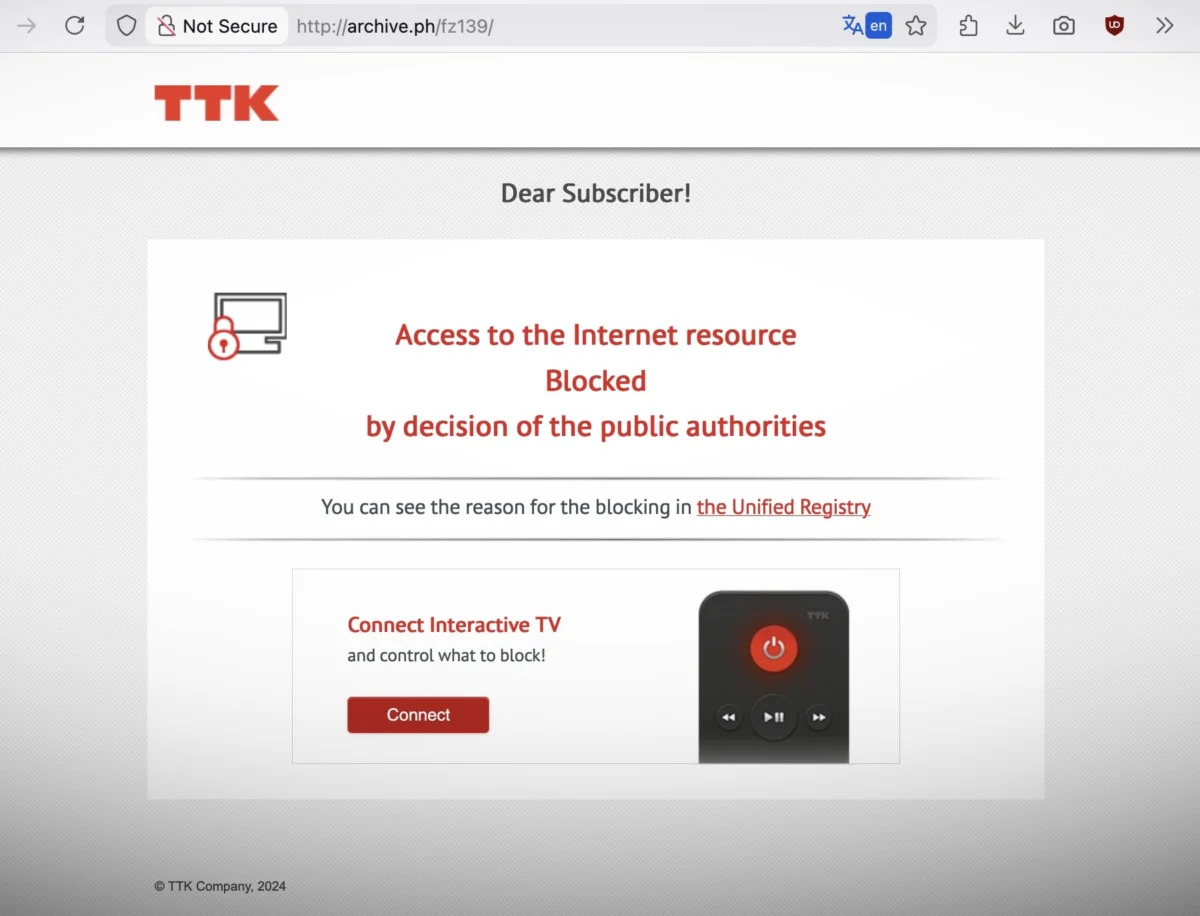
The prominent paywall bypass website Archive.today, along with several of its associated domains, including Archive.is and Archive.ph, has been blocked by Russian authorities. This development became apparent through error pages displayed to users attempting to access the websites, explicitly attributing the block to Russian governmental action. The incident underscores the escalating efforts by state actors to control information access online, impacting platforms often utilized for preserving digital content and circumventing traditional information barriers.
The block was first observed on Monday, March 23, 2026, when TechCrunch personnel, accessing the websites from the U.S. East Coast, encountered the aforementioned error messages. These pages, displayed in Russian, clearly stated: “Access to the Internet resource Blocked by decision of the public authorities.” The message further cited Roskomnadzor, Russia’s federal executive body responsible for overseeing media, mass communications, and the protection of personal data, as the authority behind the restriction.
Roskomnadzor functions as the primary internet censorship agency within Russia, wielding significant power to restrict access to websites and online content deemed undesirable or illegal under Russian law. Its mandate extends to monitoring internet resources for content that violates regulations, issuing warnings, and ultimately implementing blocks. The agency has a well-documented history of restricting access to a wide array of online platforms, from social media networks and independent news outlets to tools that facilitate circumvention of state censorship. The explicit mention of Roskomnadzor on the error pages leaves little doubt about the official nature of the block.
Further investigation into Roskomnadzor’s official listings confirmed that "access is limited to the page" for Archive.is. However, at the time of publication, the listing for Archive.today itself did not explicitly state that it was blocked, indicating a potentially nuanced or partial implementation of the restrictions, or a delay in updating official records. Despite the confirmation for Archive.is, Roskomnadzor did not provide a public reason for the block, maintaining a characteristic level of opacity often associated with such governmental actions. A representative for Roskomnadzor did not respond to inquiries from TechCrunch, which were made outside of standard working hours in Moscow, leaving the official rationale for the decision unstated.
The scope and effectiveness of the block appeared inconsistent during initial observations. While TechCrunch reported encountering block pages when accessing the sites from the U.S. East Coast, the same publication was still able to successfully access the Archive sites from various other devices and networks. Crucially, the ability to archive new web pages remained functional despite the apparent restrictions in certain regions or network environments. This inconsistency raises questions about the technical methods employed for the block, such as whether it involves DNS filtering, IP blocking, or more sophisticated deep packet inspection, and the extent to which these measures have been universally implemented across Russian internet service providers or international access points. Such partial blocks are not uncommon and can be indicative of ongoing deployment, technical challenges, or a strategic effort to disrupt access without a complete shutdown.

Archive.today is widely recognized as a crucial online utility for creating immutable snapshots of web pages. Its primary function is to archive copies of websites, preserving their content as it existed at a specific moment in time. This capability is invaluable for a variety of users and purposes, including academic researchers who need to cite stable sources, journalists documenting rapidly changing online narratives, and legal professionals requiring evidence of online content. Furthermore, Archive.today is particularly known for its ability to archive content that is typically hidden behind paywalls or requires a subscription log-in to access. This feature, while celebrated by those seeking open access to information, has also made the service a point of contention with publishers and content creators who rely on subscription models for revenue.
The act of archiving web pages helps combat "link rot," a pervasive problem on the internet where links to online content become broken or point to altered pages over time. By providing a permanent, verifiable record, Archive.today contributes to the digital preservation landscape, ensuring that information remains accessible even if original sources are removed, modified, or become unavailable. However, its methods and the ethical implications of bypassing paywalls have made it a controversial entity in the broader internet ecosystem.
The current block by Russian authorities follows a significant controversy earlier in 2026 involving Wikipedia editors. In February, Wikipedia’s community made the decision to remove hundreds of thousands of links to Archive.today from its vast repository of articles. This drastic action was prompted by allegations that Archive.today’s code was surreptitiously utilizing visitors’ web browsers, without their explicit knowledge or consent, to generate junk network traffic. This traffic was reportedly directed at the website of a blogger who had been critical of Archive.today’s operational practices, effectively constituting a distributed denial-of-service (DDoS) attack. The Wikipedia community’s decision highlighted serious ethical concerns about the service’s operational transparency and its potential misuse of user resources, further complicating its standing as a reliable and trusted archiving tool.
The broader context of this block is the accelerating trend of internet censorship and control in Russia. Over recent years, Russian authorities have systematically tightened their grip on the digital space, enacting laws that require data localization, granting Roskomnadzor extensive powers to block content, and increasing pressure on foreign technology companies to comply with local regulations. These measures are often justified under the guise of national security, combating extremism, or protecting minors, but critics frequently argue they are used to suppress dissent, limit access to independent information, and control the narrative within the country. The blocking of Archive.today, a tool that facilitates access to a wide range of information and helps preserve online content, aligns with this pattern of restricting resources that enable information freedom.
The incident raises critical questions about the future of information access in Russia and the ongoing struggle between state control and internet freedom. While the full extent and duration of the block remain unclear, and the operators behind Archive.today have yet to respond to requests for comment, the action against a service like Archive.today sends a strong message about the diminishing space for uncensored information in the region. The ability of individuals to circumvent paywalls or access archived content is increasingly becoming a battleground in the broader conflict over digital rights and the free flow of information globally.
(h/t Ryan O’Horo on Bluesky)