 11

For the initial years of the artificial intelligence (AI) boom, Nvidia established itself as the undisputed leader, serving as the primary supplier of cutting-edge Graphics Processing Units (GPUs). This dominance translated into immense profitability as the burgeoning AI industry rapidly expanded its computational needs. However, a prevailing narrative began to emerge in recent years, suggesting a potential challenge to Nvidia’s seemingly unassailable position. Major hyperscale cloud providers, including giants like Amazon and Google, embarked on developing their own custom AI chips. This strategic move by key customers raised questions among investors about the long-term durability of Nvidia’s competitive advantage, prompting concerns that the company might no longer be the sole indispensable player in the AI hardware arena.
This compelling narrative, largely rooted in reality, significantly influenced investor sentiment. After an extraordinary period of growth where Nvidia’s market capitalization soared tenfold between early 2023 and mid-2025, its stock trajectory experienced a more tempered pace over the subsequent year. This moderation was primarily fueled by anxieties surrounding the increasing competition in the GPU market. The prospect of hyperscalers deploying their proprietary silicon threatened to erode Nvidia’s market share and profit margins, creating a climate of uncertainty for the company’s future growth prospects.
However, a new and transformative narrative has begun to solidify following Nvidia’s recent earnings report on Wednesday. Investors are now gaining a deeper understanding that Nvidia’s strategic advantage extends far beyond its acclaimed GPUs. As AI compute demands continue to escalate, reaching an unprecedented "gigawatt scale," the task of orchestrating these vast computational resources has become exponentially complex. This involves managing gargantuan datasets, ensuring seamless communication between thousands of processors, optimizing power consumption, and minimizing latency across sprawling data centers. Nvidia, recognizing this evolving challenge, has proactively developed a significant portion of the state-of-the-art hardware necessary to master this intricate orchestration. This comprehensive approach provides the company with a formidable advantage in the sophisticated systems that envelop and support the GPU, even as it navigates intensifying competition within the GPU segment itself.
The notion of "compute as a commodity" has been widely discussed in technological circles, suggesting that raw processing power would eventually become interchangeable and inexpensive. Yet, the reality of operating a megascale data center at peak efficiency remains an incredibly difficult undertaking. The sheer complexity of managing power distribution, cooling, network fabric, and data flow across thousands of interconnected components presents enormous engineering challenges. As AI deployments grow larger in scale and demand faster processing speeds, this challenge is only intensifying, underscoring the critical importance of intelligent system-level design and orchestration.
Rack by Rack: Nvidia’s Holistic System Approach
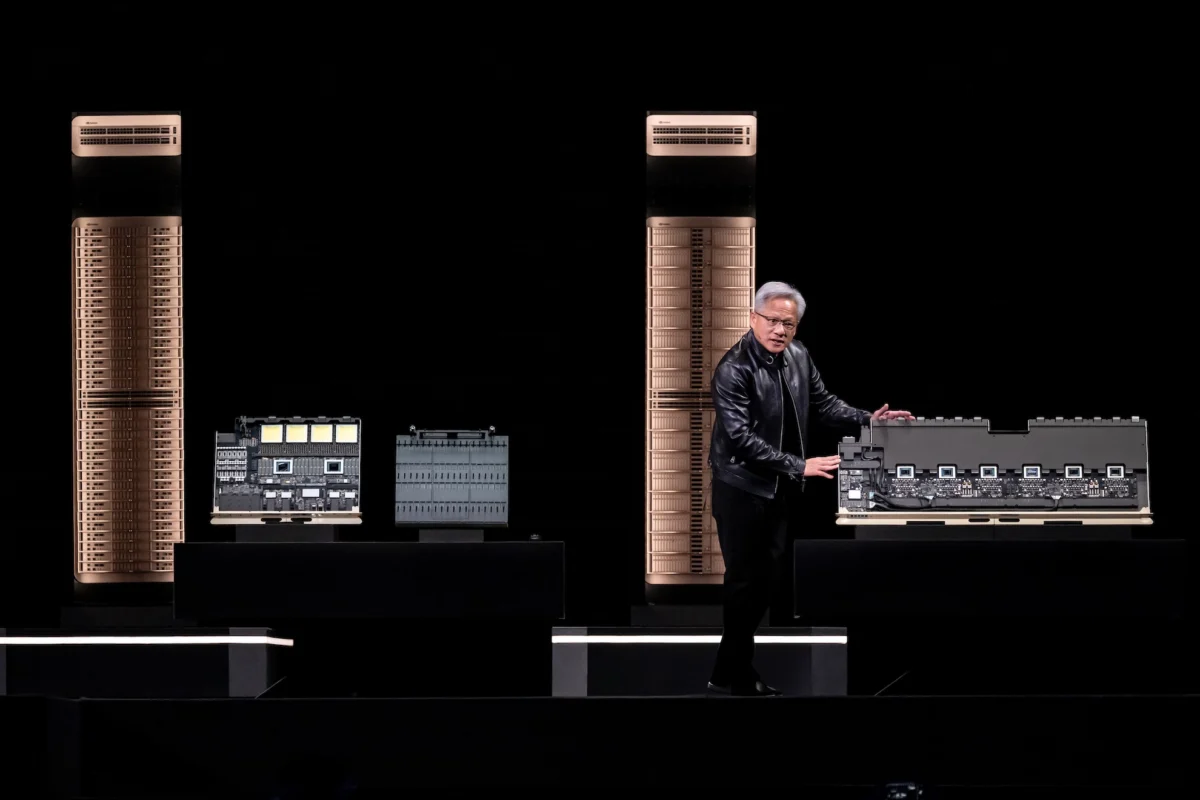
A closer examination of Nvidia’s product offerings reveals the depth of this strategic shift. The company is currently deploying its advanced Vera Rubin architecture, a testament to its integrated system philosophy. This architecture is not merely about a single chip; it’s a comprehensive platform that pairs the powerful Rubin GPU with a suite of complementary processing units. Key components include the Vera CPU, specifically designed for data orchestration, the Groq 3 LPX inference accelerator for efficient AI inference tasks, and specialized racks dedicated to optimizing storage and networking capabilities within the data center.
Recent discussions with Nvidia personnel have shed light on the sophisticated functions performed by these integrated systems. While the Rubin GPU is engineered to relentlessly churn through AI tokens and computations, the accompanying components are "extremely specialized systems" with a different, yet equally critical, mandate. Their primary role is to ensure that "everything outside the GPU works as efficiently as possible." This can be aptly understood through an automotive analogy: if the GPU represents the high-performance engine of an AI supercomputer, then the Vera CPU, storage, and networking units constitute "the rest of the car"—the chassis, transmission, steering, and fuel system—all meticulously designed to maximize the engine’s performance and overall operational efficiency.
The Vera CPU, in particular, is engineered to tackle the formidable problem of orchestrating data movement. Jason Hardy, Nvidia’s Vice President of storage technology, emphasized the strategic importance of this component, stating, "Vera is important because there’s only so much memory that you can put in a single server or any sort of compute platform." This highlights the inherent physical limitations of on-board memory and the necessity of efficiently managing data flow between various memory tiers and computational units.
As data centers have dramatically scaled up their computing power to meet the insatiable demands of AI, the capacity of associated memory has also expanded significantly. This trend has enriched companies like Micron, a leading U.S. memory maker, positioning them prominently in what some consider the "second wave" of the AI infrastructure boom. However, the challenge isn’t merely having abundant memory; it’s about precisely and rapidly delivering the right data to the GPU at the exact moment it’s needed. This is far from straightforward in complex AI workloads, where massive datasets must be constantly streamed and processed. As companies strive to achieve lower "tokens-per-watt"—a critical metric reflecting the energy efficiency of processing AI tokens—they are increasingly recognizing the paramount importance of this kind of intelligent "traffic direction" and data management.
Hardy further underscored the tangible benefits of this integrated approach, reporting, "We saw upwards of 3x improvement in these operations, where the Vera CPU is allowing for acceleration." This significant acceleration means that "now we can use our flash to its fullest potential, because we can get all that performance out of it without bottlenecking." This indicates that the Vera CPU effectively eliminates bottlenecks that traditionally hinder data transfer rates, allowing high-speed flash storage to operate at its theoretical maximum, directly translating to faster training times and more efficient inference.
Industry Parallels: Optimizing Data Movement
Nvidia’s focus on data orchestration is not an isolated trend but reflects a broader industry recognition of this critical challenge. Other key players in the AI ecosystem are also developing innovative solutions, albeit with different methodologies. OpenAI, for instance, in its development of the Jalapeño chip, placed a major emphasis on circumventing these data movement challenges entirely through a highly integrated design.
In a blog post published earlier this month, OpenAI articulated its design philosophy for Jalapeño: "We designed Jalapeño to minimize data movement and communication delays." The core strategy revolves around the chip’s "large domain," which allows "the entire workload to remain within one connected system, minimizing data movement and helping the complete request stay fast and efficient from beginning to end." This represents a distinct approach compared to Nvidia’s multi-component system, aiming to conduct an entire AI workload within the confines of a single, highly integrated chip to avoid the overhead of moving data between separate units.
Despite their differing architectures, the underlying logic shared by both Nvidia and OpenAI is fundamentally the same: to increase computational efficiency not merely by adding more raw processor cycles, but by implementing smarter traffic control and optimizing data flow. This shared objective highlights that the AI hardware arms race has evolved beyond just raw compute power. It has opened up an entirely new and critical layer of infrastructure for companies to innovate and compete over—the layer of intelligent system design and data orchestration.
This emerging focus on data orchestration does not automatically guarantee Nvidia an uncontested victory. The company will undoubtedly face stiff competition in this new domain, just as it has in the GPU market. Rival chipmakers will seek to develop their own orchestration solutions, and hyperscalers, leveraging their deep control over their data center infrastructure, will continue to innovate with proprietary systems. However, the battleground has unequivocally shifted. Success in this evolving landscape will depend less on simply building a faster standalone GPU and more on the ability to engineer an entire, cohesive system that operates with unparalleled efficiency.
In these crucial early stages of this new competitive frontier, Nvidia appears to possess a commanding lead. Its integrated hardware and software stack, coupled with its deep understanding of AI workloads and data center operations, positions it favorably to capitalize on this strategic shift. The company’s proactive development of components like the Vera CPU and its comprehensive Vera Rubin architecture demonstrate a foresight that could solidify its advantage in the next phase of the AI revolution, making it a pivotal force not just in providing the engine, but in orchestrating the entire vehicle of AI computation.
When you purchase through links in our articles, we may earn a small commission. This doesn’t affect our editorial independence.
Russell Brandom has been covering the tech industry since 2012, with a focus on platform policy and emerging technologies. He previously worked at The Verge and Rest of World, and has written for Wired, The Awl and MIT’s Technology Review. He can be reached at [email protected] or on Signal at 412-401-5489.
View Bio






