11

Three months after its initial unveiling, Nvidia’s groundbreaking RTX Spark "superchip" is taking center stage, marking what many observers consider a pivotal moment in the evolution of personal computing. First introduced with a promise of disrupting the laptop landscape, the Arm-based integrated chip has now been showcased at the IFA 2026 tech show in Berlin, offering the public a first hands-on experience with an RTX Spark-powered laptop and revealing new details about companion mini desktop PCs. This strategic move directly addresses the surging demand for executing complex, agentic AI workflows, such as advanced models like OpenClaw, directly on user devices rather than relying solely on cloud infrastructure. These new hardware offerings are meticulously engineered to cater to this growing need for local AI processing power.
Nvidia’s Entry into High-Performance Laptop Competition

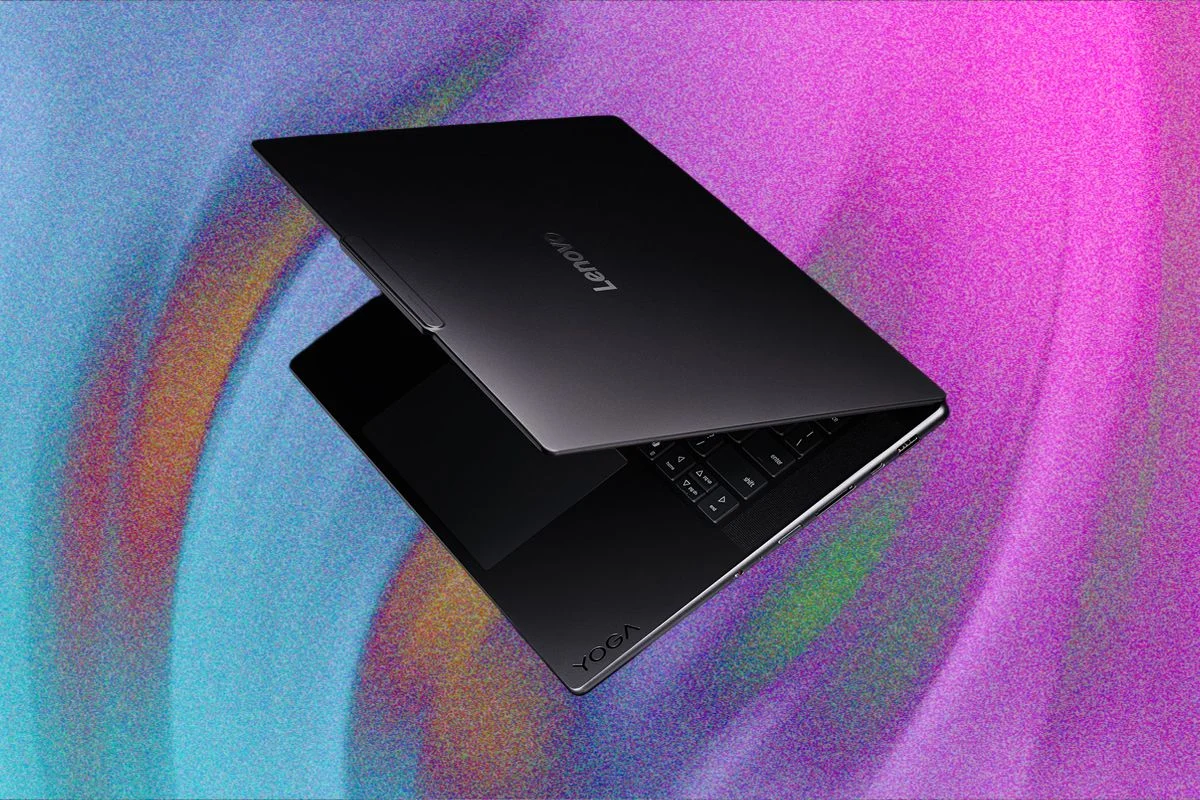
A highlight of the IFA 2026 exhibition was the debut of the Lenovo Yoga 9n 2-in-1, a 16-inch laptop representing the vanguard of RTX Spark-equipped machines. This device positions itself as a direct competitor to Apple’s premium MacBook Pro line, not only in raw performance but also in design and user experience. The Yoga 9n immediately impresses with its premium aesthetic, featuring a chassis enveloped in rounded metallic edges and exceptionally thin display bezels, conveying a sense of sophisticated craftsmanship.
The visual experience is spearheaded by a vibrant OLED touch display boasting a sharp 2880 x 1800 resolution and a fluid 120-Hz refresh rate, catering to both creative professionals and general users demanding crisp visuals and smooth motion. Further enhancing its high-end appeal are a six-speaker sound system, engineered for immersive audio, and a high-resolution 9.2-megapixel webcam, crucial for today’s video-centric communication and content creation.
Dimensionally, the Yoga 9n 2-in-1 maintains a svelte profile, measuring just 0.69 inches thick. This slender design is a testament to the efficiency of Nvidia’s Arm-based RTX Spark superchip, which integrates a Grace CPU with up to 20 cores and a Blackwell RTX GPU featuring up to 6,144 cores. Unlike traditional Windows laptops that often rely on separate CPU and discrete GPU components, the RTX Spark consolidates the CPU, GPU, and memory into a single system-on-a-chip (SoC) architecture. This integrated design shares a philosophical kinship with Apple’s acclaimed Silicon chips, enabling tighter integration, lower latency, and enhanced power efficiency. Based purely on core count, the integrated GPU within the RTX Spark theoretically positions its graphics capability somewhere between Nvidia’s RTX 5070 Ti and RTX 5080 laptop GPUs available in current market offerings, suggesting substantial graphical horsepower for creative tasks, gaming, and, crucially, AI acceleration. While specific battery life figures were not disclosed, the inherent efficiency of an Arm-based SoC is expected to yield significant improvements in endurance compared to x86 systems with discrete GPUs. Nvidia has also indicated that lower-powered configurations of the chip will be available, though the full breadth of performance options remains to be detailed.

For users preferring a slightly more compact form factor, Lenovo also announced the Yoga Pro 9n, a 15-inch model that was not physically available for viewing at the show. This model largely mirrors the premium design language and high-end features of its 16-inch sibling, including the rounded edges, enhanced webcam, and a generously sized haptic touchpad. Its 15-inch OLED screen features a 2560 x 1600 resolution. The Yoga Pro 9n distinguishes itself by being marginally thinner at 0.66 inches at its slimmest point. A notable innovation is its Force Pad touchpad, which offers stylus support, allowing users to write or draw directly on the pad using accessories like the Yoga Pen Gen 2, catering specifically to artists and designers.
Memory configurations also differentiate the models, with the Yoga 9n 2-in-1 supporting up to 64 GB of RAM. The "Pro" designation of the Yoga Pro 9n is partly justified by its more expansive memory options, extending up to 128 GB of RAM. This higher memory capacity is particularly critical for running larger, more complex AI models locally.
Beyond Lenovo, other major PC manufacturers are embracing the RTX Spark platform. The fall lineup of RTX Spark-powered laptops is expected to include the Dell XPS 16, Asus ProArt P16, and Microsoft Surface Laptop Ultra. These larger form-factor laptops appear to be strategically aimed at the creator and AI enthusiast demographics, underscoring the industry’s focus on powerful, AI-capable mobile workstations. For users seeking a more portable option, the HP OmniBook X 14 stands out as the sole 14-inch model announced thus far.

The Rise of Local AI Desktops: "AI Boxes"
The overarching impetus behind these new computing devices is the provision of robust hardware capable of running sophisticated on-device AI models locally. This paradigm shift reduces reliance on cloud-based AI services, offering significant advantages in terms of data privacy, reduced latency, and potential cost savings. Running agentic AI workflows locally ensures that sensitive personal data, such as financial information, email content, or proprietary business data, remains entirely on the user’s device, mitigating privacy concerns associated with cloud processing.
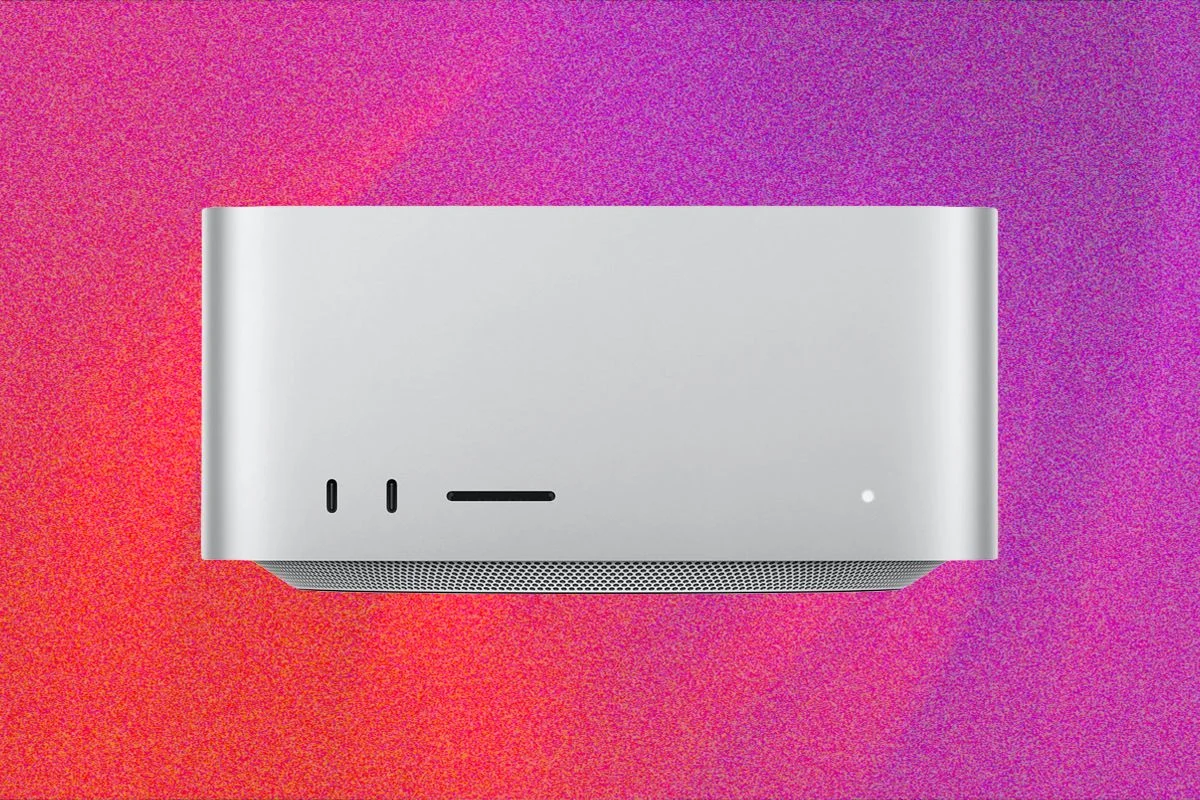
In the mini PC segment, Acer introduced its Acer SFF RTX Spark, a compact desktop solution. This follows the earlier reveal of Asus’s ProArt Mini PC (GR1X) at Computex 2026. Both mini PCs are designed to be comparable in size to Apple’s Mac Mini but pack a formidable punch, promising a "petaflop of AI performance" – a staggering computational capability crucial for demanding AI tasks. They support up to 128 GB of memory and are built around the same RTX Spark superchip at their core. These developments in the mini PC space are particularly timely, arriving just a week after Apple’s announcement of its M6 Mac mini and M5 Ultra Mac Studio, signaling a clear industry-wide trend toward powerful, efficient, and compact desktop computers optimized for local AI processing. The availability of such potent hardware is poised to play a crucial role in accelerating the mainstream adoption of on-device AI applications.

Nvidia, however, is not the sole player in this burgeoning market. Lenovo demonstrated its commitment to offering diverse AI hardware solutions by announcing the AMD-powered ThinkCentre X Ultra. This mini PC leverages AMD’s Ryzen Max+ Pro 495 chip, another high-performance processor gaining traction for local AI applications. Like its Nvidia-powered counterparts, the ThinkCentre X Ultra can be configured with up to 128 GB of memory, specifically tailored for resource-intensive agentic AI models. The Ryzen Max+ Pro 495 chip is also featured in other notable systems, such as the Framework Desktop, and AMD has made a developer kit with 128 GB of RAM available to foster innovation in local AI. The expected starting price for the base model of the ThinkCentre X Ultra is $3,699, underscoring the premium positioning of these high-capacity AI systems. This price point applies to the base configuration, with the maxed-out 128 GB version likely commanding an even higher premium.
The crucial missing element across many of these new announcements remains the final pricing for all configurations. The cost of high-capacity RAM has seen significant increases, making these AI-focused systems inherently expensive. To provide a comparative perspective, the most affordable Apple MacBook Pro equipped with an M5 chip starts at $2,349, but offers only 24 GB of RAM. For users requiring the maximum 128 GB of RAM on a MacBook Pro, the current market price ascends to $6,139. This comparison highlights that while these new RTX Spark and AMD-powered systems bring formidable local AI capabilities, they are positioned as high-end tools for professionals and enthusiasts, reflecting the significant investment in advanced chip design and high-density memory required to power the next generation of on-device artificial intelligence.