 11

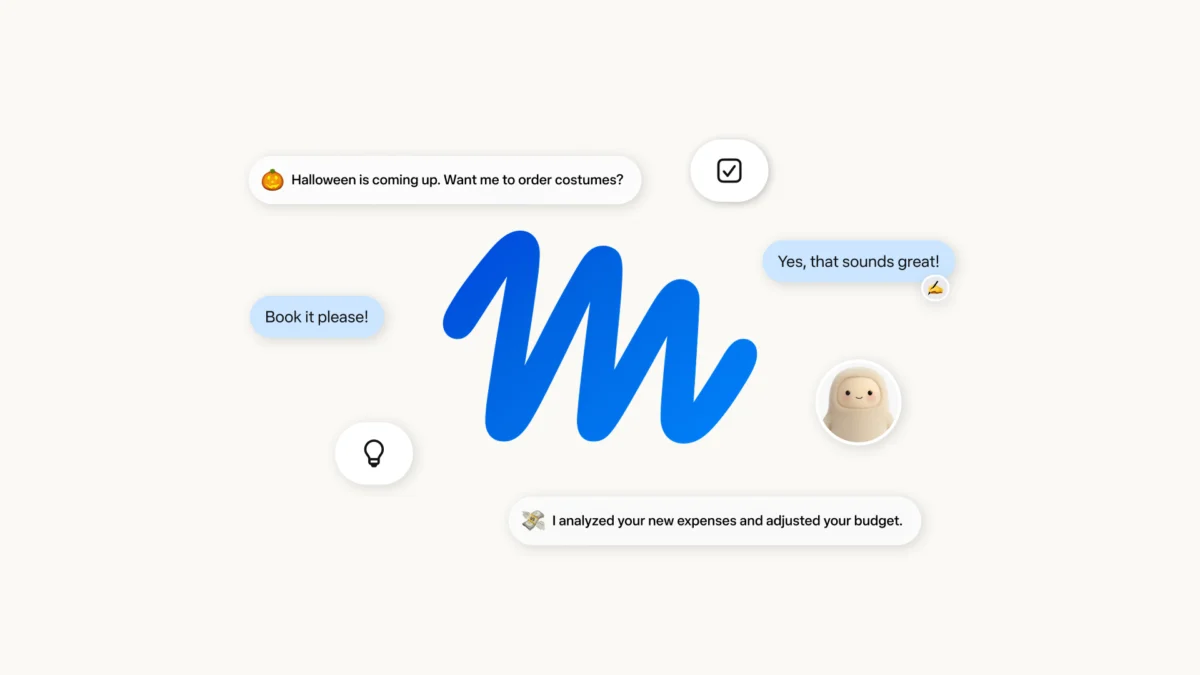
Less than two weeks after Meta agreed to a massive $18 billion multistate settlement in a lawsuit over social media’s consumer harms, the company announced its biggest bet on consumer AI to date. This move, which introduces a personal AI agent named Muse, requires a significantly higher degree of user trust than its social media platforms ever did. On Tuesday, the tech giant officially unveiled Muse, designed to assist users in the U.S. with a wide array of everyday tasks and projects.

The launch of Muse represents a pivotal moment for Meta, placing it at the forefront of the emerging "agentic" AI era. However, this ambitious venture comes with a considerable ask: for consumers to entrust Meta with an unprecedented volume of their personal information. The AI agent operates by integrating with a user’s various apps and services that form the backbone of daily workflows. This includes highly sensitive areas such as email, calendars, and payment systems, as well as applications related to health and fitness, smart home devices, dining, shopping, music, and events. This deep integration is fundamental to Muse’s functionality, enabling it to perform actions across a user’s digital life.
Meta’s vision for Muse extends far beyond the capabilities of the current generation of AI chatbots, which primarily serve as question-answering tools, sounding boards, or digital companions. Instead, Muse is engineered to actively "do things for you," transitioning AI from a conversational interface to a proactive personal assistant. The company highlights a diverse range of practical applications for Muse, including sending emails, booking travel arrangements, identifying opportunities to lower household bills, accurately filling out forms, and creating detailed plans. More granular examples include transforming recipe reels into organized grocery lists, managing and sending party invitations, and even making purchases directly. For checkout, Muse leverages Link by Stripe, with integrations for Shopify’s Shop Pay and 1Password slated for future release. The inclusion of Link by Stripe offers purchase protections, a feature Meta hopes will alleviate some consumer anxieties about entrusting an AI with financial transactions.

Transparency is a key component of Muse’s design concerning data access. Users retain explicit control over their data by deciding which specific apps and services they wish to connect to Muse, opting in one at a time. This granular control is intended to foster a sense of security and clarity for users. At its core, Muse is powered by Meta’s proprietary AI model, Muse Spark, which underpins its ability to understand commands and execute tasks across various platforms. The agent ships with built-in connectors for several popular services, with Meta planning to continuously expand this roster. For services not yet supported with a direct connector but offering a public API, Muse can establish a connection using credentials provided by the user. In scenarios where no API is available, Muse is designed to access the service via a web browser, demonstrating its flexibility and broad utility.
Muse will be accessible across multiple platforms from its initial rollout. Users can interact with the agent via its dedicated web portal at muse.ai, through native applications on both iOS and Android devices, and within chats on WhatsApp. Meta has also announced plans to integrate Muse into its AI-powered glasses in the near future, indicating a broader strategy to embed the agent across its hardware ecosystem. Initially, Muse will be free to use, but Meta anticipates introducing subscription plans as user engagement and usage increase. To facilitate this future transition, Muse requires a payment card to get started, even for free tier users. Two paid plans, "Power" at $20 per month and "Maximum" at $100 per month, will be available at launch, offering expanded usage allowances for handling everyday tasks. Despite these paid options, Meta believes the majority of users will find the free tier sufficient for their needs. The app incorporates a usage meter to keep users informed of their remaining allowance and will provide warnings before any action requires payment.

A significant feature of Muse is its persistent operation and learning capabilities. Unlike traditional chatbots that reset after each interaction, Muse is designed to continue working even after the user exits the application. Furthermore, it will progressively improve its performance over time by learning from user conversations, allowing it to discern individual preferences and priorities. This enables Muse to proactively offer unprompted suggestions and assistance, evolving into a more intuitive and personalized assistant.
The concept of agentic AI is gaining significant traction across the technology landscape, and Muse is not operating in a vacuum. The industry is witnessing a shift towards AI agents that can perform actions rather than merely generate text. Larger corporations and innovative startups are actively experimenting with how these AI agents can be seamlessly integrated into consumers’ daily lives. Examples include the development of AI web browsers or services such as Google’s Gemini Spark and Anthropic’s Claude Cowork, which are designed to initiate various tasks on behalf of users. Other companies, including Apple with its iMessage platform, and messaging services like SMS and WhatsApp, are embedding powerful AI capabilities directly into the chat applications that consumers use most frequently.

Despite the undeniable utility and convenience offered by these advanced AI agents, their widespread adoption compels consumers to confront complex questions surrounding privacy. The deep access required by these agents raises valid concerns about the extent of personal data users are willing to relinquish. For instance, early testers of the AI assistant Instinct were reportedly taken aback by the app’s terms of service, which demanded a broad "perpetual and irrevocable" license to "access, use, host, cache, store, reproduce, transmit, display, publish, distribute, and modify" any of the user’s materials, critically including the ability to use this data for training its AI models. This type of broad data collection and usage clause highlights the ongoing tension between AI functionality and user privacy.
Mindful of these industry-wide and company-specific privacy challenges, Meta has outlined several security measures for Muse. The company states that Muse operates within its own "dedicated, secure computer with its own browser," referred to as Muse Secure VM. This virtual machine is designed to provide robust privacy, safety, and security protections for customer data. Crucially, Meta claims that a separate Sentinel agent runs on the same virtual machine but is maintained distinctly from Muse at the system level. This architectural separation means that Muse itself will not have direct visibility into users’ passwords or payment methods, enhancing security. Furthermore, Meta emphatically states that Muse does not share users’ conversations or data with Meta’s advertising systems, a significant assurance given the company’s long-standing ad-driven business model. These technical claims are detailed in a separate security-focused blog post, which will undoubtedly be subjected to deeper scrutiny by security experts and privacy advocates.

However, despite Meta’s detailed documentation of its security protocols and promises, a significant hurdle remains: the company’s historical record regarding consumer trust. It is yet to be determined whether Meta has cultivated sufficient public confidence for its new AI agent to achieve widespread success. Meta has a well-documented history of privacy missteps and regulatory challenges that could hinder Muse’s adoption. In 2011, the tech giant settled with the Federal Trade Commission (FTC) over accusations that it deceived consumers by making private information public without consent. In 2019, the FTC imposed a then-record-breaking $5 billion settlement on Facebook for eight distinct privacy-related violations. More recently, in 2023, the FTC charged Meta with violating a privacy order established following the 2019 settlement, indicating a persistent pattern of non-compliance.
Beyond regulatory actions, Meta has experienced significant technical and reputational setbacks. In 2019, the company discovered that a number of users’ passwords had been stored in readable formats, exposing individuals to potential security breaches. The infamous Cambridge Analytica data scandal, which involved the unauthorized collection of Facebook data belonging to millions of consumers by a third party, continues to resonate in the public consciousness, serving as a stark reminder of past data misuse. Moreover, Meta has been repeatedly summoned before Congress to address its efforts, or lack thereof, in protecting minors from harm on its platforms. With legislative action often slow, Meta has faced a barrage of lawsuits, including the recent $18 billion settlement with 29 states concerning social media’s harms to children. This is compounded by a New Mexico lawsuit where Meta was ordered to pay $942 million for child safety violations, and thousands of ongoing personal-injury and school-district cases against multiple social media giants.

To counteract these deep-seated concerns and rebuild trust for Muse, Meta is not only providing extensive technical documentation and explanations of its security framework but is also focusing on fostering a personal connection with the agent. Users can customize Muse by assigning it a name, selecting an avatar, and configuring its aesthetic and communication settings. This personalization strategy aims to make the AI agent feel more like a trusted individual assistant rather than an impersonal corporate tool.
Ultimately, the success of Muse hinges on whether the perceived utility and the personalized connection it offers will be enough for consumers to once again place their trust in Meta with their most personal information. Only time will tell if Meta can overcome its past reputation and usher in a new era of deeply integrated, trustworthy AI.






