 11

Magna International, a prominent global automotive supplier headquartered in Aurora, Ontario, with an extensive presence across the auto industry value chain, is making a significant strategic bet on the Indian electric vehicle (EV) market. While the concept of battery swapping has faced numerous hurdles in achieving widespread adoption in many developed nations – primarily due to issues such as a lack of standardization, the high upfront capital expenditure for infrastructure, and the rapid advancements in conventional fast-charging technologies – Magna sees a unique opportunity in India. The subcontinent presents a distinct set of economic and logistical conditions that could enable battery swapping to thrive, particularly within its burgeoning electric two- and three-wheeler segments and the dynamic gig economy.
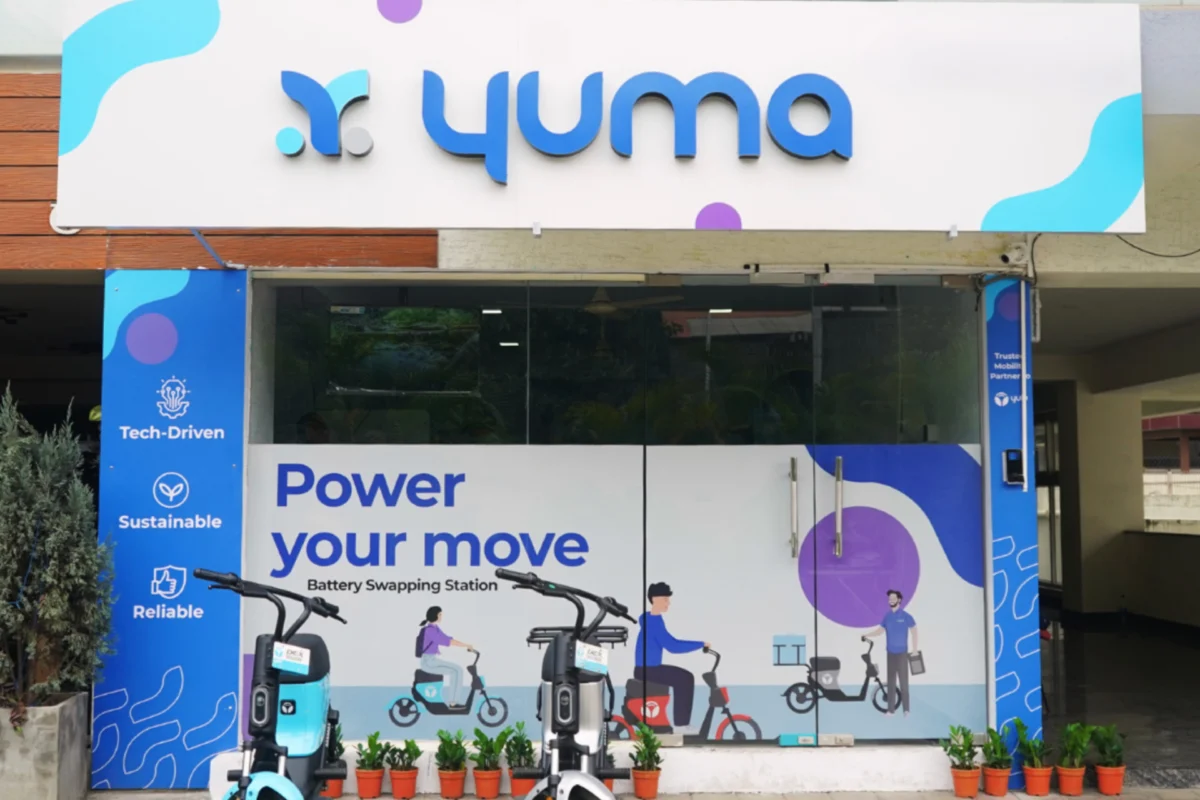
This ambitious vision is anchored in Magna’s investment in Yuma Energy, a Bengaluru-based enterprise specializing in battery-swapping networks for electric two- and three-wheelers. Yuma Energy, which originated as a spin-off from the Indian mobility startup Yulu in early 2023, has already demonstrated substantial operational scale. To date, Yuma has facilitated more than 60 million battery swaps across its network, deploying an impressive fleet of approximately 100,000 batteries. These figures underscore Yuma’s significant market penetration and its critical role in supporting the electrification of India’s light mobility sector.
Building on this foundation, Magna has further solidified its commitment to Yuma Energy with an additional investment of $35 million. This new capital injection will increase the auto supplier’s stake in the company, moving beyond the 51% share it initially acquired when the joint venture was established. Muthu Subramanian, Yuma’s managing director, confirmed this development in a recent interview. While the specific new ownership split was not disclosed, this fresh investment will result in the dilution of Yulu’s original 49% stake in Yuma.
Magna’s strategic focus on India is evident, as Yulu and Yuma represent the company’s sole startup investments in the country, a detail confirmed by Magna to TechCrunch. In 2022, Magna had initially committed a combined $77 million to these two businesses, with $25 million directed towards Yulu and $52 million allocated to the battery-swapping joint venture that would become Yuma. This long-term financial commitment highlights Magna’s conviction in the Indian market’s potential and the viability of the battery-swapping model within its specific context.
The latest investment by Magna is critically underpinned by the phenomenal growth of India’s gig economy. This sector, characterized by flexible, temporary, or task-based work, has expanded rapidly across India, fueled by increasing digital penetration, a large youth population, and the rise of e-commerce and on-demand services. Gig workers, especially those in the delivery and logistics sectors, rely heavily on two- and three-wheelers for their daily operations.
For these riders, time is directly proportional to earnings. The conventional method of charging electric vehicles (EVs) can lead to significant downtime, translating into lost revenue. Subramanian estimates that currently, only about 10% to 15% of the vehicles utilized by gig workers in India are electric. This statistic reveals an enormous untapped market and a substantial opportunity for operators like Yuma to expand their services as more gig workers transition from traditional gasoline-powered vehicles to EVs.
"With Indian gig workers’ high runtime on a daily basis, an EV makes absolute sense in terms of cost of ownership," Subramanian articulated to TechCrunch. He further emphasized, "Uptime is important." The transition to EVs offers considerable advantages in terms of reduced operational costs, including lower fuel expenses and potentially lower maintenance compared to internal combustion engine vehicles. However, these benefits can only be fully realized if the vehicles are consistently available for use, making "uptime" a critical factor for profitability in the gig economy.
Yuma Energy specifically targets these high-mileage riders, advocating that battery swapping offers a far more practical solution than conventional fast charging. Subramanian elaborated that a battery swap can be completed in under two minutes, a stark contrast to the 20- or 30-minute duration required for even a fast charge. Beyond the time saving, fast charging also demands more physical space and significant power infrastructure to simultaneously serve multiple vehicles, presenting logistical challenges, especially in densely populated urban areas. Battery swapping, by offering near-instantaneous power replenishment, minimizes idle time and maximizes a rider’s earning potential.
However, establishing and maintaining such a convenient and efficient swapping network is inherently capital-intensive. Yuma must proactively invest in batteries and swapping infrastructure, ensuring they are readily available even before peak demand materializes. "It’s a capital-intensive business, and the unit economics will play out at scale," Subramanian noted, highlighting the substantial upfront investment required to build a network that can achieve profitability through high utilization rates.
Despite the significant investments, Yuma is not yet profitable as an overall entity. Nevertheless, Subramanian revealed that some of its older swapping stations have already achieved EBITDA (Earnings Before Interest, Taxes, Depreciation, and Amortization) positive status, indicating operational efficiency at those specific locations. The firm currently operates an extensive network comprising more than 400 swapping stations equipped with over 2,500 charging units. For the financial year ending March 2026, Yuma reported revenues of approximately ₹1 billion (about $10.5 million). Looking ahead, the company is targeting overall EBITDA break-even within the next two quarters, a crucial milestone in its journey towards sustainable profitability.
To achieve its ambitious growth and profitability targets, Yuma plans to strategically deploy the bulk of Magna’s latest investment. The funds will be primarily directed towards significantly expanding its swapping infrastructure and doubling its current fleet of approximately 100,000 batteries over the next 12 to 18 months. This expansion is vital to meet growing demand and accommodate a broader customer base.
Historically, Yulu, the mobility startup from which Yuma spun out, has accounted for the vast majority of Yuma’s impressive 60 million lifetime swaps. However, Yuma is actively working to diversify its customer base. In the latest quarter, approximately 15% to 20% of swaps originated from customers other than Yulu, indicating a gradual reduction in dependence on a single client. Yuma currently serves more than five different fleets and has successfully integrated its batteries with over 10 vehicle platforms, including models from manufacturers such as Kinetic Green, Motovolt, BGauss, and Quantum Energy. This diversification strategy is expected to gain further momentum, with Yuma projecting that non-Yulu customers will contribute around 25% of its total swaps within the next two years.
This diversification is particularly important given Yulu’s own growth trajectory. Earlier this month, Yulu secured $93 million in funding to further expand its electric two-wheeler fleet. As Yulu scales its operations, Yuma will need to commensurately expand its network to keep pace with its largest customer’s demands while also accommodating newer fleets adopting its battery-swapping solution.
Geographically, Yuma currently operates its battery-swapping network across 18 Indian cities, including major metropolitan hubs like Bengaluru, Hyderabad, Mumbai, and the Delhi region, as well as other significant urban centers such as Jaipur, Lucknow, Indore, Coimbatore, Kochi, and Kolkata. With the fresh capital infusion, the firm plans to extend its footprint into Chennai and Pune in the coming quarters, simultaneously augmenting the number of stations in its existing operational cities.
While India will remain Yuma’s primary strategic focus for at least the next 12 to 18 months, Subramanian indicated to TechCrunch that the company harbors longer-term aspirations to expand its model internationally. Potential target markets include Southeast Asian nations such as Vietnam and Thailand, as well as various parts of Africa. These regions are deemed attractive due to their large and rapidly growing two-wheeler markets, presenting similar economic and logistical opportunities for battery swapping as observed in India. However, Yuma is still in the preliminary stages and has not yet initiated formal discussions regarding entry into these overseas markets.
A distinctive advantage that sets Yuma apart from many other operators in the battery-swapping space is its integrated approach. Unlike companies that merely manage swapping networks, Yuma actively designs and manufactures its own proprietary battery packs and charging units. The firm’s battery packs are produced at its facility in Chennai, while its charging units are manufactured in Bengaluru. This vertical integration grants Yuma comprehensive control over both the hardware components and the sophisticated network management systems that underpin its operations. This control ensures superior quality, facilitates rapid innovation, optimizes cost efficiencies, and enables seamless integration, providing a competitive edge in a nascent but rapidly evolving market.
Magna International’s continued investment in Yuma Energy underscores a profound belief in the viability of battery swapping as a transformative solution for India’s electric mobility landscape, particularly within its dynamic gig economy. By addressing critical issues of uptime and cost-efficiency for delivery riders, Yuma, with Magna’s strategic backing, is poised to play a pivotal role in accelerating the adoption of electric two- and three-wheelers across the subcontinent and potentially beyond.






