 11

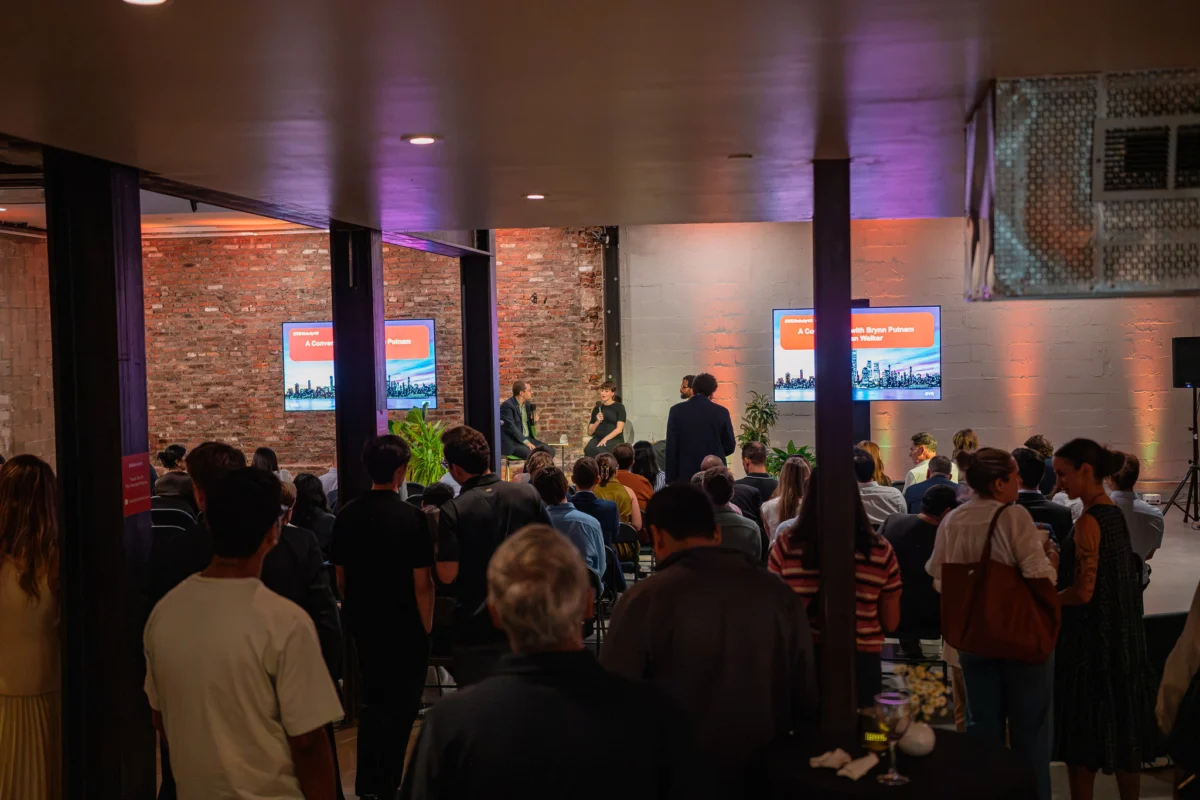
Brynn Putnam and Tristan Walker represent a rare breed of entrepreneur, having already achieved what most founders only dream about: building companies so compelling they were acquired by industry giants. Putnam, a trained ballerina who initially founded a small chain of boutique fitness studios, later created Mirror, the innovative connected-fitness company. Less than three years after its inception, Mirror was sold to Lululemon for a staggering $500 million in cash, a testament to its rapid success and market impact. Similarly, Tristan Walker, who honed his skills as an intern at Twitter during his Stanford business school days, established Walker & Company Brands, a popular men’s grooming brand. Five years later, he sold it to Procter & Gamble for an undisclosed sum, reportedly in the range of $20 million to $40 million.
That these two accomplished individuals are now embarking on new entrepreneurial journeys is less surprising than the distinct nature of their latest endeavors. It’s a common observation that founders often find the transition to working within larger corporate structures less fulfilling. Putnam herself has hinted that her role as a General Manager inside Lululemon was not her ideal fit, while Walker spent five years within Procter & Gamble before deciding to strike out on his own once more. What unites their seemingly disparate new companies, Board and Heirloom, is a shared fundamental objective: to bring people together, physically, in the same room, fostering real-world interaction in an increasingly digital age.
Putnam’s new venture, Board, manifests this vision through a 24-inch touchscreen table designed explicitly for communal use. This innovative device recognizes not only physical game pieces but also gestures, creating an interactive experience for a group rather than a solitary individual engaging with a screen. Meanwhile, Walker’s Heirloom is strategically acquiring and scaling fine-craft trade schools, beginning with a notable leatherworking school in San Francisco. This particular institution was founded by Hermès’s first American artisan-ambassador, signaling a commitment to high-quality, traditional craftsmanship. In parallel, Walker is also at the helm of Collaborative Holdings, a fund carved out by the venture firm Collaborative Fund. This unique fund aims to provide founders who are running profitable, cash-flow-positive businesses – like Walker himself – the autonomy to grow on their own terms, free from the often intense pressure to chase venture-style returns.
On the surface, a high-tech game console and a traditional leathercraft school appear to have little in common. However, both founders are pursuing the same overarching goal: to rekindle a form of connection they believe has been eroded by technology over the past decade. Crucially, both are convinced that there is significant financial opportunity in restoring these vital human links.
The timing of this pivot towards fostering connection is far from accidental. In June of the previous year, the World Health Organization’s Commission on Social Connection formally designated loneliness as a critical global health challenge. Their findings are stark, estimating that one in six people worldwide are affected by loneliness, a condition linked to approximately 870,000 deaths annually. This official recognition underscores the urgent societal need that these entrepreneurs are aiming to address.
The market opportunity to tackle this challenge is also expanding rapidly for those attuned to it. A Harris Poll survey, sponsored by Marriott Bonvoy earlier this year, revealed that a significant two-thirds of Americans are prioritizing experiences, such as travel, over material purchases. The same percentage also expressed dissatisfaction with the current retail landscape, describing it as too generic, with many retailers appearing and feeling identical. This consumer shift highlights a growing appetite for authentic, engaging, and personal experiences that stand in contrast to mass-produced goods and ubiquitous digital interactions.
Interestingly, entrepreneurs based on the East Coast seem to be gravitating more naturally to this burgeoning space, at least for the time being. Alongside Putnam and Walker, other prominent founders whose newest businesses are centered on connection include Andy Dunn, known for founding Bonobos, and Audrey Gelman, co-founder of The Wing.
Dunn’s company, Pie, now five years old, has undergone a notable evolution. It began as a friend-matching application, then transitioned into an event-discovery tool, and is currently positioned as what Dunn describes as a "social life operating system." This system is anchored by "Community Homes," which serve as permanent digital hubs for recurring social groups like run clubs or watch parties, aiming to facilitate ongoing real-world engagement.
Audrey Gelman’s journey with connection-focused ventures is also notable. Her previous company, The Wing, sought to build a business around bringing women together in physical co-working and social spaces. However, it faced significant challenges and ultimately folded during the pandemic amidst accusations regarding the equitable treatment of its staff. Undeterred, Gelman has now found a different, perhaps more intimate, approach to achieving a similar goal. Her current venture, The Six Bells Countryside Inn, is an 11-room guesthouse nestled in the scenic Hudson Valley. The inn hosts a monthly murder-mystery dinner, an event where actors blend into the crowd, and by dessert, a fictional death occurs. The mystery itself is designed to be somewhat whimsical, and its effect on guests is profound. A New York Times feature on the inn this past summer highlighted that visitors routinely linger in the bar past midnight, exchanging contact information with strangers, underscoring the success of its communal design.
At a recent StrictlyVC evening event held in New York’s West Village, Brynn Putnam offered candid insights into her entrepreneurial philosophy. She revealed that Mirror was very much built around her personal life circumstances at the time. Pregnant with her first child and simultaneously managing brick-and-mortar fitness studios, she sought to replicate that studio experience at home through technology. As she articulated it, Mirror was about using technology to focus on "myself, my body, my fitness, my reflection."
Board, her new company, was conceived with an entirely opposite philosophy. Now a mother of five in a blended family – her household dramatically expanded from three people to seven – Putnam frequently encountered a recurring challenge: the absence of any product on the market that allowed people of vastly different ages and abilities to play together meaningfully. The driving question behind this pivot, she explained, became: "How can we use tech to create a shared experience?" She clarified that this was not a "movement from digital to analog," but rather a thoughtful exploration of "how can we use tech to bring people together rather than take them apart." This ethos is reflected in Board’s design; its touchscreen recognizes physical objects placed upon it – a spaceship triggers an action, a knife performs a cut – rather than relying on traditional controllers with buttons and joysticks. This intuitive interaction eliminates a shared learning curve, enabling a child and a grandparent to play the same game seamlessly.
Tristan Walker harbored a similar instinct, but his stemmed from a deep-seated anxiety regarding the potential impact of artificial intelligence on both work and community. He founded Heirloom, he stated, due to concerns about AI "stealing knowledge work" and further isolating individuals. If he were to build another company after Walker & Company, he was determined that its core mission would be to bring people back together.
This represents a fascinating and potentially prescient bet. Speaking at the same StrictlyVC event, Walker articulated his belief that the U.S. has, for decades, "forgotten how to transmit mastery" in various fine crafts, including leatherworking, watchmaking, and fragrance design. He argued that for 50 years, America has broken the chain from master to apprentice, largely due to offshoring production and stripping manual skills of their prestige. Apprenticeships, he contended, became seen as a last resort for those unable to pursue a four-year college degree.
Heirloom is a wager that this trend is now reversing. Walker supported this assertion with compelling data, informing the room full of founders and investors that roughly half of Gen Z and Gen Alpha express no desire for a four-year degree at all. In fact, he noted that more than half of the current capacity at Heirloom’s inaugural San Francisco location is filled not by career-changers or retirees, but by young tech workers actively seeking what he terms a "phones-down creative outlet." This indicates a strong demand for tangible, skill-based engagement away from digital screens.
Financially, the dollars involved in most of these new ventures are relatively modest by typical venture-backed startup standards. Putnam’s three-year-old company, Board, has secured $35 million from venture capitalists. Pie has raised $24 million, and The Six Bells has garnered approximately $3.8 million. Heirloom, founded just 11 months ago, has not yet disclosed its funding figures.
A notable exception to this pattern is Adam Neumann, co-founder of WeWork. His new residential real estate venture, Flow, which is explicitly marketed around the premise of solving loneliness through thoughtfully designed physical spaces, has attracted over $450 million in funding, predominantly from Andreessen Horowitz. This colossal sum dwarfs the combined investments received by all the other companies discussed in this narrative.
Indeed, it remains to be seen whether "togetherness" will evolve into its own substantial investment category. The challenge of persuading strangers to connect and show up for each other – however beneficial it may be for society – is inherently less scalable than simply shipping software. What is particularly noteworthy, however, is the caliber of the individuals leading these companies: Putnam, Walker, Dunn, Gelman, and Neumann have all successfully built a recognizable brand at least once before.
This track record significantly eases the process of raising capital, providing investors with a degree of confidence that these founders possess the acumen to build products and services that people will genuinely buy. Each of them has previously demonstrated an ability to correctly anticipate market trends and consumer desires. The coming year or two will reveal whether a sufficient number of customers will follow them into this new, connection-focused frontier.






