11

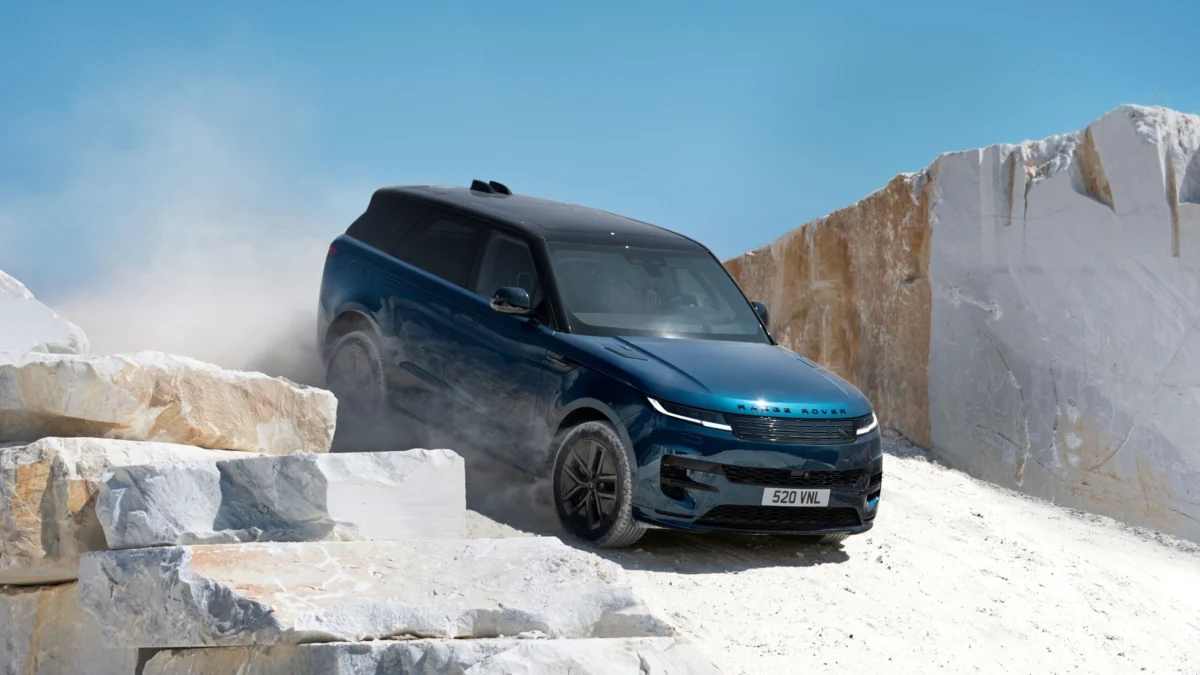
JLR has officially launched the Range Rover Sport Electric, a significant addition to its growing portfolio of electrified vehicles. The unveiling, though conducted with considerably less public fanfare, strategically positions itself between the highly anticipated debut of the full-fat Range Rover Electric at the beginning of September and the upcoming final reveal of the much-buzzed-about Jaguar Type 01 in New York City next week. This quieter introduction, however, belies the immense importance of the all-electric Sport for the British luxury automaker, particularly as it navigates a challenging period marked by significant restructuring.
The Range Rover Sport has long been a pivotal model for JLR, frequently rivaling or even surpassing the sales figures of its flagship sibling, the Range Rover. Its slightly more accessible price point and sportier driving dynamics have resonated strongly with a broad segment of luxury SUV buyers globally. This all-electric iteration, therefore, arrives at a critical juncture for an embattled JLR, which recently announced plans to cut 4,000 jobs over the next two years as part of a broader strategy to streamline operations and accelerate its transition to an electric future. The success of the Range Rover Sport Electric is not merely about expanding an EV lineup; it is integral to JLR’s financial health, market relevance, and its ability to compete effectively in an increasingly competitive and rapidly evolving automotive landscape.
From an engineering perspective, JLR asserts that the Range Rover Sport Electric boasts the stiffest body structure of any Range Rover Sport model to date. This enhanced rigidity is a direct consequence of the integrated battery placement, which forms a fundamental part of the vehicle’s chassis, contributing significantly to its overall structural integrity. Furthermore, this design approach also results in the lowest center of gravity across the entire Range Rover Sport range, a crucial factor that profoundly impacts the vehicle’s handling characteristics and dynamic stability.
Performance-wise, the electric Sport promises an exhilarating experience. It features a torque response that is a remarkable 50 percent faster than that of the recently revealed Range Rover Electric, indicating a highly tuned and responsive powertrain designed for agility and immediate power delivery. Crucially, the Sport shares the same fundamental powertrain architecture with its larger Range Rover Electric sibling, comprising two potent 260-kilowatt electric motors. However, it benefits from distinct tuning tailored to its sporty persona. These motors collectively unleash an impressive 550 pferdestärke (PS) – equivalent to roughly 542 horsepower – and a formidable 850 Newton-meters (Nm) of torque. This makes the Range Rover Sport Electric the most powerful Range Rover Sport ever produced, surpassing all previous internal combustion engine variants. When engaged in the EV’s specialized Dynamic Launch Mode, the vehicle can rocket from a standstill to 60 mph in a mere 4.3 seconds, firmly placing it in the realm of high-performance SUVs.
Pricing for the Range Rover Sport Electric starts from £109,810 in the UK, although US pricing details have yet to be announced. This positions it as a premium offering, albeit at a lower entry point than the flagship Range Rover Electric, consistent with the Sport’s traditional market positioning.
Powering the Range Rover Sport Electric is a substantial 118.5-kilowatt-hour battery pack, designed to deliver impressive range capabilities. Under the Worldwide Harmonised Light Vehicles Test Procedure (WLTP) standard, Range Rover claims the Sport will achieve up to 374 miles on a single charge. Recognizing the stricter nature of the US Environmental Protection Agency (EPA) testing, this WLTP figure is projected to translate to approximately 320 miles of real-world range under EPA’s more rigorous protocols, providing a robust and practical driving distance for most users.
Charging capabilities are equally advanced, featuring split-charging technology and an 800-volt electrical architecture. This high-voltage system is a hallmark of modern, rapid-charging electric vehicles, enabling significantly faster replenishment of the battery. Under ideal charging conditions, the Range Rover Sport Electric can add 136 miles of range in as little as 10 minutes. Furthermore, a 10 to 80 percent charge can be completed in just 22 minutes, minimizing downtime and enhancing the practicality of long-distance electric travel. The 800-volt system not only facilitates quicker charging but also contributes to greater overall efficiency and potentially allows for lighter cabling within the vehicle.
Beyond its straight-line performance, the Range Rover Sport Electric is engineered for dynamic driving on pavement and formidable capability off-road, upholding the brand’s legendary heritage. It incorporates sophisticated technologies such as all-wheel steering, which enhances maneuverability at lower speeds by turning the rear wheels in the opposite direction to the front, and improves stability at higher speeds by turning them in the same direction. The vehicle also features electronic Active Roll Control, a system capable of applying up to 1,400 Nm of force across each axle. This advanced technology actively counters body roll during cornering, ensuring "maximum composure" for occupants and maintaining optimal tire contact with the road surface, crucial for both comfort and spirited driving.
Further augmenting its dynamic prowess is an adaptive dynamics system that continuously monitors 100 different vehicle parameters—including steering angle, throttle position, brake pressure, and suspension movement—an astonishing 500 times per second. This constant, real-time analysis allows the system to instantaneously adjust suspension settings, providing greater control over body roll and pitch during cornering or braking, thereby optimizing both ride comfort and handling precision. For off-road enthusiasts, the Range Rover Sport Electric retains the brand’s renowned go-anywhere capability, capable of wading through water up to 900 mm deep and confidently tackling steep 45-degree inclines, demonstrating that electrification has not compromised its rugged credentials.
As a final touch, JLR has incorporated subtle yet effective aerodynamic optimizations. An "aerodynamically-optimized" grille and specially designed alloy wheels contribute to reduced drag, which in turn can extend the driving range by up to 10 extra miles at typical motorway speeds. This attention to detail highlights JLR’s commitment to maximizing efficiency and real-world usability.
While the all-electric model takes center stage, JLR will continue to offer Plug-in Hybrid Electric Vehicle (PHEV), gasoline, and diesel versions of the Range Rover Sport, catering to diverse global markets and customer preferences during the ongoing transition to full electrification. The Range Rover Sport Electric enters a burgeoning and highly competitive segment, poised to go head-to-head with established luxury performance electric SUVs. Its direct rivals include the Porsche Cayenne Electric, the BMW iX xDrive60, and the Lotus Eletre 600. Notably, the Porsche Cayenne Electric starts approximately £20,000 cheaper than the Range Rover Sport Electric, suggesting JLR is positioning its offering at the premium end of the segment.
An interesting dynamic in the competitive landscape involves the Polestar 3 Dual Motor, another high-performance electric SUV that would typically be a direct competitor. However, in the United States, Polestar faced a significant setback earlier this year when it was banned from selling its cars. This ruling stems from a US law prohibiting Chinese software in new internet-connected vehicles. Despite Polestar’s Swedish branding and design heritage, its majority ownership by Chinese automotive giant Geely triggered the ban, effectively making Polestar the first major casualty of this specific US regulatory framework. This development underscores the complex interplay of technology, geopolitics, and trade policies impacting the global automotive industry, particularly in the rapidly expanding EV sector.
In summary, the Range Rover Sport Electric represents a crucial strategic move for JLR, blending the Sport’s characteristic performance and luxury with advanced electric vehicle technology. Its introduction is a testament to the brand’s commitment to electrification amidst broader corporate challenges and intense market competition, particularly in the high-stakes luxury EV SUV segment. Its success will be a key indicator of JLR’s ability to navigate the future of automotive mobility.