11
11
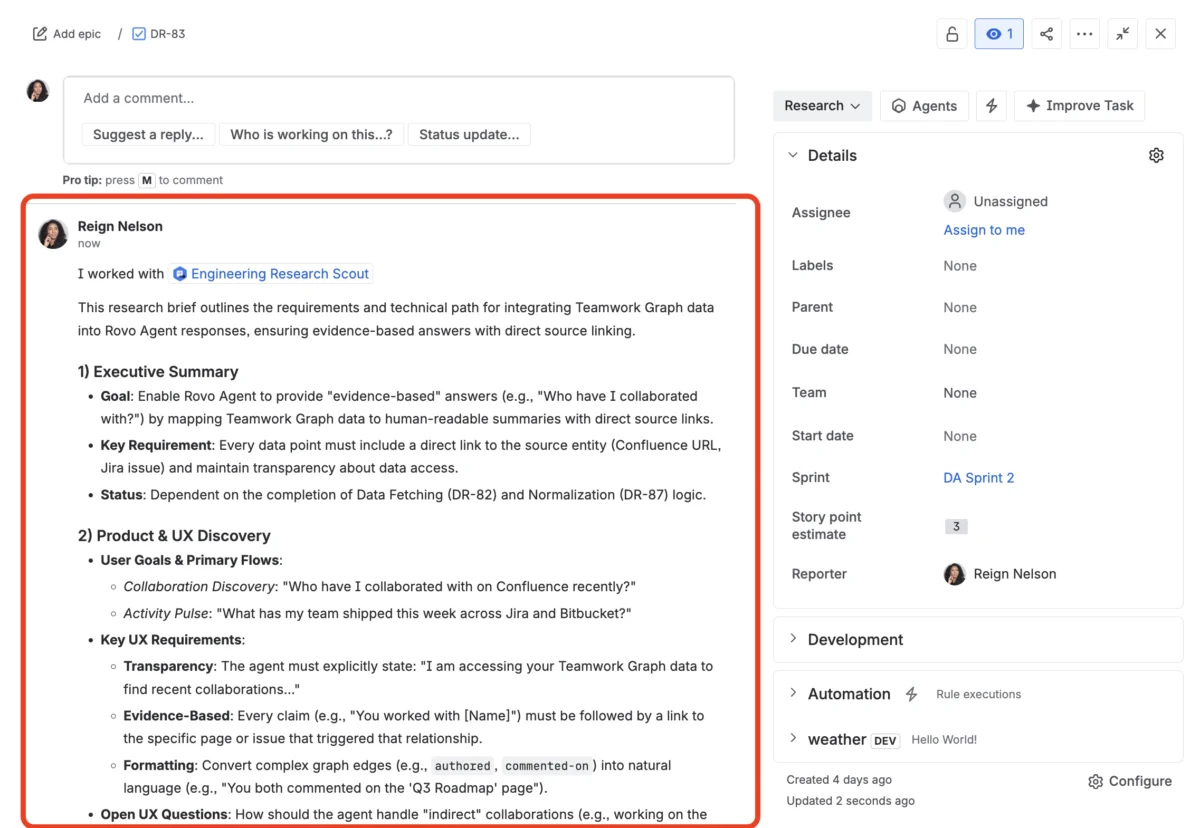
The role of project management software is undergoing a fundamental transformation as Atlassian’s Jira transitions from a traditional system of record into a dynamic delegation layer for software development teams. Traditionally utilized as a platform for tracking work through status updates and ticket closures, Jira is now being reimagined as a central hub where work is seamlessly transitioned between human developers and specialized artificial intelligence agents. This shift was recently highlighted through an experimental workflow that mapped AI agent capabilities directly to the various functions of a software team, effectively automating significant portions of the software development lifecycle (SDLC).
The experiment was rooted in the concept of utilizing Jira not just as a historical log of completed tasks, but as a routing engine for autonomous agents. By assigning specific agents to work items within a Jira board, the platform facilitates a workflow where the board itself handles the coordination and movement of tasks between different stages of production. The objective of the study was to determine the efficiency of a system where each stage of the SDLC is managed by a specialized agent, with the human developer serving as the final authority and reviewer at each transition point.
To test this hypothesis, a real-world feature was selected for development within a Forge application known as Launchpad. Launchpad is a tool designed to allow developers to iterate on ideas with an AI agent before transitioning those ideas into actionable team projects. The specific feature chosen for the experiment was a "Teamwork Graph-powered context discovery layer." The functional goal of this layer was to automate the gathering of organizational context before the implementation of any new feature began. Specifically, the system was designed to surface related Jira issues, relevant Confluence pages, established implementation patterns, known project blockers, and the specific stakeholders who possessed existing context on the problem.
The complexity of this feature—which required research, planning, implementation, and quality assurance—provided a robust environment for pressure-testing assignable agents. Rather than treating the project as a single coding task, the workflow was structured to reflect the natural boundaries of a professional software team. This resulted in a four-stage SDLC model consisting of Research, Planning, Implementation, and Review. The Jira board was subsequently updated to reflect these stages, with each column representing a distinct phase of the development process rather than a generic status.

The design of the workflow introduced a significant shift in how work was delegated. In this model, the column on the Jira board determined ownership. When a work item resided in a specific column, that stage "owned" the task. To facilitate this, four specialized agents were created using Atlassian’s Rovo Studio. Each agent was mapped to one of the four stages of the Jira board. The automation was configured such that moving a ticket into a new column would automatically trigger the corresponding agent to begin its specialized task.
The integration of Rovo MCP (Model Context Protocol) allowed for the creation of work items directly from a developer’s local environment. By describing a feature in a single sentence, the Rovo MCP generated a Jira work item complete with a title, description, and the necessary scaffolding to initiate the workflow. This process emphasized the importance of intentionality in project descriptions. Unlike human engineers, who can ask clarifying follow-up questions, AI agents are heavily dependent on the initial intent provided by the user. However, the multi-stage workflow mitigated the need for exhaustive initial documentation, as the Research and Planning stages were specifically designed to refine the initial prompt into a technical reality.
The first stage of the automated workflow occurred in the Research column. Upon the ticket’s entry, the Research Agent scanned the organization’s Teamwork Graph to identify relevant historical data. Instead of a developer manually searching through archives of Jira tickets and Confluence documentation, the agent surfaced the necessary organizational context within seconds. The output of this stage included implementation guidance and identified potential blockers, which were then saved as comments on the Jira issue. These comments served as a permanent record of decisions and a shared context for the subsequent agents in the pipeline.
Once the research was reviewed and approved by the human developer, the ticket was moved to the Planning column. The Planning Agent then utilized the research findings to develop a concrete implementation strategy. This ensured that the subsequent coding phase was not based on a vague feature request but on a structured, reviewed, and researched plan. This sequence highlights the primary benefit of the agent-led workflow: the reduction of ambiguity. By the time a task reached the Implementation Agent, the requirements were highly refined, allowing the AI to generate code based on specific, approved parameters.
The Implementation Agent performed the actual coding based on the approved plan, followed by the QA Agent, which reviewed the results for errors or inconsistencies. Throughout this entire process, the human developer maintained control over the transitions. No work item moved from one stage to the next without a human reviewing the agent’s output and approving the move. This preserved the developer’s role as a decision-maker and judge of quality, while offloading the time-consuming tasks of information gathering and initial drafting to the AI.

The experiment revealed that the primary value of assignable agents lies not just in their speed, but in the structural clarity they bring to the development process. The workflow transformed the developer’s role from one of "chasing context" to one of "approving transitions." By delegating the heavy lifting of the pre-coding phases—research, planning, and discovery—to specialized agents, the human team members were able to focus on high-level judgment and strategic direction.
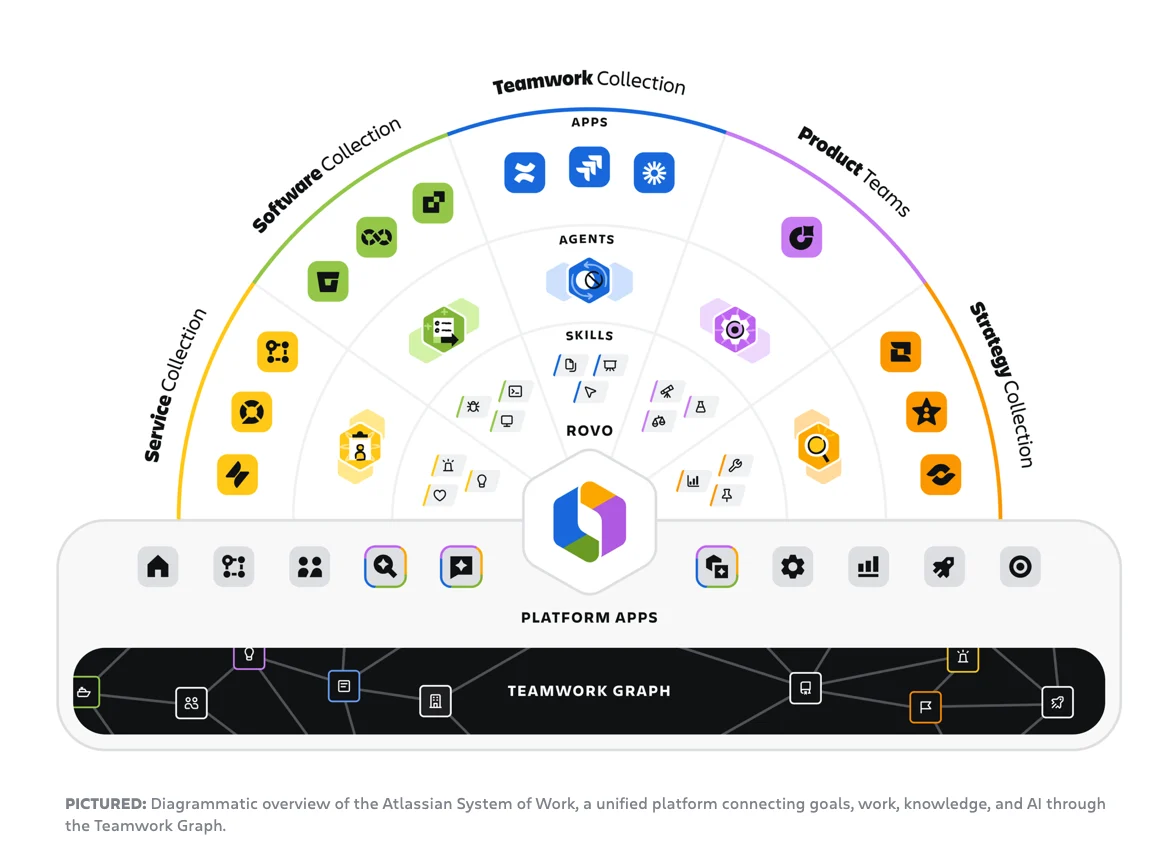
Atlassian’s ecosystem of tools, including Jira for coordination, Rovo Studio for agent creation, and Forge for application surfacing, provides the primitives necessary for teams to build these automated workflows. The experiment suggests that teams do not need to overhaul their entire process at once. Instead, a gradual implementation strategy is recommended. Organizations can start by automating a single column—typically the stage where context is most frequently lost or where ambiguity is highest, such as research or discovery.
The process for integrating a single AI agent into a Jira workflow involves four primary steps: identifying a bottleneck stage in the current SDLC, creating a specialized agent in Rovo Studio with instructions tailored to that stage, mapping that agent to a specific Jira column, and testing the delegation by moving a ticket into that column. As the reliability of the agent is established, additional columns and agents can be added to the sequence until a fully coordinated SDLC is achieved.
This pattern of assignable agents is not restricted to individual developers but is scalable across entire organizations and the Atlassian Marketplace. The primitives used in this experiment allow for the creation of standardized workflows that can be shared across teams or shipped by partners to thousands of customers. This modular approach to AI integration allows for the composition of complex, multi-agent systems that reflect the specific needs of different software environments.
Ultimately, the integration of AI agents into Jira boards represents a shift toward a more structured and less ambiguous software development process. By treating the project management board as a delegation layer, teams can ensure that work flows smoothly from concept to completion, with each stage handled by a specialized entity—whether human or AI—that is best suited for the task. This evolution allows developers to reclaim time spent on administrative and research-heavy tasks, focusing instead on the critical decisions that define successful software products. For organizations with Rovo enabled, the ability to build and assign these agents is currently available through Rovo Studio, marking the beginning of a new era in automated project coordination.