 11
11
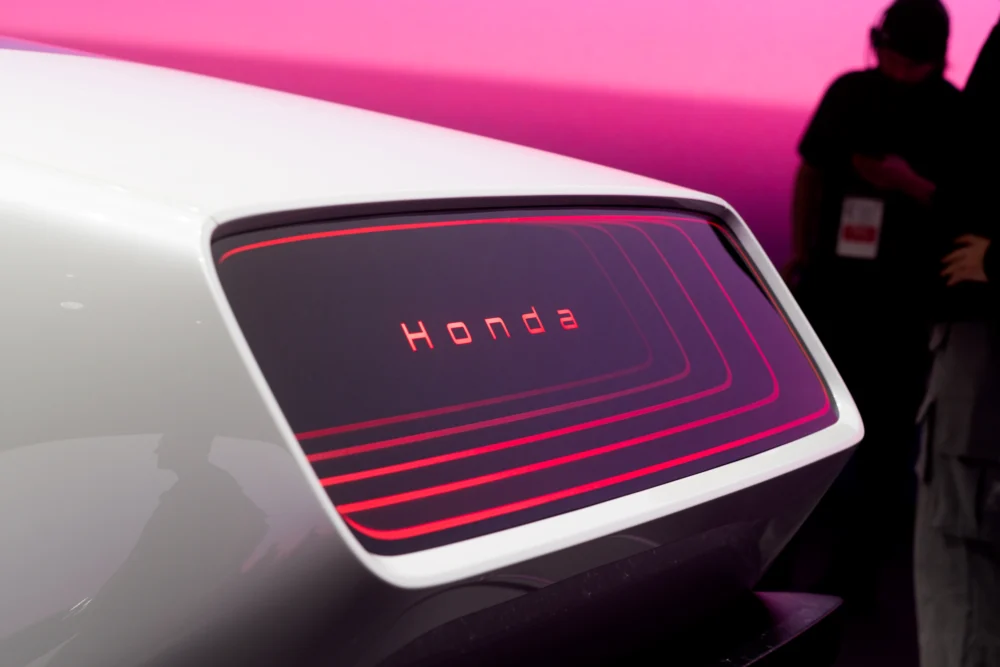
Honda, a storied legacy automaker, has made a dramatic retreat from its electric vehicle (EV) programs, a move that analysts suggest reflects a profound struggle to adapt to the automotive industry’s transformative shifts. This strategic pivot comes at a particularly challenging time for established manufacturers, grappling with fluctuating EV incentives and intense competition, most notably from rapidly ascending Chinese automakers. Honda’s decision to effectively dismantle its nascent EV ambitions risks leaving the company critically behind in two fundamental industry evolutions: the widespread adoption of electric drivetrains and the emergence of software-defined vehicles.
This week saw Honda take decisive action, significantly scaling back its EV development efforts, which had been characterized by limited progress and lukewarm market reception. The company initiated its pullback on Thursday by halting the development of three key models: the electric Acura RDX, the Honda 0 sedan, and the Honda 0 SUV. These vehicles were previously heralded as Honda’s first "ground-up" EVs, designed specifically for electric propulsion rather than adapting existing internal combustion engine (ICE) platforms. Despite their strategic importance, very little information about these models had been shared publicly, raising questions about their viability and Honda’s commitment. The cessation of EV development continued on Friday, with Automotive News reporting that Honda was also discontinuing production of the Prologue. Notably, the Prologue was not an in-house Honda design but a vehicle that was largely conceived and manufactured by General Motors, highlighting Honda’s previous reliance on external partnerships for its EV presence. This sequence of events signals a significant strategic reversal, effectively dismantling the limited momentum Honda had garnered in the electric vehicle sector.
Honda has publicly attributed its strategic shift to external economic pressures, specifically citing the impact of U.S. tariffs and the escalating competitive landscape dominated by Chinese EV manufacturers. While these factors are indeed significant challenges within the global automotive market, many industry observers contend that Honda’s difficulties run deeper, rooted in an inadequate and arguably misdirected EV strategy from its inception. The company’s approach has often been perceived as viewing an electric vehicle as merely a conventional car equipped with a different drivetrain—a perspective that has proven costly for many legacy automakers attempting the transition. This simplistic viewpoint risks overlooking the fundamental engineering, design, and philosophical shifts required for successful EV development and market penetration.
Missed EV Opportunities
The notion that transitioning to electric vehicles merely involves swapping fossil fuel components for electric motors and batteries is a profound miscalculation. Many automakers have discovered that attempting to integrate large battery packs and electric powertrains into platforms originally designed for internal combustion engines (ICE) often leads to suboptimal outcomes. Such vehicles frequently suffer from increased weight due due to necessary structural reinforcements, reduced efficiency resulting from compromises in battery packaging and aerodynamic profiles, and ultimately higher production costs compared to purpose-built EVs. These adaptations, while potentially shortening initial development cycles, yield products that are less competitive in range, performance, and overall user experience.
In contrast, when an EV is developed from the ground up on a dedicated electric platform, it unlocks immense opportunities to fundamentally rethink automotive design. This approach allows for optimized battery integration as a structural component, leading to superior chassis rigidity and safety. It enables better weight distribution, lower centers of gravity for improved handling, and more efficient use of interior space. Dedicated EV platforms can also significantly simplify vehicle architecture, reduce the complexity of wiring harnesses, streamline manufacturing processes, and ultimately contribute to lower production costs while enhancing vehicle performance and range.
Ford’s experience with the Mustang Mach-E serves as a illustrative example. While the Mach-E has achieved considerable sales success, it has not been a significant financial success for the company. Ford CEO Jim Farley acknowledged in a recent interview that legacy engineering decisions, particularly adapting a platform originally designed for the fossil fuel-powered Escape crossover, constrained the Mach-E’s efficiency and cost-effectiveness. He specifically highlighted that the Mach-E’s wiring harness, for instance, is 70 pounds heavier than Tesla’s—a detail that underscores how seemingly minor inherited design compromises can compound into significant inefficiencies in a product as complex as an automobile.
By retracting its EV programs, Honda stands to miss crucial learning opportunities across multiple vital domains. This includes invaluable "learning by doing" in both the advanced research and development phases and the specialized manufacturing processes unique to electric vehicles. Furthermore, the company will forgo the critical chance to cultivate new supplier relationships for essential EV components like advanced batteries, power electronics, and charging infrastructure, as well as establishing robust new supply chains tailored for the electric era. Perhaps most critically, Honda will be deprived of receiving direct and essential customer feedback. This iterative feedback—insights into what consumers truly value, desire, and expect from their electric vehicles regarding range, charging, software, and overall ownership experience—is indispensable for continuous product improvement and maintaining market relevance in a rapidly evolving sector.
Sayonara, Software-Defined Vehicles
Beyond the powertrain transition, Honda’s retreat also jeopardizes its position in the second major disruption sweeping the automotive industry: the rise of the software-defined vehicle (SDV). An SDV is fundamentally characterized by its core capabilities being primarily driven and enhanced by software, allowing for continuous upgrades, the introduction of new features, and performance improvements over the vehicle’s lifespan, frequently delivered through seamless over-the-air (OTA) updates.
Consumers who have experienced modern EVs from companies like Tesla, Rivian, BYD, Nio, or Xiaomi have grown accustomed to a superior digital experience. This includes frequent software updates that not only fix bugs but also improve functionality and add new features, sophisticated and intuitive infotainment systems, and advanced driver assistance systems (ADAS) that offer varying degrees of automation and can be enhanced over time. Honda, in stark contrast, has made limited significant progress in these software-centric domains, continuing to rely heavily on traditional hardware-driven development cycles.
While SDVs do not exclusively have to be EVs, the two concepts are highly synergistic. The large battery packs inherent in electric vehicles provide ample and consistent power to feed the high-performance computers required for advanced software functionalities and sensor arrays. Moreover, the inherent "always-on" connectivity of an EV (even when parked) facilitates seamless OTA updates, allowing software improvements to be downloaded and installed conveniently when the car is idle. While Honda theoretically could develop a fossil fuel-powered SDV, such a path is less likely. The underlying reason mirrors its hesitancy with EVs: the established methods of developing and selling ICE vehicles are, for now, perceived as easier and more immediately profitable, despite the long-term strategic risks. Embracing SDVs requires a fundamental transformation in corporate culture, development processes, and business models, shifting from a transactional sale of a fixed product to an ongoing relationship with a dynamically evolving digital platform.
What Does Honda Stand For?
Honda is currently facing a profound identity crisis. For decades, its core identity has been inextricably linked to its mastery of the internal combustion engine. The company built a formidable global reputation for producing highly efficient, reliable, and performance-oriented engines across cars, motorcycles, and power equipment. However, in an automotive landscape increasingly dominated by electric propulsion, the significance of this core competency is rapidly diminishing.
Other traditional hallmarks of Honda vehicles are also under threat. For years, the company has prided itself on crafting "driver’s cars"—vehicles renowned for their lightweight construction, fuel efficiency, and superior handling dynamics. But as the industry inexorably moves towards greater automation and potentially fully self-driving vehicles, the very concept of a "driver’s car" becomes increasingly ambiguous and niche. What does "handling well" mean when the car is largely driving itself, or when the primary interaction shifts from tactile feedback to digital interfaces and advanced ADAS?
Furthermore, the market for a pure "driver’s car" is inherently limited. Honda’s broader appeal to the mass market has historically stemmed from its reputation for unwavering reliability and competitive pricing. The driving dynamics, while appreciated by enthusiasts, have often served as an "icing on the cake" feature, perhaps swaying a consumer torn between two otherwise similar brands.
However, electric vehicles inherently promise greater long-term reliability due to their simpler powertrains with significantly fewer moving parts compared to complex ICE engines. As battery technology continues to advance and production scales, Chinese automakers are demonstrating that EVs can be produced at increasingly competitive price points, directly challenging Honda’s traditional value propositions. If Honda cannot effectively compete on the fundamental pillars of reliability and affordability in the evolving EV market, it risks alienating its core customer base and losing its competitive edge.
This precarious situation is already manifesting in key markets. Honda’s recent earnings report starkly highlighted its struggles in China, a critical battleground for EV adoption and innovation. The company explicitly stated, "Honda was unable to deliver products that offer value for money better than that of newer EV manufacturers, resulting in a decline in competitiveness." These significant headwinds in China alone contributed to Honda’s substantial losses of nearly $16 billion last year. Without a clear, robust, and forward-looking strategy for electric vehicles and software-defined capabilities, it appears to be only a matter of time before Honda faces similar, if not more severe, challenges in other global markets. This strategic retreat from EV development, rather than an acceleration, suggests a significant gamble on the pace of market transition—a gamble that carries immense risk for the venerable Japanese automaker’s long-term viability in a rapidly transforming industry.