 11

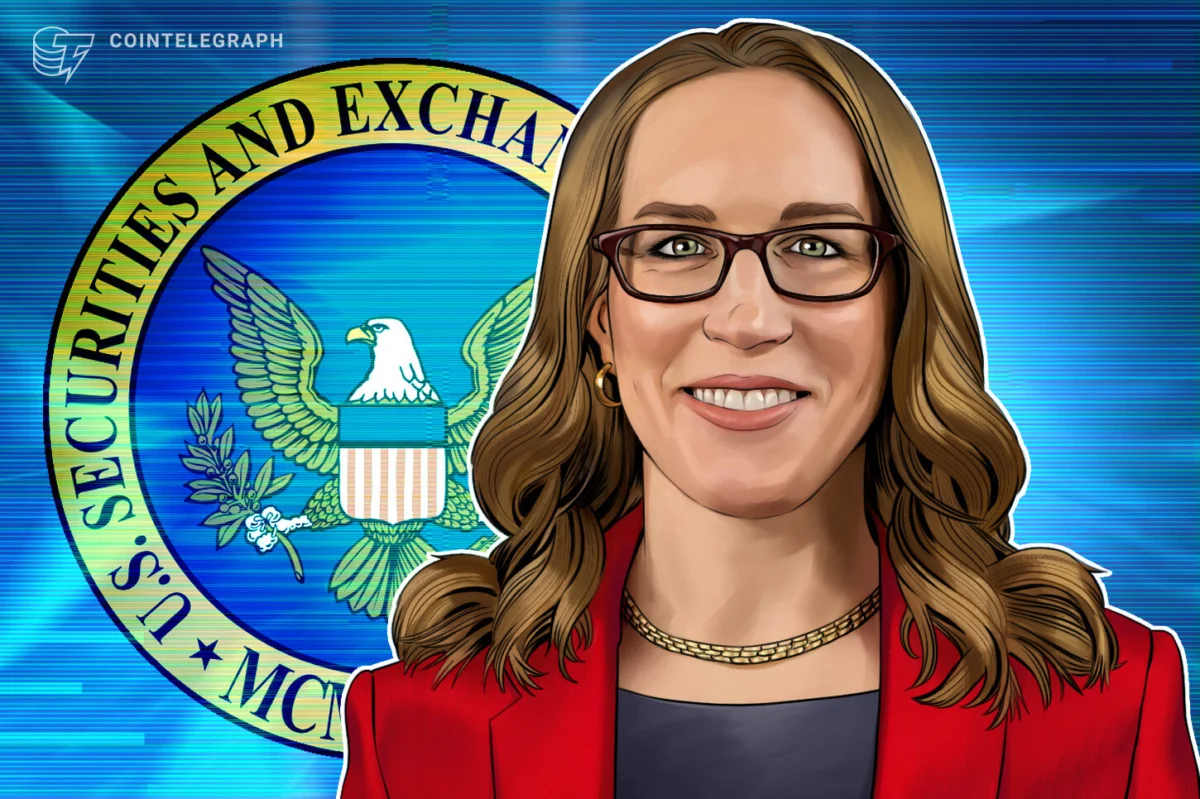
SEC Commissioner Hester Peirce has formally submitted her resignation from the U.S. Securities and Exchange Commission (SEC), with her departure slated for October 2, 2024. Peirce, widely recognized within the cryptocurrency and blockchain communities as "Crypto Mom" for her consistent advocacy for clear, rules-based regulatory frameworks for the digital asset industry, shared a copy of her official resignation letter via her X (formerly Twitter) account on Friday.
In her farewell letter, Peirce expressed profound gratitude to the President for what she described as "the honor of [her] professional lifetime" to serve as a commissioner. She further noted that she was leaving the SEC under the leadership of Chairman Paul Atkins and Commissioner Mark Uyeda, the two remaining Republican members of the commission. Her tenure at the SEC spanned approximately eight years.
Beyond her role as a commissioner, Peirce had also served as the director of the agency’s Crypto Task Force since February 4, 2025. Her official term as a commissioner was set to expire in June 2025. However, SEC commissioners have the provision to continue serving for up to approximately 18 months beyond their term’s expiration if their successors have not yet been appointed, as per agency guidelines.
Peirce’s Transition to Academia
The move to academia marks a significant shift for Peirce. Cointelegraph reported in May that Peirce had plans to join the law school faculty at Regent University in Virginia as an associate professor, with her tenure expected to begin in November 2024. At Regent University, Peirce is anticipated to play a key role in strengthening the law school’s academic offerings in several critical areas, including federal litigation, securities regulation, and the burgeoning field of digital assets.
The vacancy left by Peirce’s departure may not be filled immediately. This follows a precedent set by the earlier departure of Caroline Crenshaw, the agency’s former Democratic commissioner, who left in January 2024, also 18 months after her term had ended. To date, no nominations have been put forth by President Donald Trump to fill Crenshaw’s vacant seat.
The SEC’s approach to cryptocurrency regulation and enforcement has undergone a notable transformation since President Trump took office in January 2025. The agency has seen a reduction in several enforcement actions and investigations targeting cryptocurrency companies, a shift that has included cases previously linked to individuals associated with the Trump administration and his family.
The Role of the Crypto Task Force and Evolving Regulatory Stance
The SEC’s Crypto Task Force, established to examine the application of existing securities laws to digital assets and decentralized systems, has been a focal point of Peirce’s work. In June, Cointelegraph reported on Peirce’s remarks regarding open-source code publishing. She posited that the act of publishing open-source code should not, in itself, subject software developers to federal securities regulations. This stance addressed a long-standing debate concerning the potential liability of developers within decentralized finance (DeFi) ecosystems.
Peirce’s comments were consistent with the broader reorientation of the SEC’s strategy under Chairman Atkins, who has publicly characterized the agency’s prior approach as "regulation by enforcement." This shift suggests a move towards more predictable and principles-based guidance rather than an over-reliance on enforcement actions to define regulatory boundaries.
Background on Hester Peirce and SEC Dynamics
Hester Peirce has been a prominent figure at the SEC since her appointment in 2018. Her tenure has been marked by a consistent call for regulatory clarity in the rapidly evolving digital asset space. She has often expressed concerns that overly broad or ambiguous regulations could stifle innovation and create unintended consequences for market participants. Her nickname, "Crypto Mom," reflects her role as a perceived guardian and advocate for a more thoughtful and practical approach to cryptocurrency regulation within the commission.
The SEC, as a federal agency, is tasked with enforcing federal securities laws, promoting full disclosure, and protecting investors against fraud and manipulation. The commission’s approach to novel technologies like cryptocurrencies has been a subject of intense scrutiny and debate, particularly given the rapid pace of technological development and the inherent complexities of digital assets.
The departure of Peirce and Crenshaw, coupled with the potential for delayed appointments, could further impact the commission’s composition and its decision-making processes. The SEC operates with a bipartisan structure, typically comprising five commissioners, with no more than three from the same political party. This structure is designed to ensure a balanced approach to regulatory matters.
The ongoing evolution of the digital asset landscape necessitates a regulatory framework that can adapt to new innovations while upholding investor protection and market integrity. Peirce’s contributions have been significant in highlighting these challenges and advocating for approaches that balance innovation with regulatory oversight. Her move to academia is expected to allow her to continue contributing to the discourse on securities regulation and digital assets from a different platform.
The SEC’s Crypto Task Force, under Peirce’s leadership, has been instrumental in analyzing the unique characteristics of digital assets and exploring how existing legal frameworks can be applied effectively. This has involved complex considerations regarding the definition of a security, the role of intermediaries, and the implications of decentralization for regulatory oversight. Peirce’s outspokenness on these issues has provided valuable insights into the challenges faced by regulators in this dynamic sector.
The broader shift in enforcement strategy, as alluded to by Chairman Atkins, suggests a desire to move away from a reactive approach towards a more proactive and principles-based regulatory environment. This could involve providing clearer guidance and frameworks for the industry, thereby reducing uncertainty and fostering more responsible innovation. Peirce’s advocacy for simpler disclosure rules, as previously reported by Cointelegraph, aligns with this objective of enhancing clarity and accessibility for market participants.
The impact of these regulatory shifts on the broader financial markets, including the increasing integration of tokenization and the evolving tax implications for crypto investors, continues to be a subject of considerable interest and analysis. Peirce’s departure signifies the end of a particular chapter in the SEC’s engagement with the digital asset space, and her future contributions from academia will be closely watched.






