 11

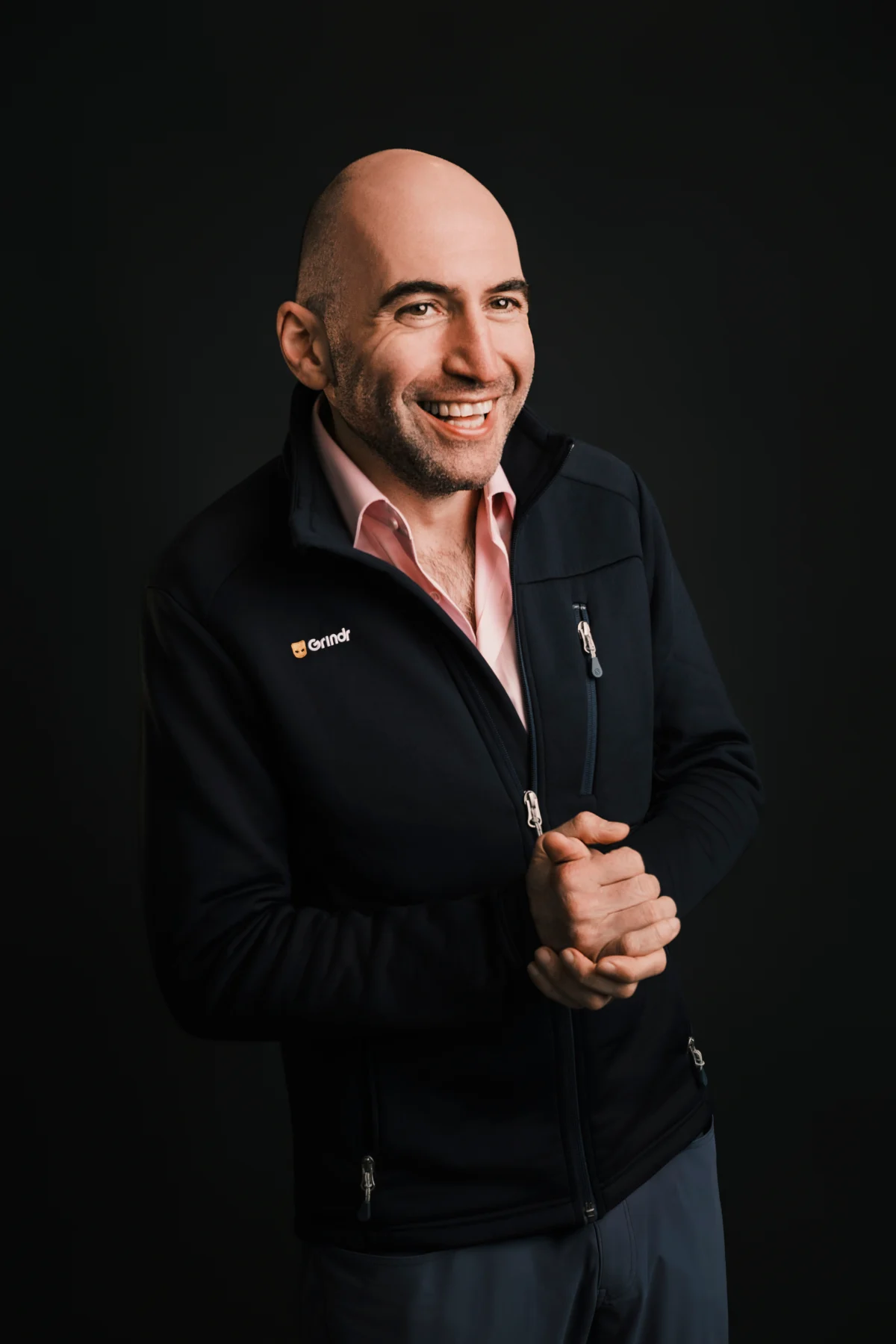
When George Arison assumed leadership of Grindr in 2022, he inherited a company adrift, scarred by a tumultuous history that included a forced divestiture from Chinese ownership and a subsequent private-equity rescue. At that time, Grindr, despite printing money, lacked a coherent product strategy or a clear business direction. Fast forward four years, following a successful SPAC listing and a controversial but impactful return-to-office mandate, Grindr has not only stabilized but has emerged as a compelling growth narrative in the tech landscape. Under Arison’s guidance, the company’s revenue is on track to nearly triple, projected to surge from $195 million in 2022 to an estimated $540 million-plus this year, all while maintaining robust adjusted EBITDA margins consistently above 40%.
This impressive financial growth has primarily been fueled not by a dramatic expansion of its overall user base, but by strategically encouraging its existing customers to engage more deeply and, crucially, to pay more for enhanced features. In the second quarter of this year, Grindr reported 1.4 million paying users, constituting approximately 9% of its total user base. A key metric reflecting this success is the average revenue per user (ARPU), which has risen considerably since 2022. Arison’s current focus is firmly set on identifying and cultivating the "next leg of growth," charting an ambitious course for the platform’s future.
A cornerstone of this future strategy is Arison’s vision to transform Grindr into a "gayborhood in your pocket." This expansive concept aims to evolve the platform beyond its foundational role as a dating and hookup app. Instead, it seeks to become a comprehensive digital hub catering to a broader spectrum of the LGBTQ+ community’s needs. This includes venturing into healthcare services, offering everything from common medications like ED treatments and GLP-1s to vital HIV prevention resources, and eventually, connecting users with LGBTQ+-affirming medical professionals. The vision also extends to travel, aiming to help users find and connect with local communities wherever their journeys may take them. This "everything app" instinct, as Arison describes it, mirrors a broader trend seen across much of consumer technology today.
Beyond this holistic community-centric approach, Grindr is also preparing to roll out a new, highly anticipated, and significantly pricier subscription tier later this year, tentatively named "EDGE." This premium offering has already sparked considerable debate and even "hackles" online during its testing phase, with some internet users questioning its perceived high cost (reported to be around $350-$375 per month in U.S. dollars during Canadian trials) and longing for a return to earlier, simpler versions of the app. Arison, however, views EDGE as a strategic move. He clarified that the widely circulated test prices were part of an elasticity study to understand market tolerance, not a final price point. He emphasizes that EDGE isn’t selling "AI itself," but rather advanced features derived from AI, designed to leverage user behavior and intent (with consent) to facilitate "much better matches than a sparse profile ever could." Early retention rates for these features have been notably higher than any previous offerings, suggesting a strong value proposition for a segment of the user base. He likens EDGE to a Tesla Model X or S—a premium flagship product whose underlying technological capabilities are expected to eventually trickle down to the broader product suite over time.
Arison, who previously founded and successfully took public Shift Technologies, an online used-car marketplace, is also actively engaging with the press to address what he perceives as a persistent "Grindr discount" applied to the company’s stock by institutional investors, solely due to its identity as a gay dating app. During a recent Zoom call with TechCrunch, he recounted an anecdote where an investor’s financial model explicitly included a "Grindr discount" line item, effectively knocking 25% off a fair-value estimate.
While this perceived discount is a concern for Arison, not everyone in the financial sector agrees it’s justified. Major investment banks like Morgan Stanley, Goldman Sachs, and Raymond James have all raised their price targets on Grindr’s stock this year. Morgan Stanley, in particular, upgraded it to "overweight" in July, specifically citing the potential of the upcoming EDGE tier and Grindr’s strategic foray into telehealth services. This positive sentiment has contributed to a significant rally, with the stock climbing approximately a third over the past six months. Nevertheless, Arison’s perception of a discount isn’t entirely unfounded; the stock currently trades at roughly 11 times its projected 2027 EBITDA, representing about a 35% discount compared to its peers, even if the precise reasons for this disparity remain somewhat opaque.
Arison, an amiable leader with a subtle hint of his native Georgia still present in his voice, openly discussed these dynamics and the company’s trajectory in a Q&A session. When asked about his initial priorities upon joining Grindr in 2022 when it was "pretty adrift," he outlined three key areas of focus.
"Three things, really," he stated. "First, company building." He explained that many employees had been hired during the peak-COVID era, a period characterized by low expectations for in-office productivity, where the average output was perhaps "three to four hours of real work a day." To address this, Grindr implemented a return-to-office mandate, requiring employees to be in the office two days a week starting in the summer of 2023. This decision, Arison acknowledged, generated "a lot of press and a lot of anger" and led to significant attrition, reducing the employee count to approximately 70. Today, only about 25 individuals who were with the company before his arrival remain. Grindr now operates as a remarkably lean organization, with 175 U.S. employees supported by a team in Colombia, on track to achieve $540 million in guided revenue this year.
"Second was driving revenue growth by shipping product people would actually pay for," Arison continued. This focus on value-driven features successfully propelled Grindr’s pay conversion rate from under 6% to over 9%, while simultaneously nearly doubling the average revenue per user (ARPU). "Third was setting a long-term vision: the ‘gayborhood in your pocket’ idea, and everything else – healthcare, travel – that flows from it."
Grindr’s engineering culture, Arison asserts, is significantly underrated. When questioned about the size of the team driving these innovations, he revealed, "About 94 or 95 people across all technical roles." He recounted a conversation with a large-tech-company CEO who predicted that AI would enable him to achieve with far fewer people what he initially thought would require 300 to 350. "He was right," Arison affirmed. "We’re doing roughly 350 people’s worth of work with about 100." This efficiency is largely attributed to AI integration: "Something like 80% of our code is now AI-written, and we’ve seen a 2.5x increase in engineering productivity over the past year."
Elaborating on the much-discussed EDGE premium tier, Arison reiterated that the high pricing seen during testing in Canada (around $350-$375 per month in U.S. dollars) was merely "one test point among several." He explained, "We ran a range to understand elasticity, not a final price." EDGE, which will sit above existing XTRA ($23.99) and Unlimited ($44.99) tiers, is slated to go live towards the end of this year or early next. The core value, he clarified, lies in AI-derived features that, with user consent, utilize behavioral and intent data to create "much better matches than a sparse profile ever could." The high retention on these features so far bolsters their confidence in the product.
Regarding AI’s role in matching, particularly its ability to suggest partners outside a user’s home city, Arison highlighted the unique challenges faced by the gay community. "Even in San Francisco, where the share of the gay population is higher than almost anywhere else in the country, you’re talking about maybe 50,000 to 60,000 gay people total. That’s not a big pool to be fishing in if you’re trying to find a partner, and it’s a big reason dating is so hard for gay men generally." He posed the question, "what if AI could break down the geographic constraint entirely, and surface someone in St. Louis who actually matches what you want, based on real behavior rather than what people say in a profile?" While Grindr doesn’t track post-app relationships, it is widely recognized as a primary meeting place for gay men seeking connections. Arison also noted a significant shift in younger cohorts’ preferences: "about 50% of gay men under 35 say they want a long-term monogamous relationship, and 25% say they want children – numbers that would have been unthinkable for my own generation." Recognizing that the traditional dating landscape hasn’t fully met these evolving needs, Arison believes that trying something new with AI is a worthwhile endeavor.
The expansion into healthcare is another critical component of the "gayborhood in your pocket" strategy. Arison detailed a multi-pronged approach. "We started with cash-pay products through a line we call Woodwork – ED medications, GLP-1s, peptides, and so on – because cash-pay was the simplest place to get going." He added, "we just launched an AI bot that handles the whole transaction inside the app rather than sending people out to Woodwork.com." The second focus area is HIV prevention and treatment, where Grindr has committed to providing 10 million people direct access to information on where to get PrEP, both in the U.S. (already available in their in-app health center) and internationally. The third bucket, "actual clinical care, like connecting people to a gay doctor through telehealth," is a much longer-term vision. "That’s not something we’re building today, but I do think there’s a world, a decade out, where healthcare is a bigger revenue stream for Grindr than what we do today," Arison predicted.
Currently, non-subscription revenue, encompassing ads and other services including healthcare, constitutes a smaller fraction of Grindr’s overall business. "Subscriptions are about 83% of revenue today, down from around 86% in 2022, even though subscription revenue itself has grown enormously – that tells you how much bigger the base is overall," Arison explained. "The newer businesses are genuinely small right now. What I want is a company that, 10 years from now, has a strong subscription business, a strong advertising business, a real healthcare business, and a real travel business alongside it. Today those last two are early."
Addressing the persistent "Grindr discount" and the recent positive market performance, Arison expressed optimism. "I hope we’re being treated as a growth company at this point – we’ve grown revenue more than 25% for 16 straight quarters as CEO, so there’s reason to expect that." He acknowledged the tangible impact of stigma, citing instances where a consulting firm declined to work with them due to "reputational concerns" and a bank refused their money during the Silicon Valley Bank crisis, contrasting this with strong partnerships from major institutions like Goldman Sachs and Morgan Stanley. He believes this stigma is largely directed at Grindr’s identity as a gay dating product, noting, "nobody says that about Tinder, which literally has a ‘free tonight’ button on its homepage." Despite these challenges, Arison concluded, "But I’d agree the market’s read on us has clearly improved."






