 11

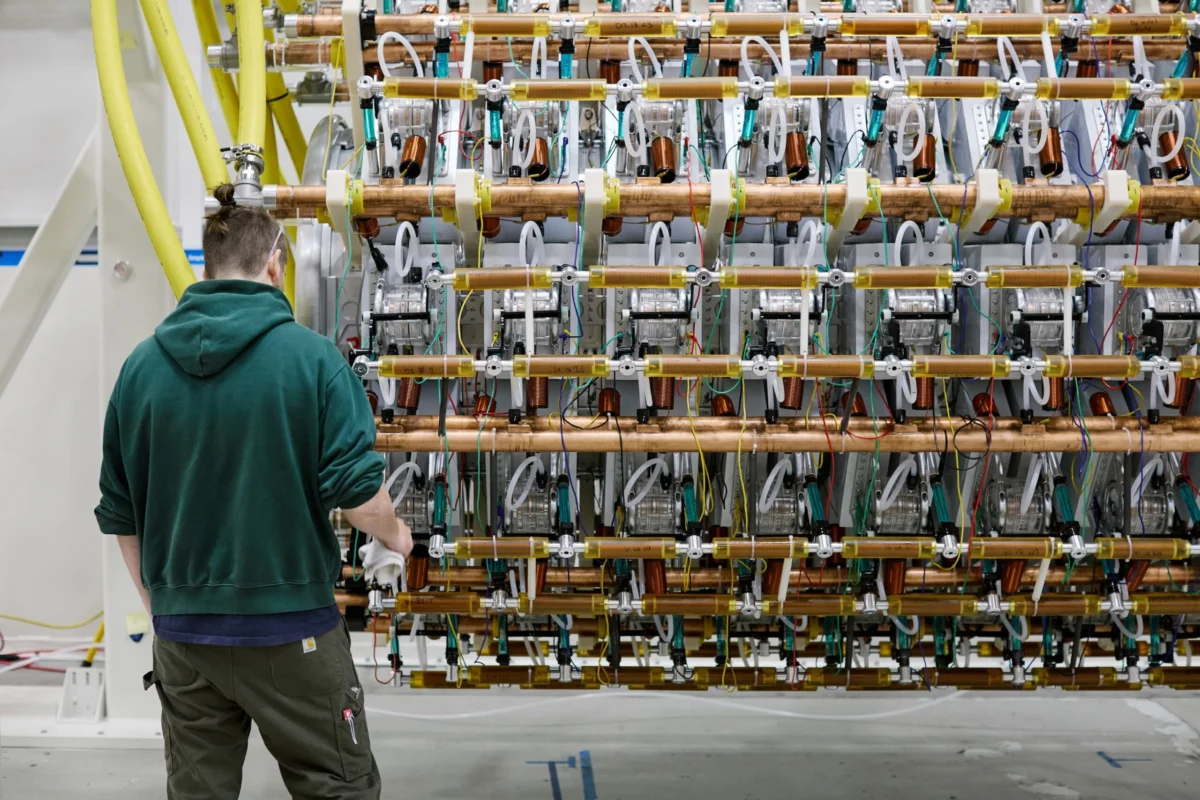
Fusion power, a long-sought clean energy solution, is undergoing a strategic recalibration, increasingly aligning itself with the defense applications that initially laid the groundwork for the industry. As numerous fusion startups tirelessly pursue the ultimate objective of delivering electrons to the electrical grid, a growing number are simultaneously embracing, or in some cases, returning to, the national security applications that have always been intertwined with the science of controlled nuclear fusion. This pivot reflects a recognition of the inherent dual-use nature of fusion technology and an evolving funding landscape.
The genesis of the fusion sector dates back decades, emerging from a critical juncture in history when physicists sought to harness the immense power behind thermonuclear bombs, which proliferated during the Cold War, for more constructive and peaceful purposes. However, the national security dimension of fusion research never truly receded from prominence. A prime example of this enduring connection is the groundbreaking fusion power experiment conducted in December 2022 at the National Ignition Facility (NIF). This landmark achievement, which produced more energy from a fusion reaction than the laser energy used to initiate it, occurred at an institution that has dedicated over 25 years to supporting vital national security applications for the United States. NIF’s primary mission, managed by Lawrence Livermore National Laboratory for the National Nuclear Security Administration (NNSA), is to ensure the safety and reliability of the nation’s nuclear deterrent without full-scale testing, through a program known as Stockpile Stewardship. The 2022 experiment not only marked a monumental step toward practical fusion energy but also provided invaluable data relevant to high-energy-density physics and the behavior of matter under extreme conditions, which is crucial for national security research.
This renewed emphasis on defense applications has gained considerable momentum, particularly as venture capital committed to climate technology—the primary funding source for many nascent fusion startups—has shown signs of stagnation. While fusion startups have successfully attracted a significant share of recent climate tech funding, the development of fusion technology is an inherently capital-intensive undertaking. Consequently, venture capitalists, always keen to diversify revenue streams and accelerate progress, are receptive to their portfolio companies exploring and securing alternative funding channels. The defense industry, with its long-term investment horizons and specific technological needs, presents a compelling and increasingly attractive alternative.
The defense sector’s interest, particularly in advanced laser technology, has been sustained for years, but it has intensified dramatically as the proliferation of drones has fundamentally reshaped the landscape of modern warfare. Traditional air defense systems, such as missile batteries, were originally conceived and designed to counter larger, human-piloted aircraft, which are generally fewer in number and have distinct flight profiles. This established paradigm has led to striking inefficiencies and comical mismatches when confronting the threat posed by swarms of inexpensive, expendable drones. A notable incident from approximately a decade ago perfectly illustrates this challenge: a U.S. ally reportedly expended a sophisticated $3 million Patriot missile to intercept and neutralize a consumer drone costing merely $200. While effective in its immediate objective, such an exchange is demonstrably not economically sustainable or strategically efficient in the long run.
Laser weapons offer a transformative solution, promising to fundamentally alter this costly defensive calculus. Unlike conventional missile systems, which involve firing a single, exceptionally expensive, and one-time-use projectile per engagement, laser weapons can fire rapidly and relatively inexpensively. Their operational cost is primarily tied to the electricity they consume, which can be drawn from an onboard generator, a ship’s reactor, or a vehicle’s engine, providing a virtually limitless magazine capacity as long as power is available. This capability translates into significantly lower per-shot costs and enhanced operational flexibility, making them ideally suited for countering drone threats, as well as potentially engaging other targets.
Fusion startups that are actively developing laser-based reactor designs are particularly well-positioned to become indispensable partners in the advancement of such directed-energy weapons. A recent, high-profile example of this synergy occurred last week when Xcimer, a laser-based fusion startup, publicly announced a strategic partnership with and a significant investment from RTX. RTX, a global aerospace and defense conglomerate, includes prominent defense contractors such as Raytheon within its extensive portfolio. Under the terms of this pivotal agreement, Xcimer will receive crucial funding from RTX Ventures, the corporate venture arm of RTX. Concurrently, RTX gains the invaluable opportunity to begin exploring and evaluating how Xcimer’s cutting-edge, high-power laser technology can be adapted and utilized for its own diverse defense-related purposes, potentially accelerating the development of next-generation weapon systems.
Denver-based Xcimer currently operates what it asserts is the largest privately owned laser system in the world. This formidable system, known as Phoenix, is central to the company’s ambitious plan to develop a commercial fusion power plant. Within the envisioned power plant, Phoenix’s powerful lasers will precisely bombard minuscule fuel targets, compressing them to extreme densities and temperatures until the atomic nuclei inside fuse, thereby releasing a substantial amount of energy. While Xcimer’s current Phoenix laser system operates at an order of magnitude lower power than what will ultimately be required for a full-scale commercial power plant, its existing capabilities are already sufficiently advanced and powerful to have captured the keen attention of the defense industry, which sees immediate potential for various applications beyond energy generation. The precision and energy density achievable with such lasers hold significant promise for tasks ranging from materials processing to defense countermeasures.
Xcimer is not an isolated case in this burgeoning defense-fusion nexus. Pacific Fusion, another innovative fusion startup, recently announced a memorandum of understanding (MOU) with the National Nuclear Security Administration (NNSA) last month. This agreement signals a collaborative effort to jointly conduct high-energy-density fusion experiments. These experiments are critical for understanding the fundamental physics of extreme states of matter, which has direct relevance to both fusion energy and nuclear weapons science.
Pacific Fusion recently broke ground on a demonstration facility situated in New Mexico, strategically located in close proximity to the renowned Sandia and Los Alamos National Laboratories. While the primary objective of this facility is to unequivocally demonstrate that the company’s proprietary fusion design can generate more power than it consumes—a critical milestone known as net energy gain—it possesses significant secondary utility. The fusion reactions produced at Pacific Fusion’s facility are projected to be substantially more powerful than those currently employed by the government for certain nuclear weapons experiments. This enhanced capability offers NNSA an invaluable tool for advancing its Stockpile Stewardship Program, allowing for more realistic and higher-fidelity simulations and experiments crucial for maintaining the safety, security, and effectiveness of the nation’s nuclear deterrent.
"It turns out that the facility that we’re building also has utility in this world-leading defense application," Keith LeChein, co-founder and chief technical officer at Pacific Fusion, recently informed TechCrunch. This statement underscores the inherent dual-use potential of their technology.
This alignment with defense applications is far from a mere fortunate coincidence; rather, it is a deeply ingrained aspect of the company’s strategic vision. "Defense applications were always on our mind," affirmed Carrie von Muench, co-founder and chief operating officer at Pacific Fusion. This intentionality is further reinforced by the professional background of LeChein, who developed the company’s core technology. His distinguished career includes significant tenures at leading national security institutions such as Sandia National Laboratories, the Lawrence Livermore National Laboratory, and the National Nuclear Security Administration itself. This rich background provides Pacific Fusion with an intimate understanding of both the energy and defense landscapes, enabling them to design their technology with both applications in mind from the outset.
Fusion power has undeniably traversed an extraordinary path since the pioneering weapons scientists first conceptualized its potential decades ago. While the pursuit of clean, limitless energy remains the overarching goal, its profound national security applications have never truly been forgotten. The recent and increasingly explicit reacquaintance between the fusion industry and the defense sector is perhaps long overdue. This synergistic relationship promises to provide willing fusion startups with a substantial and timely boost, offering diversified funding streams, accelerated technological development, and a broader strategic impact that benefits both global energy security and national defense capabilities.






