11
11
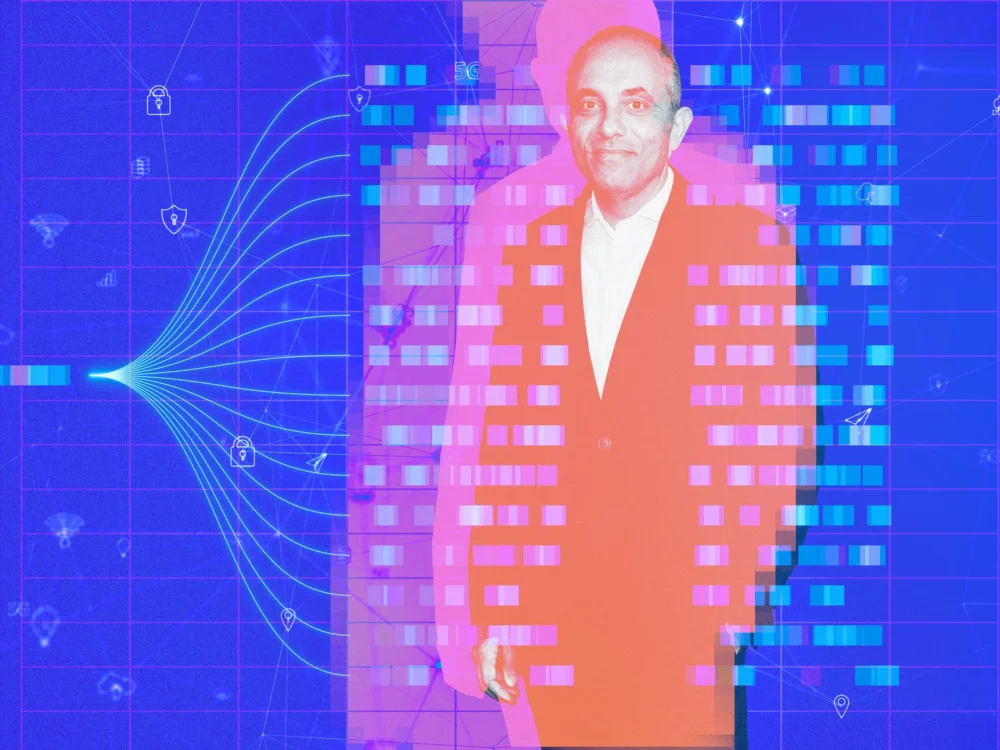
Elie Habib, the visionary CEO behind Anghami, one of the Middle East’s largest music streaming platforms, found himself operating far outside the realms of entertainment and into the intricate landscape of global conflict. While his daily responsibilities typically revolve around securing licensing deals, optimizing streaming metrics, and expanding Anghami’s user base, a personal coding endeavor he undertook earlier this year unexpectedly transformed into a critical open-source dashboard utilized worldwide to monitor real-time geopolitical events and conflicts. This powerful tool, aptly named World Monitor, became an invaluable resource when missiles began traversing the Middle East, offering an unprecedented, unvarnished view of unfolding crises.
Habib, an engineer by training, conceived World Monitor not as a venture into defense or intelligence, but as a personal project to bring clarity to an increasingly complex and chaotic global news environment. "I’m an engineer by training, and I hold myself to a discipline of continuously learning new technologies regardless of my CEO title," Habib shared with WIRED, highlighting the driving force behind his initiative. The idea germinated from a growing frustration with the fragmented and often overwhelming nature of geopolitical headlines. He observed that traditional news outlets, while essential, struggled to connect the dots in a way that provided a comprehensive, real-time understanding of interdependent global events. "The news became genuinely hard to parse," he explained. "Iran, Trump’s decisions, financial markets, critical minerals, tensions compounding from every direction simultaneously."
He quickly realized that what he needed was not merely another news aggregator. His vision was for a dynamic system that could illustrate the intricate connections between disparate events as they happened. Existing Open-Source Intelligence (OSINT) tools, which offered similar capabilities, were prohibitively expensive, costing governments and large enterprises tens of thousands of dollars annually. This significant gap in the market presented Habib with a compelling challenge, one he approached with the characteristic ingenuity of a seasoned engineer. Treating it as a "weekend challenge," he embarked on building a solution from scratch. Remarkably, he stated, "I built World Monitor in a single day as a learning exercise. The platform you see now reflects maybe five or six total days of development plus community contributions." This rapid development underscores the power of modern agile coding practices and the potential of open-source collaboration.
Signals From Everywhere: The Data Backbone
World Monitor’s core strength lies in its ability to ingest and process a vast, messy stream of global data, effectively bypassing the often-noisy and unreliable channels of social media to extract factual information directly from its source. Habib elaborates on the system’s robust capabilities: "The system ingests 100-plus data streams simultaneously." This multi-faceted approach creates a continuously updated, intricate map of global tensions. The dashboard visualizes conflict zones with dynamic escalation scores, tracks military aircraft broadcasting their positions via ADS-B transponders, monitors ship movements through AIS signals, and pinpoints critical infrastructure such as nuclear installations and submarine cables. Furthermore, it integrates data on internet outages and satellite-detected fire detections, providing a comprehensive operational picture.
.jpg)
The technical brilliance behind World Monitor lies in its sophisticated data processing and visualization. "Everything is normalized, geolocated and rendered on a WebGL globe capable of displaying thousands of markers without frame drops," Habib proudly states. This ensures that users experience a fluid and responsive interface, even when observing a high volume of rapidly changing global events. The underlying architectural principles for handling such massive volumes of streaming data were not entirely new to Habib. His extensive experience building and scaling data systems for Anghami and OSN+, a Middle Eastern video streaming platform now majority-owned by Anghami, provided a foundational understanding. "I built Anghami and OSN+ data systems and I took a lot of inspiration from the learnings while building this tool," he noted. "It’s obviously very different in nature, but the systems remain the same." This cross-pollination of expertise from the entertainment streaming industry to geopolitical monitoring highlights an innovative application of established data engineering principles.
An Unexpected Global Audience
The true surprise for Habib, however, came not from the technical challenges, but from the diverse and expansive audience World Monitor attracted. Unlike music-streaming platforms, which tend to exhibit relatively predictable user patterns, a live geopolitical map appeals to a vastly different demographic: a global and often intensely engaged crowd of watchers. "Building for such a varied audience is hard," Habib acknowledged, recognizing the complexities of catering to a user base with such diverse interests and needs.
Traffic data vividly illustrates the platform’s widespread reach. The United States accounts for approximately 10 percent of its users, while Europe collectively contributes roughly 20 percent. The Middle East and North Africa region, where Anghami is headquartered, makes up 18 percent of the traffic, and Asia leads with a significant 35 percent share. "These are surprise numbers," Habib remarked, underscoring the unexpected global adoption. This geographic spread further complicates user support and feature development, as the platform must address a myriad of regional interests and access requirements.
When the War Hit: A Live Threat Monitor
Before the recent surge in regional conflicts, World Monitor served various niche purposes. Traders utilized the map to track cargo ships, enabling them to monitor global supply chains for potential disruptions. Engineers kept an eye on power grids and critical infrastructure networks, while even a sports bar famously ran it on their TVs during off-peak hours when no games were airing. The platform was a curiosity, a specialized tool for analysts and hobbyists.
.jpg)
However, its role transformed almost overnight with the escalation of tensions in the Middle East. When joint US-Israeli military strikes targeted Iran in late February, the platform’s utility shifted dramatically. These strikes caused significant disruptions to maritime logistics and forced commercial airspace to clear, creating an immediate and urgent demand for real-time information. What was once a niche analytical tool instantly became a crucial live threat monitor. Casual observers and concerned citizens alike began watching active escalations unfold in an unprecedented, immediate fashion.
The impact on World Monitor’s usage was staggering. Between early February and the morning the strikes commenced, the project had recorded just over 1 million unique visitors. By the evening of March 3, that number had surged past 2 million. Habib noted the sustained increase, stating, "Every day has been the biggest day since the strikes started." At its peak, the system handled an astonishing 216,000 unique visitors in a single day, a testament to its newfound criticality. Yet, even amidst this unprecedented traffic, Habib remained actively involved in development, continuously writing code to adapt the platform. "During the Iran strikes I had to build fast additions," he revealed. These rapid enhancements included new map layers, integration of Telegram intelligence retrieval, real-time Hebrew-to-English siren alerts, GPS-jamming detection, airport cancellation feeds, and embassy risk advisories. These features were deployed almost immediately, demonstrating the agility of the system and its creator. "The architecture had to scale in ways I never originally planned for," he reflected, highlighting the unexpected demands placed on his initially modest side project.
How the Map Verifies Reality: The Automated Approach
Processing hundreds of live data streams during a military conflict, where misinformation and propaganda are rife, raises a fundamental question: How does World Monitor verify information fast enough to maintain its real-time accuracy and credibility? Habib’s innovative, and somewhat radical, answer was to entirely remove human editors from the verification loop. "Zero editorializing," he stated emphatically. "No human editor makes a call."
Instead, World Monitor relies on a rigorously defined, multi-tier source hierarchy. At the top tier are highly credible wire services and official channels, including Reuters, Associated Press (AP), the Pentagon, and the United Nations. Following these are major broadcasters like the BBC and Al Jazeera, along with specialist investigative outlets such as Bellingcat, renowned for its open-source investigations. In total, the system processes information from approximately 190 sources, each assigned a confidence score based on its historical reliability and credibility.
Sophisticated software then continuously scans incoming reports for major events and emerging patterns. If multiple credible sources report the same development within minutes of each other, the system automatically flags it as a breaking alert. However, headlines alone are not deemed sufficient for verification. Recognizing the potential for online claims to be unreliable, the platform also actively seeks out corroborating physical signals on the ground. It tracks disruptions such as internet blackouts, the diversion of military flights from their regular paths, the halting of cargo ships, and satellite-detected heat signatures indicative of fires or explosions.
.jpg)
The lynchpin of this verification process is a "convergence algorithm." Habib explains its function: "A convergence algorithm then checks how many distinct signal types activate in the same geography simultaneously." This means that the system doesn’t rely on a single piece of evidence. "One signal is noise. Three or four converging in the same location is the signal worth surfacing," he clarified. For instance, if an internet outage occurs concurrently with diverted aircraft activity and a satellite heat signature in the same geographical area, the map automatically flags this as a potential and highly credible escalation.
Habib openly acknowledges the inherent risks of removing human judgment from the verification process. "The multi-tier source-credibility system and convergence algorithm [are a] substitute for editorial judgment," he conceded. "Whether that creates blind spots in genuinely novel scenarios, an event with no historical baseline, is a real architectural question the system doesn’t fully resolve." This candid assessment reflects his commitment to transparency and the ongoing evolution of the platform.
Beyond the Map: The Future Vision
World Monitor was never intended to become a commercial enterprise. "World Monitor started as a personal learning project," Habib reiterates, emphasizing its non-profit, open-source ethos. Yet, the experiment quickly transcended its initial scope. Developers from around the world, inspired by its utility and open nature, began contributing code and ideas, collaboratively expanding the system’s capabilities and fostering a vibrant community around it.
Now, the project is evolving towards a broader and more ambitious goal. "The direction shifts from pure conflict tracking toward broader world signal understanding and acting on these signals," Habib reveals. The aim is to move beyond merely mapping events after they have occurred. Instead, the platform is increasingly being designed to detect patterns and anticipate developments before they even become headlines. "The architecture is moving toward predicting where signals converge before events become news," Habib explains. This forward-looking approach positions World Monitor not just as a reactive observer, but as a proactive tool for understanding and potentially even foreseeing global shifts, marking a significant advancement in open-source intelligence and real-time global monitoring.