11

In a comprehensive security analysis released by Atlassian, the company has detailed a sophisticated and persistent cyber-espionage campaign known as "Contagious Interview." Attributed with high confidence to North Korean state-sponsored threat actors, the campaign specifically targets software developers and IT professionals by exploiting the inherent trust found within the global software development community. By leveraging popular platforms such as Bitbucket, GitHub, and GitLab, these actors facilitate fraudulent recruitment processes designed to deploy malicious payloads onto the systems of unsuspecting job seekers.
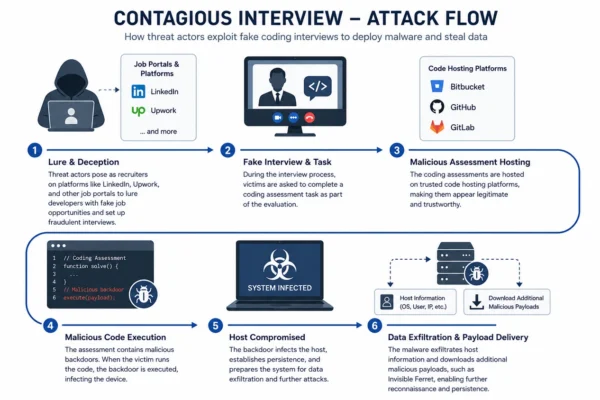
The campaign represents a significant evolution in social engineering, moving beyond simple phishing emails to a "long-con" recruitment scam. Candidates are typically approached on professional networking sites like LinkedIn or via direct email by individuals posing as recruiters for legitimate-looking technology firms. Once a rapport is established, the candidate is invited to participate in a technical assessment. This assessment involves downloading or cloning a coding project from a publicly accessible repository to complete a task, such as fixing a bug or adding a feature to a pre-existing application.
According to Atlassian’s findings, these repositories are meticulously crafted to appear legitimate. They often contain thousands of lines of plausible, functional code representing complex applications. However, concealed within a few lines of this code—or within the project’s dependencies—is a malicious payload. When the developer runs the code locally to test their work, the payload executes, granting the attackers access to the victim’s machine.

The "Contagious Interview" campaign is linked to the threat group identified as G1052. This group is part of a broader ecosystem of North Korean cyber activity, often associated with the Lazarus Group or its various subgroups. The primary objectives of these operations are multifaceted: they seek to generate revenue for the North Korean regime through the theft of cryptocurrency, and they aim to gain entry into corporate networks for the purposes of intellectual property theft and espionage.
The malware delivered through these assessments is frequently identified as "BeaverTail," a sophisticated loader designed to steal sensitive information. Once BeaverTail is executed, it can harvest browser credentials, cryptocurrency wallet data, and API tokens. It also serves as a gateway for more advanced, later-stage malware, such as "InvisibleFerret," which provides the attackers with full remote access capabilities, including keylogging, file exfiltration, and the ability to execute arbitrary commands.
Atlassian’s research identified several recurring patterns that characterize the Contagious Interview campaign. These patterns highlight the scale of the operation and the level of coordination behind the North Korean effort.
1. Repository Themes and Code Structures:
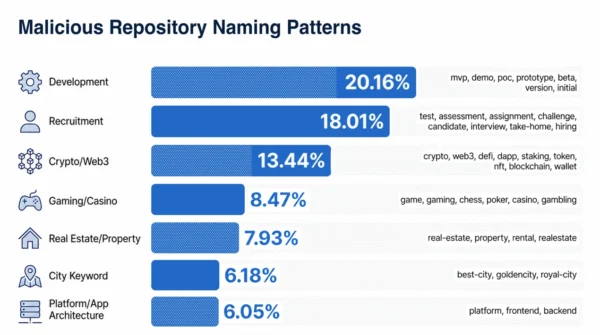
The malicious repositories frequently reuse specific project themes. Common examples include cryptocurrency management tools, e-commerce platforms, or specialized developer utilities. While the names of the repositories may vary slightly to avoid simple detection, the underlying code structure and the specific files used to hide the malicious payloads remain remarkably consistent. This suggests a modular approach to the campaign, where the threat actors can quickly spin up new "tests" using a standardized kit.
2. Realistic Front Companies and Recruiter Personas:
To increase the success rate of their social engineering, the threat actors establish elaborate front companies. These entities often have professional-looking websites, custom domains, and a presence on LinkedIn. The "recruiter" personas used to contact targets are equally well-developed, often featuring AI-generated profile pictures and a history of endorsements that provide a false sense of legitimacy. Outreach is conducted through both common email providers and domains registered specifically for the campaign.
3. Infrastructure Overlap:
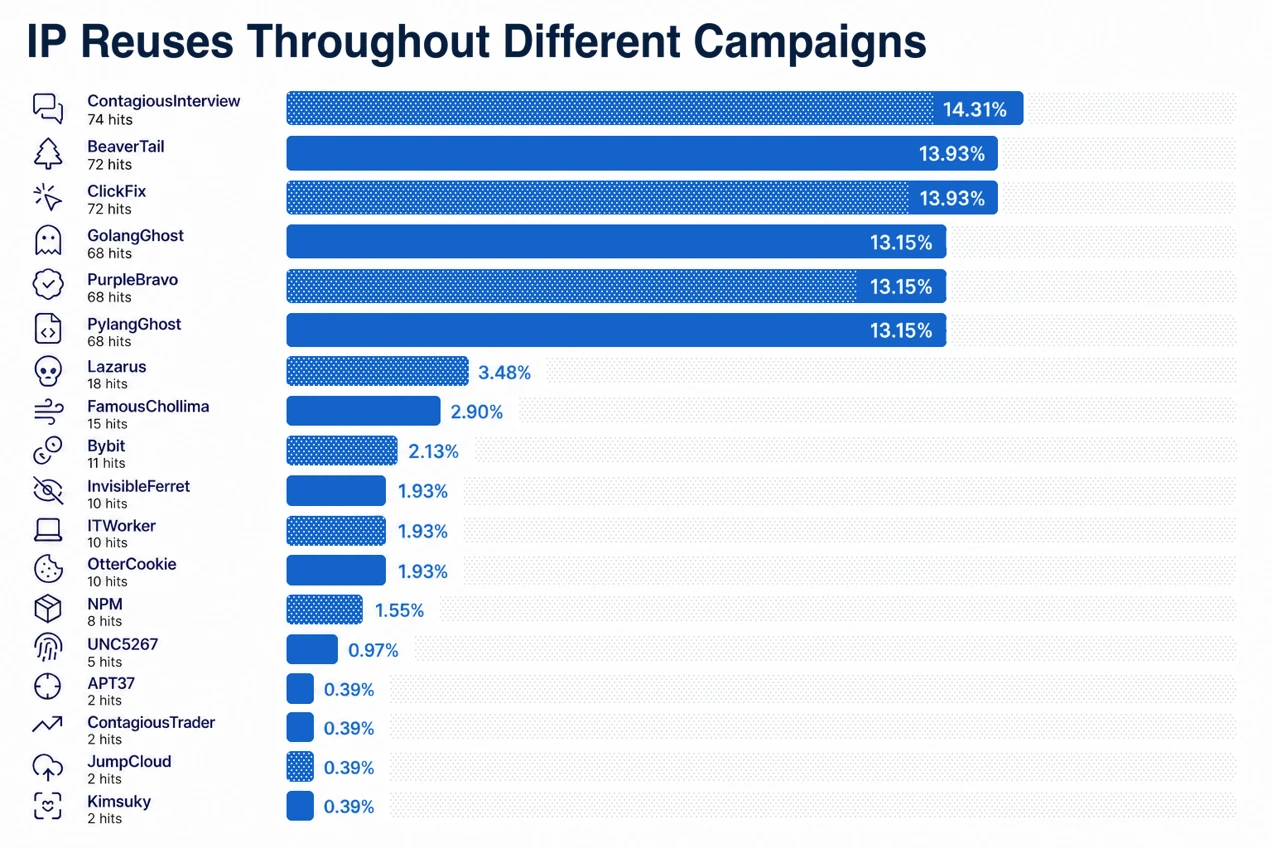
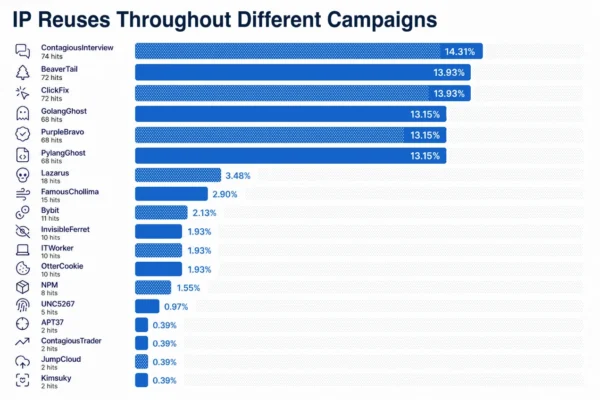
A key finding in the Atlassian report is the significant overlap in infrastructure between Contagious Interview and other known North Korean campaigns. Analysis of IP addresses used to create Bitbucket accounts and manage repositories revealed matches with indicators of compromise (IOCs) previously linked to BeaverTail and other state-sponsored activities. This infrastructure sharing indicates that North Korean cyber units likely utilize a centralized pool of resources or share operational tradecraft across different mission sets.
The methods used to trigger the initial malware have become increasingly sophisticated. Threat actors have moved away from simple executable files, instead opting for techniques that integrate the malicious trigger into the standard development workflow. This includes:
package.json for Node.js or requirements.txt for Python) that automatically download and run the payload when the developer initializes the project.Atlassian’s quarter-by-quarter analysis shows that the attackers are constantly experimenting with these triggers. Nearly half of the observed repositories utilized two or more techniques simultaneously to ensure the payload was delivered regardless of the victim’s specific environment or build process.
In a particularly concerning development, the research found that some victims are being turned into unintended distributors of the malware. Threat actors have begun asking candidates to record a "walkthrough" of their completed assessment and then upload their version of the code to their own personal GitHub or Bitbucket accounts.
When a developer does this, they are essentially hosting a copy of the malicious repository on a legitimate, well-established account. This bypasses many security filters that might flag a newly created or suspicious account, making the malware appear even more trustworthy to the next potential victim who might stumble upon it or be directed to it by the attackers.
Atlassian has taken a proactive stance in disrupting the Contagious Interview campaign. Working in tandem with industry peers and the broader cybersecurity community, the company has successfully identified and removed hundreds of malicious repositories and associated accounts from the Bitbucket platform.
Detection capabilities have been enhanced through the integration of threat intelligence and the simplification of in-product reporting. Users can now report malware or abuse directly through the Bitbucket interface while viewing a repository, allowing for faster response times. Atlassian emphasizes that protecting the platform is an ongoing priority and that the publication of their full research report is intended to maximize disruption efforts across the industry by sharing IOCs and tradecraft details.
While Atlassian stated that no specific action is required from Bitbucket customers to secure their accounts against this campaign, the report provides a set of best practices for individuals and organizations to mitigate the risk of falling victim to fraudulent recruitment:
As the Contagious Interview campaign continues to evolve, the security community remains vigilant. The detailed technical analysis provided by Atlassian serves as a critical resource for defenders, offering the necessary indicators to identify and block these North Korean operations before they can compromise sensitive development environments.