 11
11
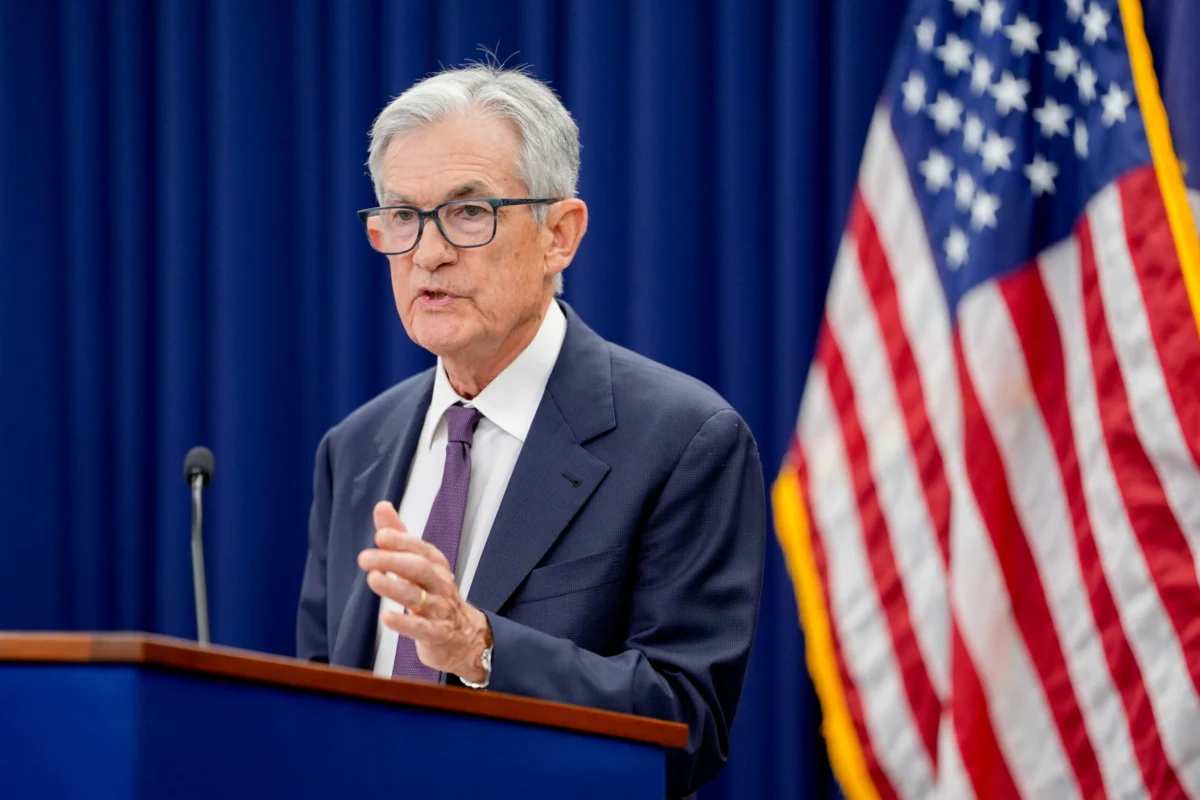
The Federal Reserve finds itself in a precarious position, compelled to maintain its current monetary policy stance this week as it grapples with a complex tapestry of conflicting economic forces. Market participants are overwhelmingly signaling a near-zero probability of any interest rate cuts at the current meeting of the Federal Open Market Committee (FOMC), or indeed in the immediate future. Futures markets are currently pricing in a strong likelihood that policymakers will not consider easing monetary conditions until at least September, with October appearing more probable, and even then, anticipating only a single rate reduction for the entire year.
For the upcoming decision on Wednesday, Federal Reserve Chair Jerome Powell and his colleagues are tasked with navigating the geopolitical implications of the ongoing Iran war, persistent concerns about inflationary pressures, and a labor market that continues to present mixed signals. This confluence of factors virtually assures that the Fed will hold its key interest rate steady, maintaining it within the target range of 3.5%-3.75%. Projections for economic growth and future interest rate paths are also not anticipated to undergo significant revisions.
"The decision itself is almost guaranteed – a rate hold at the March meeting. But any hints Chair Powell might drop about the path of future interest rates will be key," observed BeiChen Lin, senior investment strategist at Russell Investments. "Broadly speaking, the U.S. economy is still on solid footing. This means however that the bar for further rate cuts in the U.S. may be quite elevated."

Even prior to the escalation of the Iran conflict, market expectations did not anticipate a rate cut at this week’s meeting. Instead, traders had projected that the FOMC would wait until June, followed by at least one additional cut before the year’s end, according to CME Group’s FedWatch pricing data. However, the recent attacks and their discernible impact on oil prices and broader inflation have altered market calculations. This is occurring even though Fed officials generally tend to look past the types of oil price shocks that have historically accompanied such conflicts. Consequently, all attention will be directed towards Chair Powell’s communications. In a potentially significant development, this meeting could be Powell’s next-to-last as chair, a factor that might lead markets to exercise caution in interpreting his pronouncements.
"With an April cut almost entirely priced out, Powell’s ability to guide markets depends on the extent to which they perceive his comments as representing the committee’s consensus rather than his own views," noted analysts at Bank of America in a recent research note. "Even setting this constraint aside, Powell will have his work cut out for him."
Former Fed Vice Chair Roger Ferguson echoed this sentiment, telling CNBC that he anticipates the committee will adopt a "circumspect" tone in its post-meeting statement as it characterizes inflation, unemployment, economic growth, and the projected trajectory of monetary policy. "The question in front of everyone’s minds is, what do they say, if anything, about the future and how they think about changing the balance of risks," Ferguson stated.
When weighing the labor market against inflation, Ferguson indicated a preference for the Fed to prioritize price stability. "I’m more worried about higher inflation. You know, the Fed has a 2% target. They’ve been away from that target for multiple years now, actually," he elaborated. "At some point, it’s going to start to come into question whether or not the 2% target is really what the Fed’s aiming at, and so I am much more worried about that."

Investors will gain a more granular understanding of the committee’s internal deliberations through the release of updated economic projections. This release includes the Federal Reserve’s closely scrutinized "dot plot," which illustrates individual officials’ expectations for future interest rate levels. However, most observers anticipate minimal shifts in the Summary of Economic Projections (SEP) or the dot plot. The Fed might slightly revise upward its forecasts for economic growth and inflation compared to the December update, but the outlook for interest rates is expected to remain largely consistent. In December, officials projected only one rate cut for the current year, and this consensus is widely expected to hold, even in the face of recent dissenting votes that have accompanied Fed policy decisions.
"Looking at their communications, they will likely emphasize that the conflict in the Middle East has added further uncertainty to the outlook for both inflation and employment. However, their forecasts could look remarkably similar to three months ago," wrote David Kelly, chief global strategist at JPMorgan Wealth Management.
Adding another layer of complexity to the Fed’s decision-making process is the lingering political influence surrounding the central bank. President Donald Trump has consistently advocated for lower interest rates, frequently directing his criticism towards the Federal Reserve and Chair Powell. In a recent public appearance, Trump reiterated his stance, suggesting that Powell should have convened a special meeting to implement a rate cut. "What’s a better time to cut interest rates than now? A third-grade student would know that," Trump remarked.
The administration’s influence extends to the potential for a leadership change at the Fed. President Trump’s nomination of Kevin Warsh to succeed Powell in May is currently facing procedural hurdles. The confirmation process is being impeded by a legal matter involving the U.S. Attorney’s office and a renovation project at the Fed’s headquarters. Until this issue is resolved, Senator Thom Tillis, R-N.C., has indicated his intention to block the Warsh nomination within the Senate Banking Committee.