 11
11
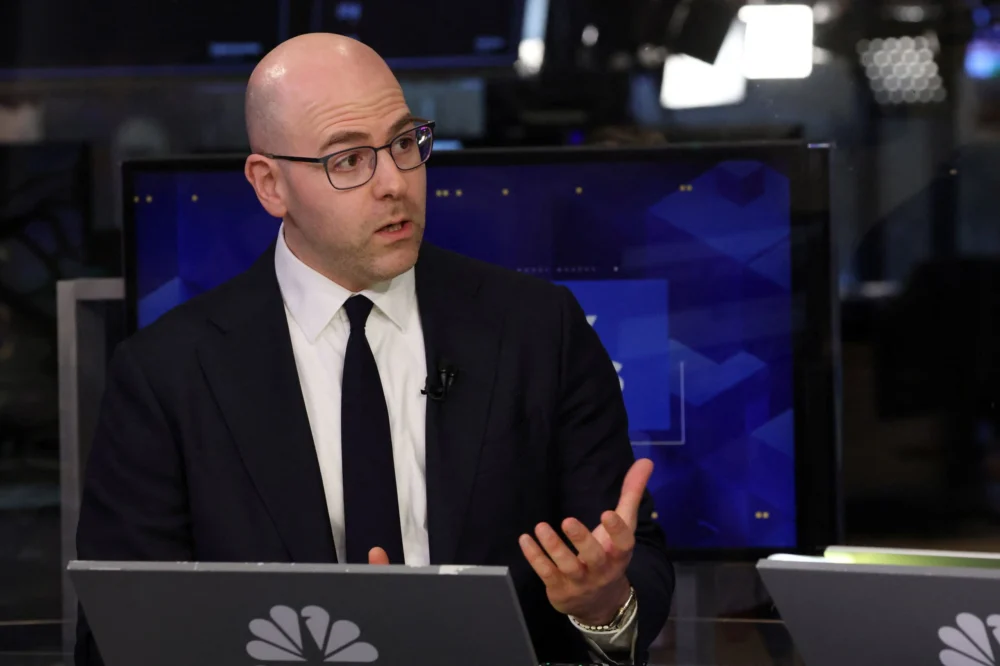
Federal Reserve Governor Stephen Miran has asserted that the unexpectedly weak February jobs report provides further justification for the central bank to implement additional interest rate reductions. The Bureau of Labor Statistics reported a decline of 92,000 nonfarm payrolls for February, a figure that Miran believes signals a need for the Fed to prioritize supporting the labor market over concerns about inflation.
In an interview on CNBC’s "Money Movers," Miran stated, "I think that we don’t have an inflation problem. I think that the labor market can use more accommodation from monetary policy. And I don’t see having a modestly restrictive stance of monetary policy as opposed to a neutral stance as being appropriate. I think being close to neutral is appropriate."
The current target range for the Federal Reserve’s benchmark interest rate is between 3.5% and 3.75%. This range was established following three consecutive quarter-percentage-point rate cuts that occurred in the latter half of 2025. Miran’s perspective suggests a desire for a more significant easing of monetary policy, advocating for a rate that is approximately a full percentage point lower than the current level, which he considers closer to a neutral stance.
The consensus among Federal Reserve officials at their December meeting indicated that a neutral interest rate—defined as a level that neither stimulates nor restrains economic activity—is estimated to be around 3.1%. This assessment implied the expectation of two further rate cuts. However, Miran’s interpretation of the economic data, particularly the recent jobs report, suggests a stronger case for more aggressive action.
Miran has consistently voiced his view that persistently high inflation figures are more a reflection of how inflation is measured by government agencies like the Commerce and Labor departments, rather than indicative of underlying inflationary pressures. He has pointed to specific factors, such as the rise in portfolio management fees, as contributing to this measurement distortion. These fees are often calculated as a percentage of the assets they manage. Consequently, as stock markets experience growth, the dollar value of these fees increases, even if the underlying service rate remains unchanged. This statistical artifact, Miran argues, can artificially inflate inflation readings.

Furthermore, Miran downplayed concerns about the recent surge in oil prices, which has been linked to geopolitical events such as the conflict involving Iran, and its subsequent impact on fuel costs. He noted that the Federal Reserve typically does not adjust monetary policy in response to such oil price shocks. "Typically, the Federal Reserve doesn’t respond to higher oil prices like that," Miran explained. "It [boosts] headline inflation, but it tends to be a one-off shock. When you think about core inflation [which does not include energy prices], it tends to be more predictive of where inflation is going over the medium term than headline inflation." This distinction between headline inflation (which includes volatile energy prices) and core inflation (which excludes them) is central to his argument that underlying inflation trends are not as problematic as headline figures might suggest.
Miran has been a vocal dissenter at Federal Open Market Committee (FOMC) meetings since his appointment as a governor by President Donald Trump in September. He has advocated for more substantial rate reductions, preferring half-percentage-point cuts over the quarter-point moves that have been approved by the committee. In January, when the FOMC decided not to implement a rate cut, Miran expressed his preference for a quarter-point reduction.
When questioned about the possibility of dissenting again at the upcoming FOMC meeting, Miran indicated his hope to avoid further dissent but acknowledged that the decision would depend on his colleagues’ deliberations. "I hope not, but that would be up to my colleagues. I hope that we vote to cut," he stated.
Miran was appointed to fill the unexpired term of Adriana Kugler, who resigned in August 2025. Kugler’s term concluded in January, but Miran has continued to serve in his role pending the approval of a successor. In related developments, President Trump has nominated Kevin Warsh for a position that is expected to ultimately replace current Fed Chair Jerome Powell, whose term is set to expire in May.
Looking ahead, Miran confirmed his participation in the upcoming FOMC meeting, stating, "I will be at the meeting in a couple weeks, and after that I will take it a day at a time." His remarks underscore a continued push for a more accommodative monetary policy, driven by his assessment of the labor market’s needs and his skepticism regarding the severity of current inflationary pressures as measured by official statistics.