 11

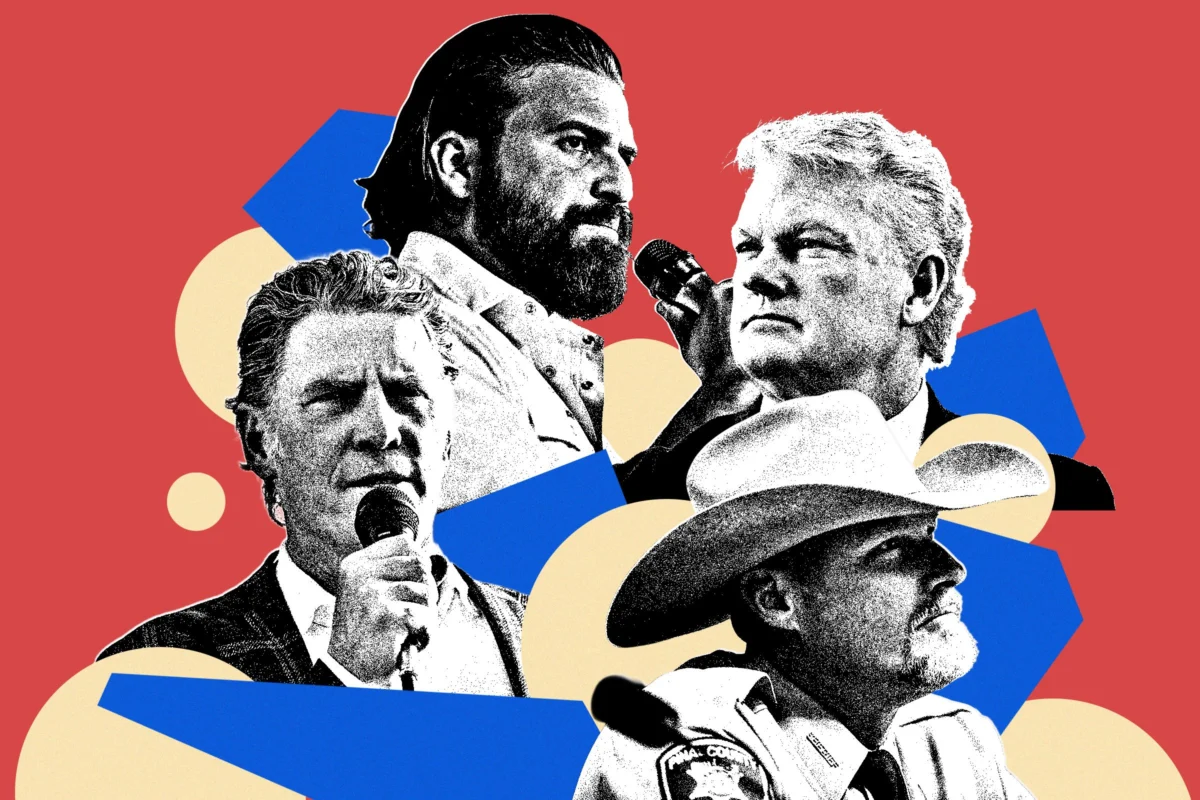
With just five weeks remaining until the critical midterm elections across the United States, a pervasive theme has emerged: extremism is undeniably on the ballot. A comprehensive review conducted by WIRED, encompassing candidates vying for statewide and federal positions this November, alongside exclusive data concerning state-level aspirants, has brought to light a disturbing trend. The investigation reveals hundreds of Republican candidates who not only openly espouse virulently hateful ideologies but also actively share racist content online. Many of these candidates maintain close ties to known white supremacist and antisemitic figures, and a significant number are members of various far-right groups operating online. Adding to the gravity of the situation, former President Donald Trump and his administration have openly embraced, endorsed, and staunchly defended many of these controversial figures, lending them a veneer of mainstream legitimacy.
The presence of extremism is not confined to the national stage; it resonates deeply at the local level. Data meticulously collected by the Institute for Research and Education on Human Rights, and shared exclusively with WIRED, indicates that over 500 candidates running for state legislator positions in the upcoming November elections are active members of far-right Facebook groups. These online communities are known for promoting extremist views, including those advocating for militias, radical interpretations of gun rights, and Christian nationalism, reflecting a broader infiltration of radical ideologies into local political landscapes.
While the Republican primaries saw the defeat of some particularly egregious extremist candidates—such as groyper James Fishback and antisemitic influencer Dan Bilzarian—many others successfully navigated these initial hurdles and secured their spots in the general election. Alarmingly, a significant number of these candidates are now projected to win their respective races, signaling a potential shift in the composition of legislative bodies across the nation.
Luke Baumgartner, a former research fellow at George Washington University’s Program on Extremism, offered a critical perspective to WIRED, stating, "The candidates are taking a page out of the Trump administration’s playbook." Baumgartner elaborated, suggesting that the current cohort of candidates running in November has drawn direct inspiration from the actions and rhetoric emanating from the White House during the Trump era. He asserted, "In essence, the executive branch has handed them a permission slip to say and do what would have been unthinkable during the George W. Bush, McCain, or [Mitt] Romney eras of the GOP." This observation underscores a perceived erosion of traditional political boundaries and an emboldening of extremist voices within the Republican Party.

The rise of extremist rhetoric in the political sphere is not merely a matter of words; it has tangible and dangerous consequences, manifesting as real-world political threats. Data from 2025 shows a concerning escalation: terrorism and targeted violence incidents increased by 19 percent compared to 2024, according to researchers at the University of Maryland. Concurrently, the US Capitol Police reported an increase in "threat assessment cases" against members of Congress for the third consecutive year, with a staggering 58 percent surge from 2024 figures. Furthermore, the US Marshals Service documented threats against nearly 400 judges, representing an approximate 5 percent increase from the previous year. These statistics paint a stark picture of a political climate increasingly fraught with intimidation and violence.
As the November midterms approach, WIRED is closely monitoring five specific races involving candidates who have either openly shared extremist ideologies or maintain close ties to extremist figures, highlighting the urgent nature of this political moment.
Bo French, the Republican candidate for Texas Railroad Commissioner, exemplifies the extreme elements now prominent in the GOP. His views are so radical that even seasoned Republican strategist Karl Rove has publicly declared his intention to vote for a Democrat rather than support what he termed a "bigot."
Earlier this month, French ignited widespread controversy by posting overtly racist comments concerning students celebrating at a University of Texas at Austin football game. French wrote, "Like bodycam footage exposed criminals, social media is exposing how many Americans have been displaced by foreigners. It’s everywhere and far worse than any of us could imagine," accompanying his text with a picture of students of South Asian descent celebrating a victory over Ohio State. The post drew further extremist engagement, with former Border Patrol leader Greg Bovino replying, "Mass deportations will solve it in very short order."
Despite widespread criticism, including calls from prominent Republicans like Senator John Cornyn of Texas to remove the offensive post, French defiantly doubled down. He told a conservative radio host that while he had "nothing against the people specifically in that picture," his intention was to "prioritize Americans." This incident was not an isolated one. French has a history of controversial statements, previously advocating for the removal of 100 million people from America, a group that unsettlingly included US citizens. He has also been documented repeatedly using homophobic slurs, further cementing his reputation for divisive rhetoric.

The Texas Railroad Commissioner is an unexpectedly powerful position, despite its misleading title. It holds no regulatory authority over railroads but instead oversees the state’s vast oil and gas industries, which collectively drill more oil and other hydrocarbons than all other US states combined. The individual in this role will also play a critical part in shaping how the rapidly expanding data center industry in Texas will be powered. Recent polling this week indicates that French, who has not received a public endorsement from Trump, is a slim favorite to win this significant seat.
Mark Lamb, the Republican nominee for Arizona’s 5th congressional district, is a former sheriff and reality TV personality whose political career is deeply intertwined with extremist elements. He boasts extensive ties to paramilitary groups, anti-immigration organizations, and is a prominent figure within the far-right constitutional sheriffs movement, an ideology that asserts local sheriffs have ultimate authority over federal law.
Lamb has consistently opposed public health measures, protesting Covid lockdowns and vaccine mandates. He has also been a vocal supporter of the "stop the steal" movement, which falsely claimed the 2020 election was stolen, and openly sympathized with the rioters who stormed the US Capitol on January 6, 2021. Furthermore, Lamb is a proponent of private militias, and during his tenure as sheriff of Pinal County in 2020, he authorized the formation of a civilian posse in response to Black Lives Matter protests, raising concerns about community policing and civil liberties. His presence is regular on right-wing podcasts, including those hosted by white nationalists and conspiracy theorists, amplifying his controversial views.
Despite facing accusations of multiple sex scandals, Lamb, who enjoys the support of Trump and the conservative student organization Turning Point USA, secured his primary victory. In one particularly disturbing incident, when a woman allegedly threatened to expose him, a Facebook account featuring Lamb’s avatar reportedly threatened to invoke Arizona’s revenge porn law against her. Given the deeply red nature of the district, which includes parts of Phoenix, Lamb is almost certain to be elected, underscoring the challenge of combating extremism in solidly conservative areas.
Brandon Herrera, who gained notoriety as a "guntuber"—an online personality focused on firearms—is now running for Congress in Texas’s 23rd district, which tragically includes Uvalde. His candidacy arose after the incumbent GOP congressman Tony Gonzales resigned following an admission of an affair, paving the way for Herrera as the Republican nominee.

Herrera’s public record reveals a long and troubling history of sharing sexist, racist, and antisemitic opinions. He has referred to a Nazi-era submachine gun as "the original ghetto blaster" and "Hitler’s street sweeper," trivializing a tool of genocide. His misogynistic comments are equally stark: he has compared feminists’ weight to whales, elephants, and nuclear bombs, and described liberal women discussing guns as "both fat and wrong." In a particularly vulgar attack on Shannon Watts, the gun control activist who founded Moms Demand Action after the Sandy Hook school shooting, Herrera stated, "The fact that you kept your cum trophy doesn’t make you any less wrong about the dumb shit that you say."
Despite this litany of offensive remarks, Trump publicly endorsed Herrera in a Truth Social post in March, declaring, "HE WILL NEVER LET YOU DOWN." When questioned about Herrera’s opinions on women, Speaker of the House Mike Johnson controversially dismissed them as merely part of his online "persona," while simultaneously praising Herrera as a "very serious candidate" and a "very thoughtful guy." This normalization of Herrera’s rhetoric by high-ranking party officials is a significant concern. Herrera is currently locked in a tight race against Democratic nominee Katy Padilla Stout.
Mike Collins, the Trump-backed Republican Senate candidate in Georgia, is challenging Democratic incumbent Jon Ossoff. Collins’s campaign has been largely consumed by efforts to distance himself from accusations of supporting or being indifferent to white supremacy and antisemitism. These accusations stem not from his own direct statements, but from the unsavory connections of those within his inner circle.
In May, NOTUS reported that William Paul, a former Collins staffer and son of Kentucky Senator Rand Paul, allegedly hurled antisemitic insults at Representative Mike Lawler from New York during an encounter at a bar. Later that same month, Slate revealed that Kip Talley, Collins’s then chief-of-staff, was a member of a group chat that included known white supremacists such as Nick Fuentes and Richard Spencer. In these texts, Talley indicated he was working to assist Charles "Chuck" Johnson, a Holocaust denier who has been accused of (and denied) being a white nationalist, who was then in jail for contempt of court in a racketeering lawsuit. Talley defended his actions to Slate, claiming he was concerned about an "acquaintance I have known for years was being mistreated in custody and denied basic medical care."
The controversies continued into July, when CNN disclosed that Collins’s son-in-law, David Alan Scheer II, a social media influencer, had shared antisemitic content and Nazi imagery online. Most recently, last month, the Washington Post revealed that a former intern and contractor for Collins’s PAC had shared images on X (formerly Twitter) depicting a swastika and an image of himself in what appeared to be KKK robes.

Collins has repeatedly issued statements condemning antisemitism and hate speech of any kind, attempting to mitigate the damage from these associations. He also successfully secured Trump’s endorsement earlier this month. However, current polling data suggests that Ossoff maintains a comfortable lead over Collins in the general election, indicating that these controversies may be impacting voter perception.
Marshall Rawson, a 34-year-old citrus farmer and Republican activist, emerged as the surprise winner of the Republican primary in August for Florida’s 10th District House race. His victory has brought to light a troubling past.
Talking Points Memo revealed this month that Rawson participated in the infamous Unite the Right rally in Charlottesville, Virginia, and was photographed in close proximity to the neo-Nazi who later drove his car into a crowd of protesters, resulting in the death of Heather Heyer.
Rawson’s social media presence further reinforces concerns about his ideology, with numerous posts containing overtly racist remarks. He has also suggested that gay people should face criminal charges and potentially even execution, revealing a deeply homophobic stance. Additionally, he has been linked to the racist and antisemitic League of the South movement, an organization that advocates for the secession of Southern states from the US.
Adding to the controversy, Talking Points Memo discovered that Rawson’s campaign has received donations from the daughter of former KKK leader David Duke, as well as from another individual who not only marched in Charlottesville but also admitted to organizing a birthday party for Duke. These financial ties underscore the profound links between Rawson’s campaign and figures associated with white nationalism and hate. While no public polling is available for this specific race, the district is known to lean heavily Republican, with the GOP winning the seat by a substantial 48-point margin in 2024. This suggests a strong likelihood of Rawson securing victory, despite the revelations about his extremist past and associations.






