 11

The universe’s relentless, accelerated expansion stands as one of the most profound enigmas in modern astronomy. At the heart of this expansion lies a mysterious force, dubbed "dark energy" by scientists. Pervading the cosmos, dark energy constitutes an estimated 68% of the universe’s total energy density, yet its fundamental nature, composition, and behavior remain largely unknown. Understanding this elusive force is paramount to comprehending the ultimate fate of our universe.
For the past five years, the Dark Energy Spectroscopic Instrument (DESI) has been diligently at work, striving to unravel this cosmic mystery. Perched atop a remote mountain in Arizona’s Sonoran Desert, within the Kitt Peak National Observatory, DESI has systematically mapped the universe with unparalleled precision. The culmination of this monumental effort is the release of the largest three-dimensional map of the universe ever created, offering scientists and the public an extraordinary new tool for exploration.
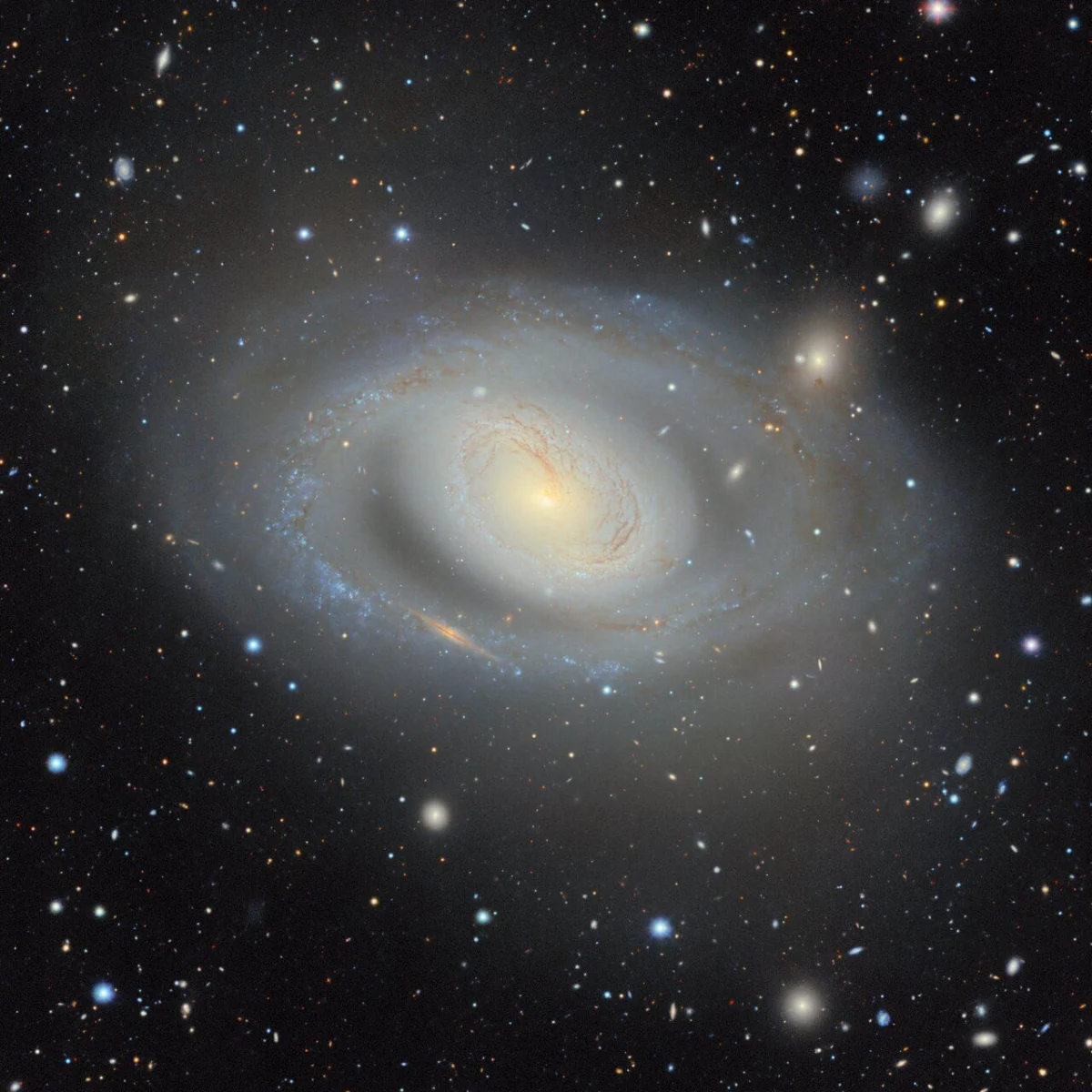
This groundbreaking map is now publicly accessible through the latest version of the DESI Legacy Imaging Surveys, a free online platform. This resource allows anyone with an internet connection to delve into the vast imaging data collected, effectively poking around the universe from their own device.
The sheer scale of the new map is staggering. It encompasses an overwhelming 5.6 trillion pixels of information, capturing approximately 4 billion individual celestial objects. These objects span the cosmic tapestry, including countless stars, distant galaxies, enigmatic black holes, and smaller bodies like asteroids. The survey meticulously covers an impressive 75 percent of the entire celestial sphere, recording light across both visible and near-infrared wavelengths. The inclusion of near-infrared light is particularly crucial, as these longer wavelengths can penetrate cosmic dust more effectively than visible light, allowing astronomers to peer through obscuring matter and observe objects further back in time, often seen as redshifted light.
One of the persistent challenges for astronomical surveys, especially those based on Earth, is the obscuring presence of our own Milky Way galaxy. The dense band of stars, space dust, and other matter within our galactic plane can block views of deeper space. The Milky Way, often described as splayed out like a "fried egg," presents a significant barrier. To overcome this, the DESI researchers ingeniously aim the instrument’s 5,000 robotic mechanical eyes — each precisely positioning an optical fiber — out of the top or bottom of our galaxy. This strategic vantage point allows DESI to capture some of the clearest and least obstructed images of distant space to date, bypassing the galactic "fog" that typically hinders observations.
While DESI’s dedicated survey spanned five years, its success is built upon an extensive foundation of 13 years of preparatory groundwork. This preparatory phase involved not only the development and refinement of the instrument’s cutting-edge technology but also earlier imaging surveys that helped identify target objects for DESI’s spectroscopic observations. Over the course of this ambitious project, more than 160 scientists from various institutions worldwide have contributed to data collection and analysis. The impact of their work is already evident, with upwards of 1,800 scientific papers referencing the DESI data already published, underscoring its pivotal role in contemporary astronomical research.

David Schlegel, a distinguished researcher at the Lawrence Berkeley National Laboratory and co-lead of the Legacy Surveys, articulated the instrument’s profound influence in a press release. "It’s part of the fabric of astronomy research now," Schlegel stated. "When you’re working with astronomical objects today, you often start by pulling up the Legacy Imaging Viewer to see what you’re looking at." This highlights DESI’s establishment as an indispensable tool for astronomers globally.
Earlier in the year, DESI researchers released another significant map, which charted the distances of 47 million galaxies and quasars. This previous endeavor reconstructed an astonishing 11 billion years of cosmic history, bringing the subtle yet powerful effects of dark energy into sharper focus. By mapping the large-scale structure of the universe over vast cosmic timescales, astronomers can utilize features like baryon acoustic oscillations (BAO) – remnants of sound waves from the early universe that serve as "standard rulers" – to precisely measure the universe’s expansion rate at different epochs. This allows scientists to track the influence of dark energy by analyzing the rates at which celestial objects appear to be moving away from us, a phenomenon known as cosmological redshift.
Crucially, data gleaned from the first three years of DESI’s comprehensive survey, when combined with independent observations of supernovae (which act as "standard candles" for cosmic distance measurements) and the pervasive cosmic microwave background radiation (the leftover heat from the Big Bang), has yielded a tantalizing hint: dark energy may not be a constant force throughout cosmic history. Instead, the analysis suggests it might be gradually weakening over time. This finding challenges the prevailing cosmological model, which largely assumes a constant dark energy density, and opens new avenues for theoretical exploration into the nature of this mysterious force. A full analysis of all five years of DESI data is eagerly anticipated, with its release scheduled for 2027. Scientists believe this comprehensive dataset will paint an even more vivid and detailed picture of the universe’s past and present, potentially revolutionizing our understanding of cosmic evolution.
Looking ahead, DESI’s meticulous observations are poised to serve as a vital reference and comparison point for other monumental cosmic projects. Among these is NASA’s recently launched Nancy Grace Roman Space Telescope, a next-generation observatory designed to explore dark energy, exoplanets, and infrared astronomy. DESI’s detailed mapping of galaxy positions and redshifts will provide crucial context and target lists for Roman’s high-resolution observations, enabling synergistic scientific discoveries.
Furthermore, the sheer volume of data generated by DESI—operating at petabyte scales—necessitates advanced analytical techniques. Researchers are actively planning to train artificial intelligence (AI) tools to accelerate the analysis of this immense astronomical dataset. AI algorithms excel at pattern recognition, anomaly detection, and classification, making them invaluable for sifting through vast quantities of information to uncover new insights that might otherwise remain hidden. Within these petabytes of data, much remains to be discovered, and AI is expected to be a powerful ally in unlocking those secrets.
Arjun Day, co-director of the Legacy Surveys and an astronomer with the National Science Foundation, underscored the broader significance of this achievement. "Explorations of our universe always start with images of the night sky," Day remarked. "These data are fundamental to the investigation of the expansion history of the universe and the formation of our galaxy. But the skies belong to everyone, and this survey gives everyone the chance to marvel at their wonders." This sentiment highlights the dual benefit of DESI’s work: advancing cutting-edge scientific understanding while simultaneously democratizing access to the awe-inspiring beauty and complexity of the cosmos.
This story originally appeared on WIRED Japan and has been translated from Japanese.






