 11


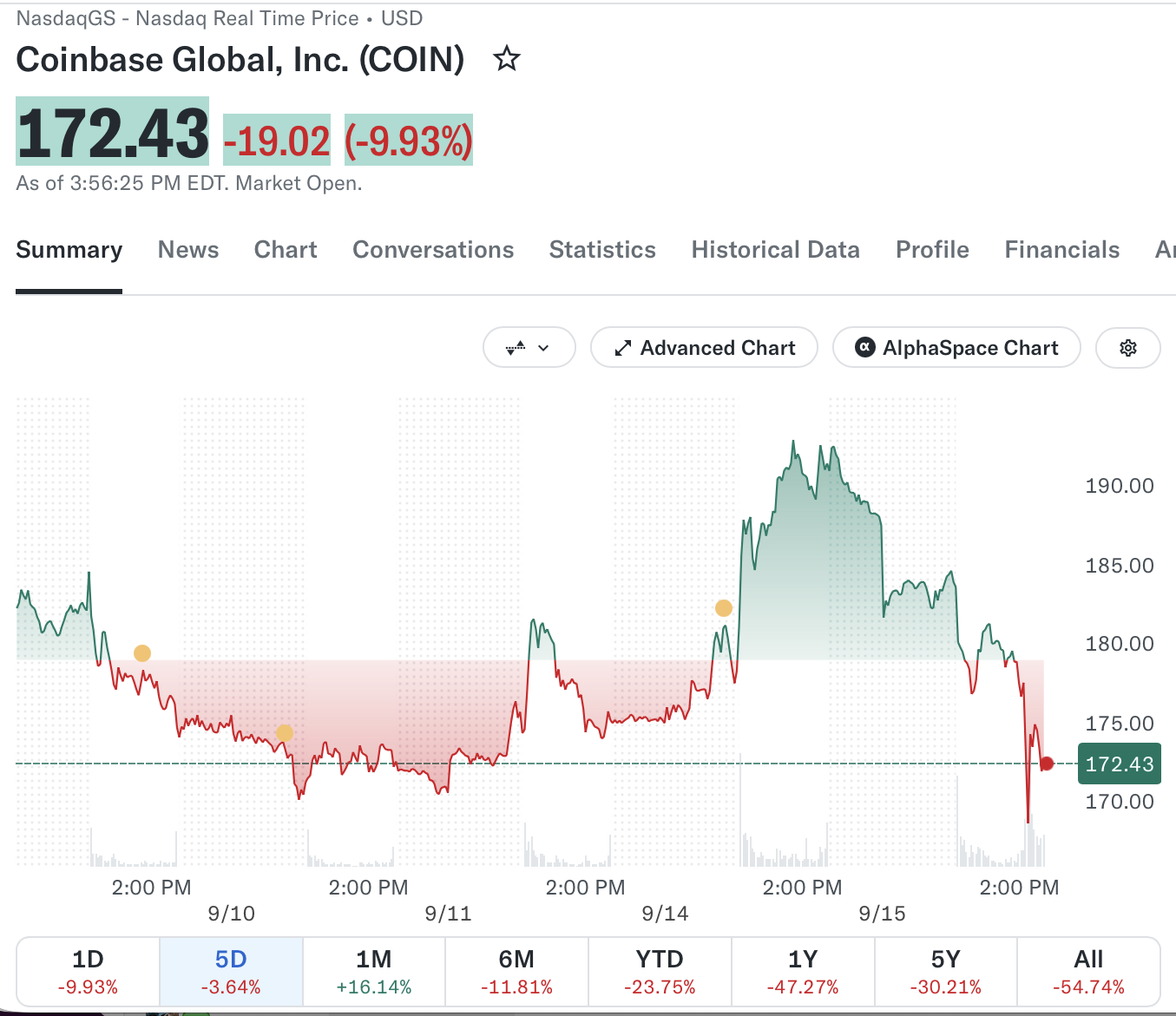
Crypto-linked stocks experienced a significant downturn on Tuesday, with several prominent companies seeing double-digit declines, following the US Senate’s failure to advance the CLARITY Act. The proposed legislation, aimed at establishing a comprehensive regulatory framework for the burgeoning digital asset market, fell short of the necessary 60 votes for cloture, leaving the industry in a state of increased uncertainty. Shares of Circle, a stablecoin issuer, and Coinbase, a leading cryptocurrency exchange, were among the hardest hit, both dropping approximately 10%.
The ripple effect of the Senate’s decision extended to companies heavily invested in Bitcoin. American Bitcoin, a Bitcoin treasury company, saw its stock fall by around 8%. Strategy and Strive, other entities with substantial Bitcoin holdings, also experienced declines, each shedding approximately 5% of their market value, according to data from Yahoo Finance. The selloff permeated the Bitcoin mining sector as well. Riot Platforms registered a decrease of about 6%, while CleanSpark fell by nearly 5%. Hut 8 experienced a decline of more than 4%, and IREN saw its stock drop by almost 4%.

Coinbase (COIN) shares, specifically, experienced a sharp decline of 9.9% on Tuesday, as highlighted by Yahoo Finance data. This significant drop underscores the market’s sensitivity to regulatory developments impacting the cryptocurrency ecosystem.
The immediate catalyst for these market movements was the Senate vote on a cloture motion intended to bring the CLARITY Act to the Senate floor for a full debate and vote. The failure to achieve the required 60-vote threshold signals a significant setback for the bill, which seeks to delineate the regulatory responsibilities for various aspects of the digital asset industry between the Commodity Futures Trading Commission (CFTC) and the Securities and Exchange Commission (SEC). The CLARITY Act was designed to provide much-needed clarity on the classification of digital assets and the oversight authority for exchanges, brokers, and other market participants.
This legislative roadblock leaves the CLARITY Act with a narrow window of opportunity to advance before the end of the year. With fewer than 36 legislative days remaining before a new Congress is sworn in following the midterm elections in November, the prospects for the bill’s passage in its current form appear dim. The failure to secure bipartisan consensus on this critical piece of legislation creates a vacuum in regulatory guidance, which investors and industry participants have been eagerly anticipating.
Following the Senate’s vote, the price of Bitcoin, the flagship cryptocurrency, experienced a brief dip below the $75,000 mark. However, it showed some resilience, climbing back to approximately $76,000 at the time of reporting, according to data from CoinGecko. While the broader market selloff in crypto-linked stocks was significant, Bitcoin’s ability to partially recover suggests a degree of underlying strength or perhaps a divergence between the speculative trading of related equities and the underlying digital asset itself.
This development comes amidst ongoing discussions and proposals within the digital asset space. In a related move, Democrats had reportedly pushed back on a previous offer from Republicans regarding the CLARITY Act, proposing a counteroffer, as reported by Politico. This indicates that while a consensus on regulatory clarity has not been reached, the dialogue and negotiation process are still active, albeit complex.
Coinbase CEO Brian Armstrong had been a particularly vocal proponent of the CLARITY Act, actively advocating for its passage and emphasizing its potential to foster innovation within the US crypto market. As far back as May, Armstrong expressed optimism, stating that the legislation was in its "stronger or more bipartisan position." His confidence was further articulated in August when he predicted either a favorable vote of "60+ votes in the Senate on September 15th" or the issuance of new regulatory rules by the CFTC and SEC on September 16th, should the bill fail to advance. He had remarked on X (formerly Twitter), "Sounds like clarity is coming either way," suggesting a belief that regulatory direction would be established regardless of the bill’s fate.

In the lead-up to Tuesday’s vote, Armstrong intensified his calls for legislative support, framing the decision as a critical juncture for the United States’ position in the global digital asset landscape. He warned that failure to act could cede leadership in crypto innovation to other nations. His message on X urged senators to consider the long-term implications, stating, "History – and the crypto voter – won’t forget."
In the wake of the CLARITY Act’s stalled progress, Michael Saylor, co-founder of Strategy and a prominent Bitcoin advocate, offered his perspective on regulatory clarity. Saylor, whose company holds a significant amount of Bitcoin on its balance sheet, posited on X, "The only clarity you need is Bitcoin." This statement reflects a sentiment held by some within the crypto community who believe that Bitcoin’s inherent decentralized nature and established track record provide sufficient clarity, rendering the need for extensive regulatory frameworks less critical.
The failure of the CLARITY Act to advance in the Senate highlights the ongoing challenges in navigating the complex landscape of digital asset regulation. The market’s reaction underscores the significant impact that legislative developments can have on publicly traded companies operating within or closely associated with the cryptocurrency industry. As the year progresses and the focus shifts towards the upcoming midterm elections, the path forward for digital asset regulation in the United States remains uncertain, leaving investors and businesses to contend with an environment of continued ambiguity. The market will likely remain sensitive to any future legislative efforts or regulatory pronouncements concerning the digital asset sector.






