11

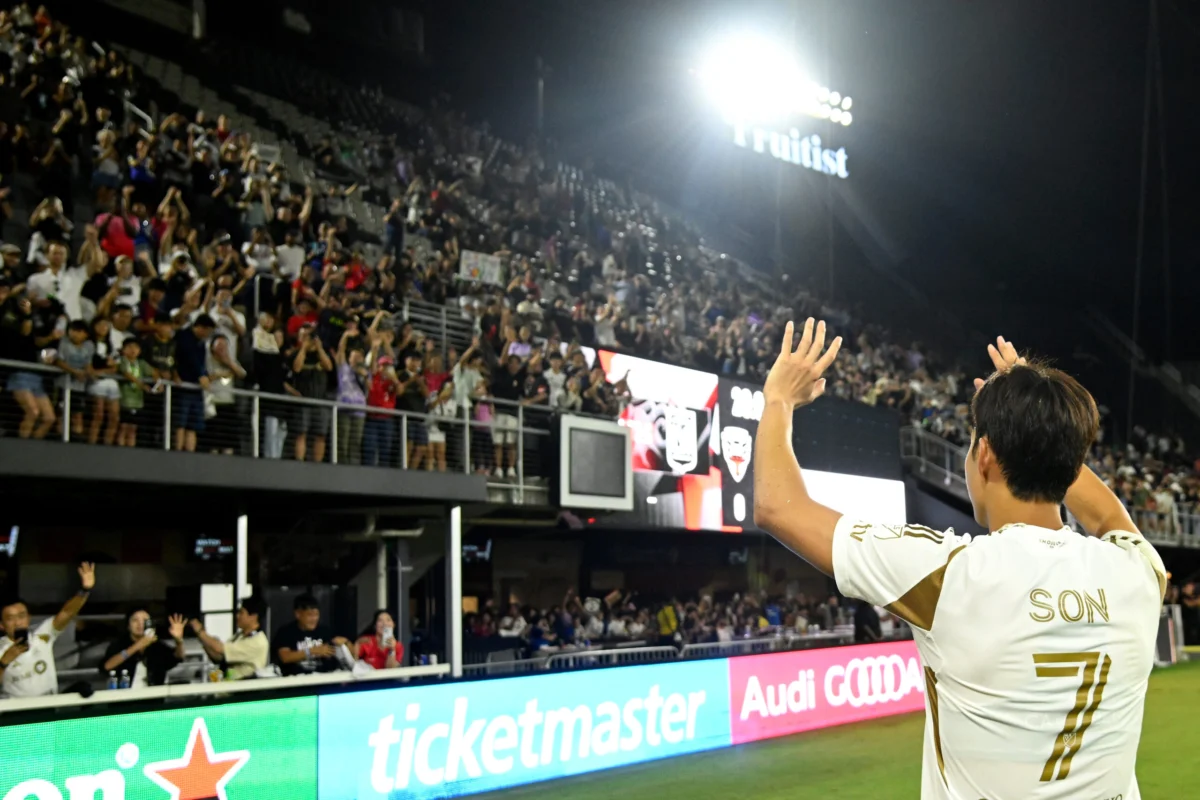
Collaborative Fund, the distinguished 15-year-old New York-based generalist venture capital firm, which manages approximately $1 billion in assets and has a notable track record of early investments in companies like Lyft, Reddit, Sweetgreen, and Olipop, has announced a significant strategic move: acquiring a stake in the Major League Soccer (MLS) club D.C. United and its home stadium, Audi Field. This investment marks a pivotal moment, positioning Collaborative Fund as the latest – and, in terms of fund structure, perhaps the most distinct – venture firm to enter the realm of professional sports ownership, following a path recently illuminated by Thrive Capital.
This emerging trend signifies a departure from traditional sports investment models, introducing venture capital as a new and potentially transformative source of funding and strategic partnership for professional sports franchises. Historically, capital has flowed into the lucrative world of professional sports primarily through two well-established channels: the vast personal fortunes of wealthy individuals, often from the tech sector, and the structured financial mechanisms of private equity firms. However, the recent moves by Thrive Capital and now Collaborative Fund indicate a novel approach, where venture capital, typically focused on high-growth startups and technological innovation, is increasingly recognizing the inherent value and strategic potential embedded within established sports entities.
The groundwork for this new investment paradigm was laid just months ago by Joshua Kushner’s Thrive Capital. Thrive launched a specialized investment vehicle named Thrive Eternal, explicitly designed with the mandate to acquire and hold "iconic franchises and cultural institutions" for extended periods, potentially decades. This permanent-capital structure, funded by many of the same institutional and individual investors backing Thrive’s traditional venture and growth funds, represented a groundbreaking shift. Thrive Eternal initiated its foray into sports by announcing a significant stake in the venerable San Francisco Giants, a cornerstone franchise in Major League Baseball. Building on this initial success, the same vehicle, with the notable addition of former Disney CEO Bob Iger joining as a co-owner and strategic partner, subsequently made headlines by acquiring the Los Angeles Lakers outright for a record-breaking $12.5 billion. This acquisition underscored the immense financial power and long-term vision behind Thrive’s new strategy, signaling that sports franchises are increasingly being viewed as enduring, high-value assets worthy of long-term, patient capital.
Contrastingly, traditional investment routes have been well-trodden. The infusion of personal wealth from successful entrepreneurs and executives into sports ownership has been a recurring theme. A prominent recent example is Vinod Khosla, the co-founder of Sun Microsystems and a renowned venture capitalist, whose family agreed this summer to acquire the Seattle Seahawks National Football League (NFL) franchise for an unprecedented $9.6 billion. This personal-wealth play followed the Khosla family’s prior investment in the San Francisco 49ers, another NFL powerhouse, alongside OpenAI chairman Bret Taylor. Such investments are often driven by a combination of passion for the sport, a desire for community involvement, and the strategic diversification of personal assets, leveraging substantial individual fortunes to acquire ownership stakes in highly visible and valuable sports organizations.
Private equity firms have also been deeply entrenched in sports for years, employing a different, more financially engineered approach. These firms typically focus on acquiring minority stakes or, in some cases, outright ownership, with a keen eye on operational efficiencies, revenue growth, and eventual exits that yield significant returns. Notable examples include Sixth Street, which holds strategic stakes in elite franchises such as the Boston Celtics (NBA), the New England Patriots (NFL), and MLB’s San Francisco Giants. Ares Management has also been active, owning a piece of the Miami Dolphins (NFL) outright, and separately providing substantial financing, including a $500 million preferred-equity deal, to support Chelsea Football Club’s stadium development plans in London. RedBird Capital Partners has established a significant presence in global soccer, owning Italian Serie A giant AC Milan outright and holding a minority stake in Fenway Sports Group, the influential holding company behind English Premier League club Liverpool FC and MLB’s Boston Red Sox. Arctos Partners specializes in minority positions scattered across a wide array of leagues, including MLB, the NFL, the NBA, and top-tier European soccer clubs, demonstrating a diversified portfolio approach to sports investment. Apollo Global Management, a newer entrant into the sports finance landscape, has largely concentrated on providing debt and financing solutions for sports entities rather than taking direct ownership stakes, illustrating yet another facet of private equity’s engagement with the industry.
While both Thrive and Collaborative are charting new territory by bringing venture capital into sports ownership, their specific approaches diverge significantly. Thrive Capital, through its Thrive Eternal vehicle, has meticulously constructed a stand-alone, permanent-capital fund explicitly designed for the acquisition and long-term holding of "trophy assets" – iconic franchises with enduring cultural and financial value. This strategy emphasizes long-term appreciation and generational ownership, treating these sports entities as foundational pillars within a diversified, patient investment portfolio.
Collaborative Fund, in stark contrast, is deploying capital for its D.C. United stake directly from its existing early-stage fund, the very same vehicle it utilizes to write seed and Series A checks for nascent technology and consumer startups. This fundamental difference in funding mechanism speaks to a profoundly different investment thesis. Collaborative Fund is treating the D.C. United deal less as a traditional buy-and-hold asset acquisition and almost more like an investment in "infrastructure." This perspective suggests that the sports franchise, and particularly its physical assets like Audi Field, are viewed as platforms or distribution channels that can actively support and amplify the firm’s broader portfolio of early-stage companies, rather than merely appreciating in value as a standalone asset.
In an internal memo shared with TechCrunch, Craig Shapiro, the founder and managing partner of Collaborative Fund, articulated this unique perspective, framing the D.C. United deal as a natural extension of the firm’s core investment activities. Shapiro posited that "A franchise is the ultimate consumer product," highlighting the deep emotional connection, brand loyalty, and recurring engagement that sports teams cultivate with their fan bases. He further underscored D.C. United’s strategic value, pointing to its status as one of Major League Soccer’s original clubs, which provides Collaborative Fund access to an established institution with a decades-long history and a deeply ingrained fan base ripe for further engagement and expansion.
Shapiro’s thesis also leans heavily on the significant tailwinds currently propelling American soccer. He cited the recent success of a World Cup just concluded (implying the 2026 World Cup co-hosted by the U.S., Mexico, and Canada), the anticipation of the Los Angeles Olympics in 2028, and soaring youth participation numbers across the United States as powerful demographic and cultural forces that will continue to elevate the sport’s profile and commercial potential. Furthermore, he emphasized D.C. United’s valuable assets, including its ownership of Audi Field, a modern, purpose-built soccer-specific stadium strategically located in Washington, D.C. The club also boasts a robust talent-development pipeline through Loudoun County, Virginia, which includes Loudoun United FC, a USL Championship team that serves as D.C. United’s official reserve side, ensuring a steady stream of homegrown talent. Crucially, D.C. United also holds the rights to a future Baltimore expansion team, providing a clear pathway for market expansion and increased regional influence.
Indeed, the investment philosophy Shapiro elaborated at a TechCrunch StrictlyVC event in New York centered less on the traditional notion of merely owning a piece of an appreciating asset – the sports team itself – and more on leveraging the strategic possibilities that such an ownership stake unlocks. Collaborative Fund explicitly aims to transform Audi Field into what Shapiro describes as a "living showcase" for its own portfolio companies. This innovative approach envisions the stadium as a dynamic, experiential platform where Collaborative Fund’s early-stage investments can gain unparalleled exposure and engagement with a targeted consumer base.
For instance, as a prominent backer of both Whoop, a leading fitness wearable company, and Olipop, an innovative healthy beverage brand, Collaborative Fund envisions integrating these portfolio companies directly into the fan experience at Audi Field. This could manifest as interactive Whoop wearables activations for fans during game days, allowing them to track their biometric data in real-time, or the seamless integration of Olipop drinks into the stadium’s concession offerings, providing healthier beverage alternatives. Shapiro emphasized the immense value of the stadium’s predictable foot traffic – tens of thousands of people showing up on a regular schedule – as a potent distribution channel. In an era where artificial intelligence (AI) is increasingly making aspects of daily life feel synthetic or virtual, Shapiro argues that authentic, live experiences, such as attending a professional sports match, are becoming exponentially more valuable and, therefore, more impactful for consumer engagement and brand building.
While Shapiro’s public statements focus on this strategic, synergistic vision, it is undoubtedly a significant factor that team valuations across professional sports have been on a steep upward trajectory, a reality that would surely reassure Collaborative Fund’s limited partners. Soccer valuations, in particular, have experienced an extraordinary surge. The arrival of global superstar Lionel Messi, for example, is estimated to have roughly doubled Inter Miami’s franchise value in just two years. Across Major League Soccer, the average club value has reportedly increased by approximately 134% since 2019, reflecting the league’s burgeoning popularity, expanding media rights deals, and growing fan base. D.C. United’s own valuation serves as a compelling case study, having climbed dramatically from $35 million in 2008 to an impressive $785 million today, a figure that comprehensively factors in the club’s ownership of Audi Field and the surrounding real estate assets. This robust financial performance underscores the intrinsic value of these sports properties as appreciating assets, even as Collaborative Fund emphasizes their role as strategic platforms.
If Craig Shapiro’s forward-thinking thesis proves correct – that a professional sports franchise is indeed "the ultimate consumer product" and a powerful experiential platform – then Collaborative Fund’s strategic investment in D.C. United and Audi Field could represent not only a savvy financial play but also an innovative blueprint for venture capital to unlock new avenues of value creation for its portfolio companies. This bold move will undoubtedly be closely watched as the venture capital industry continues to explore non-traditional asset classes.
The deal, like all such transactions in professional sports, remains subject to the final approval of Major League Soccer.