 11
11
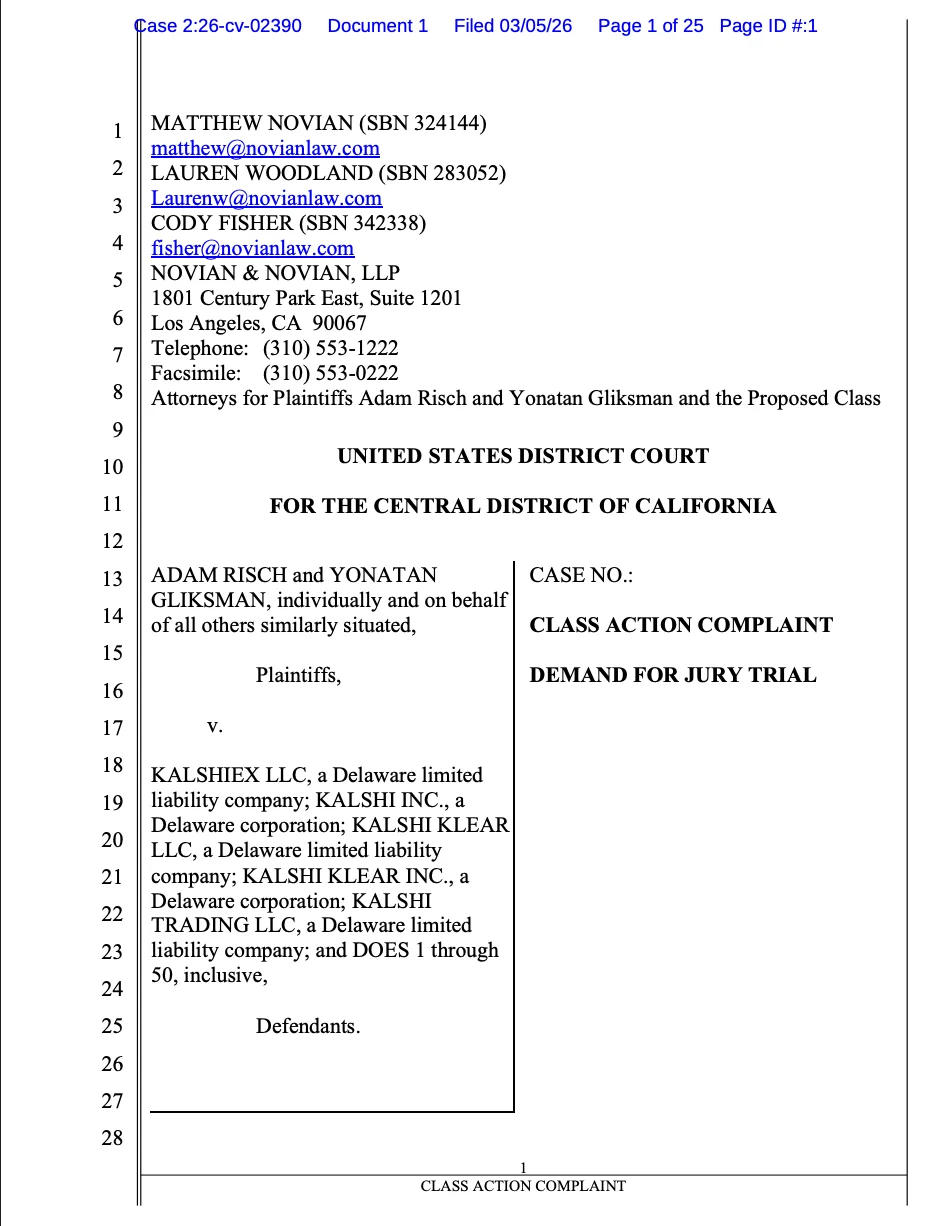
A class action lawsuit has been filed against the prediction market platform Kalshi, alleging that the company engaged in deceptive practices regarding a market designed to predict the ouster of former Iranian Supreme Leader Ali Khamenei. The plaintiffs claim that a crucial "death carveout" policy was not adequately disclosed to users, leading to confusion and a failure by Kalshi to pay out winning trades following Khamenei’s confirmed death.
The lawsuit, filed by a group of plaintiffs, asserts that the death carveout policy, which stipulated how trades would be settled in the event of Khamenei’s demise, was not properly integrated into the user-facing rules summary for the "Ali Khamenei out as Supreme Leader" market. According to the plaintiffs, this omission meant that a "reasonable consumer" would not have been adequately notified of the policy’s existence or its significant implications for their potential winnings. The legal filing further quotes the defendants themselves acknowledging that their prior disclosures were "grammatically ambiguous," a concession that the plaintiffs argue supports their claims of deceptive practices.
Kalshi voided all trading positions on the market after the death of Ali Khamenei was officially confirmed. This action meant that the market did not resolve to a "yes" outcome, as would have been the case if Khamenei had been removed from power through means other than death. This decision directly impacted users who had invested in contracts that would have paid out upon his death, leading to financial losses for some.
Tarek Mansour, co-founder of Kalshi, has stated that the platform’s policy is not to list markets directly tied to death. He explained that when markets involve potential outcomes related to death, the rules are designed to prevent individuals from profiting from such events. This stance, however, has been met with skepticism by the plaintiffs, who characterize the carveout policy as "predatory" and an "unfair" business practice, particularly in the context of this specific market.
The lawsuit details the plaintiffs’ understanding of the market’s premise, stating, "With an American naval armada amassed on Iran’s doorstep and military conflict not merely foreseeable but widely anticipated, consumers understood that the most likely, and in many cases the only realistic, mechanism by which an 85-year-old autocratic leader would ‘leave office’ was through his death. Defendants understood this as well." This suggests that the plaintiffs believe Kalshi was aware that death was the most probable outcome for the market’s resolution and that the carveout policy was implemented to circumvent payouts in such a scenario.

In response to the controversy, Mansour announced a reimbursement plan for users affected by the carveout policy. The reimbursements were to be calculated based on the "last traded price" of the market before Khamenei’s death was confirmed. However, this reimbursement policy also faced significant pushback from users, who questioned the methodology and transparency of the "last traded price" calculation. The plaintiffs in the lawsuit specifically highlighted that the precise timestamps and methodology used to determine this price were not disclosed or made transparent, further fueling their accusations of unfair practices.
Mansour has publicly defended Kalshi’s actions, maintaining that the platform was adhering to its established policy regarding "death markets." He asserted that the policy was clearly articulated within the market’s rules. Furthermore, he emphasized Kalshi’s financial position in the matter, stating, "Kalshi made no money here and even reimbursed all losses out of pocket. Not a single user walked away losing money from this market." This claim aims to counter the notion that Kalshi profited from the situation, suggesting instead that the company incurred costs to resolve the issue and satisfy users.
This incident occurs at a time when trading volumes on prediction markets have been experiencing a significant surge, reaching record highs in 2026 as these platforms gain increasing popularity. The growing interest in prediction markets, which allow users to bet on the outcomes of future events, has also brought increased scrutiny to their operational practices and regulatory compliance. The Kalshi case highlights the complex ethical and legal considerations that arise when prediction markets deal with sensitive and potentially volatile events, particularly those involving the life and death of prominent public figures.

The lawsuit against Kalshi is expected to shed further light on the transparency and fairness standards required for prediction market operations. The plaintiffs’ legal challenge aims to hold Kalshi accountable for what they perceive as a deliberate attempt to mislead users and avoid rightful payouts. The outcome of this class action lawsuit could set a precedent for how similar disputes are handled in the rapidly evolving landscape of prediction markets. The core of the dispute revolves around whether Kalshi adequately disclosed its "death carveout" policy and whether its actions constituted deceptive or unfair business practices, particularly given the sensitive nature of the market in question and the anticipated outcome. The platform’s claim of adhering to policy and reimbursing losses is countered by the plaintiffs’ allegations of hidden terms and a predatory approach to market design.