11
11
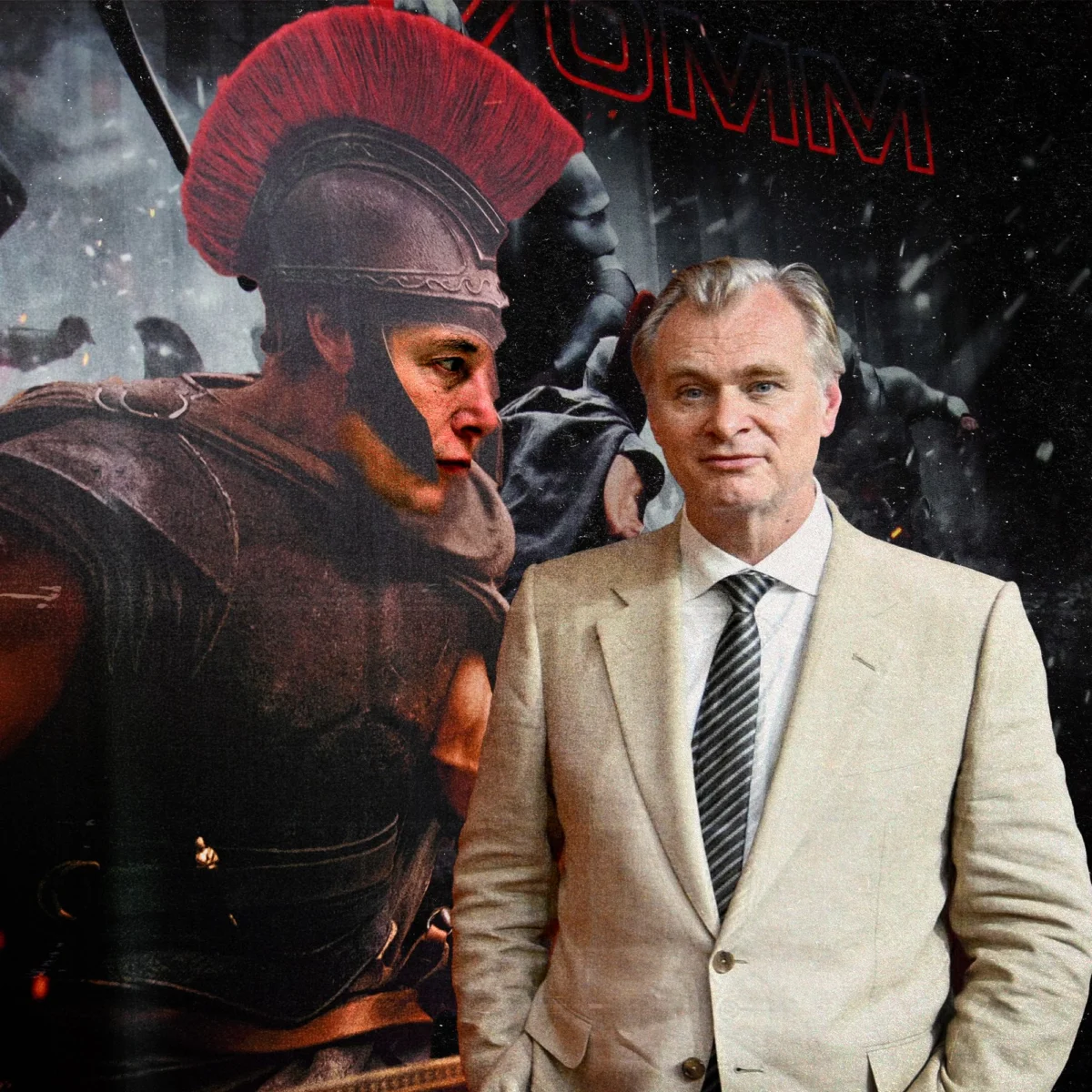
For months, a concerted campaign orchestrated by figures like Elon Musk and a network of right-wing commentators on the social media platform X has attempted to whip up a storm of outrage. Their target: acclaimed movie director Christopher Nolan’s cinematic adaptation of The Odyssey. This manufactured backlash, however, has not only failed spectacularly but has also underscored a growing chasm between online culture war narratives and the sentiments of mainstream audiences. The resounding box office success of Nolan’s film has left its detractors grappling with a reality increasingly at odds with their perceived influence.
The supposed "artistic crimes" committed by Nolan in bringing Homer’s ancient Greek epic to the big screen were, according to Musk and his vocal allies, instances of "historical inaccuracy." This accusation, however, seems particularly misplaced given the very nature of The Odyssey itself—a lavish fantasy narrative teeming with mythical monsters, powerful witches, and the spectral presence of undead spirits. The core of their furor centered primarily on specific casting decisions: the choice of Lupita Nyong’o, a Black actress, for the iconic role of Helen of Troy, and Elliot Page, a trans actor, as Sinon. These casting choices, which accounted for a grand total of approximately 10 minutes of screen time within the three-hour saga, became flashpoints in a broader hysteria surrounding "wokeness" in Hollywood.
Beyond the casting, other grievances included a rejection of Americanized dialogue, which some critics deemed anachronistic for an ancient Greek epic. Furthermore, a lingering undercurrent of misogyny was evident, particularly in relation to scholar Emily Wilson’s groundbreaking 2017 translation of Homer’s epic—the first complete English translation by a woman. Wilson’s work, celebrated for its accessibility and modern sensibility, had already drawn criticism from traditionalists, and its perceived influence on the film’s contemporary approach further fueled the online backlash. These combined elements resulted in countless posts filled with teeth-gnashing indignation and fervent calls for a boycott that ultimately failed to materialize.
Instead of succumbing to the online pressure, Nolan’s mythic drama soared at the box office. Its opening weekend hauled in a staggering $264 million worldwide, immediately positioning it for continued dominance and, in all likelihood, a slew of prestigious awards. This impressive financial performance starkly contrasted with the predictions of doom propagated by the film’s online critics, effectively silencing their calls for a mass rejection. The film’s robust reception demonstrated a clear disconnect between the highly amplified voices of the online culture war and the actual preferences of moviegoers globally.
The undeniable success of The Odyssey prompted varied reactions from its conservative critics. A few commentators, including Ben Shapiro—a prominent voice known for his strong opposition to Diversity, Equity, and Inclusion (DEI) initiatives and what he terms "woke" values—acknowledged the film as a landmark achievement. This concession, coming from an unexpected quarter, hinted at an internal struggle within conservative media regarding the efficacy and reach of their cultural critiques. While some recognized the futility of this particular battle and opted to pivot to other fronts in the ongoing culture war, many others plunged deeper into a state of denial, unable or unwilling to accept the film’s popular appeal.
The most extreme reactions manifested in elaborate conspiracy theories. One anonymous X account, "ObviousRises," blared a "BREAKING" post on Monday, alleging: "The Odyssey is FAKING ticket sales by buying up theaters/seats (Fraud) to make the movie look like a success (already $400 million in the hole) moviegoers are reporting having to take terrible seats (because full) but when they show up the theaters are mostly empty." This post, which quickly gained traction among like-minded users, included screenshots of unverifiable anecdotes from Reddit, purporting to show quiet cinemas and evidence of no-show ticket holders. The theory posited that Universal Pictures, the studio behind the film, was orchestrating a massive and costly fraud to inflate box office numbers.
However, the logic of such a conspiracy quickly unravels under scrutiny. Universal Pictures had already invested a reported $250 million in production and an additional $125 million in marketing. The notion that the studio would then spend millions more to "astroturf" a perceived flop by secretly buying up tickets, only to leave theaters empty, defies basic financial sense and corporate strategy. Such an operation would incur immense additional costs, far exceeding any potential benefit of masking a box office failure, which would inevitably be exposed by industry analysts and financial reports. This elaborate fabrication serves as a prime example of the lengths to which some conspiracists will go to rationalize outcomes that contradict their narratives.
Another common conspiratorial talking point, echoed by accounts like "catturd2," questioned the integrity of film critics. The X user found it suspicious that critics’ reviews tend to be "published at the same time." This particular grievance reveals a misunderstanding of standard media practices, where review embargoes are common in the entertainment industry. Studios often impose an embargo, meaning critics are given early access to a film but are contractually obligated not to publish their reviews until a predetermined date and time. This coordinated release ensures a fair playing field for all publications and maximizes initial media impact, a practice entirely unrelated to any alleged collusion or manipulation.
Elon Musk, a central figure in amplifying the initial backlash, offered his own unique response to the film’s success. He appeared to be inspired by an X user who posted a three-minute compilation of AI-generated scenes depicting The Odyssey with all-white characters speaking in British accents. Commenting on this clip, which at best resembled a montage from a low-budget 1970s adaptation, the world’s richest man declared his own ambitious project: "Before this year ends, Grok Imagine will make a full-length movie of The Odyssey that is historically accurate and true to the art of Homer." Grok Imagine refers to an anticipated AI model from xAI, Musk’s artificial intelligence company.
Musk’s pronouncements of reaching significant milestones by year’s end are, however, well-documented for their frequent lack of fulfillment. Those familiar with his past ambitious timelines, particularly concerning projects like Tesla’s robotaxi capabilities or xAI’s broader technological breakthroughs, know that such pledges rarely materialize within the stated timeframe. For instance, in 2025, Musk had speculated that the xAI model might "discover new technologies" within several months, a promise that, like many others, remains unrealized. The promise of a Grok-animated Odyssey, while perhaps minor compared to his ventures into space exploration or autonomous vehicles, is widely expected to fall by the wayside as well.
The concept itself is not only a tiresome one, appealing primarily to a niche group insistent on a very specific, racially homogenous interpretation of ancient epics, but it also lacks originality. Mainstream moviegoers, many of whom have already seen or are planning to see Nolan’s critically and commercially successful version, are unlikely to flock to an AI-generated alternative. Furthermore, another AI studio, Fountain 0, has already announced plans for the online release of its own artificially generated feature titled Odyssey: The Fall this summer, preempting Musk’s vision and highlighting the uninspired nature of his proposal.
Beyond the specific cultural grievances, Christopher Nolan’s blockbuster delivers a powerful message to the entertainment industry at large. At a time when many executives are envisioning artificial intelligence as the ultimate solution for cutting production costs and turbocharging content output, Nolan has once again demonstrated the enduring power of traditional filmmaking craft. With a reported $250 million budget, Nolan meticulously brought The Odyssey to life through practical effects and human artistry, largely eschewing AI. He himself has disparaged AI-generated content as "slop," advocating for the tangible, handcrafted quality that has defined his career.
The success of The Odyssey serves as a potent reminder that audiences still value high-quality, human-driven storytelling and immersive cinematic experiences over shortcuts offered by nascent AI technologies. It suggests that while AI may have a role in certain aspects of production, it cannot replace the vision, artistry, and meticulous execution of a master filmmaker. Nolan’s latest triumph reinforces the idea that true innovation in cinema often comes from pushing the boundaries of practical filmmaking, not from seeking technological shortcuts.
Ultimately, the failure of the anti-Odyssey backlash raises a fundamental question: will this aggrieved cadre of internet reactionaries ever be able to accept that their echo chambers, fueled by skewed algorithms and bogus amplification, do not accurately reflect popular opinion? Will they concede that their perceived influence is largely an illusion? The pattern of behavior suggests otherwise. Their inability to accept a loss, coupled with a constant need for new targets, means that the cycle of manufactured outrage is unlikely to abate. As the dust settles on The Odyssey‘s box office victory, one can anticipate that another cultural flashpoint is always just around the corner, waiting to ignite the next front in the ongoing culture war.