 11

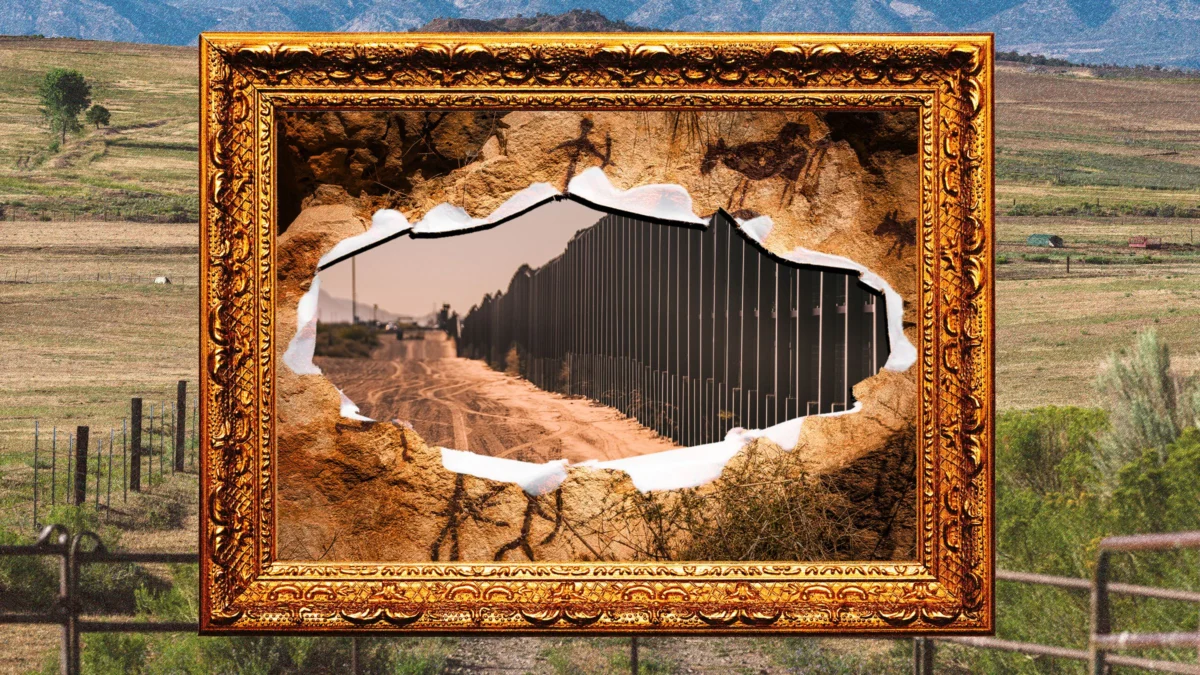
Outrage has intensified over recent border infrastructure development that commenced tearing through the pristine desert landscapes within Big Bend National Park. Yet, beneath this visible conflict, a more insidious struggle unfolds across the private lands of West Texas. Here, the ambitious US border wall project is poised to bisect some of North America’s most historically rich archaeological sites, risking the irreparable destruction of ancient indigenous artifacts and the fracturing of millennia-old rock art. This critical juncture highlights a profound tension between national security imperatives and the preservation of irreplaceable cultural heritage.
The Department of Homeland Security (DHS) and Customs and Border Protection (CBP) have this year awarded contracts totaling billions of dollars for the construction of a comprehensive border wall system and other barriers. This massive undertaking spans a remote 500-plus-mile (over 800-kilometer) riverfront stretch of the US-Mexico border in West Texas. This vast expanse encompasses not only Big Bend National Park but also other areas of immense ecological and cultural significance. The initial plans for a 30-foot steel bollard wall within Big Bend National Park drew swift and bipartisan condemnation, prompting DHS to revise its strategy. While the steel wall was scrapped in the park, it was replaced by miles of riverside vehicle barriers and an extensive network of over 200 miles of road construction. Bulldozers initiated clearing operations along the Rio Grande corridor near the iconic Santa Elena Canyon on August 6, marking the tangible beginning of this controversial project.
Construction within the national park has since been temporarily halted in response to multiple lawsuits filed by environmental and conservation groups. However, the DHS remains committed to its broader plans for the region, intending to construct the wall, alongside a complex web of associated roads, over rugged mountains and across deep canyons situated outside the national park’s boundaries. This includes numerous parcels of private property, where ranchers and other landowners assert the existence of significant archaeological sites that demand protection. These property owners express grave concerns that the wall’s construction will not only irrevocably bifurcate their landholdings but also inflict severe damage upon these archaeological treasures, many of which have yet to be thoroughly studied or even fully cataloged.
One such landowner is rancher Jeff Fort, on whose property archaeologist Bryon Schroeder has been meticulously excavating for two years. Schroeder, who directs Sul Ross University’s Center for Big Bend Studies, leads a dedicated research program focused on documenting and understanding the rich cultural, historical, and archaeological legacy of the entire Big Bend region. His methodical approach involves removing sediment in precise 4-inch (10-centimeter) layers, a painstaking process that has yielded remarkable discoveries at a site he calls Canta Recio. Among the unearthed artifacts are pottery shards and remnants of melted adobe, a slick building material, dating as far back as AD 800. The site has also revealed turquoise and marine shells, compelling evidence of extensive trade networks that connected these ancient communities with distant regions, including the Pacific coast and the American Southwest. Intriguingly, the evidence suggests a clear cultural link between Canta Recio and Paquimé, a UNESCO World Heritage site located some 200 miles away in Mexico, underscoring the interconnectedness of ancient Mesoamerican and North American cultures.
Tragically, Canta Recio lies directly in the path of the proposed border wall. Portions of this invaluable site are slated for direct bulldozing, ensuring their complete obliteration. Furthermore, if the wall proceeds as planned, other critical sections of the site will become effectively inaccessible to archaeologists, sealing away vital clues to the past. Schroeder draws a compelling parallel between Canta Recio and the ancient Egyptian settlements along the Nile. He hypothesizes that the site was settled and re-settled four or five times between AD 800 and 1400 by various indigenous groups. These communities were likely drawn to the fertile lands periodically enriched by the routine floods of the Rio Grande. However, this natural cycle also meant that these groups were eventually compelled to relocate when the river overtopped its banks, only for another community to establish itself once the silt firmed up, creating a repetitive pattern of settlement, flood, and exodus.

Schroeder’s extensive work in the region has also given him a glimpse into the broader archaeological wealth that remains largely unstudied. "There’s some bigger, cooler sites up the river that are just insane," Schroeder remarked, emphasizing their untapped potential. "They have so much pottery, they have Mesoamerican copper bells, they have turquoise. They have all sorts of crazy stuff." This statement underscores a profound paradox confronting Schroeder and other archaeologists: they are severely hampered in their ability to fully assess the scope of what is at risk because many of these significant archaeological sites reside on private ranches and have never been subjected to comprehensive academic study.
This dire situation means that extensive portions of human history risk being permanently erased by construction before anyone has the opportunity to record, interpret, or understand them. In response to inquiries from WIRED, a Customs and Border Protection spokesperson stated that the agency is conducting environmental and cultural reviews to minimize impacts and strive for a balance between operational needs and responsible land stewardship. However, past instances demonstrate that even prior studies have not always prevented the destruction of historically important sites.
For example, a 30-foot steel bollard wall is set to directly bisect the Polvo site, located in Redford, Texas. This site is known to host the remnants of a prehistoric village, complete with an ancient burial ground dating back to the 1300s. Adding to its layered history, the same site also contains tangible evidence of a Spanish mission that was established in the 1600s, showcasing centuries of human occupation and cultural interaction. Further downriver, Eagle Nest Canyon in Langtry, widely recognized as one of the most significant and intensively studied archaeological sites in the entire state of Texas, is also slated for the erection of some form of border barrier. This particular site is home to the southernmost bison jump site in the US, a testament to the sophisticated hunting techniques employed by Native Americans who herded and funneled bison over cliffs en masse.
Approximately 350 miles downriver from Big Bend, in the small community of Comstock, Texas (population 268), rancher Patrick Zuberbueler grew up picnicking beneath the colossal, 6,000-year-old rock art panels that adorn the limestone shelters on his family’s property. Some of these awe-inspiring displays stretch up to 50 feet tall and hundreds of feet wide. While the government acquired some of his family’s land through eminent domain in the 1960s and 1970s to create the Amistad Reservoir and Seminole Canyon State Park, the Zuberbueler family still retains thousands of acres, continuing their deep connection to the land.
As a child, Zuberbueler’s memories include catching minnows in a stream that flowed through Painted Shelter, a prominent limestone rock shelter on his family’s ranch. For him, it was simply "a place we’d go picnicking," a cherished part of his childhood. However, for archaeologist and rock art expert Carolyn Boyd, Painted Shelter represents "one of the most important archeological sites in the region." Boyd, a distinguished research professor at Texas State University in San Marcos and the founder of the Shumla Archaeological Research and Education Center in 1998, is a leading scholar in the nation on rock art. Painted Shelter is distinguished by three distinct styles of rock art, meticulously painted over a period spanning from 6,000 to 1,000 years ago. Boyd emphasizes that these ancient rock artworks are far more than mere decorations; they are intricate "libraries of human knowledge," encoding complex stories, spiritual beliefs, and cosmologies of the peoples who created them.
Alarmingly, Painted Shelter now lies directly in the path of border construction. Boyd warns that a proposed vehicle barrier immediately above the shelter could irrevocably destroy the stream that sustains the area’s delicate ecosystem and, more critically, potentially damage the ancient paintings themselves. She explains that the vibrations generated by heavy construction machinery could cause the limestone bedrock to "spall," or sheet off, leaving the invaluable rocky canvas in tatters and erasing millennia of human expression. Beyond Painted Shelter, Boyd has identified 12 other significant rock art sites across the region that are directly imperiled by the planned construction, while an additional 79 sites will become effectively inaccessible to researchers and the public, further isolating these cultural treasures.

The region encompassing the Zuberbueler ranch is part of the Lower Pecos Canyonlands Archaeological District, a designation of national significance. It was officially recognized as a National Historic Landmark on January 13, 2021, under the first Trump administration. Federal law explicitly dictates that agencies, "to the maximum extent possible," undertake all necessary planning and actions to minimize harm to National Historic Landmarks. However, this crucial protective measure, along with dozens of other environmental and cultural protection laws, has been waived by the Department of Homeland Security in its relentless pursuit of the border wall. This blanket waiver effectively nullifies the legal requirements to minimize harm, leaving these irreplaceable landmarks vulnerable.
For Patrick Zuberbueler, his impassioned resistance against the border barrier transcends the archaeological significance of his land. It is deeply intertwined with the enduring legacy of his great-grandfather, who first began working this very land in 1898. "The ranch continues to shrink and shrink and shrink, and you can’t effectively ranch something that way," Zuberbueler laments, expressing the profound impact on his family’s livelihood. "They’re hurting our livelihood as producers."
Carolyn Boyd, who has dedicated four decades of her life to unearthing the rich history embedded within the region’s rock art, describes her current experience as living a nightmare. Despite the grim outlook, she maintains a glimmer of hope. "Maybe it’s wishful thinking," she concedes, but she remains determined to persuade the government to fully comprehend the profound significance of the region’s archaeology. Her ultimate aspiration is to see the plans revised, advocating for a reliance on advanced technology for border patrol and surveillance rather than destructive physical infrastructure.
However, time appears to be rapidly running out for such appeals. Several miles of steel bollards are already stockpiled in staging areas across the region, ominous precursors to the impending construction. Numerous temporary workforce housing facilities, colloquially known as "man camps," have sprung up on newly cleared land, signaling the imminent commencement of large-scale operations. Locals have reported instances of wall contractors bulldozing private property even before legal permissions were fully secured, resulting in damage to vital irrigation systems and the unauthorized clearing of precious vegetation. Nevertheless, many locals are not prepared to surrender their fight. Signs of robust resistance to development on private lands are emerging elsewhere, including recent lawsuits filed earlier this month by residents in San Ygnacio, a community situated approximately 275 miles south of the Big Bend region.
"It’s almost unfathomable to even put it into context, the different ways that this can be detrimental to us," Zuberbueler asserted, reflecting on the multifaceted impacts of the border construction. His resolve, echoed by many others in the region, remains unshaken: "We’re not going to go down without a fight."






