 11
11
Bitcoin’s fifth halving, anticipated in April 2028, is fast approaching, and the cryptocurrency’s mining sector is preparing for a significantly more challenging environment compared to the 2024 event. The industry is navigating a landscape reshaped by escalating costs, increasingly constrained energy markets, and the growing clarity of regulatory frameworks, all of which are compressing profit margins for miners.
The last halving, occurring in April 2024, saw Bitcoin (BTC) trading around the $63,000 mark. At that time, the block reward was halved from 6.25 BTC to 3.125 BTC. This was a manageable transition for many miners, especially considering the prevailing market conditions. However, the upcoming halving in April 2028 presents a starkly different economic reality. Miners will face the prospect of earning just 1.5625 BTC per block, effectively halving their new coin revenue once again. This comes at a time when the Bitcoin network has achieved record hashrate, energy prices have climbed, and access to capital has become more discerning.
The strategic importance of energy security has been amplified by recent geopolitical events that have disrupted global fuel and power markets. Simultaneously, regulatory bodies, from Washington to Europe, are transitioning from ad-hoc guidance to formal regulatory regimes governing cryptocurrency custody and licensed institutional platforms. These converging pressures are compelling Bitcoin miners to evolve beyond their traditional role as mere proxies for Bitcoin’s price movements. Instead, they are increasingly being compelled to operate more like sophisticated energy and infrastructure companies. This necessitates a strategic approach to monetizing existing reserves, rigorously cutting operational costs, and undertaking a thorough reassessment of capital allocation strategies in anticipation of the April 2028 halving.
This fundamental shift in the industry’s operational paradigm is also influencing how investors evaluate the sector. Capital is progressively flowing towards mining operators that demonstrate a robust ability to secure long-term power agreements and construct diversified infrastructure that extends beyond just Bitcoin mining operations.
Balance Sheets Reflect a More Challenging Pre-Halving Cycle

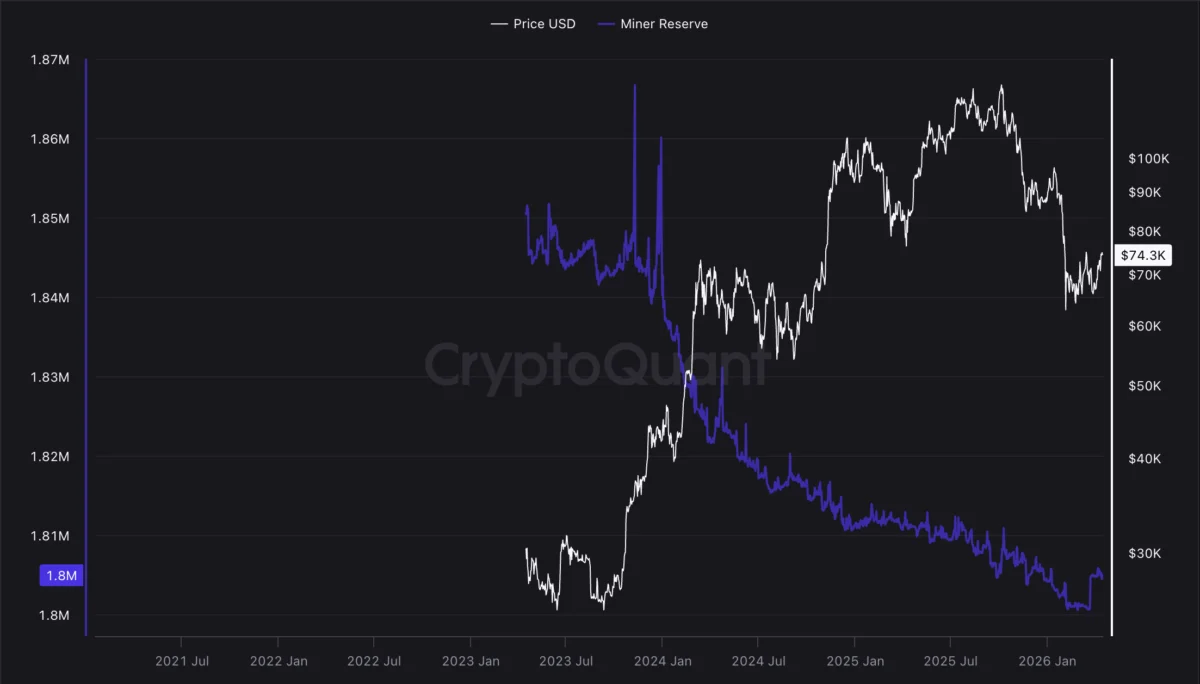
The financial adjustments within the mining sector are already evident. MARA Holdings, for instance, offloaded over 15,000 Bitcoin in March to reduce its leverage. Riot Platforms sold more than 3,700 BTC during the first quarter, signaling a strategic shift in their operations. Similarly, Cango divested 2,000 BTC to pay down Bitcoin-backed debt, and Bitdeer announced that its Bitcoin holdings had been reduced to zero as of February 20th.
These significant asset sales are indicative of a broader recalibration in how mining companies are approaching hardware acquisition, energy procurement, and capital management. Juliet Ye, Head of Communications at Cango, highlighted that the operating environment for the 2028 halving will be "almost unrecognizable" compared to 2024. She pointed to a widening efficiency gap among mining hardware, which is now forcing critical decisions regarding fleet upgrades. Furthermore, there’s a discernible trend towards securing long-term energy contracts across various regions, a departure from the previous strategy of simply chasing the cheapest available tariffs.
"There is less room in the middle now," Ye stated. "Operators with scale and diversification will be fine. Those without will find the next halving very difficult."
Mark Zalan, CEO of GoMining, echoed this sentiment, emphasizing that "capital discipline now matters more than hashrate maximalism." He noted that new deployment strategies must now meet significantly higher return thresholds.
From the perspective of mining pools, some underlying dynamics remain consistent despite the escalating pressures. Alejandro de la Torre, Co-founder and CEO of the Stratum V2 pool DMND, observed that "there is actually very little fundamental difference between this mining cycle and previous ones. The same dynamics repeat." He anticipates that established mining hotspots will reach their peak and subsequently realign, as "no region keeps dominance for long." This ongoing realignment is expected to foster greater decentralization, with mid-sized miners expanding their operations through new energy partnerships.
Business Models Diversify Beyond Pure Block Rewards

The economic landscape surrounding the next halving is also moving away from an exclusive reliance on block rewards, which is becoming a "thinner business than it used to be," according to Zalan. He predicts that stronger operators will increasingly focus on power generation and data center operations, seeking to generate additional revenue streams through grid curtailment services, the provision of grid services, and the innovative reuse of waste heat.
Cango is actively developing its operations in line with this evolving model. Ye stated, "The facilities that will matter in five years are the ones that can do more than one thing." Cango’s strategy involves leveraging Bitcoin mining to fill capacity while simultaneously positioning its sites to dynamically switch between high-performance computing workloads for artificial intelligence and traditional Bitcoin mining.
Regulatory developments, once viewed primarily as a potential impediment, are increasingly being integrated into investment theses. Zalan highlighted the growing specificity of rules governing custody and banking access in the United States, alongside the European Union’s Markets in Crypto Assets (MiCA) regulatory framework. Furthermore, new exchange-traded funds (ETFs), derivatives, and settlement rails emerging from Hong Kong are contributing to a clearer regulatory environment. Zalan argued that "capital moves faster when those rules are clear and usable."
This evolving regulatory backdrop is influencing both how miners secure financing and how institutional investors position themselves for the impending reduction in Bitcoin issuance. Zalan expressed his belief that the market has not yet "fully priced the next halving," contending that the increased scarcity of Bitcoin will be met by a "much stronger ecosystem around Bitcoin by the time 2028 arrives."
Ye observes that investors are already re-evaluating miners that are able to secure high-performance computing contracts. These operators are currently trading at "more than double the revenue multiple of pure-play miners." De la Torre suggests that supporting large, established operators is "no longer the only logical path."
While the 2024 halving cycle rewarded miners that could capitalize on Bitcoin’s price strength, the period leading up to 2028 is likely to favor operators adept at managing debt, securing favorable power contracts, and developing diversified infrastructure that generates revenue beyond block subsidies.