 11
11
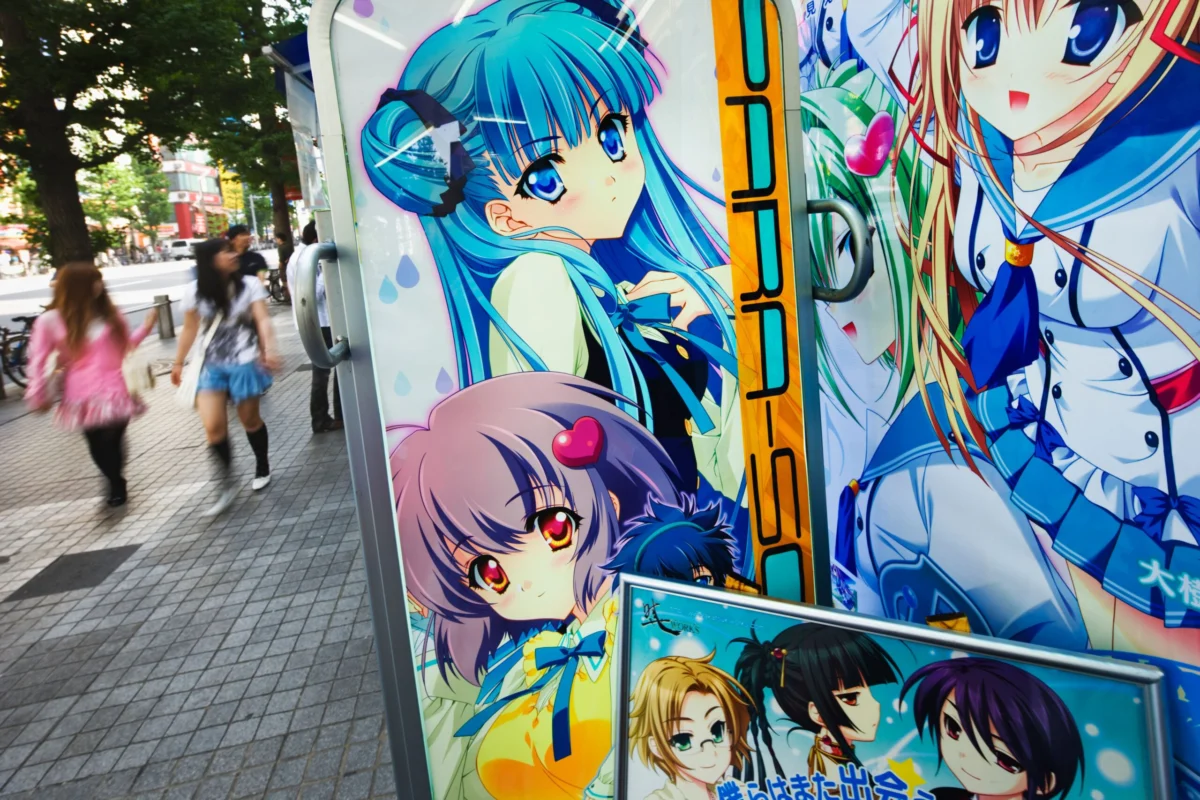
Despite its ferocious global popularity and ever-expanding influence across diverse media, a significant portion of the public still tends to dismiss or "swear off" anime entirely. This often stems from preconceived notions, outdated stereotypes, or a fleeting exposure to the medium, perhaps a few seconds of animation glimpsed on a computer screen in the early 2000s. Such limited experiences fail to capture the vast and varied landscape of Japanese animation.
However, for over half a century, Japan has consistently produced some of the most emotionally resonant and visually audacious storytelling found in contemporary media. The sheer breadth of genres, artistic styles, and narrative complexities within anime means that a great deal of it looks nothing at all like the narrow stereotype it might hold in some minds. From profound philosophical dramas to exhilarating action epics, slice-of-life narratives to intricate psychological thrillers, the medium defies easy categorization.
This guide serves as a comprehensive case for the uninitiated, designed to demystify anime and introduce newcomers to its rich offerings. The recommended journey begins with self-contained films, which can be enjoyed and completed in a single evening, providing an accessible entry point without a long-term commitment. Once comfortable, viewers can then graduate to series that are genuinely worth committing to, offering deeper character development and expansive narratives. The unifying thread across all these selections is their independence from prior knowledge; not one requires you to be familiar with anime culture, specific tropes, or even Japanese history to appreciate them. They are universal stories, beautifully told.
It is also worth noting that many of these selections are readily available in both their original Japanese audio with accompanying subtitles, or as "dubs," featuring dialogue expertly voiced by English-speaking actors. This flexibility allows viewers to choose their preferred method of engagement, making the dive into anime as comfortable and immersive as possible.
Solo Leveling
For those seeking an immediate rush of adrenaline and an unapologetically addictive narrative, Solo Leveling is an excellent starting point. This series, adapted by the renowned Japanese animation studio A-1 Pictures, originates from a highly successful South Korean web novel and webtoon. It plunges viewers into the world of Sung Jinwoo, initially an E-rank hunter, widely regarded as the weakest in his perilous profession. His life takes an extraordinary turn after a near-fatal dungeon expedition, where he awakens with access to a mysterious, unseen "System." This unique ability allows him to grow exponentially stronger in a world where everyone else’s powers are largely static. The series masterfully delivers pure wish fulfillment as it chronicles Jinwoo’s dramatic transformation from an expendable underdog to an overwhelmingly powerful fighter. This journey is propelled by incredibly propulsive pacing, a compelling power-fantasy narrative, and spectacular, large-scale battles that are both visually stunning and intensely engaging. It’s a modern action-fantasy spectacle that demonstrates the medium’s capacity for slick, high-octane storytelling.
The Girl Who Leapt Through Time
This 2006 animated film offers one of the softest and most accessible landings into the world of anime. Directed by Mamoru Hosoda, it presents a concept that is refreshingly simple to grasp yet profound in its implications. Makoto Konno is an ordinary high school student who unexpectedly discovers the extraordinary ability to leap backward through time. Initially, she uses this newfound power for trivial, relatable teenage concerns: acing poor test results, artfully sidestepping awkward romantic confessions, and correcting everyday social embarrassments. However, her playful manipulation of time inevitably creates unforeseen consequences and ripples for the people around her, forcing Makoto to confront the ethical dilemmas of her powers and face a future that she may no longer be able to control or reverse. It’s a charming, heartfelt coming-of-age story that beautifully explores themes of responsibility, friendship, and the irreversible nature of time, all within a familiar contemporary setting.
Frieren: Beyond Journey’s End
Breaking from conventional fantasy tropes, Frieren: Beyond Journey’s End begins where most heroic sagas conclude: after the defeat of the great evil. The narrative centers on Frieren, an elven mage who, after completing a decade-long quest with her human companions, embarks on a solitary journey. When she returns five decades later, she finds that her human friends have aged significantly, while she, due to her elven longevity, remains virtually unchanged. A profound sense of regret for not cherishing their time together more, coupled with the poignant pain of witnessing the death of one of her closest friends, sets Frieren on an unexpected journey of self-discovery. This series is a quiet, contemplative, and exquisitely animated meditation on memory, mortality, the passage of time, and the deep meaning we find in seemingly fleeting human relationships. Its gentle pacing, stunning visuals, and profound emotional depth make it a unique and moving fantasy experience.
Nausicaä of the Valley of the Wind
For a journey back to the formative years of anime in the 1980s, Nausicaä of the Valley of the Wind is essential viewing. This cinematic masterpiece was conceived by writer-director Hayao Miyazaki even before he co-founded the legendary Studio Ghibli, and it played a pivotal role in redefining what Japanese animation could achieve. Set in a post-apocalyptic world ravaged by ecological catastrophe, the film follows Princess Nausicaä, a courageous and empathetic protagonist. She endeavors to prevent a devastating war between human kingdoms while simultaneously striving to understand and coexist with the enormous, toxic forest spreading across the planet. More than just a thrilling post-apocalyptic adventure, Nausicaä is a remarkably prescient and powerful story about environmental destruction, humanity’s often destructive impulse to conquer what it fears, and the vital importance of empathy and understanding in the face of ecological disaster. Its timeless themes and breathtaking animation continue to resonate deeply.
Death Note
For viewers who mistakenly associate anime primarily with sprawling fights and exaggerated superpowers, Death Note offers a compelling counter-narrative as a gripping psychological thriller. The story centers on Light Yagami, an exceptionally intelligent high school student who stumbles upon a supernatural notebook known as the "Death Note." This sinister artifact grants him the power to kill anyone whose name he writes inside it, provided he knows their face. Armed with this terrifying discovery, Light embarks on a self-appointed crusade to eliminate criminals worldwide, believing he can cleanse society and become its new god. What unfolds is a compulsive, morally murky, and intellectually stimulating battle of wits between Light and the enigmatic detective L. The series delves deep into complex themes of justice, absolute power, the nature of good and evil, and the alarming speed with which idealism can corrupt and transform into tyranny.
The Colors Within
The Colors Within (also known as Kimi no Iro) is a 2024 Japanese drama film that provides a refreshing and emotionally rich experience, particularly for those seeking anime with a bit more introspective depth. The protagonist, Totsuko, is a student at a Catholic girls’ school who possesses a unique and extraordinary ability: she can perceive people’s emotions as distinct colors. Drawn to the vibrant auras of two individuals, she forms a band with them, embarking on a musical odyssey. The film masterfully weaves together themes of emotion, connection, self-discovery, and artistic expression, all set against a backdrop of classic anime characteristics like coming-of-age anxieties and the power of friendship. It’s a beautifully animated exploration of internal landscapes and the way art can bridge emotional gaps, offering a thoughtful and resonant viewing experience.
Jujutsu Kaisen
For anyone seeking supernatural horror fused with spectacular action, Jujutsu Kaisen stands out as an incredibly easy and rewarding gateway into the genre. The series introduces high school student Yuji Itadori, whose life takes a dark turn when he swallows a cursed finger to save a classmate, inadvertently becoming the vessel for Ryomen Sukuna, a fearsome reincarnated sorcerer known as the King of Curses. This event thrusts Yuji into the secretive and perilous world of jujutsu sorcerers, who dedicate their lives to combating supernatural beings—curses—born from humanity’s negative emotions. While the series progresses into considerably darker and more intense territory, its compelling blend of humor, richly developed and memorable characters, and brilliantly inventive, fluidly animated battles make the commitment to its unfolding narrative undeniably worthwhile. Its dynamic action sequences and intricate power system have cemented its place as a modern shonen classic.
The Tale of the Princess Kaguya
This breathtaking 2014 film by the late Isao Takahata, co-founder of Studio Ghibli, is a reimagining of Japan’s most famous folklore tale, "The Tale of the Bamboo Cutter." A true hand-drawn masterpiece, its creation spanned an arduous eight years, evident in every meticulously crafted frame. The story unfolds with an ethereal beauty, appearing as if sketched in real time. It begins with an old bamboo cutter who discovers a tiny girl inside a glowing bamboo stalk. He and his wife raise her, watching her transform into a woman of impossible, otherworldly beauty. However, the girl, Kaguya, finds herself slowly suffocated by the expectations and plans of everyone around her, including five noble suitors who fiercely compete for her hand. The film is a poignant meditation on nature, freedom, societal constraints, and the ephemeral beauty of life, presented with a unique, watercolor-like animation style that sets it apart from any other.
Kiki’s Delivery Service
Even if one has never delved into the world of anime, the charm and enduring appeal of Kiki’s Delivery Service (1989), another gem from Hayao Miyazaki and Studio Ghibli, make it a recognizable title. The fantasy film follows Kiki, a spirited 13-year-old witch who, as part of her traditional training, leaves her home to establish herself in a new city. Accompanied by her witty talking cat, Jiji, she settles in a picturesque seaside town and begins supporting herself by operating an airborne delivery service. However, Kiki soon finds her nascent independence challenged as her confidence wanes, and with it, her ability to fly begins to disappear. Ostensibly a delightful children’s film, it is also an unusually perceptive and nuanced story about the universal struggles of independence, the pangs of loneliness in a new environment, navigating creative burnout, and finding one’s place in the world.
Spirited Away
Hayao Miyazaki’s 2001 masterpiece, Spirited Away, remains one of the most powerful and enduring arguments for animation’s rightful place as serious, impactful cinema. The film introduces ten-year-old Chihiro, who unknowingly stumbles into a mysterious spirit world. Her journey begins when her parents, after eating food at an abandoned amusement park, are transformed into pigs. To save them, Chihiro must find work in a magical bathhouse, serving an array of spirits and gods, as she searches for a way to break the curse. Strange, at times frightening, and intensely imaginative, the film deliberately refuses to explain every intricate corner of its fantastical world. Instead, it trusts viewers to follow Chihiro through a deeply personal and transformative story about courage, the dangers of greed, and the complex process of growing up. Its immense critical acclaim culminated in 2003, when it made history as the first non-English-language film to win the Academy Award for Best Animated Feature.
Fruits Basket
Adapted from its beloved Japanese manga origin, Fruits Basket returned as a full animated series in 2019, captivating a new generation of viewers across three emotionally charged seasons. The narrative centers on the Soma family, who harbor a peculiar and ancient secret: if any of them are embraced by someone of the opposite sex, they transform into one of the animals of the Chinese zodiac. The story begins with Tohru Honda, an optimistic orphan who, after a series of misfortunes, finds herself living with the enigmatic Soma family and slowly unraveling the depths of their generational curse. The series is a wild, poignant, and deeply empathetic exploration of trauma, family bonds, self-acceptance, and the arduous journey towards healing. By its cathartic final season, Fruits Basket earns its place not just as a popular series but as a profound narrative that fosters a fanbase of emotionally invested and devoted viewers. Hulu offers the English dubbed version, while Crunchyroll provides access to both the dubbed and subtitled versions.
Demon Slayer: Kimetsu no Yaiba
If the allure of anime featuring expertly choreographed sword fights and formidable demons piques your interest, Demon Slayer: Kimetsu no Yaiba is the quintessential adventure series for you. It has become one of the biggest animation phenomena of the past decade, with its movie spin-offs shattering box office records globally. The story follows Tanjiro Kamado, whose life is shattered when his family is brutally attacked by demons, leaving only his younger sister Nezuko alive, albeit transformed into a demon herself. Tanjiro embarks on a perilous and wild journey to avenge his family and find a cure for Nezuko, joining the ranks of the Demon Slayer Corps. This epic quest unfolds over four thrilling seasons (and counting), characterized by compelling plot lines, rich character development, and truly impressive, hand-drawn fight sequences that set a new standard for animated action. Its blend of heartfelt emotion, dark fantasy, and spectacular combat makes it an irresistible entry point.
This story was originally published by WIRED Middle East.