11

A new report from Atlassian’s Teamwork Lab indicates that the primary metric for measuring artificial intelligence (AI) success in the workplace is shifting from simple adoption rates to the depth of contextual understanding. According to a comprehensive survey of 1,002 U.S. knowledge workers, the ability of AI to comprehend the specific nuances of an organization is the strongest predictor of its actual utility. The research suggests that while most organizations have successfully integrated AI tools into their daily workflows, many are failing to provide the necessary business context required for these tools to move beyond generic assistance toward high-value, senior-level contributions.
The study draws a sharp comparison between the current state of AI and a "brilliant new employee" who, despite their raw intelligence, lacks access to onboarding documents, company history, and strategic objectives. This lack of institutional memory forces the AI to operate in a vacuum, requiring constant reminders and resulting in output that often misses the mark. Despite this, many organizations continue to measure AI success through "adoption metrics" such as seat counts, prompt volume, and usage dashboards. The Teamwork Lab findings argue that these metrics only confirm that employees are using the technology, not that the technology is effectively solving business problems.
The Pulse survey conducted by the Teamwork Lab reveals that the "context gap" is the most significant hurdle to AI ROI. When AI is granted a deep understanding of an employee’s specific work, that employee is up to six times more likely to report that the AI is helpful across their core tasks. This finding remained consistent even when controlling for usage intensity, suggesting that a worker who uses AI less frequently but with better data integration may derive more value than a frequent user with no data context.
Molly Sands, a future-of-work expert and head of the Teamwork Lab, noted that the industry has spent the last year optimizing for adoption. However, she points out that the workers deriving the most value are not necessarily those prompting the most often, but those whose AI systems are integrated into the specifics of their business. Sands emphasized that most companies have not yet begun to solve the problem of connecting AI models to the day-to-day realities of their operations, leading to a persistent plateau in performance.
The lack of concrete information about a business results in what researchers call a "fragmentation tax." Previous data from the Teamwork Lab estimated that this lack of information flow costs Fortune 500 companies approximately $161 billion annually. This fragmentation is mirrored in how employees perceive their AI tools. In the latest survey, only 12% of respondents described their AI as having an understanding of the organization—its people, history, and internal processes—comparable to a tenured, senior colleague. Conversely, 45% of workers stated that their AI operates more like a newly-hired junior employee at best. The data shows a direct correlation between lack of context and this "junior hire" perception.
Sands explained that the issue does not lie with the intelligence of the underlying large language models (LLMs). Rather, the models are not connected closely enough to the specific data points of an organization’s daily life. Without a way for the AI to learn the specific "institutional memory" of a company, the output remains generic, requiring significant human intervention to make it usable.
To validate the survey findings with objective performance data, Atlassian analyzed behavioral data from DX, its engineering intelligence platform. This analysis involved anonymized data from 272 customer organizations to determine if better context leads to measurable output improvements. The results showed that teams who heavily utilized the "Teamwork Graph"—a proprietary tool designed to unify, connect, and contextualize insights across different work streams—shipped up to 64% more work. This trend was observed across various industries, regions, and sectors, suggesting that the value of context is a universal driver of productivity rather than a niche requirement for specific functions.
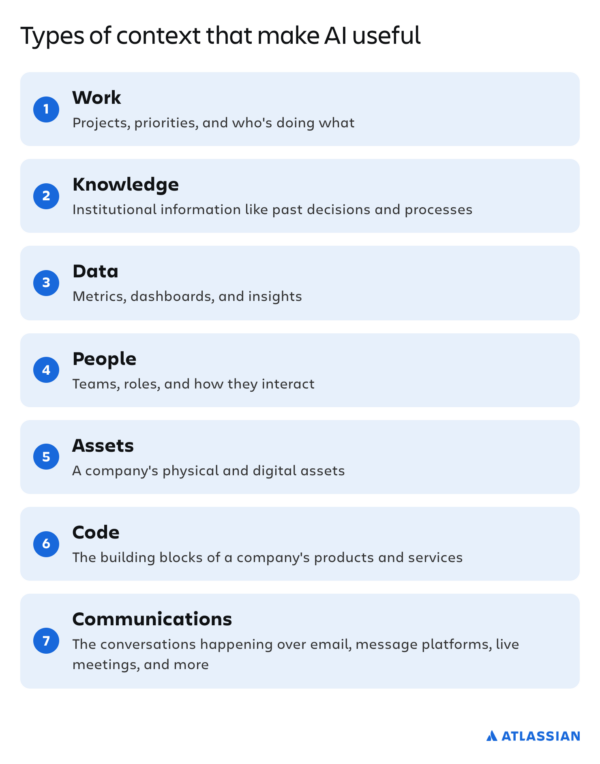
The research also highlights a significant "trust gap" rooted in this lack of context. While workers are generally open to AI, they remain skeptical of delegating high-stakes tasks to a system that does not understand how their specific company operates. The survey found that 77% of knowledge workers believe it is "very important" for AI to have a thorough understanding of their company’s institutional knowledge. However, only 21% believe their current AI tools actually possess that knowledge. This discrepancy exists across multiple types of context, including understanding company data, team communications, and internal project assets.
According to Sands, this skepticism is a rational response. Workers are hesitant to hand off real responsibilities to tools that lack the background necessary to perform them accurately. However, the research suggests that this skepticism diminishes rapidly once the AI demonstrates a genuine understanding of the work. When AI is properly contextualized, it does more than just feel more helpful; it significantly reduces "rework." The study found that AI with a high degree of business context produces up to 48% more output that can be used immediately without the need for human revision.
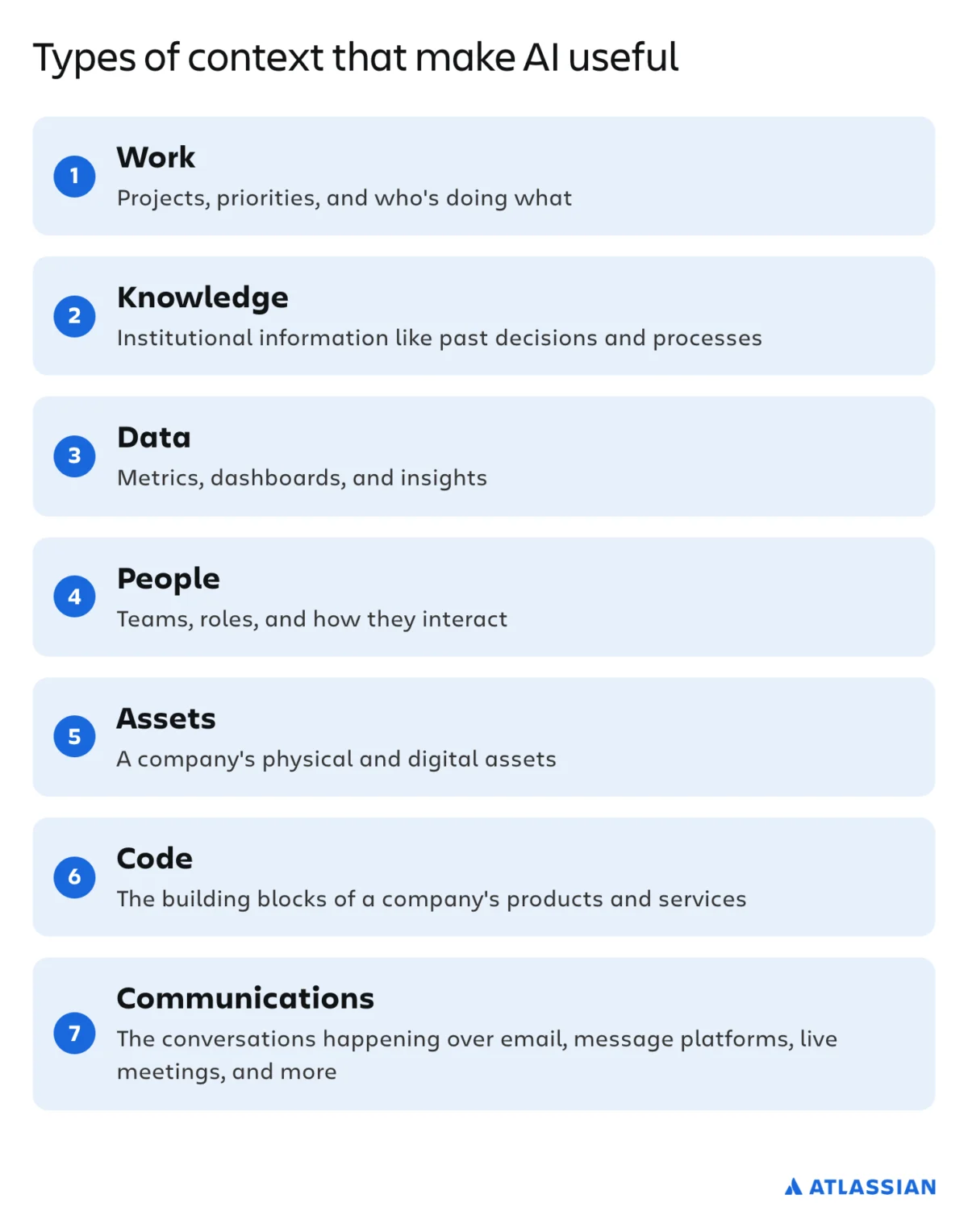
For leaders looking to bridge this gap, the Teamwork Lab suggests a prioritized approach to data integration. While all forms of context—such as codebases, communication logs, and project assets—are valuable, the research points toward company data and institutional knowledge as the most effective starting points. Institutional knowledge, which includes past decisions, documented processes, and lessons learned over time, is what differentiates a tenured employee from a new hire. Providing AI with access to this memory is identified as the most direct path to transforming the technology from a "junior assistant" into a "trusted colleague."
The methodology for this report involved a double-blind survey of 1,002 full-time U.S. knowledge workers conducted between July 28 and August 3, 2026. The respondent pool was diverse, spanning various industries, job functions, seniority levels, and generations. The analysis of AI helpfulness utilized logistic regression to control for variables such as role, industry, and usage intensity. The productivity data regarding developer output was derived from an analysis of 272 DX and Atlassian customers, merging productivity metrics with product telemetry to ensure a data-driven conclusion.

Ultimately, the report concludes that the next phase of AI maturity in the workplace will not be defined by how many people use the tools, but by how well those tools are integrated into the specific knowledge fabric of the organization. Companies that fail to move beyond adoption metrics and neglect the "context gap" risk continued fragmentation and a lack of ROI, while those that prioritize institutional knowledge integration stand to see significant gains in shipping velocity and output quality.