 11

Europe, with its charming cobblestone streets and bustling city centers, often gives visitors the impression of a pedestrian-friendly continent. While walking is indeed a significant part of daily life, the reality of urban mobility across the continent remains firmly rooted in car dependency. Despite growing awareness of environmental concerns and increasing traffic congestion, the automobile continues to be the default mode of transport for many, a status quo that a new wave of innovative entrepreneurs is determined to challenge. Understanding the deeply ingrained reasons behind this reliance on four-wheeled vehicles is the crucial first step for these visionaries aiming to redefine urban travel.
At the forefront of this movement is Any, a Belgian startup with a clear and ambitious philosophy: to significantly boost the adoption of two-wheelers by ensuring they are "designed for real life." For Any, this isn’t just a catchy slogan; it represents a commitment to developing vehicles that offer practical utility without compromising on the essential attributes of speed, range, or versatility. Their core insight is that for many potential users, the primary barrier to switching from cars to motorcycles or scooters is the perceived lack of carrying capacity. Cars, with their integrated trunks, effortlessly accommodate groceries, luggage, and everyday essentials – a convenience largely absent from traditional two-wheelers.
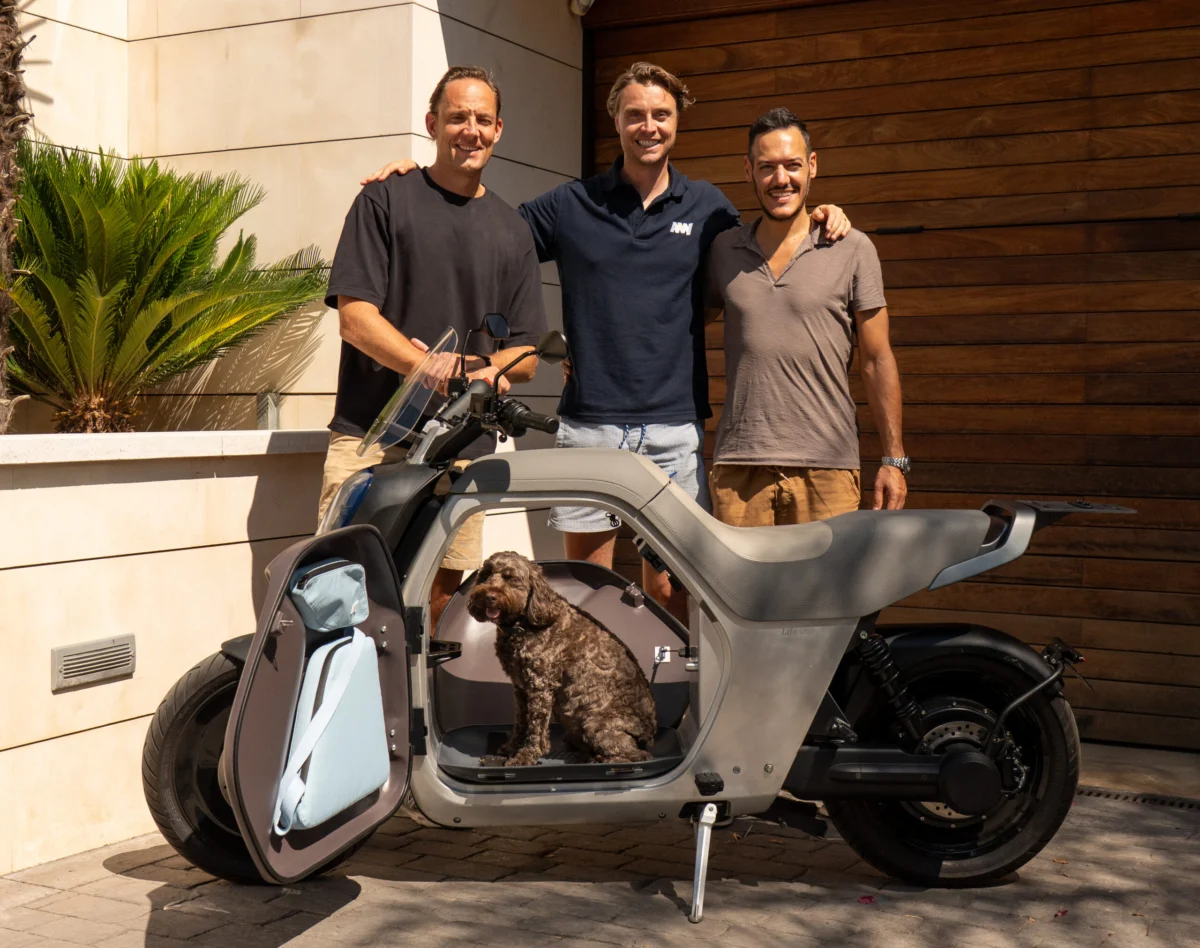
This "designed for real life" conviction directly inspired Any’s inaugural product, the LUV1. This innovative modular electric motorcycle aims to bridge the gap between the agility of a two-wheeler and the practicality of a cargo vehicle. The LUV1 boasts an impressive storage capacity of up to 120 liters, a volume comparable to that of many dedicated cargo bikes, yet it achieves a top speed of 100 km/h (approximately 62 mph). This unique combination of speed and significant carrying capacity positions the LUV1 as a genuine alternative to smaller cars for a wide range of urban and peri-urban tasks.
The generous 120-liter storage capacity of the LUV1 is a direct response to what Any identifies as the "missing link" left by the absence of a car trunk on traditional two-wheelers. This wasn’t an arbitrary number chosen for marketing appeal; rather, it was meticulously determined by a fundamental question posed by the startup: "What does a real week actually need?" The answer encompasses a multitude of everyday requirements, from transporting a week’s worth of groceries and weekend bags to carrying suitcases for a short trip. As Any articulated on LinkedIn, their goal was to ensure that users wouldn’t have to "leave behind just because you’re on two wheels, not four." This focus on practical utility directly addresses a major pain point for individuals considering a shift away from cars.

The LUV1’s versatility is further enhanced by its highly modular design. Customers have the flexibility to choose between an open frame configuration or one equipped with various types of panels. This allows for tailored solutions, whether the user needs to comfortably transport a pet, securely carry work equipment, or pack camping gear for an outdoor adventure. The modularity extends beyond just the cargo area, offering a suite of customizable options. These include an optional windshield for enhanced comfort, various racks for additional external carrying, a rain poncho for unpredictable weather, and several other variations designed to appeal to a broad spectrum of users. From daily commuters seeking an efficient and practical ride to families needing space for school bags or active outdoorsy riders carrying sports equipment, the LUV1’s adaptability makes it a compelling choice.
This ingenious modular design is the brainchild of Lowie Vermeersch, a name synonymous with automotive excellence. As the former design director at the legendary Italian design house Pininfarina and founder of Granstudio, Vermeersch brings a wealth of experience and a reputation for groundbreaking design. His involvement immediately garnered significant attention for the LUV1, which made headlines when its eye-catching prototype was unveiled in May during the prestigious Milan Design Week. The public and industry alike were captivated by its innovative approach to two-wheeled transport.
Vermeersch’s collaboration with Any is far from a one-off consultancy; he plays a pivotal role in the startup’s strategic direction. Beyond holding the position of creative director, he is also an investor, demonstrating his deep belief in Any’s vision. Together, Vermeersch and the Any team are not just launching a new product but are actively aiming to pioneer an entirely new hybrid vehicle category. They term this category "life utility vehicles," a concept that directly inspired the LUV1’s name. This classification underscores their ambition to create vehicles that seamlessly integrate into the diverse and demanding fabric of modern life, offering both the practicality of a utility vehicle and the engaging experience of a two-wheeler.
From a market accessibility standpoint, the LUV1 is positioned strategically. With a starting price of €7,000 (approximately $8,150), it is significantly less expensive than most cars, placing it within a similar cost bracket as higher-end electric cargo bikes. This competitive pricing makes it an attractive proposition for those seeking a cost-effective alternative to car ownership. Furthermore, unlike more powerful and complex motorcycles that require extensive licensing, the LUV1 is designed to be ridden with an A1 license. This category of license is generally easier to obtain in most places, drastically lowering the barrier to entry for many potential riders who might otherwise be deterred by the complexities of full motorcycle licensing.
The market’s initial reception to the LUV1 has been overwhelmingly positive. Following the considerable buzz generated at Milan Design Week, Any swiftly launched its preorder campaign alongside an intuitive online configurator that allows customers to customize their LUV1. The results have been impressive: in its first 100 days, the startup secured over 600 reservations, a strong indicator of significant market interest and demand. Each reservation requires a €49 ($57) fee, which is fully credited towards the final purchase price and, crucially, is completely refundable according to Any’s transparent terms.

Any’s rapid progress is also underpinned by substantial financial backing and a highly experienced leadership team. The startup has successfully raised venture capital, securing €1.5 million in November, followed by an additional €1.25 million top-up in May, bringing its total funding to €2.75 million (approximately $3.2 million). This capital injection is vital for a hardware-focused startup in the competitive mobility sector. The team itself is robust, featuring Erik de Winter as co-founder and CCO, who previously co-founded Cargoroo, a Dutch e-cargo bike-sharing service. A year ago, Any brought in former venture capitalist Pieter Van de Velde as its CEO, a strategic move to leverage his financial acumen and growth-oriented mindset. Adding to their impressive roster, Any recently hired Alessandro Mangano as Head of Engineering. Mangano brings invaluable experience from some of the most prestigious names in the automotive world, having previously worked at Aprilia, Ferrari, and Piaggio Group. The startup also benefits from a robust network of high-profile individuals from the automotive sector serving as backers and advisors, further solidifying its industry credibility and expertise.
The LUV1 enters a dynamic and rapidly evolving two-wheeler market. With its two swappable batteries, providing a respectable range of up to 87 miles per charge, the LUV1 is well-equipped to compete against electric models launched by established players like Piaggio and even Harley-Davidson, who are increasingly investing in electric mobility solutions. However, simply offering a capable electric vehicle will not be enough to stand out in a market that the European Association of Motorcycle Manufacturers (ACEM) projects will be predominantly electric by 2030.
Any’s primary bet for differentiation lies squarely on its unique selling proposition: the unparalleled cargo space. Erik de Winter, Any’s CCO, emphasized to TechCrunch that the LUV1 is designed to appeal to a much broader customer base than traditional motorcycle riders. The startup has already seen interest from last-mile delivery players, highlighting the potential for commercial applications. Looking ahead, Any’s ambition extends beyond the LUV1; they intend to develop a comprehensive "portfolio of vehicles," which could include more specialized solutions, such as a potential "third-wheeler" to further enhance stability and carrying capacity for specific use cases.
Before it can fully realize its ambitious portfolio expansion, Any’s immediate priority is to ramp up production of the LUV1 to meet the growing demand and begin its first deliveries to customers. This critical phase requires substantial capital, and the startup is actively seeking to raise a Series A funding round of approximately €10 million (over $11.65 million) or more. Any hopes to successfully close this significant funding round by the end of the year, which will be instrumental in scaling its manufacturing operations and solidifying its position as a pioneer in the burgeoning "life utility vehicle" category. The journey to transform urban mobility is complex, but with its innovative LUV1, strategic team, and clear vision, Any is making a compelling case for a future where two wheels can carry as much as four.






