 11
11
In a significant departure from standard corporate operations, Atlassian recently suspended its "business-as-usual" activities to host a massive internal initiative known as AI Builders Week. The event, which took place in early March 2026, mobilized 1,400 designers and product managers with the specific objective of transitioning from theoretical discussions about artificial intelligence to the practical application of AI tools in the product development lifecycle. This week-long intensive was designed to pressure-test how emerging technologies can fundamentally alter the daily experiences of Atlassian’s global customer base. To facilitate this massive undertaking, the company deployed 108 presenters and mentors who led 31 specialized sessions, providing the hands-on expertise required to build, test, and iterate on new ideas in real-time.

The philosophical backbone of the event was articulated during a fireside chat with Ravi Mehta, a renowned product advisor and AI expert. Mehta challenged the traditional "assembly line" model of software development, where tasks are passed linearly from one department to another. Instead, he proposed a "jazz band" framework for the modern AI era. In this model, while different roles—such as designers and engineers—maintain their unique instruments and perspectives, they operate with a level of fluidity and improvisation that allows the rhythm of the project to be carried by different participants at different times. Mehta emphasized that while an individual "guitarist" might carry the rhythm, the "magical" quality of a top-tier product only emerges when all participants bring their unique human perspectives together into a cohesive, high-quality performance.
This cultural shift is backed by significant internal data. Atlassian reports that approximately 85% of its designers and product managers are already actively utilizing AI prototyping tools in their daily workflows. However, AI Builders Week sought to push this adoption to a more sophisticated level: moving beyond basic mockups and into the realm of production-ready prototyping. The initiative was not intended to transform designers into full-scale software engineers, but rather to bridge the gap between design environments and the technical infrastructures that engineers use. By bringing designers closer to the code, Atlassian aims to streamline the journey from an initial concept to a functional, customer-facing experience.

A central figure in this technical transition is the Design Technologist, a role dedicated to empowering the design organization to navigate the complexities of software architecture. During the week, sessions focused on establishing a baseline understanding of traditional developer tooling, including Integrated Development Environments (IDEs) and remote development environments. Participants were guided through the process of setting up these environments without the need to download code locally, utilizing cloud-based systems to run development servers. A key component of this workflow was Rovo Dev, Atlassian’s AI-powered agent, which helped participants navigate the company’s front-end monorepo, answer technical queries, and execute code changes.
The practical results of this technical immersion were immediate. In various build groups, makers collaborated across disciplines to apply their new skills to existing product areas. Notably, a group focused on Trello successfully utilized Cursor, an AI-powered code editor, to build out a new feature and subsequently opened a pull request in Bitbucket. This represents a significant milestone in design-engineering collaboration, as it demonstrates designers directly contributing to the codebase in a way that aligns with professional engineering standards.

The scope of innovation during AI Builders Week was broad, resulting in over 240 distinct "builds" or prototypes. These projects were categorized into seven hands-on build groups that explored various AI-driven workflows. One of the major themes observed was the "progression of tools," where teams would begin their creative process using Figma Make and Replit to rapidly explore conceptual ideas before moving into Cursor to refine and finalize their builds. This tiered approach allowed for both high-level creativity and granular technical execution.
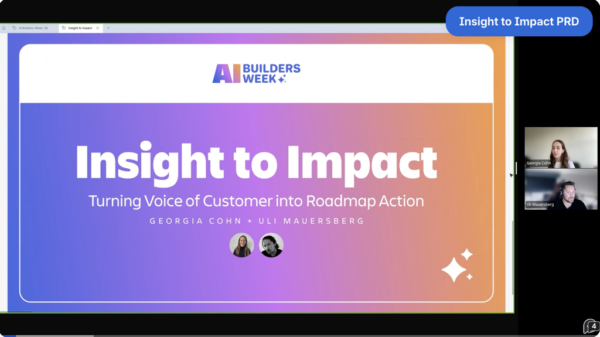
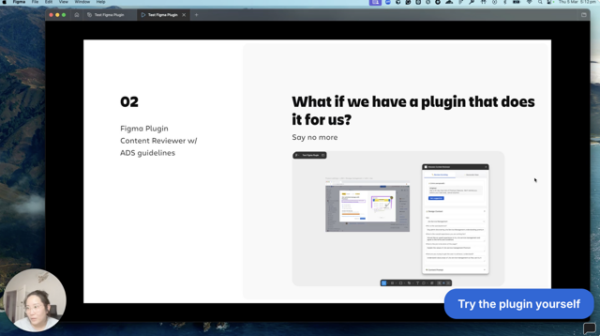
Among the 240+ builds, three projects were highlighted as exemplary of the week’s output. The first, "Insight to Impact," is a tool designed to bridge the gap between user research and product strategy. It automatically converts customer research insights into actionable roadmap items, ensuring that the "voice of the customer" directly influences development priorities. The second project, a "Content Assistant Plugin" for Figma, streamlines the design process by allowing designers to check their interface copy against Atlassian’s content assistant agent without leaving their primary design environment. The third highlighted project, the "Figma MCP Parity Agent," addresses the common friction point of keeping documentation in sync with design. This agent automates the process of updating designs from Figma to Confluence, reducing manual overhead and ensuring that cross-functional teams always have access to the most current visual assets.
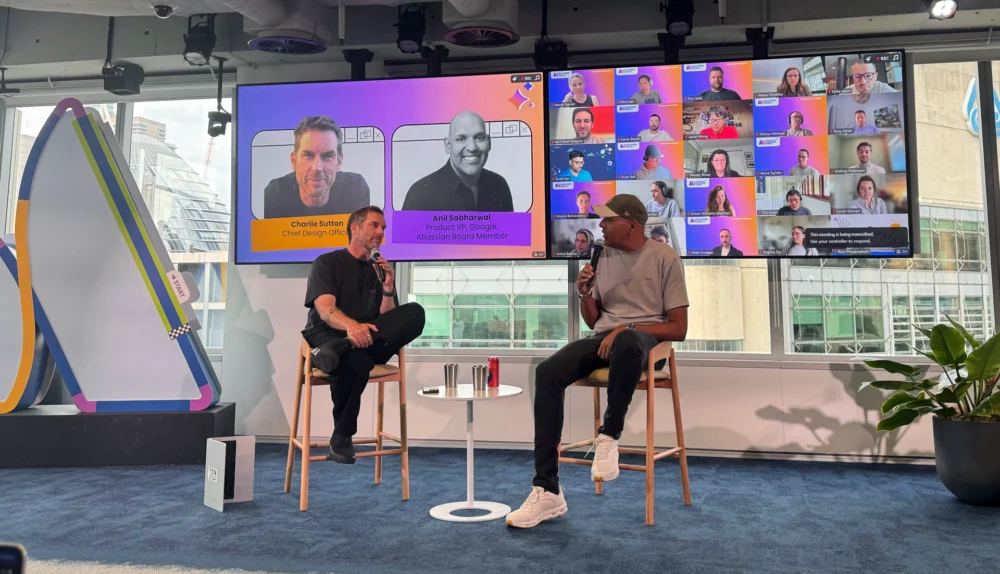
The strategic implications of these advancements were discussed by Atlassian Board Director and global product leader Anil Sabharwal and Atlassian Chief Design Officer (CDO) Charlie Sutton. During their fireside chat, they introduced the concept of AI "raising the floor and the ceiling" of product development. Raising the floor refers to AI’s ability to handle routine, foundational tasks, thereby lowering the barrier to entry for complex work. Raising the ceiling refers to the expansion of what is possible, allowing teams to reach higher levels of innovation. Both leaders emphasized that as technical fluency becomes more democratized through AI, the primary differentiator for high-quality products will be uniquely human qualities: taste, creativity, and a sensitive understanding of context.
Despite the successes of the week, the participants also engaged with the inherent "friction" of the development process. The challenges of opening pull requests, managing foundational code, and configuring development environments were not viewed as failures, but as essential learning opportunities. This friction highlighted a critical industry-wide pain point: the need to democratize the setup of development environments so that all "makers"—regardless of their primary discipline—can contribute more effectively. Design Technologists at Atlassian are now tasked with leading the effort to make these technical processes faster and more intuitive.
The event concluded with a clear signal of cultural evolution within Atlassian. By encouraging designers and product managers to lead with curiosity and embrace the errors and "walls" typically associated with the software development lifecycle, the company is fostering a more resilient and technically capable workforce. Tools like Rovo Dev are becoming central to this transition, making the technical hurdles of the past increasingly manageable.
The internal feedback for AI Builders Week was overwhelmingly positive, with 96% of the 1,400 participants providing favorable ratings. The event served as a practical demonstration of Atlassian’s evolving design culture, proving that when the boundaries between design and engineering are blurred through the use of AI, the path from a conceptual idea to a high-impact product becomes shorter and more transparent. As the company moves forward, the lessons learned during this week are expected to shape the future of how Atlassian builds software, emphasizing a collaborative "jazz band" approach where human creativity remains the lead soloist, supported by a powerful, AI-driven technical rhythm.