 11

In a significant move to address the foundational challenges of artificial intelligence in the workplace, Atlassian has introduced the Context Quality Score (CQS), a proprietary metric designed to evaluate and enhance the data environments that fuel enterprise AI models. Drawing on more than 25 years of experience in facilitating teamwork and collaboration, the company has identified that the primary obstacle to organizational efficiency is no longer the execution of specific tasks, but rather the seamless integration of relevant context into the flow of work. As AI continues to assume a greater share of routine and complex operations, Atlassian posits that the competitive advantage for enterprises will shift from the sheer processing power of a specific AI model to the quality and depth of the context provided to that model.
The development of the Context Quality Score is rooted in the observation that even the most advanced large language models (LLMs) are only as effective as the data they are permitted to access. In an enterprise setting, data is often fragmented across various platforms, departments, and projects. Without a standardized method to measure the health of this data, AI outputs frequently suffer from inaccuracies, irrelevance, or a lack of actionable insight. The CQS aims to solve this by providing a framework to map and measure the quality of context, offering organizations a clear roadmap to optimize their data architecture for the AI era.
The Context Quality Score is structured around three core dimensions: completeness, connectedness, and relevance. These three pillars serve as the primary metrics for evaluating how well enterprise data can support AI-driven workflows. By analyzing data through these lenses, the CQS identifies specific "blind spots" within an organization’s information ecosystem.
The first dimension, completeness, assesses whether the AI has access to the full scope of information required to perform a task. In many enterprise environments, critical data is trapped in silos or remains uncaptured, leading to AI outputs that are technically correct but contextually insufficient. A high completeness score indicates that the data feeding the AI represents a total picture of the project, including historical decisions, current status, and future objectives.
The second dimension, connectedness, evaluates the relationships between different data points. Atlassian’s research emphasizes that isolated information is of limited value to an AI model. For AI to provide meaningful assistance, it must understand how a Jira ticket relates to a Confluence page, how a specific code commit in Bitbucket affects a project timeline, or how a customer feedback loop influences product requirements. Connectedness measures the strength and clarity of these links, ensuring that the AI can traverse the organizational "knowledge graph" to find intersecting points of information.
The third dimension, relevance, focuses on the precision of the data provided to the AI. Providing an LLM with too much irrelevant information can lead to "noise," which degrades the quality of the output and increases the computational cost. Relevance ensures that the context provided is strictly applicable to the specific query or task at hand. By filtering out extraneous data, organizations can ensure that their AI tools remain focused and accurate.
Atlassian’s internal research has demonstrated that the Context Quality Score is not merely a theoretical metric but a practical tool for operational efficiency. When AI models are fed context that scores highly across these three dimensions, the result is a measurable increase in the quality of AI outputs. Furthermore, the use of high-quality context has been shown to significantly reduce the number of tokens required per run. In the context of enterprise AI, where token usage directly correlates to API costs and latency, this efficiency provides a substantial economic and performance benefit.
The implementation of the Context Quality Score is closely tied to the Atlassian Teamwork Graph. The Teamwork Graph acts as the underlying engine that captures and stores the complex web of interactions within an organization. It is designed to house seven distinct types of context, ranging from project metadata to interpersonal collaboration patterns. By using the CQS in tandem with the Teamwork Graph, teams can effectively engineer and activate these types of context, ensuring that their AI tools have a sophisticated understanding of how the organization functions.
The practical application of the CQS is particularly evident in the Software Development Lifecycle (SDLC). Software development is a high-context activity that involves numerous stakeholders, complex dependencies, and a continuous stream of technical and strategic data. Atlassian has highlighted that the CQS allows development teams to spot gaps across the SDLC, from the initial planning phases to testing and final shipping. By providing AI tools with a connected and complete data set, developers can automate routine documentation, identify potential bottlenecks before they occur, and accelerate the overall pace of delivery.
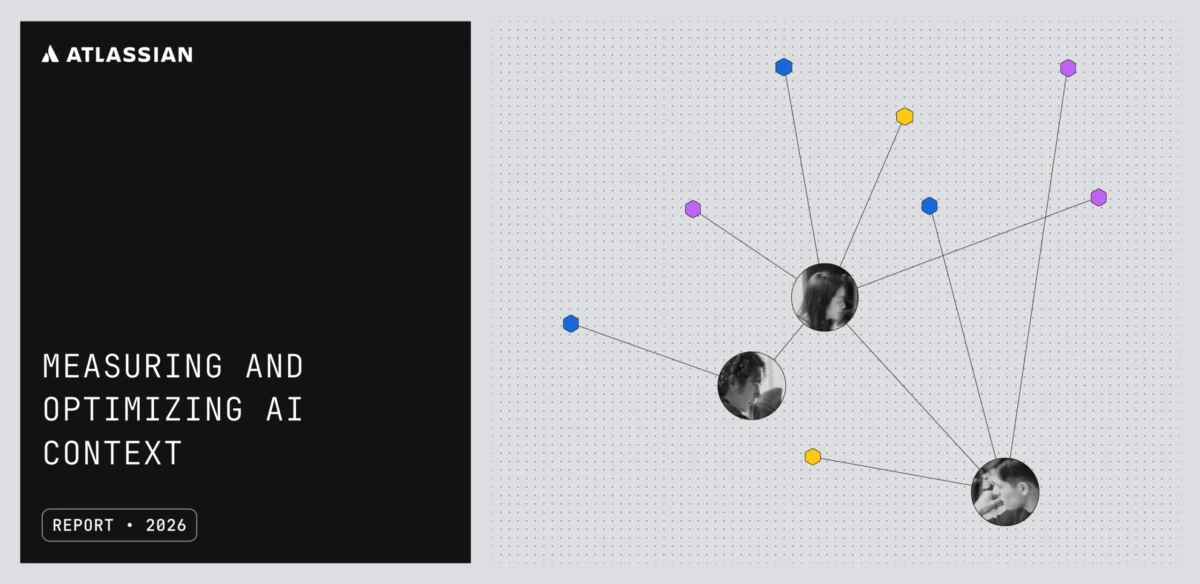
To assist organizations in adopting this new standard, Atlassian has released a comprehensive whitepaper titled "Context Quality Score." This document outlines the technical methodology behind the metric and provides a detailed guide on how CQS evaluates context health. The whitepaper also showcases how the Teamwork Graph powers a more reliable, context-aware SDLC, offering practical strategies for enterprises to refine their data strategies.
The introduction of the CQS reflects a broader shift in the technology industry toward "Context-Aware AI." As the initial novelty of generative AI fades, enterprise leaders are increasingly focused on the reliability and ROI of these tools. Atlassian’s approach suggests that the key to unlocking the full potential of AI lies in the "data hygiene" of the organization. By providing a single metric to measure context health, Atlassian is giving enterprises the tools to move beyond experimental AI deployments and toward integrated, high-performance AI systems.
Furthermore, the CQS addresses the "black box" problem often associated with AI. By breaking down context into measurable dimensions like completeness and connectedness, organizations can audit their AI’s performance in a way that was previously difficult. If an AI provides a suboptimal answer, the CQS framework allows administrators to determine whether the failure was due to a lack of data (completeness), a failure to link related concepts (connectedness), or an influx of irrelevant information (relevance). This diagnostic capability is essential for any enterprise looking to scale AI across critical business functions.
The transition to a context-first AI strategy also has implications for how teams manage their daily work. As the CQS provides a roadmap for data improvement, it encourages teams to maintain better documentation and more disciplined communication habits. When teams understand that the quality of their "Teamwork Graph" directly impacts the helpfulness of their AI assistants, there is a natural incentive to create more connected and relevant data points.
In summary, Atlassian’s Context Quality Score represents a pivot from model-centric AI development to data-centric AI optimization. By leveraging 25 years of expertise in human collaboration, Atlassian is positioning itself as a leader in the infrastructure of AI-driven teamwork. The CQS, supported by the Teamwork Graph, offers a systematic way for enterprises to evaluate their data readiness, reduce operational costs through token efficiency, and ultimately build, test, and ship products faster. As the enterprise landscape becomes increasingly crowded with AI solutions, the ability to measure and manage the quality of the context that feeds these models may become the defining factor in successful digital transformation. Organizations are encouraged to review the newly released whitepaper to begin the process of evaluating their own context health and closing the gaps in their software development lifecycles.