 11
 1
 2
 3
Atlassian Corporation has announced a robust start to its 2027 fiscal year, signaling a significant strategic shift toward becoming the primary "System of Work" for an era defined by the collaboration between human teams and artificial intelligence agents. In a recent quarterly update to shareholders, CEO and co-founder Mike Cannon-Brookes detailed the company’s performance, emphasizing a laser focus on AI integration, enterprise expansion, and the delivery of profitable growth. The company’s trajectory is currently defined by an accelerated pace of feature releases and a deepening engagement with large-scale enterprise clients, including SAP, Infosys, and Westpac, all of whom expanded their footprints on the Atlassian platform during the first quarter.

The financial metrics released by the company underscore a period of durable growth, particularly within its high-value "Collections" offerings. Atlassian reported that its Remaining Performance Obligations (RPO) grew by more than 44% year-over-year, reaching a total of $4.7 billion, while current RPO saw a 28% increase. This growth is largely attributed to the increasing adoption of the Atlassian platform as a connected ecosystem rather than a collection of standalone tools. The "Service Collection" has now surpassed 70,000 customers, with Annual Recurring Revenue (ARR) growing at a rate exceeding 30% year-over-year. Furthermore, Atlassian is successfully capturing market share from legacy vendors, reporting that seat growth resulting from competitive wins has increased by over 40% compared to the previous year.
Central to the company’s current momentum is the "Teamwork Collection," which has seen a sevenfold increase in adoption over the last year, now serving more than 3,000 customers. Internal data indicates that these customers are achieving higher levels of productivity; users within the Teamwork Collection are completing 35% more work items per Jira user than those utilizing Jira as a standalone product. Additionally, these organizations are running twice as many AI agents and expanding their Jira and Confluence footprints at a faster rate than standalone customers. This "flywheel effect" is a core component of Atlassian’s strategy: as customers adopt more applications, the underlying "Teamwork Graph" becomes richer, which in turn powers more effective AI, leading to more work being brought onto the platform.
The company’s "System of Work" framework is built upon three reinforcing pillars: Context, Collaboration, and Confidence. Atlassian argues that for nearly 25 years, it has facilitated billions of workflows for over 350,000 customers, including 85% of the Fortune 500. This history has provided the company with an extensive data set regarding how teams plan, build, and deliver projects. As the workplace evolves to include AI agents, Atlassian is positioning its platform as the essential infrastructure to manage the resulting increase in output and complexity.
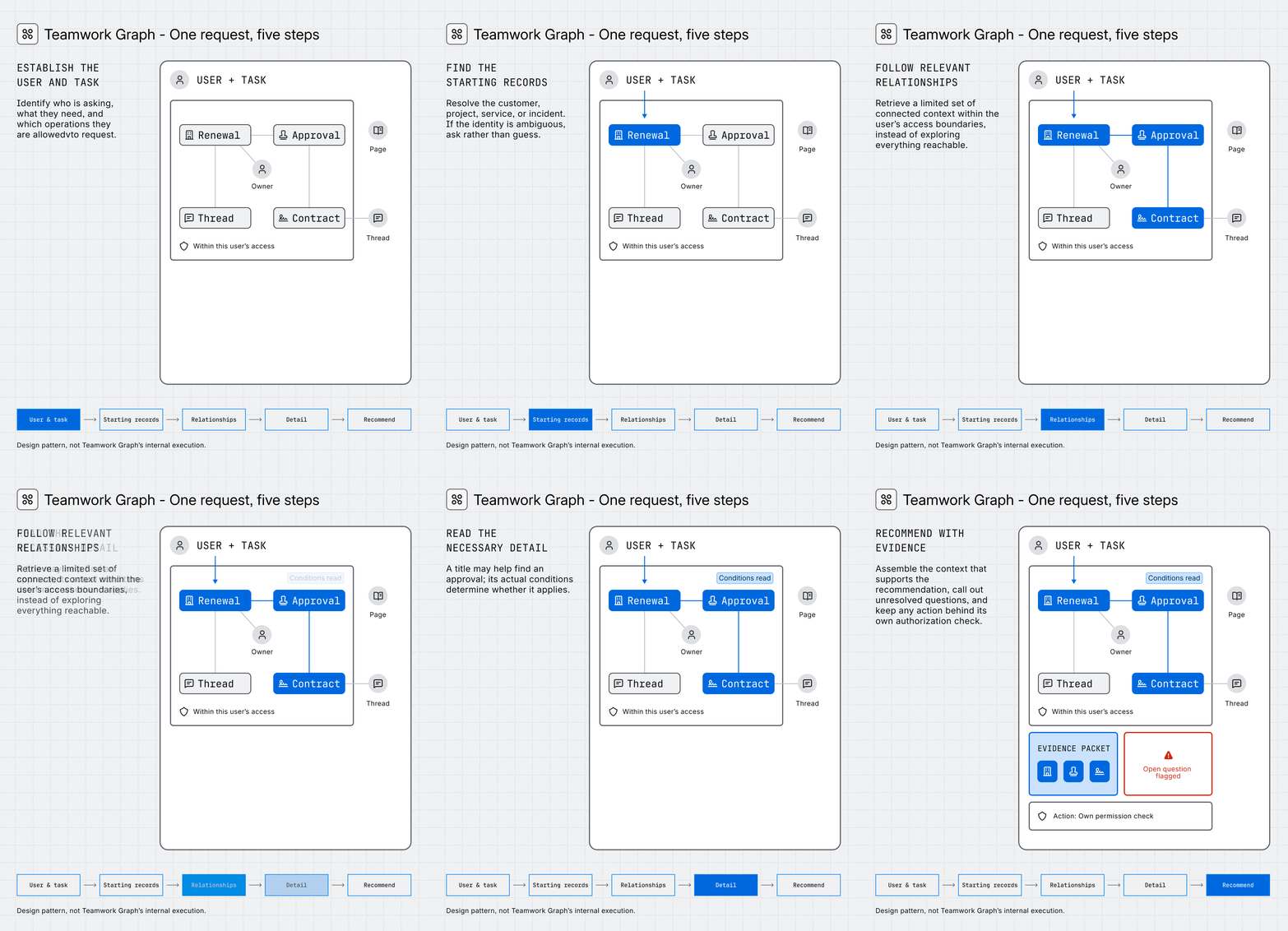
In terms of "Context," Atlassian emphasizes that while AI models are becoming increasingly sophisticated, their utility in a professional setting is dependent on the organizational data they can access. The Atlassian "Teamwork Graph" serves as a living memory of a customer’s organization, mapping more than 250 billion objects and relationships—a significant increase from the 150 billion reported just six months ago. This graph spans seven critical types of context: knowledge, work, people, communications, code, assets, and data. By connecting to more than 80 third-party tools out of the box, the platform allows AI agents to operate with a comprehensive understanding of how work is executed. Developers are increasingly leveraging this data layer; usage of the Teamwork Graph CLI grew by more than 250% month-over-month in September.
To further enhance this context layer, Atlassian has expanded its partnership with OpenAI, allowing ChatGPT and Codex to ground their outputs in real-time work data via the Teamwork Graph. The company has also scaled its Forward Deployed Engineering (FDE) program, which assists enterprise clients like Expedia and Reddit in building custom AI agents and streamlining workflows across technical and non-technical departments. The business impact of a rich data graph is evident: customers with extensive graphs are twice as likely to become deep adopters of Rovo, Atlassian’s AI-powered agent, and these adopters grow their ARR more than twice as fast as those with lighter usage.

The second pillar, "Collaboration," focuses on the interaction between humans and AI agents. At the Team ’26 Europe event, Atlassian introduced the Agentic Multiplayer Protocol (AMP), a specialized layer designed to facilitate seamless teamwork between human employees and AI entities. AMP integrates into Jira, Confluence, and Loom, as well as third-party applications like Figma and Microsoft Teams. It allows AI agents to possess distinct identities and governed authority, ensuring that every action taken by an agent is attributed and auditable. This protocol enables agents to create, review, and collaborate on projects in real-time or asynchronously.
Case studies provided by the company highlight the practical application of these technologies. At VodafoneZiggo, the implementation of Rovo and Loom led to a 20-fold increase in AI adoption over five months. By utilizing the Teamwork Graph, the company was able to bridge the gap between business requirements and technical deliverables, reducing duplicate work and improving cross-departmental collaboration. Similarly, Kaplan reported that by connecting Rovo to their entire ecosystem—including Slack and Google Workspace—they transformed the Teamwork Graph into a real-time engine for delivery, asserting that a model powered by organizational context significantly outperforms isolated AI models.
The final pillar, "Confidence," addresses the need for control, security, and governance as AI agents take on more autonomous tasks. Atlassian has developed administrative controls that allow organizations to scale AI usage while maintaining compliance and cost-effectiveness. This focus on governance is particularly critical for customers in highly regulated industries. According to the company, more than 80% of its highly regulated Cloud customers have already enabled Rovo.
A prominent example of this enterprise trust is Morgan Stanley, which is currently migrating Jira and Confluence to the Atlassian Cloud and rolling out Rovo to thousands of users. The financial institution is utilizing the Atlassian platform to modernize its software development life cycle (SDLC) and gain greater visibility across its technology teams. Gary Meadhurst, Executive Director at Morgan Stanley, described Atlassian Cloud as a "mission-critical part" of the firm’s software development toolchain.
Looking forward, Atlassian maintains that the integration of context, collaboration, and confidence will drive a step-change in organizational productivity. By providing a platform where AI agents and humans work with shared goals and clear ownership, the company aims to move businesses from ideas to outcomes at an unprecedented pace. The CEO’s report concludes that the more deeply customers integrate the "System of Work" into their operations, the more value they derive, which secures Atlassian’s position as a foundational platform for the future of enterprise technology. With a robust RPO and a rapidly expanding data graph, Atlassian enters the remainder of FY27 with a clear mandate to lead the transition toward AI-augmented teamwork.