 11

Political organizations, representing both the burgeoning artificial intelligence industry and those advocating for stronger AI safeguards, collectively invested millions of dollars in efforts to sway Tuesday’s midterm elections. Their aim was clear: to shape the future landscape of AI regulation in the United States. However, this substantial spending produced a mosaic of outcomes, with several heavily backed candidates failing to secure victories, indicating a complex and often unpredictable electoral environment.
On the side of the AI industry, two prominent political action committees (PACs), American Mission and Building the Future, actively engaged in fundraising and spending to influence key races. These two PACs collectively channeled a significant $4.8 million into backing South Carolina Senate candidate Darline Graham, who ultimately lost her bid. American Mission, a critical player in this ecosystem, functions as the Republican spending arm of Leading the Future (LTF). LTF itself is a broader political organization that boasts substantial backing from influential figures within the AI sphere, including OpenAI president Greg Brockman and the venture capital firm Andreessen Horowitz, underscoring the deep pockets and strategic intent behind these industry-led efforts.
Beyond the high-profile Senate race, American Mission also committed over $500,000 apiece to support Republican House candidates Aaron Flint in Montana and Laurie Buckhout in North Carolina. Both Flint and Buckhout, despite the financial support, were unsuccessful in their respective races. Interestingly, LTF’s Democratic spending arm, known as Think Big, encountered greater success. This arm provided support to Florida Representative Jared Moskowitz, who successfully secured his reelection, demonstrating that the industry’s influence operations are bipartisan in their approach, albeit with varying degrees of success across the political spectrum.
Groups advocating for more robust AI safeguards also experienced a mixed bag of results in their electoral endeavors. Public First, an organization financially supported by Anthropic, another significant player in the AI development space, saw some of its backed Republican candidates lose. However, the group achieved more favorable outcomes when supporting Democratic candidates. In a notable investment, Public First also contributed $3 million to a PAC supporting California state Senator Scott Wiener, who was reported to be leading his race at the time of publication. This indicates a strategic allocation of resources towards state-level influence, potentially recognizing the growing importance of state-specific AI legislation.
Meanwhile, the Guardrails Alliance, a group committed to making financial contributions from AI companies a political liability for candidates, pursued a strategy of direct opposition. The Alliance spent more than $1 million each opposing two candidates who ultimately lost: California Representative Jimmy Gomez and Montana’s Aaron Flint, the latter also targeted by American Mission. Furthermore, Guardrails Alliance allocated $300,000 to support Angela Gonzales-Torres, who successfully defeated Representative Gomez, highlighting the effectiveness of targeted opposition spending in certain contests. The Alliance’s strategy directly confronts the industry’s influence by framing their financial support as a potential political detriment.
Disentangling the precise impact of AI-related political spending from the broader electoral dynamics, particularly the Democratic wave that characterized Tuesday’s elections, proves challenging. The outcomes for AI-backed candidates mirrored broader trends, suggesting that even substantial financial investment doesn’t guarantee victory against prevailing political currents. For instance, Elon Musk, who reportedly poured an astonishing half-billion dollars into supporting Republican candidates in the midterms, also witnessed many of his favored candidates lose. Indeed, even LTF, despite its strategic backing, saw some candidates it had deemed likely to win ultimately fall to Democratic challengers, reinforcing the notion that money, while powerful, is not the sole determinant in electoral success.
For Leading the Future (LTF), however, the general election was not the primary focus of its extensive financial outlay. The group communicated to TechCrunch prior to Election Day that it views primary elections—the contests that determine each party’s nominee—as a more effective arena for deploying its resources. The rationale behind this strategy is that spending during primaries can significantly aid in building name recognition for candidates and, crucially, help them establish clear AI policy agendas early in their campaigns. This approach allows LTF to shape the discourse and policy positions of potential officeholders before they even face a general election challenge.
LTF’s commitment to primary intervention was evident in its spending figures, with a total of $27.38 million allocated during the primary season. A substantial portion of this, $8 million alone, was spent opposing New York Assembly member Alex Bores, a former tech executive who ultimately lost his bid for Congress back in June. When deciding whether to engage in a general election race, LTF meticulously assesses several factors: the perceived competitiveness of the race, whether its spending is likely to make a discernible difference, and whether it should conserve its financial resources for future electoral cycles. This pragmatic approach underscores a long-term strategy for influencing AI policy rather than simply chasing short-term victories.
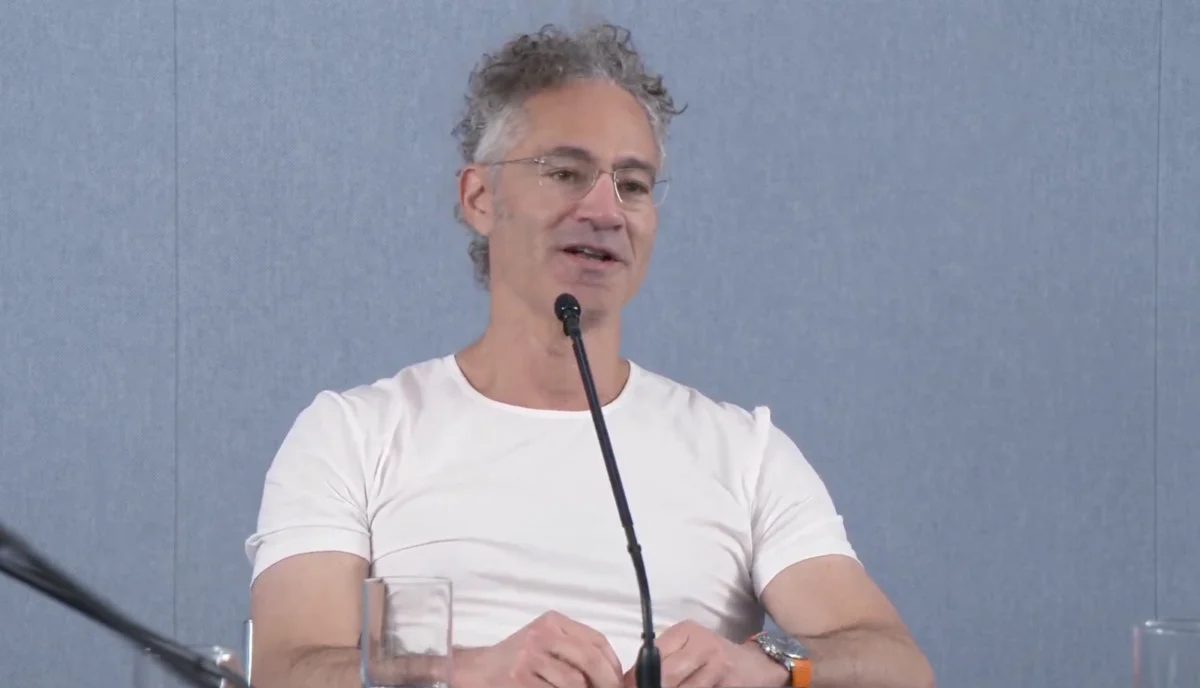
Charlie Blaettler, the political director for Guardrails Alliance, offered an alternative explanation for LTF’s comparatively lower spending in general elections. Blaettler posited, "They don’t want their money to become an issue in these elections." He drew a parallel to the Michigan Senate primary election, where the pro-Israel lobbying group AIPAC spent close to $30 million supporting Democratic candidate Haley Stevens against Abdul El-Sayed. Stevens ultimately conceded the primary to El-Sayed, who went on to win the Senate seat.
Blaettler elaborated on the AIPAC example, stating, "AIPAC became the story in that race." He then applied this observation to the AI industry’s political involvement: "We know people hate AI billionaires. They hate the people running these companies. They’re very distrustful and disgusted by the political spending and lobbying that the tech industry does. If they spend in a competitive race, they would just become an enormous liability for their candidates." This perspective suggests that overt financial intervention by AI industry groups in closely contested general elections could backfire, galvanizing opposition and making the source of the funding a central campaign issue, rather than the policy positions themselves. The public’s growing skepticism towards large tech companies and their influence thus becomes a critical factor in electoral strategy.
At the heart of the political skirmishes between pro-industry and pro-regulation groups lies a fundamental disagreement over the future of AI governance: whether Congress should establish a comprehensive national AI framework that supersedes individual state laws, or if states should retain their autonomy to implement their own distinct safeguards. The industry, often favoring a national framework, argues for consistency and predictability, believing a fragmented regulatory landscape could stifle innovation and create compliance complexities. Conversely, advocates for state-level control argue for tailored solutions that can respond more nimbly to local concerns and foster a diversity of approaches to complex AI challenges.
Neither side appears willing to retreat from this pivotal debate. Leading the Future (LTF), a staunch proponent of a single national AI framework, has informed TechCrunch of its intention to continue significant spending in the 2028 elections, signaling a long-term commitment to its policy objectives. Concurrently, Guardrails Alliance has vowed to persist in its mission of opposing candidates who receive financial backing from the AI industry, indicating that the battle over AI’s regulatory future will intensify in coming electoral cycles.
A key divergence in strategy between the two factions is evident in their political advertising. Charlie Blaettler highlighted that LTF’s advertisements rarely touch upon AI directly, instead focusing on popular issues that resonate with each candidate’s local constituency. This approach aims to build general goodwill and support without drawing attention to the controversial nature of AI regulation or its industry backers. In stark contrast, Guardrails Alliance’s advertisements are explicitly designed to inform voters about which candidates are accepting money from the AI industry. "Our goal is to make AI money politically toxic," Blaettler asserted, clearly articulating a strategy that weaponizes financial transparency to influence public opinion and electoral outcomes. This direct approach seeks to create a negative association between candidates and their AI industry funding, hoping to leverage public distrust to achieve their regulatory safeguard objectives.