 11

As organizations transition from simple generative AI chatbots to sophisticated autonomous agents, a critical bottleneck has emerged: the distinction between data access and operational understanding. While modern AI agents can be connected to hundreds of enterprise tools, mere connectivity does not equate to the nuanced context required to make high-stakes business decisions. The evolution of artificial intelligence in the workplace now depends on "connected context"—a framework that illustrates how work fits together, where organizational boundaries lie, and which data points carry the most authority.
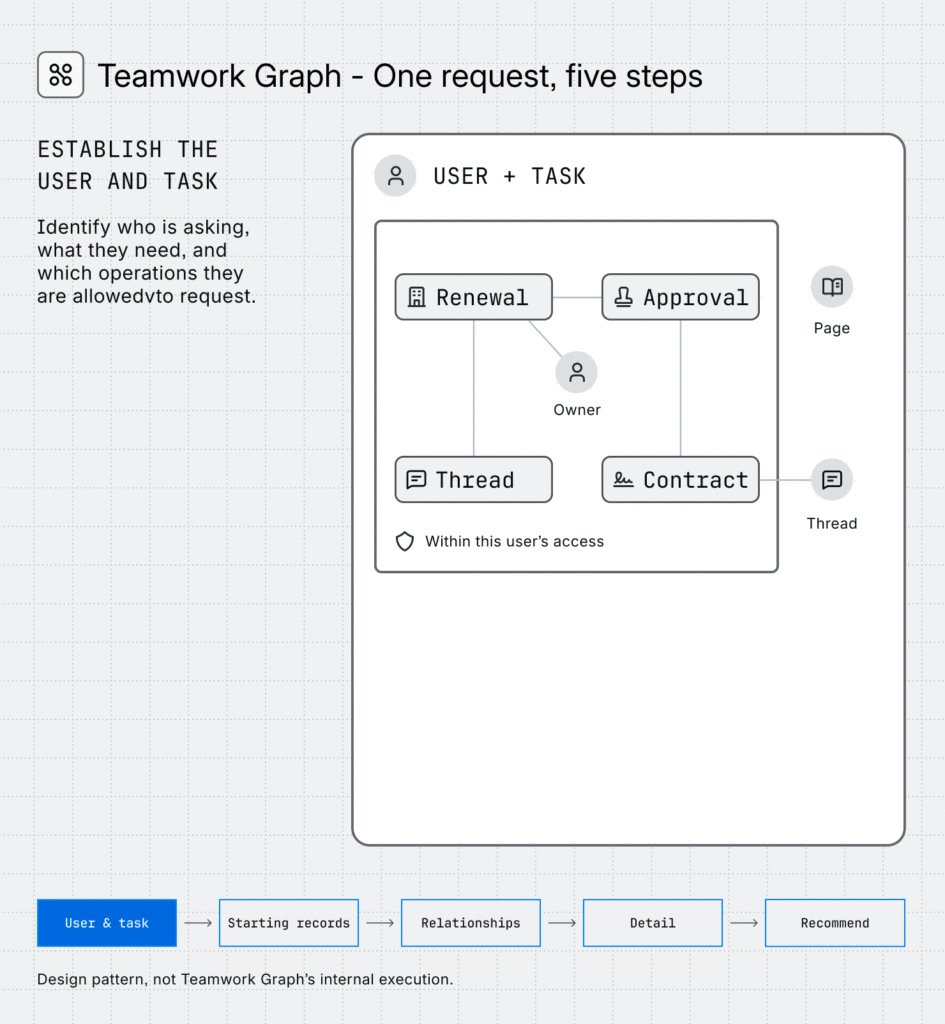
The limitations of current AI integration strategies are often exposed during complex business processes, such as a customer contract renewal. In a typical enterprise environment, an account team preparing for a renewal must navigate a fragmented landscape of information. The customer’s current contract may reside in a CRM system, while the corporate discount policy is stored in a separate wiki or internal knowledge base. Simultaneously, a recent support escalation might have altered the customer’s sentiment, and a historical precedent for a similar exception might exist only within a threaded Slack conversation from the previous quarter.
For an experienced human employee, navigating this landscape is intuitive. They understand which approval takes precedence, who owns the next stage of the process, and whether a past Slack discussion is a binding precedent or merely a suggestion. However, when an AI agent is tasked with recommending renewal terms—such as whether a 15% discount is permissible—it requires the same level of operating context. Simply providing the agent with a "connector" to these 50 or 500 systems is insufficient. Connectivity provides the "what," but context provides the "why" and the "how."
To solve this, industry leaders are looking toward the implementation of context graphs, a technology designed to turn disconnected data into actionable intelligence. This approach moves beyond traditional search methods to create a map of relationships that define how work actually happens within an organization.

In the current technological landscape, most AI agent configurations rely on two primary techniques: Retrieval-Augmented Generation (RAG) and the Model Context Protocol (MCP). RAG utilizes vector search to surface information that is semantically similar to a user’s query. MCP acts as the access layer, providing a standardized way for agents to call tools and fetch records from various systems. While both are essential components of an AI strategy, they suffer from a shared "blind spot": similarity is not the same as authority.
Vector search might surface a discount policy and a specific approval side-by-side because both documents mention "discounts." However, the search algorithm cannot inherently determine which document applies to a specific customer in a specific region for a specific contract period. MCP can reach the data, but it cannot explain how those records relate to one another or which one carries the final word. Without pre-mapped relationships, an AI agent is forced to infer connections from scratch for every single request. This process is not only computationally expensive but also prone to errors, as the agent may struggle to resolve references between different versions of documents or conflicting data points.
This is the specific gap that a context graph is designed to fill. Unlike a general knowledge graph, which focuses on defining what objects are, a context graph models how work operates. it maps the recorded relationships around work—linking an escalation to a specific account, an approval to a specific exception, and a task to its rightful owner. By maintaining these relationships as they evolve in real-time, the graph allows agents to reason over a connected picture of the organization rather than a disjointed pile of search results.
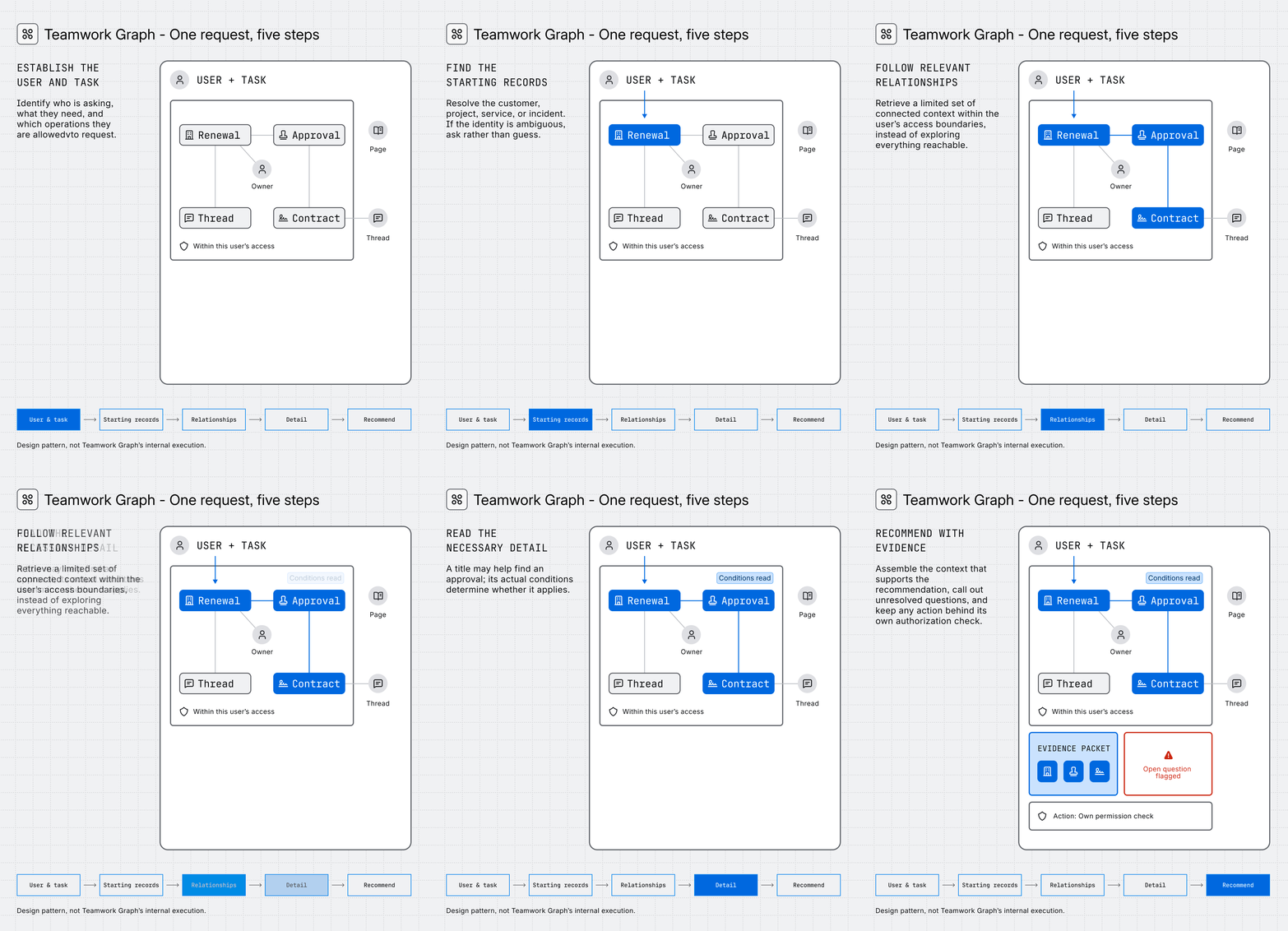
The practical value of this connected context becomes evident when layered into an AI agent’s workflow. If an agent starts only with a policy and a contract, it can identify that a requested discount requires an exception, but it cannot explain the justification or identify the authorizer. By adding a linked support escalation, the agent gains business context regarding urgency and commercial risk. Incorporating Slack discussions might reveal precedents or conditions worth investigating. Finally, by connecting the recorded approval and the account owner, the agent can verify if an authorized exception applies to the current customer and timeframe.
The recommendation provided by the AI changes fundamentally as each layer of context is added. The goal is "compounding context," where the value is derived not from the volume of sources retrieved, but from the relationships between them. This architecture allows the agent to identify constraints that might otherwise be missed, such as expiration dates, cross-system dependencies, or specific conditions attached to an approval.

Furthermore, a context graph serves a vital role in defining the boundaries of AI autonomy. One of the most significant risks in AI deployment is an agent taking an unsupported action based on incomplete information. A connected context allows the agent to identify when information is missing or in conflict. If an agent finds a "lead" (e.g., a similar customer received a discount) but lacks a "claim" (e.g., a recorded approval for this specific account), it can recognize the uncertainty. Instead of assuming an override, the agent can produce a "context packet" that summarizes the evidence and routes the question to a human account owner for review. In this framework, stopping to ask a well-supported question is considered a superior outcome to completing an unsupported action.
For enterprise leaders, these developments necessitate a shift in AI strategy. The focus must move from simply selecting a large language model (LLM) to building a high-quality, governed, and portable context layer. Experts suggest several key pillars for a modern AI strategy centered on context.
First, organizations must invest in the graph rather than a single model. Because AI models and agent clients are evolving rapidly, the most durable investment is the operating context of the business. By using standardized paths like MCP and Command Line Interfaces (CLI), organizations can ensure their context remains portable across different AI vendors, preventing technical lock-in.
Second, context must be layered to enable agents effectively. Much like a human team draws on diverse expertise, an agentic system may draw on multiple sources of context. A context graph’s specific role is to manage the context of cross-team and cross-tool work—identifying ownership, connections, and decisions. This allows agents to function alongside other systems that may hold specialized data, such as codebases or financial records.
Third, context engineering must be prioritized to ensure that data remains governed and appropriate for the task at hand. The objective is not to provide an agent with "all" the data, but rather the specific context appropriate to the user’s permissions and the task’s scope. Retrieved content should serve as evidence for a recommendation, never as instructions that override the core controls of an application.

Ultimately, the effectiveness of a context graph is rooted in the human teams that support it. A graph cannot synthesize knowledge that was never recorded, nor can it settle a policy dispute that exists between departments. The technology is designed to make the existing context of teamwork usable by AI agents, rather than creating a new divide between technical and non-technical staff.
As the industry moves toward "autonomous" agents, the focus remains on building a foundation of quality context. By maintaining connected and governed data, organizations can ensure that the agents working alongside their human employees operate with the same level of understanding and precision. This transformation is not merely about adding more tools, but about ensuring that every tool—and every agent—is grounded in the true reality of how the organization functions. The future of enterprise AI lies not in the sophistication of the model alone, but in the depth and connectivity of the context it can access.