 11
11
Atlassian’s performance marketing team navigates a complex and perpetual challenge every quarter: determining the most effective allocation of a fixed marketing budget to maximize business impact. With hundreds of advertising channels, diverse geographic markets, and an extensive portfolio of product lines, the combinatorial complexity of budget distribution grows exponentially. Historically, these allocation decisions were characterized by an operationally demanding process that relied heavily on human intuition, professional experience, manual adjustments, and recommendations from external agencies. However, as the digital advertising landscape has become increasingly dynamic, Atlassian has transitioned toward a more scalable, intelligence-driven approach by implementing a sophisticated machine learning (ML) optimization system.
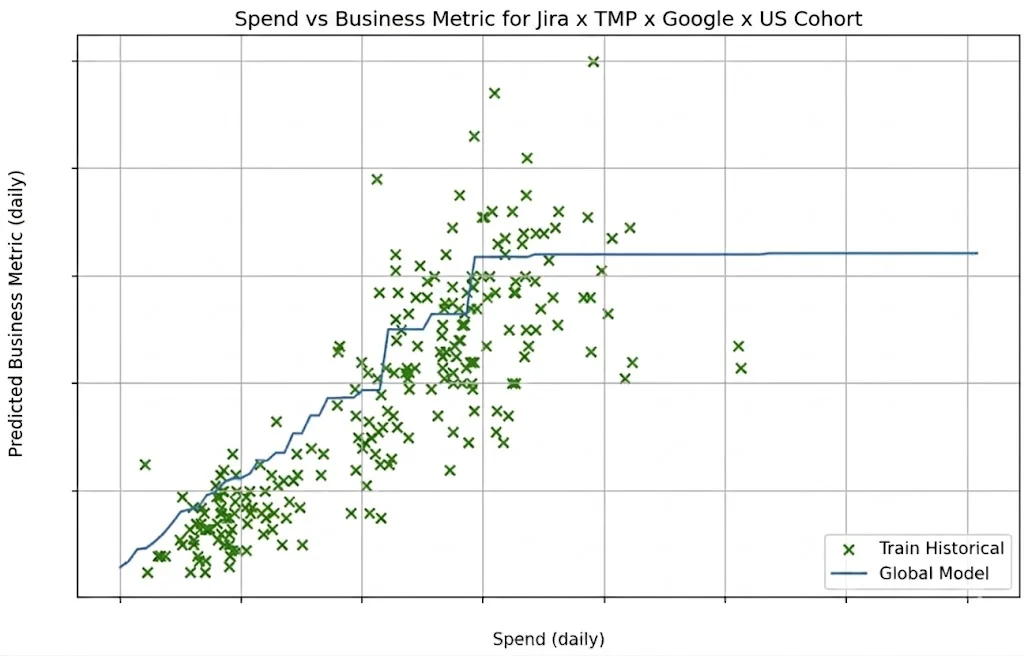
The traditional approach to budget allocation faced significant hurdles in the modern marketing ecosystem. While human-led strategies were effective in simpler environments, they struggled to maintain pace with the volatility of real-time advertising auctions and the sheer volume of data generated across global campaigns. Organizations found that manual processes often resulted in siloed decision-making, where budgets were managed independently by channel or region, leading to missed opportunities for cross-channel synergy. Furthermore, human intuition is frequently ill-equipped to account for the non-linear nature of marketing returns, particularly the phenomenon of diminishing returns, where the marginal utility of each additional dollar spent decreases as the most receptive audiences are exhausted.

To address these limitations, Atlassian developed an intelligent system designed to answer a fundamental question: if a specific amount is spent in a given market segment, what is the resulting business value? Recognizing that marketing spend is not linear, the company introduced a two-stage ML paradigm. This framework is designed to recommend the optimal budget distribution across various segments to achieve the highest possible return on investment (ROI). Powered by advanced algorithms and granular market signals, the system offers the flexibility to accommodate multiple optimization objectives and complex business constraints simultaneously.
The core of this budget allocation system is its two-stage ML architecture. The first stage involves a "Payout Model," a supervised learning model that predicts business outcomes based on various input features. These features include historical spend data, seasonality trends, and campaign-level variables such as channel, platform, product, and geography. Specifically, the model is trained to capture the relationship between spend and business metrics, such as the acquisition of high-value business customers or projected long-term value. By utilizing LightGBM, a gradient-boosting framework, the payout model can effectively handle the non-linearities and complex interactions inherent in marketing data. In offline evaluations, this global payout model demonstrated a meaningful reduction in prediction error compared to baseline approaches, particularly in moderate-spend segments that constitute the majority of the portfolio.
The second stage of the system is the "Budget Optimizer." Once the payout model provides an estimate of the potential outcome for any segment at any spend level, the optimizer must determine how to distribute the total fixed budget to maximize the aggregate predicted outcome. This is a constrained optimization problem, where the system must respect real-world business needs, such as maintaining a minimum presence in strategic markets or capping spend in saturated regions. The optimizer identifies the most cost-efficient opportunities across the entire portfolio, performing global multi-channel optimization rather than treating channels in isolation.
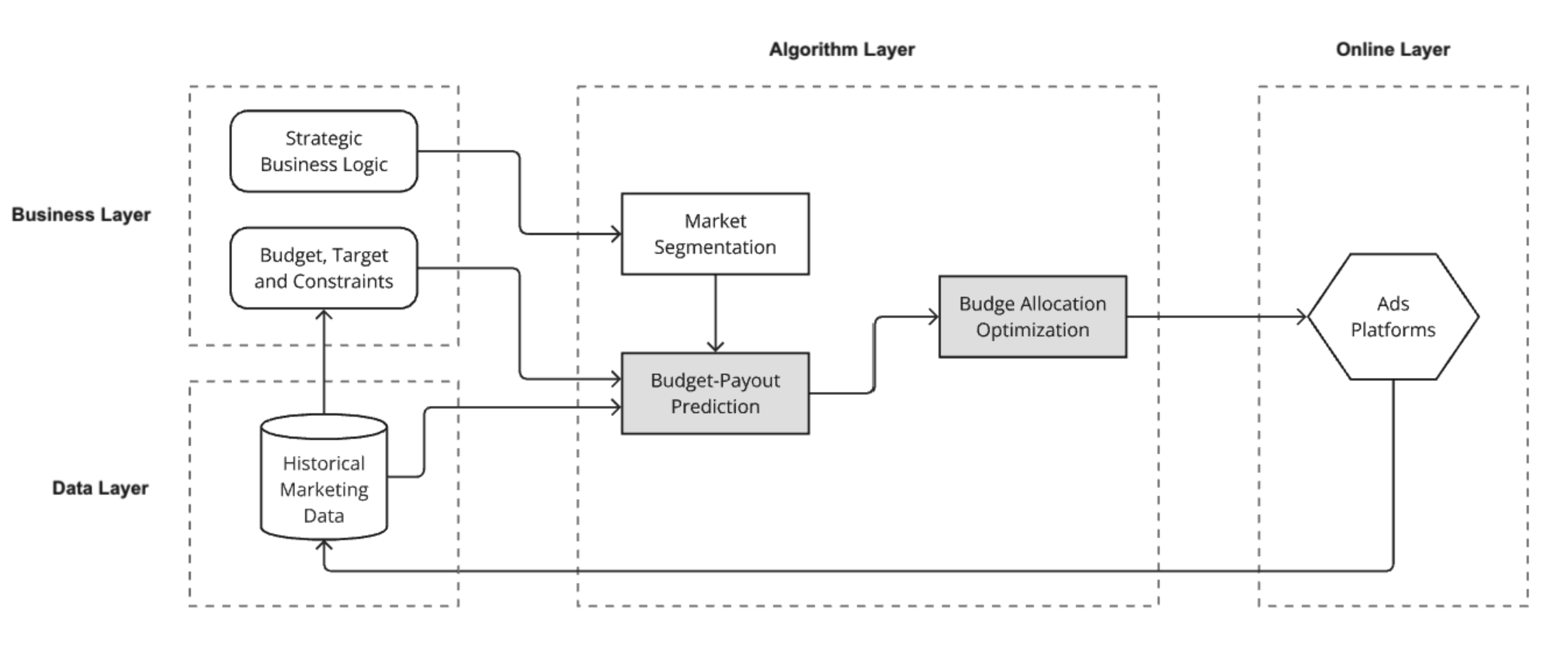
Atlassian evaluated three distinct optimization algorithms to power this stage: Greedy, Genetic, and Bayesian Optimization. Each algorithm offers different trade-offs regarding the balance between exploration and exploitation, computational overhead, and the ability to find global rather than local optima. Ultimately, Bayesian Optimization was selected as the primary optimizer due to its proficiency in handling non-differentiable objectives—a critical requirement when working with tree-based models like LightGBM—and its ability to explore the search space more globally than greedy methods. To ensure reliability, Atlassian implemented the Cross-Entropy method as an independent validator. When both optimizers solve the same problem, any significant disagreement between their recommendations triggers a manual investigation, providing a deliberate check-and-balance for decisions influencing significant capital expenditure.
The system’s capabilities extend beyond simple ROI maximization. It is designed to optimize for multiple objectives simultaneously, ranging from top-funnel metrics like signups to down-funnel purchase signals and projected customer value. This multi-objective approach ensures that marketing investments are aligned with long-term business impact rather than merely short-term campaign efficiency. The system also integrates operational constraints, such as quarterly budget ceilings and geographic prioritization, ensuring that the ML recommendations remain realistic and aligned with broader corporate strategy.
The implementation of this system followed a rigorous end-to-end campaign execution workflow consisting of offline and online layers, supported by a continuous learning loop. The offline layer focuses on model training and validation using historical data, while the online layer handles the execution of recommended budgets in live markets. To validate the effectiveness of the ML-driven approach, Atlassian conducted a series of online experiments.
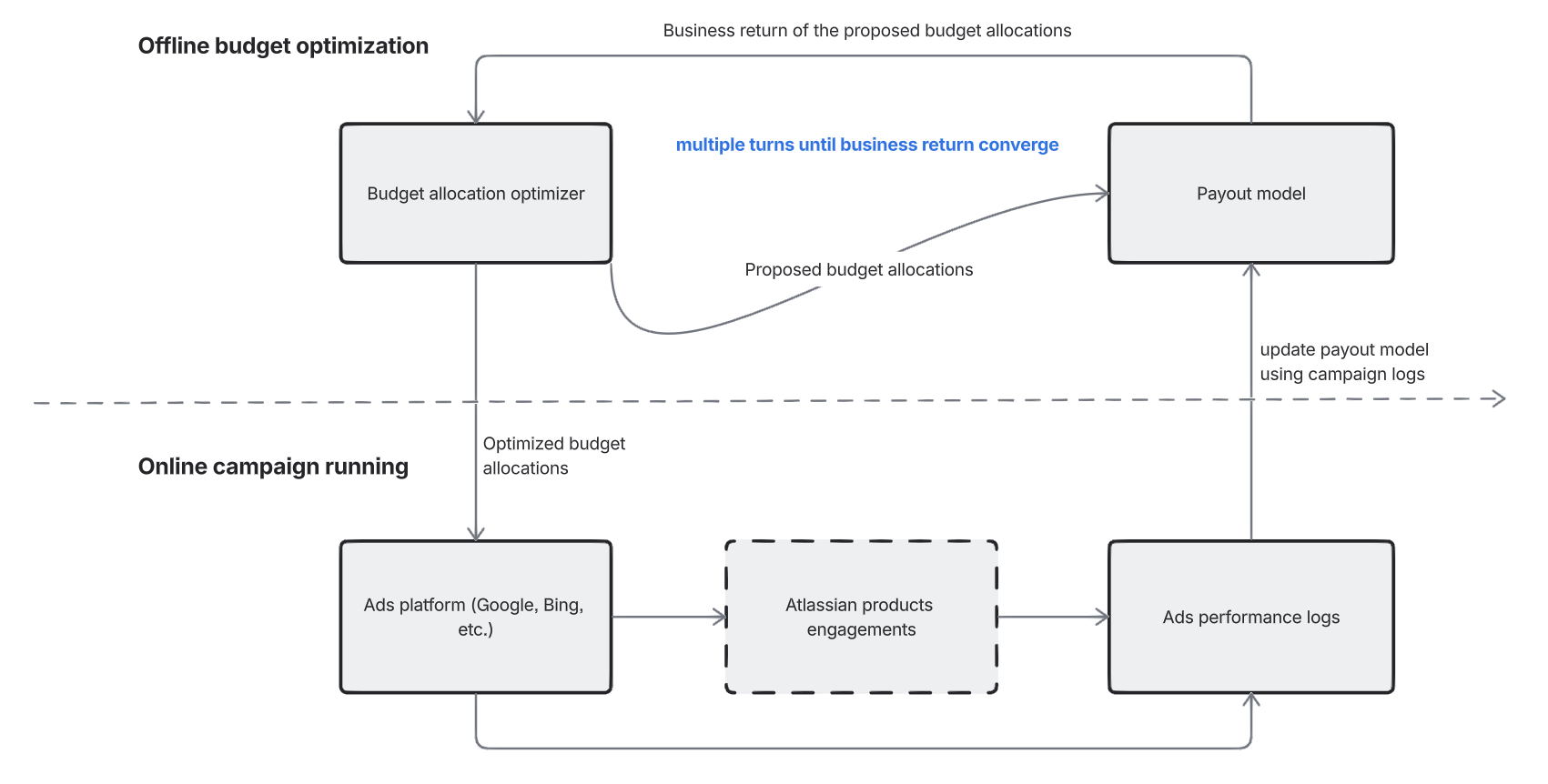
The initial experimental design utilized a weekly rotation, alternating between model-driven and manual allocation. However, this test was stopped early when it became clear that the one-week window was insufficient. Advertising platform algorithms typically require one to two weeks to adapt to new budget distributions; consequently, the weekly rotation was measuring adaptation lag rather than steady-state performance. A second, more robust experiment was designed using a "pre-and-post" methodology. In this setup, a manual baseline was established over three weeks, followed by a three-to-six-week period of ML-driven allocation. To account for seasonality and spend variances, Atlassian enriched the baseline by analyzing numerous historical windows with similar total spend levels, creating a more accurate benchmark for comparison.
The results of these experiments were substantial. Across three separate experiments covering multiple marketing channels and products, the ML-driven allocation achieved a double-digit percentage reduction in the cost per business metric compared to manual methods. Crucially, these efficiency gains were achieved without increasing the total budget. The model achieved this by intelligently redistributing existing funds—concentrating spend in segments with the highest predicted marginal returns and scaling back in segments approaching saturation.
Looking ahead, Atlassian plans to expand and refine this system. While the current iteration focuses on Paid Search and Display, the two-stage architecture is designed to be generalizable across all marketing channels. The ultimate goal is full cross-channel optimization, where budgets are allocated jointly across the entire marketing mix. Future developments will also focus on better handling of extrapolation. As the optimizer considers spend levels with limited historical data, prediction uncertainty increases. Atlassian is exploring hybrid models that combine tree-based algorithms with parametric components to strengthen performance across a broader range of spend levels.
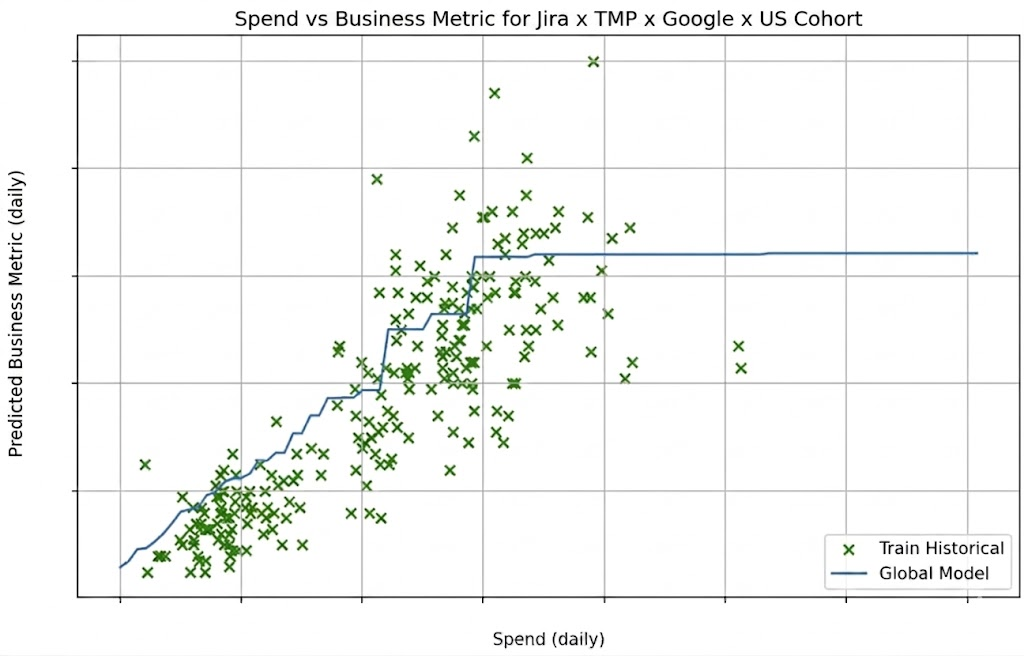
Furthermore, the team is working on incorporating prediction uncertainty directly into the optimization process to better balance exploration and exploitation. This would allow the system to selectively test segments with less historical data, thereby improving the model’s learning over time while maintaining overall performance. Finally, feature enrichment remains a priority. By adding lagged features to capture momentum effects and interaction features to identify dynamics between specific platforms and geographies, the team aims to further increase the accuracy of payout predictions. These incremental improvements in data quality and algorithmic sophistication are expected to compound, leading to even more precise and effective budget allocation decisions in the future. Through this transition to an ML-centric model, Atlassian has established a scalable and adaptive framework that continuously learns and improves, ensuring that every marketing dollar is deployed for maximum impact.