 11
11 1
1 2
2 3
3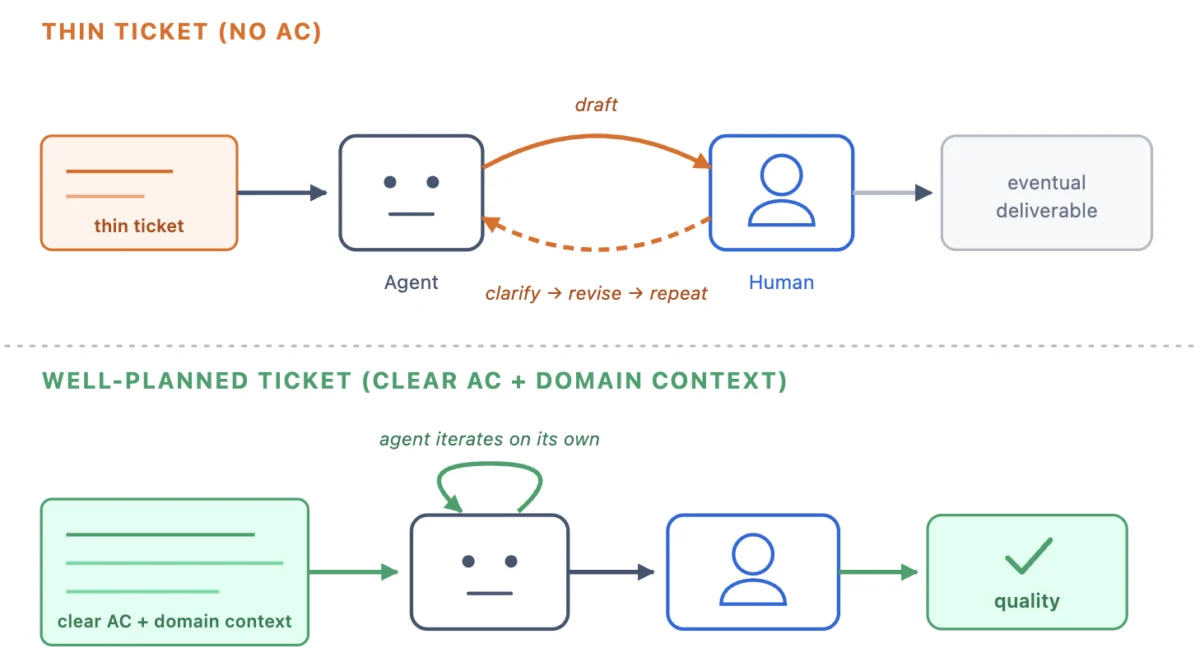
A comprehensive internal study conducted by Atlassian researchers has provided a data-driven look into the future of software engineering, revealing that the integration of AI agents into the development lifecycle can result in a fivefold increase in per-engineer output. The research, which tracked the rapid development of a production-grade enterprise application for employee compensation planning, suggests that the traditional "sprint ceremony" model is being superseded by a high-velocity, agent-centric approach that prioritizes "spec-driven development" and rigorous upfront documentation.
The project was initiated with the specific goal of testing the limits of a small engineering team’s delivery speed when unburdened by traditional frameworks. By bypassing standard agile ceremonies and focusing on a direct collaboration between a five-person team and AI agents, the researchers sought to measure the tangible impact of AI on production-grade software delivery. The resulting data compared this AI-native build against a comparable enterprise product developed using traditional methodologies, offering a rare glimpse into the quantitative shifts occurring in the modern software development lifecycle (SDLC).
According to the findings, the per-engineer output of the AI-augmented team was approximately five times higher than that of the traditional team across several critical technical benchmarks. These metrics included net lines of code, database schema size, and the number of external integrations. Crucially, the researchers noted that the increase was not merely in volume but also in logical depth, as measured by cyclomatic complexity—a metric used to quantify the number of linearly independent paths through a program’s source code. This suggests that the AI agents were not simply generating "boilerplate" code but were contributing to the core logic and architectural complexity of the application.
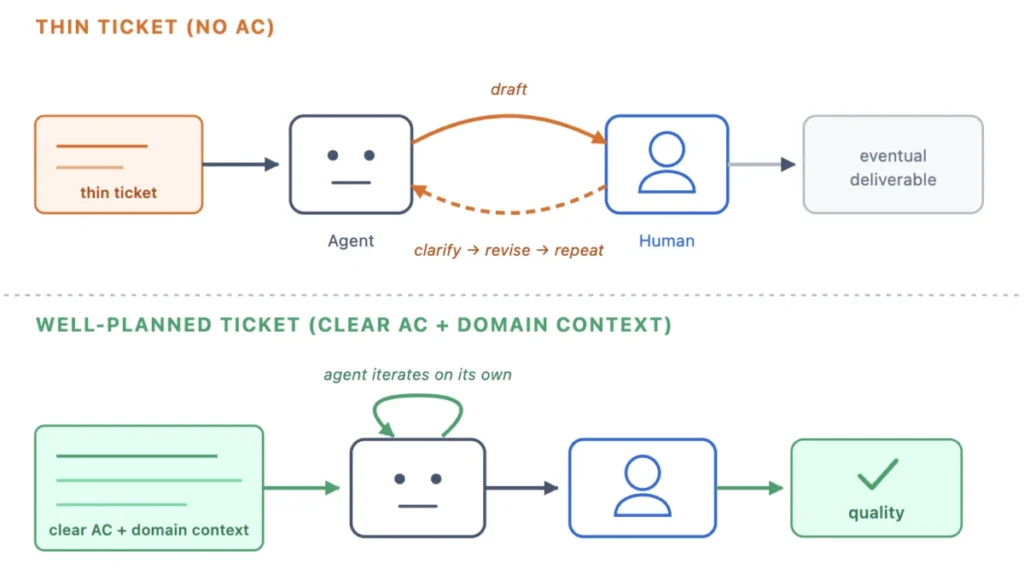
One of the most counter-intuitive findings of the study involved the use of Jira, Atlassian’s project management tool. While the researchers initially hypothesized that working with AI would lead to a more streamlined, perhaps less documented process, the opposite proved true. The team of five engineers wrote nearly five times more Jira tickets per person than the comparison team. This surge in documentation was identified as a prerequisite for speed rather than a hindrance to it. The study posits that in an AI-native environment, a well-defined ticket serves as the "execution loop" for an agent. By providing tightly scoped units of work with clear exit criteria, engineers can allow agents to run to completion without the need for constant back-and-forth prompting.
The quality of this documentation also saw a significant improvement. Using an LLM-based "judge" to perform a source-blinded analysis, the researchers scored tickets on five dimensions: clarity, scope, acceptance criteria, context, and actionability. The AI-native tickets achieved an average quality score of 4.47 out of 5, compared to a 2.72 average for traditionally authored tickets. Furthermore, 83% of the tickets generated in the AI-native workflow were classified as "agent-ready," meaning they contained sufficient detail for an autonomous agent to execute the task. In contrast, only 6% of traditional tickets met this threshold.
The researchers identified three primary reasons why high-volume, high-quality ticketing became the backbone of their accelerated workflow. First, tight scoping is essential to keep agents "on the rails," preventing them from "going rogue" or inventing unnecessary requirements. Second, because multiple engineers were driving agents in parallel, the tickets served as a vital coordination mechanism to prevent code conflicts. Finally, the ticket acts as a formal specification; when an engineer invests effort into the "upstream" portion of the work—defining the problem and the acceptance criteria—the agent can handle the "downstream" execution with minimal human intervention.

The operational "rhythm" of the project followed a specific five-step pattern that the researchers believe defines the AI-native SDLC. The process begins with a "Walkthrough," where a Technical Product Manager (TPM) presents a feature prototype. During this phase, engineers use automated notetakers to record transcripts, which are later used as raw data for planning agents. This is followed by "Design Together," a collaborative phase where high-level architecture is documented in Confluence to ensure a durable shared understanding.
The third and most transformative step is "Interactive Planning with an Agent." In this stage, engineers provide a "planner agent" with the Product Requirement Document (PRD), design documents, source code, and meeting transcripts. Through an interactive dialogue, the human engineer and the agent pressure-test the approach, investigate technical feasibility, and propose acceptance criteria. Once the human is satisfied with the plan, the agent uses the Atlassian Model Context Protocol (MCP) to break the epic down into manageable, well-scoped Jira tickets. This shift allows human effort to concentrate on high-level judgment and strategy rather than the manual labor of ticket creation.
The final stages involve "Execution with an Agent Harness" and "Review and Ship." In the execution phase, engineers run agent harnesses that follow repository-specific guidelines to write and review code. Because the necessary context is already embedded within the Jira ticket, multiple engineers can execute these loops in parallel. The study noted that the pace of code delivery was so high that human review alone became a bottleneck, necessitating the use of agent-assisted pull request (PR) reviews. The Atlassian MCP played a central role here, connecting the various stages of the workflow—from planning and ticket creation to PR monitoring—into a unified ecosystem.
The statistical validity of these findings was underscored by a Welch t-test performed on a sample of 300 tickets. The researchers reported a p-value of less than 0.001, indicating that the performance gap between the AI-native and traditional methods was statistically overwhelming and not a result of sampling fluke. The most significant divergence was found in the clarity of acceptance criteria and context, which are the primary drivers of agent autonomy. Traditional tickets were often reduced to a one-line summary and a link, whereas AI-native tickets functioned as executable specifications, detailing out-of-scope notes and dependency links.
Despite the successes, the study also highlighted a critical shortcoming in current AI-native workflows: the problem of "agent amnesia." Researchers observed that agents frequently identify latent bugs, technical debt, or potential shortcuts while working on a specific task. However, if there is no frictionless way to capture these insights in the moment, the information is often lost once the session ends. This leads to a cycle where the same technical issues are rediscovered repeatedly, creating an invisible tax on productivity. Atlassian is reportedly working on a solution to make agent activity a "first-class citizen" on every ticket, allowing agents to automatically document technical debt as it is discovered.
The broader takeaway from the research is that AI does not eliminate the need for project management tools like Jira; rather, it transforms their purpose. In a traditional setting, a ticket is a reminder for a human; in an AI-native setting, the ticket is the interface through which human intent is translated into machine action. The researchers concluded that the "specifics we choose to make explicit" are what shape the final product. Every assumption left unsaid for an agent to fill in represents a potential technical or financial cost to be paid later.
As enterprises look toward integrating AI into their core operations, the study suggests that the "trust angle" will be paramount. By keeping the artifacts, context, and decisions made by agents within a trusted platform, organizations can maintain a permanent record of their development history and token costs. The Jira ticket, once seen as a mere administrative requirement, has emerged in this study as the essential tool for capturing intent and guiding the autonomous agents that are increasingly defining the pace of modern software engineering.