11

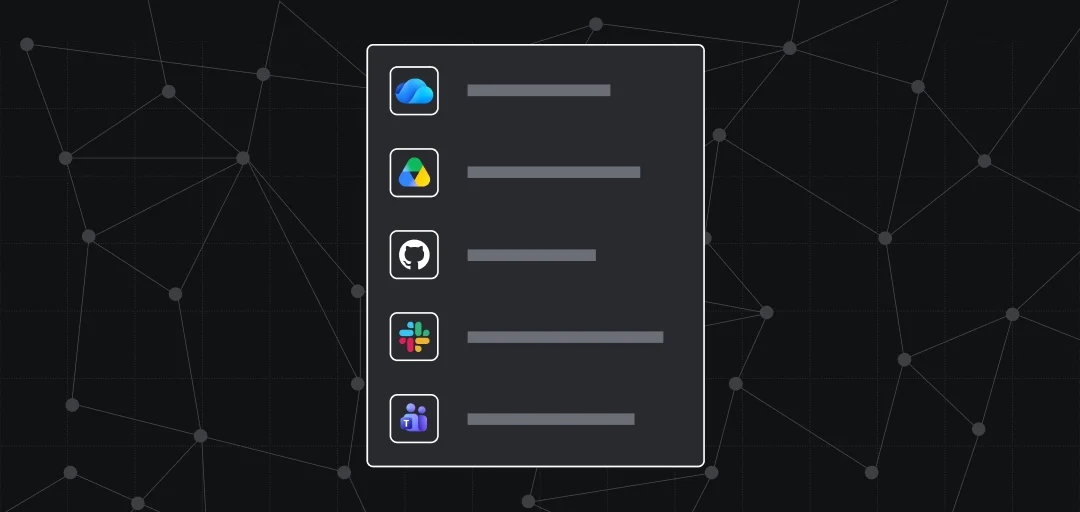
The landscape of modern enterprise productivity is characterized by a fragmented ecosystem where critical work data is dispersed across multiple platforms. While project planning often resides within Confluence and technical delivery is tracked in Jira, the nuanced context that drives daily decision-making frequently exists within communication hubs like Microsoft Teams. This data includes rapid-fire decisions made in chat, complex problem-solving occurring within threaded conversations, and the high-density information captured in meeting transcripts. Recognizing the friction caused by these digital silos, Atlassian has announced the launch of the Teamwork Graph connector for Microsoft Teams, a strategic integration designed to unify communication data with project management workflows through its AI-powered platform, Rovo.
The fundamental challenge addressed by this integration is the "information retrieval gap." In most large organizations, employees spend a significant portion of their day attempting to locate specific pieces of information—a decision made in a meeting three weeks ago, a risk raised in a specific chat channel, or a link shared during a brief sync. When this information is disconnected from the tools where the actual work is being executed, such as Jira or Confluence, the delay in finding context can lead to missed opportunities, duplicated efforts, and stalled momentum. The Teamwork Graph connector aims to eliminate this barrier by ingesting Microsoft Teams conversations and meeting context into Atlassian’s broader knowledge base, making it accessible to Rovo Search, Rovo Chat, and Rovo Agents.
Atlassian’s Rovo platform utilizes the Teamwork Graph to map the relationships between people, tasks, and content. By incorporating Microsoft Teams into this graph, the AI can provide more grounded and comprehensive answers to user queries. For instance, when a user interacts with Rovo, the AI no longer draws solely from documented pages in Confluence or tickets in Jira; it can now reference the informal but vital discussions that occurred in Teams. Crucially, this integration is built with a rigorous focus on data privacy and governance. Results generated by Rovo strictly respect the existing permissions within Microsoft Teams. If a user was not invited to a specific meeting or does not have access to a particular private channel, Rovo will not surface that information to them, ensuring that the organization’s security posture remains intact.
The utility of the Teamwork Graph connector is best understood through its application in real-world professional scenarios. One of the primary shifts this technology enables is the ability for users to "start with the outcome, not the channel." Traditionally, if a project manager needed to prepare for a review, they would be required to manually scan through weeks of Teams chat history, review multiple Confluence pages, and check the status of various Jira issues. With the new connector, a user can simply prompt Rovo to summarize the latest updates, decisions, risks, and announcements for a specific project, such as "Project Titan." Rovo then synthesizes information from across the Atlassian suite and Microsoft Teams, providing a cohesive summary and direct links to the supporting threads, thereby accelerating the path to informed judgment.
There are four primary areas where the Teamwork Graph connector significantly enhances productivity: finding conversations, summarizing threads, searching transcripts, and automating follow-up actions.
First, the connector facilitates faster information discovery. Because the Microsoft Teams connector allows for searches across channels, threads, and message history based on topic, contributor, and time range, users can rely on natural language queries rather than their own memory. Instead of scrolling through an endless feed, a developer can ask Rovo who raised a specific risk regarding "Inconsistent MFA behavior" or request the most recent announcements regarding a "Customer Portal Data Security Pilot." This is particularly beneficial in high-velocity environments where important details can quickly become buried under a mountain of new messages.
Second, Rovo addresses the "catch-up" problem inherent in modern messaging. In active Teams channels, it is common for hundreds of messages and nested replies to accumulate in a single day. For leaders or team members returning from time away, reading every message is often impossible. Rovo solves this by extracting and summarizing the elements that actually matter: finalized decisions, unresolved questions, and concrete action items. By asking for a summary of a specific working group channel, a stakeholder can stay aligned with the team’s progress without having to monitor every real-time interaction.
Third, the integration extends the power of search to meeting transcripts. Some of the most valuable intellectual property in a company is shared during meetings, yet this data is often the most difficult to retrieve once a call ends. By making Microsoft Teams meeting transcripts searchable—including both recurring and ad hoc meetings—Rovo allows teams to verify exactly what was said. This eliminates the reliance on incomplete personal notes or the need to re-watch hours of video recordings. For example, a sales lead can ask Rovo to summarize customer escalation points from a weekly strategy review, pulling directly from the spoken dialogue captured in the transcript.
Fourth, the connector enables the transformation of conversation context into actionable workflows. Once the Teams data is integrated into the Teamwork Graph, it serves as a foundation for Rovo Agents to perform complex tasks. A user can direct Rovo to draft a weekly status update for a project by pulling context from Teams, Jira, and Confluence simultaneously. The AI can then be instructed to send that draft directly back into a specific Teams channel, creating a closed-loop system where information flows seamlessly between the system of record and the system of communication.
To highlight the strategic value of this integration, Atlassian compares the "Connected Experience" against traditional methods. While Microsoft Teams is excellent for fast communication and Atlassian apps are superior for documentation and delivery tracking, they often operate as separate islands. Manual "copy-and-paste" methods to bridge these islands are slow and prone to losing context. The Teamwork Graph connector represents an "Ideal State" where conversations, meetings, and plans are unified. However, Atlassian notes that for this state to be achieved, teams must have the connector enabled and active Microsoft Teams licenses.
From an administrative perspective, the rollout of such a powerful tool requires granular control to ensure organizational confidence. Atlassian has provided enterprise admins with a suite of controls to tailor the integration. Admins can choose to block the ingestion of all Direct Messages (DMs) to protect one-to-one privacy, or block private channels to focus exclusively on shared collaboration spaces. Furthermore, time-based ingestion allows admins to index only content created after a certain date, preventing "historical noise" from cluttering the AI’s knowledge base. Admins also have the ability to allowlist or blocklist specific Teams or individual channels, providing precise oversight over which data is exposed to the AI.
The integration of Microsoft Teams into Atlassian Rovo via the Teamwork Graph marks a significant evolution in how generative AI is applied to the workplace. By moving beyond simple document search and into the realm of understanding live conversations and meeting dynamics, Atlassian is providing a toolset that mirrors the way modern teams actually work. The focus remains on reducing the "work about work"—the searching, the summarizing, and the manual syncing—allowing employees to focus on high-value tasks and faster delivery.
To begin using these features, organizations are encouraged to connect Teams to the Teamwork Graph through the Atlassian Administration portal. Atlassian specifically recommends ensuring that transcripts are enabled to maximize the utility of the connector. Once connected, the immediate value can be realized through high-value workflows such as summarizing the last week of project-specific discussions or identifying unresolved blockers discussed in recent meetings. This integration represents a commitment to an open ecosystem where the value of data is maximized regardless of which tool it was originally created in.