11

Modern enterprises are currently navigating a fundamental shift in operations known as the "agentic transformation," a period characterized by the rapid deployment of artificial intelligence agents designed to access sensitive data, trigger complex workflows, and influence high-level business decisions. This shift is occurring at a pace that has outstripped the planning cycles of most global organizations, leading to a significant disparity between the adoption of AI technologies and the implementation of necessary oversight. According to research from Gartner, the scale of this transformation is immense: by 2028, the average global Fortune 500 enterprise is projected to have over 150,000 agents in active use. However, current readiness is lagging, as only 13% of organizations believe they have the appropriate AI agent governance frameworks in place.
The risk associated with this gap is substantial. As AI agents gain increasing levels of autonomy—coordinating across various software tools, handing off tasks between systems, and executing multi-step processes with minimal human oversight—the potential for operational failure grows. A single misconfiguration in an autonomous agent can lead to the unauthorized extraction of customer Personally Identifiable Information (PII) into unapproved workflows. Such incidents can cascade across integrated systems before human operators can intervene, leading to data exposure, regulatory non-compliance, and the long-term erosion of organizational trust. For IT and security departments, the burden of accountability for these autonomous actions is absolute, necessitating a shift toward governance models that are integrated directly into the platforms where work is already being performed.
Industry experts suggest that the primary challenge facing modern businesses is not the existence of AI itself, but rather the prevalence of ungoverned AI. When the adoption of AI outpaces the development of governance structures, three primary issues typically emerge. First, sensitive data becomes increasingly difficult to control as it is accessed by various automated systems. Second, AI agents begin to proliferate across different departments without consistent boundaries or standardized protocols. Third, leadership and security teams lose visibility into what these AI systems are doing, what they are accessing, and why they are making specific decisions.
This lack of visibility often occurs when AI tools are introduced as external "bolt-on" solutions, operating outside the established systems where permissions, work histories, and corporate policies reside. In such environments, security teams are frequently unable to answer fundamental questions regarding what agents are running, who created them, what data they can access, and what specific actions they are authorized to take. When these answers are unavailable, many organizations default to slowing down AI adoption as a safety measure. However, this creates a secondary risk: internal teams, seeking the productivity gains offered by AI, may find unauthorized workarounds that are even more difficult to govern and monitor.
To address these challenges, Atlassian is advocating for an approach that brings governance closer to the work itself. By integrating AI governance into the Atlassian platform, organizations can utilize the "Atlassian Teamwork Graph"—a repository of two decades of project history, team structures, code, and institutional knowledge. This graph provides the necessary context to transform generic AI outputs into specialized outcomes that understand an organization’s unique strategic goals and history. Unlike third-party AI vendors that may require organizations to rebuild their permissions and policies from the ground up, Atlassian’s AI solution, Rovo, operates within the existing platform framework. This allows the controls already established for data classification, access, and protection to carry over into the AI experience without the need for a separate administrative model.
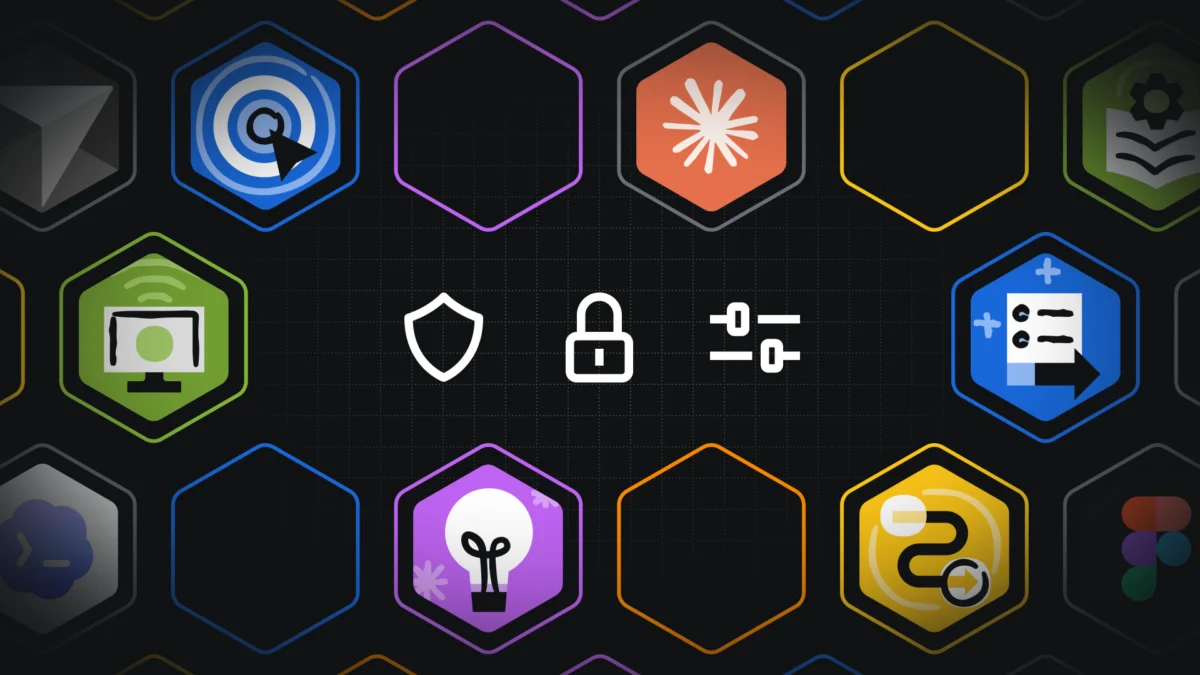
The framework for effective AI governance is structured into three critical components: securing the underlying data, setting boundaries for autonomous behavior, and maintaining a comprehensive record of all AI actions.
The first pillar, securing underlying data, acknowledges that AI security is fundamentally dependent on the integrity of the data foundation. Before AI can be scaled across an enterprise, security teams must have absolute confidence in their ability to classify and monitor data. Without these controls, predictable failures occur—such as an external contractor receiving a prompt response that includes restricted source code, or an automated summary surfacing sensitive compensation data in a public channel. These are not considered edge cases but are the logical results of deploying AI on unorganized or unmonitored data sets.
To mitigate these risks, Atlassian Guard provides security teams with the tools to classify and secure data before AI interaction occurs. This includes "Rovo connector security," which performs real-time scans of third-party data to prevent sensitive content from entering the environment, and "Rovo Chat security," which operates at the user level to block or redact sensitive information from prompts and AI-generated responses. For organizations with high-compliance needs, such as those requiring strict data sovereignty or encryption, the platform supports Atlassian-hosted Large Language Models (LLMs), customer-managed keys, and specific data residency options.
The second pillar involves setting explicit boundaries for autonomous behavior. As agents move beyond simple chat functions to executing tasks, they require granular controls. For instance, a sales team might deploy an agent to automate CRM updates. Without boundaries, that agent could potentially pull customer contract data into unapproved workflows, inheriting the full access permissions of the individual who created it. To prevent this, Atlassian allows administrators to set scoped permissions and tool restrictions. These execution boundaries ensure that agents can only perform specific actions within approved environments, making agent usage consistent and manageable at scale.
The third pillar is the maintenance of a rigorous record of activity. Governance requires not just authorization, but the ability to prove compliance after the fact. In the event of a security audit or a query from a Chief Information Security Officer (CISO), organizations must be able to provide a clear history of what an agent did, what data it utilized, and whether it adhered to corporate policy. Atlassian facilitates this through detailed audit logs and operational reporting, providing a continuous line of sight into AI adoption, compliance, and associated costs. This ensures that visibility is the default operating posture rather than a reactive measure taken only after a failure has occurred.
As the shift toward agentic AI continues, the accountability placed on IT and security teams will only increase. Atlassian’s strategy suggests that the organizations that will successfully navigate this transition are those that leverage their existing foundational data and permissions. By utilizing built-in governance rather than external layers, companies can maintain the speed of innovation without sacrificing security.
For organization administrators looking to implement these controls, the process begins with the activation of Rovo and the configuration of Atlassian Guard. Administrators are encouraged to define their data classification levels first, ensuring that the AI has a clear understanding of what information is public, internal, or restricted. Once the data foundation is secure, the next steps involve setting specific agent policies and monitoring usage through the centralized administration dashboard. This systematic approach allows enterprises to close the gap between their current capabilities and the projected future where autonomous agents become a standard component of the global workforce.
Ultimately, the goal of these governance tools is to move beyond the "black box" nature of AI. By providing clear visibility and control, Atlassian aims to help organizations move away from the fear of ungoverned AI and toward a model of "responsible autonomy." This model ensures that as the number of agents in the Fortune 500 grows toward the 150,000 mark, the risks associated with them are mitigated by design, allowing teams to focus on the outcomes of their work rather than the security of their tools. The road ahead for the agentic transformation is complex, but with the right governance built into the platforms where work occurs, it remains a manageable and productive evolution of modern teamwork.