11
11
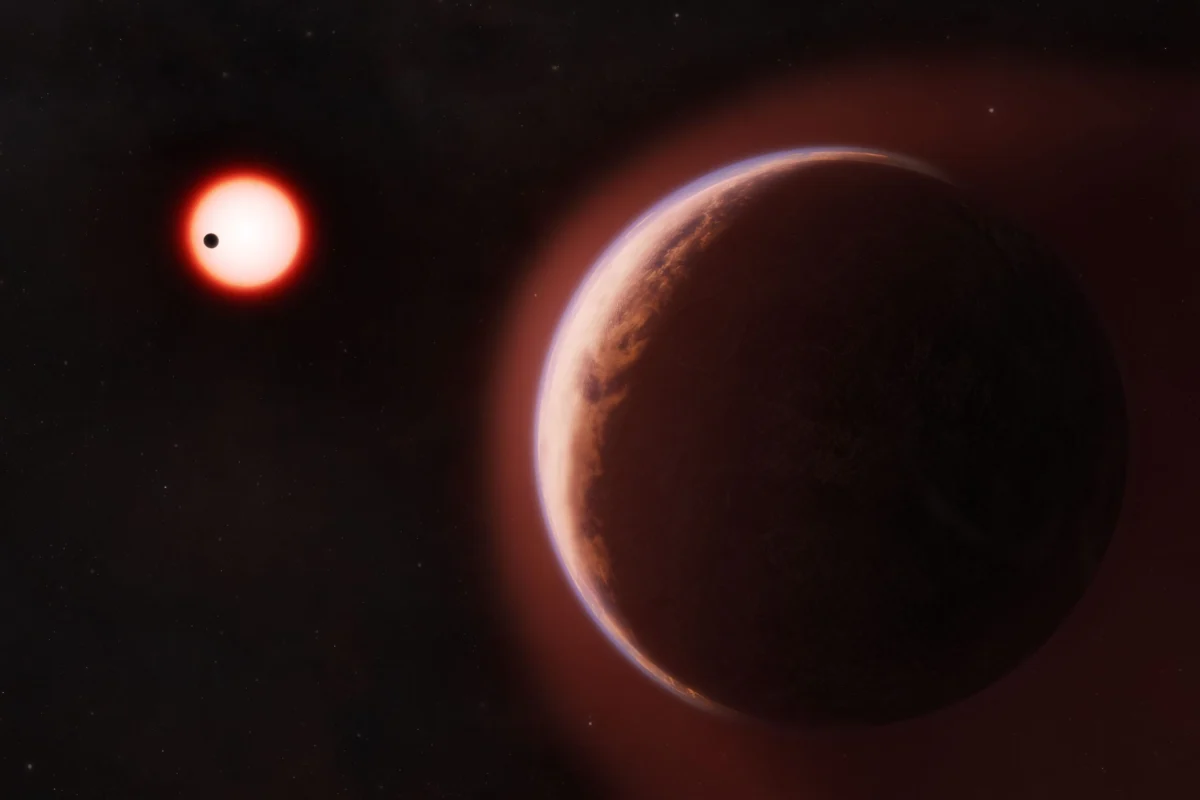
Astronomers have confirmed for the first time the existence of a rocky planet with an atmosphere that also happens to be situated within what scientists refer to as the habitable zone. This groundbreaking discovery represents a significant advancement in the ongoing quest to find environments beyond our solar system that could potentially support life.
Located an impressive 48 light-years away from Earth, this exoplanet, designated LHS 1140 b, may be the most Earth-like celestial body researchers have encountered to date. An exoplanet is defined as a planet that orbits a star outside our solar system. While not an exact twin, its characteristics suggest a strong familial resemblance to our home planet, positioning it as a prime candidate for further astrobiological investigation.
Researchers affiliated with the Harvard-Smithsonian Center for Astrophysics were instrumental in this confirmation, successfully detecting distinct signatures of helium surrounding LHS 1140 b. This exoplanet orbits a cool red dwarf star, a type of star that is abundant in our galaxy and has increasingly become a focus in the search for habitable worlds due to their long lifespans and the close proximity required for planets to be in their habitable zones. The body, previously identified in 2017, is known to possess a rocky composition, a crucial factor for a planet to potentially harbor life as we understand it. Furthermore, its orbital distance from its host star is sufficient to allow for the retention of liquid water on its surface, a key ingredient for life. The team meticulously documented their findings, which were subsequently published this week in the prestigious academic journal Science.
The presence of an atmosphere is an absolutely essential prerequisite for a planet to support life as we currently comprehend it. On Earth, for example, our atmosphere plays multiple critical roles. Primarily, it enables water to exist in a liquid state across much of the planet’s surface, preventing it from either boiling off into space or freezing solid easily. Beyond this, the atmosphere is crucial for maintaining a stable and temperate climate by regulating the planet’s temperature through the greenhouse effect, trapping some of the star’s heat. It also provides a vital shield, significantly reducing the impact of harmful space radiation and meteoroids that would otherwise bombard the surface, creating an environment inhospitable to complex life forms.
Astronomers actively engaged in the search for habitable planets typically focus on identifying what are colloquially known as "Goldilocks-type conditions." This analogy refers to the children’s story where everything is "just right" – meaning the planet is neither too hot nor too cold, but precisely within the range where liquid water can persist on its surface. LHS 1140 b is particularly significant because it is the first exoplanet to provide compelling and solid evidence that it simultaneously meets all three fundamental requirements considered vital for habitability: being a rocky body, being located within its star’s habitable zone, and definitively possessing a substantial atmosphere. This convergence of characteristics makes it an unprecedented discovery.
While LHS 1140 b was initially discovered in 2017, the new, pivotal findings regarding its atmosphere are based on advanced observations taken in 2024 and 2025. To achieve the remarkable feat of detecting an atmosphere from a distance of 48 light-years – a light-year being the distance light travels in one Earth year, approximately 9.46 trillion kilometers – researchers employed sophisticated spectroscopic techniques. They specifically identified characteristic spectral signatures indicative of helium leaks emanating from the exoplanet. These detected leaks provide robust evidence not only that the planet indeed has an atmosphere but, critically, that this atmosphere has persisted for an astonishingly long period, estimated to be at least 3 billion years. Such longevity is considered vital for the potential development and evolution of life. The research team first identified the unique spectral signature of helium, which occurs when specific wavelengths of light are absorbed or emitted by the gas. Following this detection, they utilized complex physical models to reconstruct the dynamics of how that gas is escaping from the planet’s atmosphere, thereby inferring its presence and stability over cosmic timescales.
It is important to clarify that while the planet resides within a habitable zone and possesses an atmosphere, these factors alone do not constitute definitive proof of life or confirm that its environment perfectly resembles that of Earth. In fact, based on the observed amount and rate of helium escaping from LHS 1140 b, the researchers suggest that its upper atmosphere is likely very different in composition and structure from Earth’s. The upper layer, from which the helium is being expelled, represents only the most readily observable part of the atmosphere. Beneath this escaping layer, there is a strong possibility that lower atmospheric layers could contain heavier gases, such as nitrogen, carbon dioxide, or carbon monoxide, which would significantly influence the planet’s overall climate and surface conditions. Understanding the full atmospheric profile will be a critical next step in assessing its true habitability.
Crucially, this study not only unveiled a potentially habitable world but also confirmed the viability and effectiveness of the advanced technique the team employed for detecting atmospheres around distant exoplanets. This methodological validation opens new avenues for future research, enabling astronomers to apply similar techniques to other promising exoplanet candidates. Moving forward, scientists will require the deployment of even more powerful and sensitive instruments, such as the James Webb Space Telescope (JWST) and future generations of observatories, to fully characterize LHS 1140 b’s atmosphere. The goal is to determine its complete chemical composition, temperature profile, and pressure, which are all vital for assessing its potential to harbor life. Further investigations will also focus on definitively ascertaining whether the planet possesses surface oceans or other geological and hydrological features compatible with sustaining life.
Robin Wordsworth, a professor at Harvard and one of the esteemed authors of the study, reflected on the historical progression of exoplanetary science in a recent press release. He stated, “Twenty years ago we wondered whether other terrestrial-type planets even existed.” He continued, illustrating the rapid advancements in the field: “Then we learned they’re common, and found some in the habitable zone. The next question was whether any of them had managed to keep an atmosphere. Now, we know at least one has.” This statement encapsulates the profound impact of the current discovery, marking a pivotal transition from theoretical speculation to empirical confirmation in the search for extraterrestrial life.
This story originally appeared on WIRED en Español and has been translated from Spanish, bringing this significant scientific breakthrough to a wider global audience.