 11
11
AI search is poised to be the most transformative development in the industry in a decade, yet it’s also subject to a constant barrage of over-narrated trends and urgent calls to action. Amidst the weekly emergence of new acronyms and pronouncements of impending obsolescence, discerning genuine shifts from mere noise is crucial. This report delves into the concrete, data-backed AI search trends that have been steadily building throughout the year, supported by search volume and social media discussion analysis.
1. The Escalating Demand for AI ROI Reporting
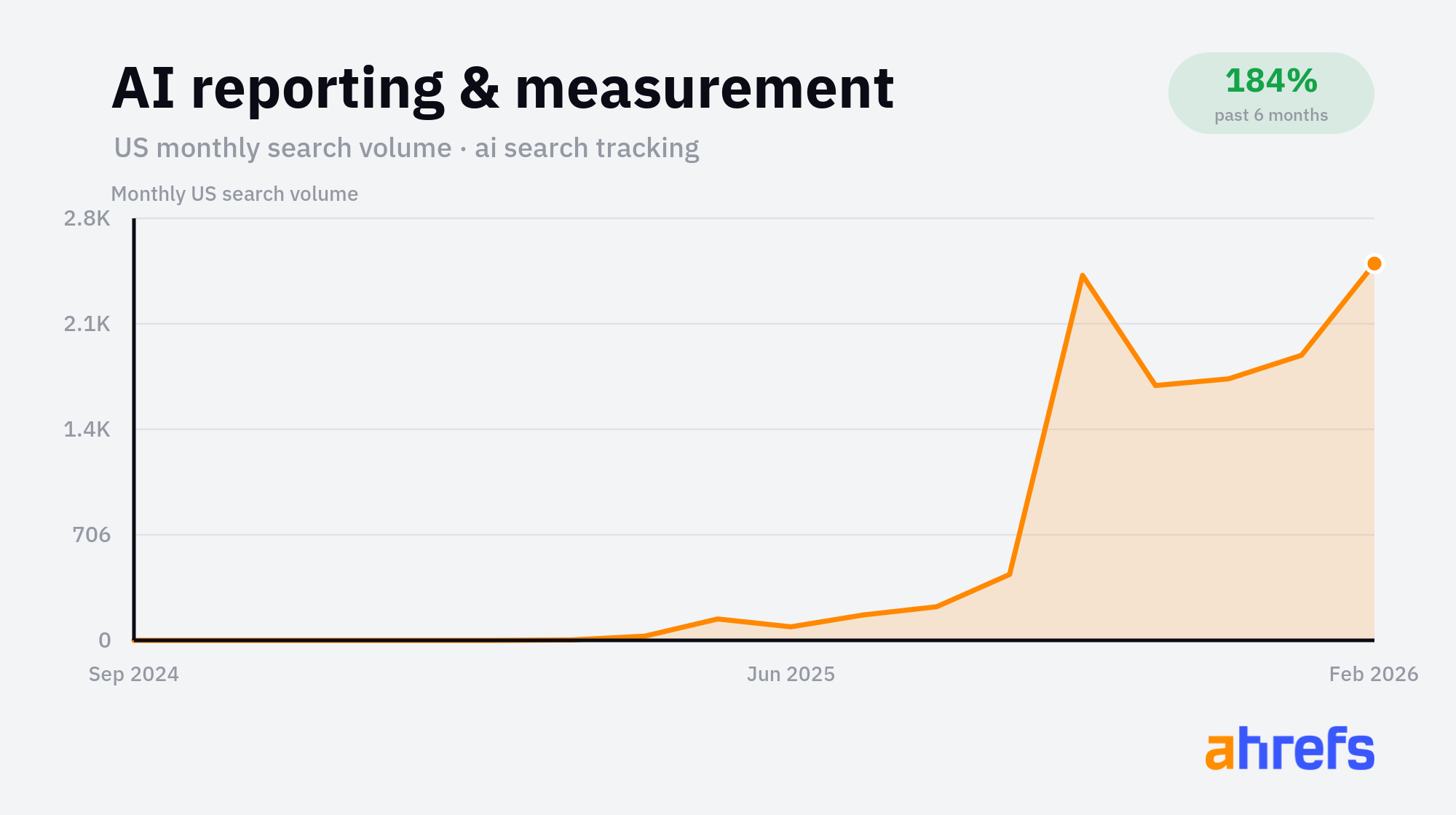
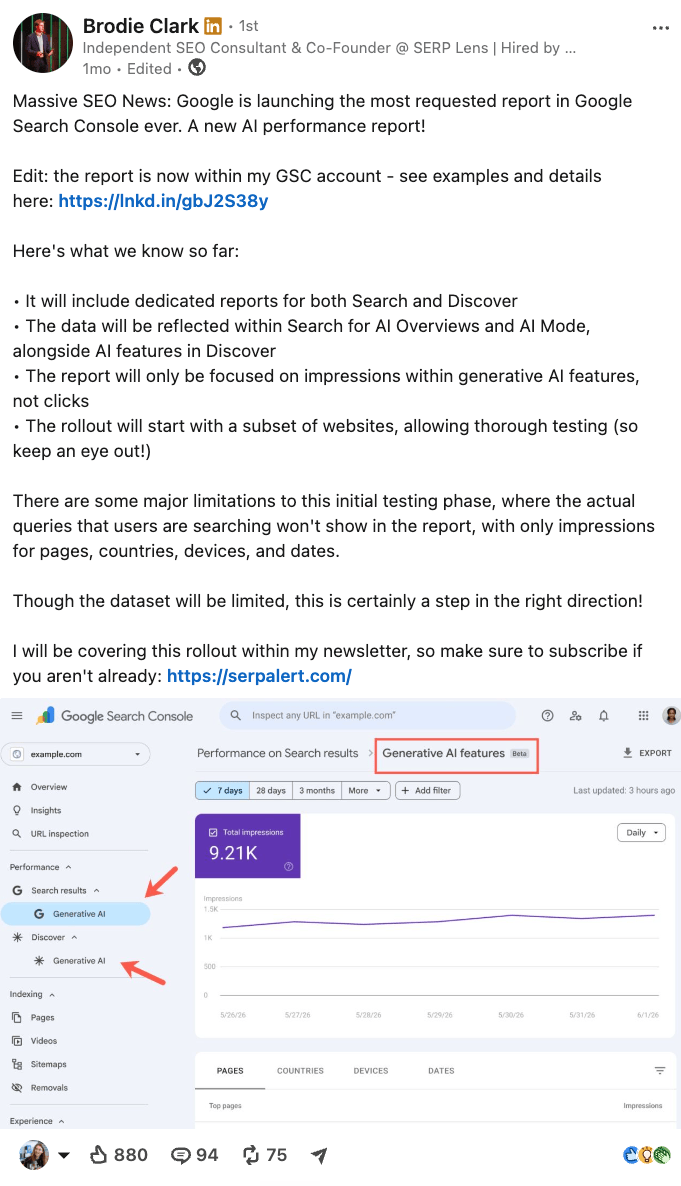
Since the advent of ChatGPT in 2022, marketers have been keenly focused on understanding their brand’s visibility within AI-generated answers. The demand for tools that track AI visibility has surged dramatically over the past year. Searches for "AI search tracking" have seen an increase of 184%, while "AI rank tracking" has grown by 175%. This growing imperative is underscored by Google’s recent introduction of an AI performance report in Search Console, which breaks down visibility within AI Overviews and AI Mode. Brodie Clark described this report as "the most requested report in Google Search Console ever," highlighting the intense appetite for any data related to AI visibility.
However, the initial rollout has also brought forth discussions about its limitations, particularly the absence of click and query data, offering only impression metrics. This contrasts with platforms like Bing, which provides insights into the RAG (Retrieval-Augmented Generation) queries that inform its AI answers. The industry consensus is that earning a citation within an AI answer is the most immediate and controllable method for achieving visibility, far more accessible than the uncertain prospect of being integrated into an AI model’s training data. The more complex question now being grappled with is the actual value of these AI citations: do they translate into website visits and conversions, or are they merely decorative references with no tangible business impact?
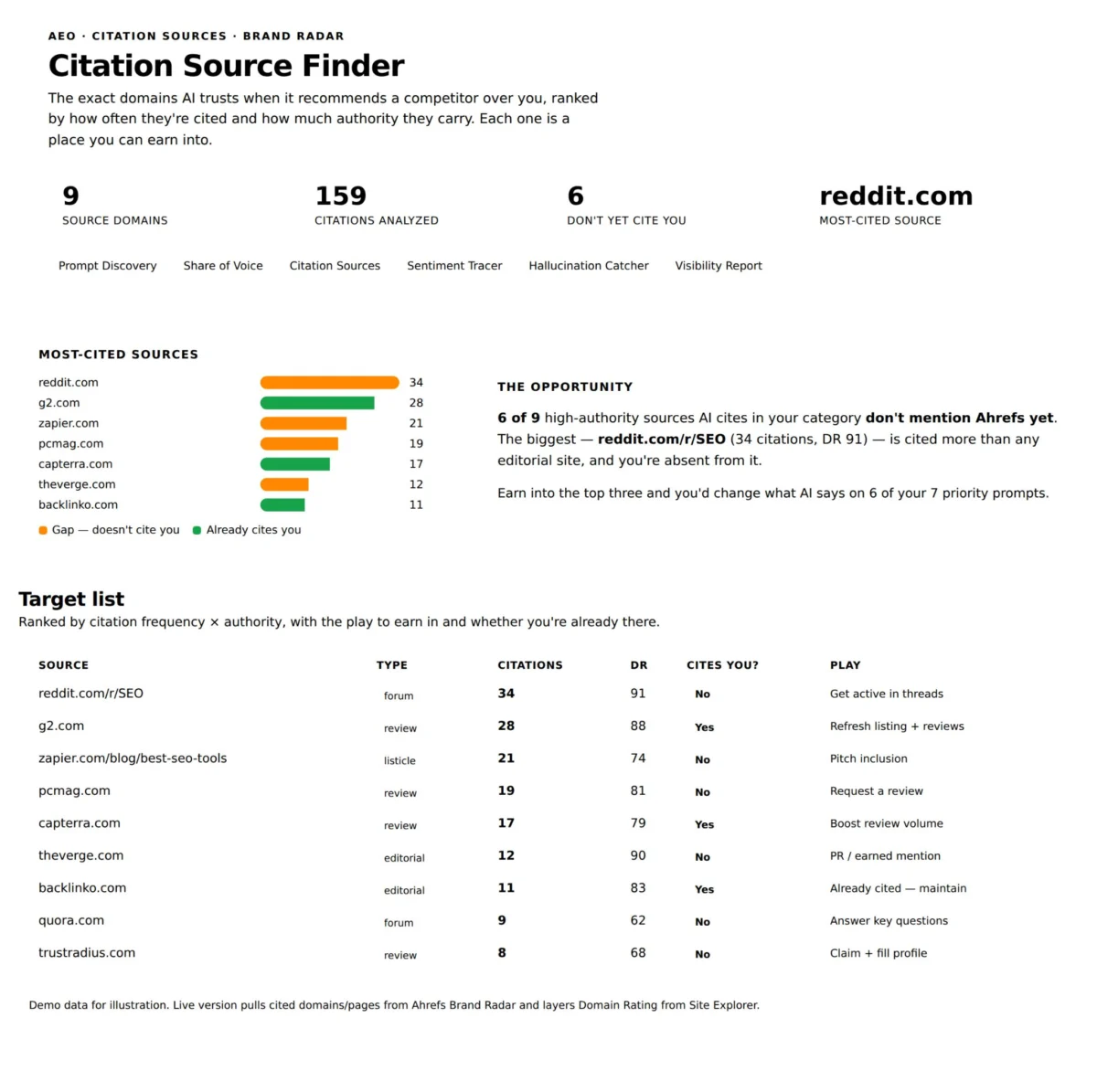
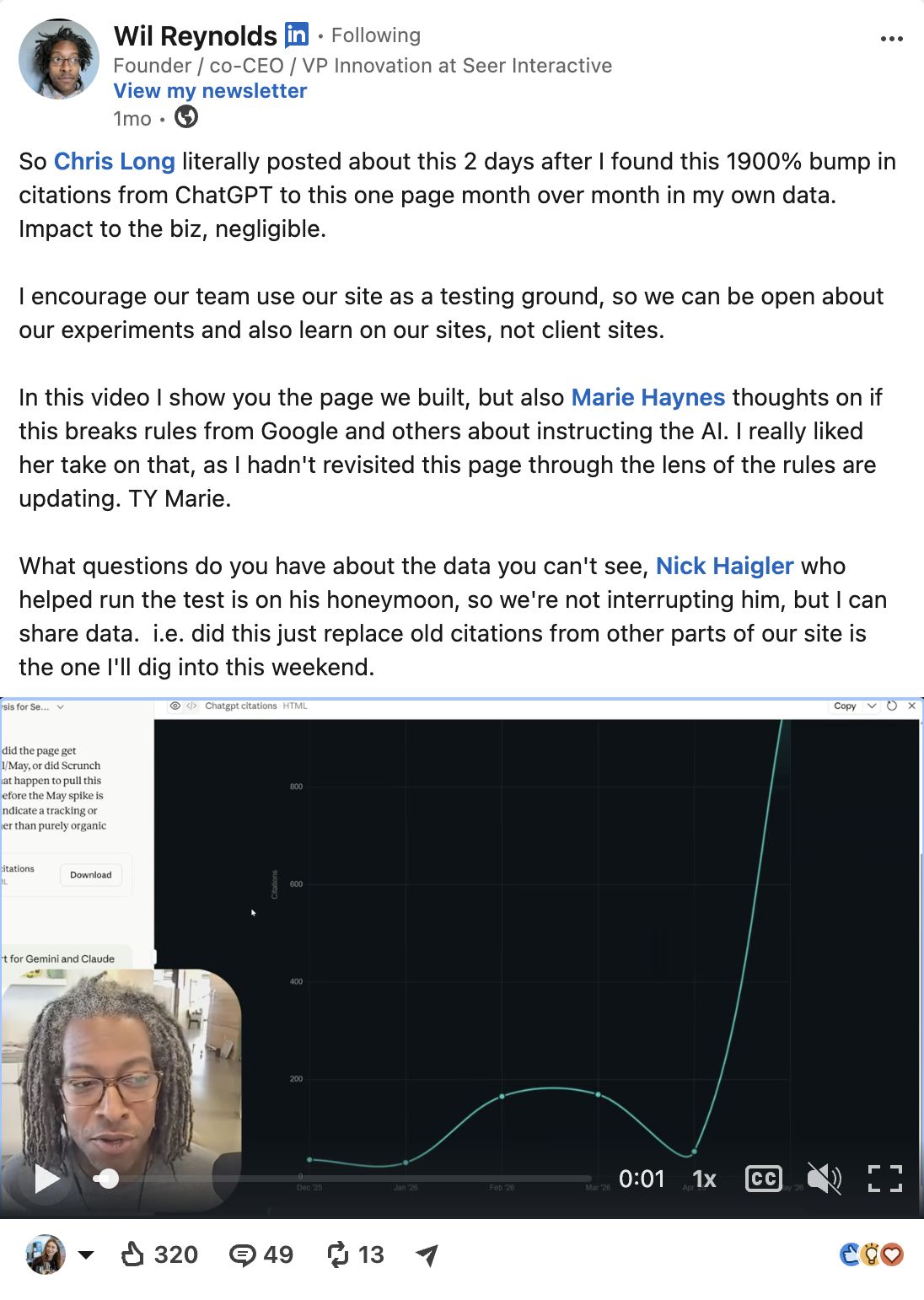
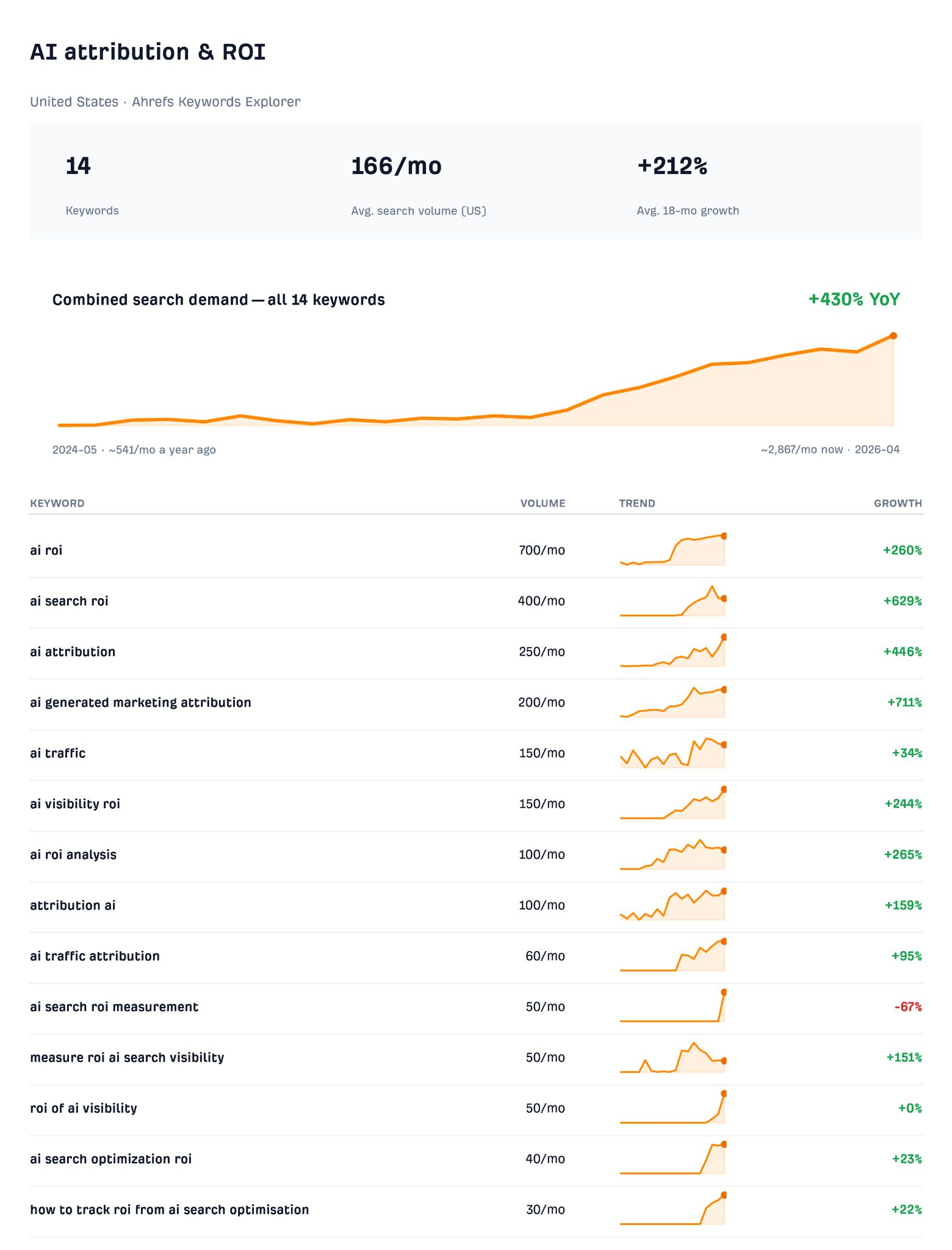
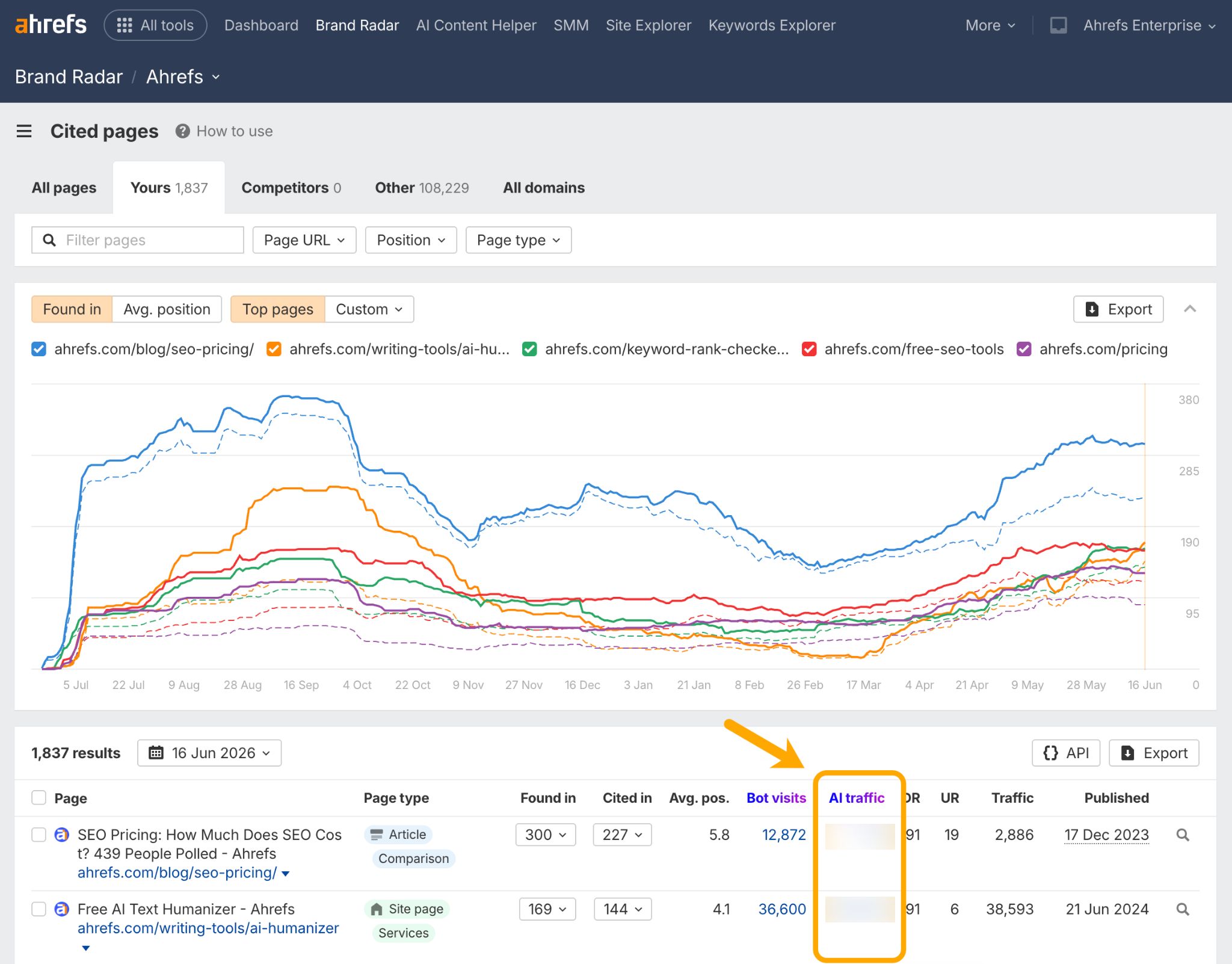
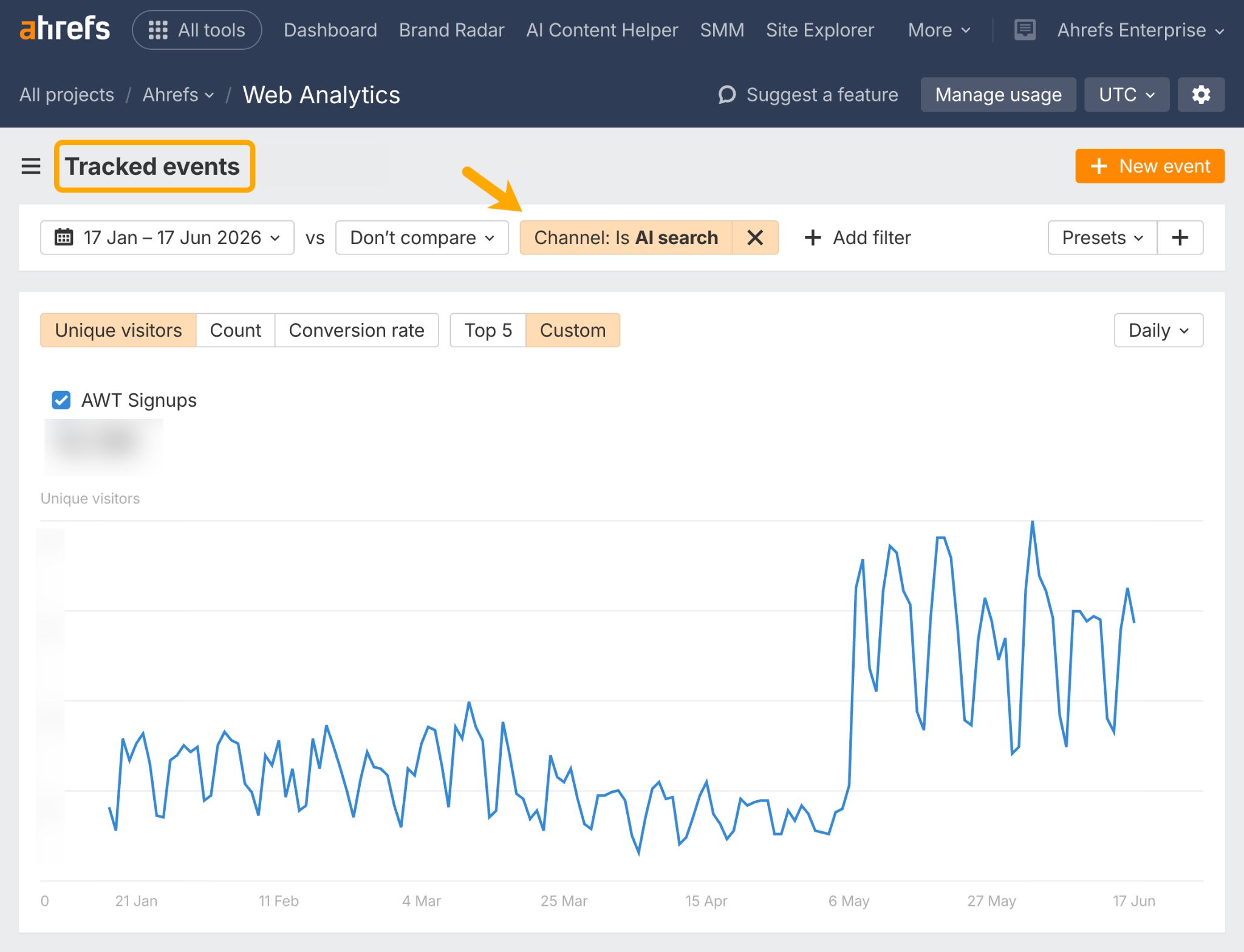
This debate has been fueled by experiments like the one shared by Wil Reynolds on LinkedIn. He observed a significant month-over-month surge in ChatGPT citations to a single page on his personal site, only to find it had minimal business impact. This shift from merely counting mentions to rigorously assessing their value represents a genuine and evolving trend in AI search over the last twelve months, leading to the development of new measurement vocabularies. The search terms associated with AI attribution and ROI reflect this growing concern, with numerous related searches appearing across various platforms, even those with modest search volumes. Marketers are increasingly realizing that a citation’s true worth lies in its ability to drive both website traffic and subsequent conversions. Tools like Ahrefs Brand Radar are emerging to help identify which cited pages are actually attracting real AI traffic, enabling further analysis of actual events and conversions through web analytics.
2. Agent Optimization Emerges as a Key Focus
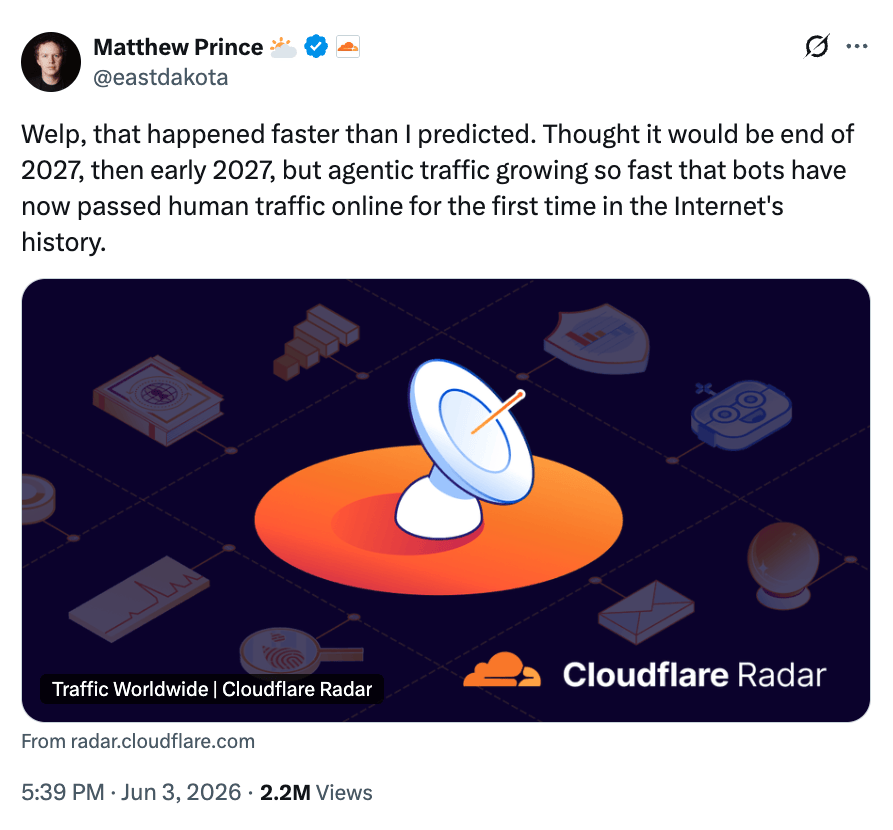
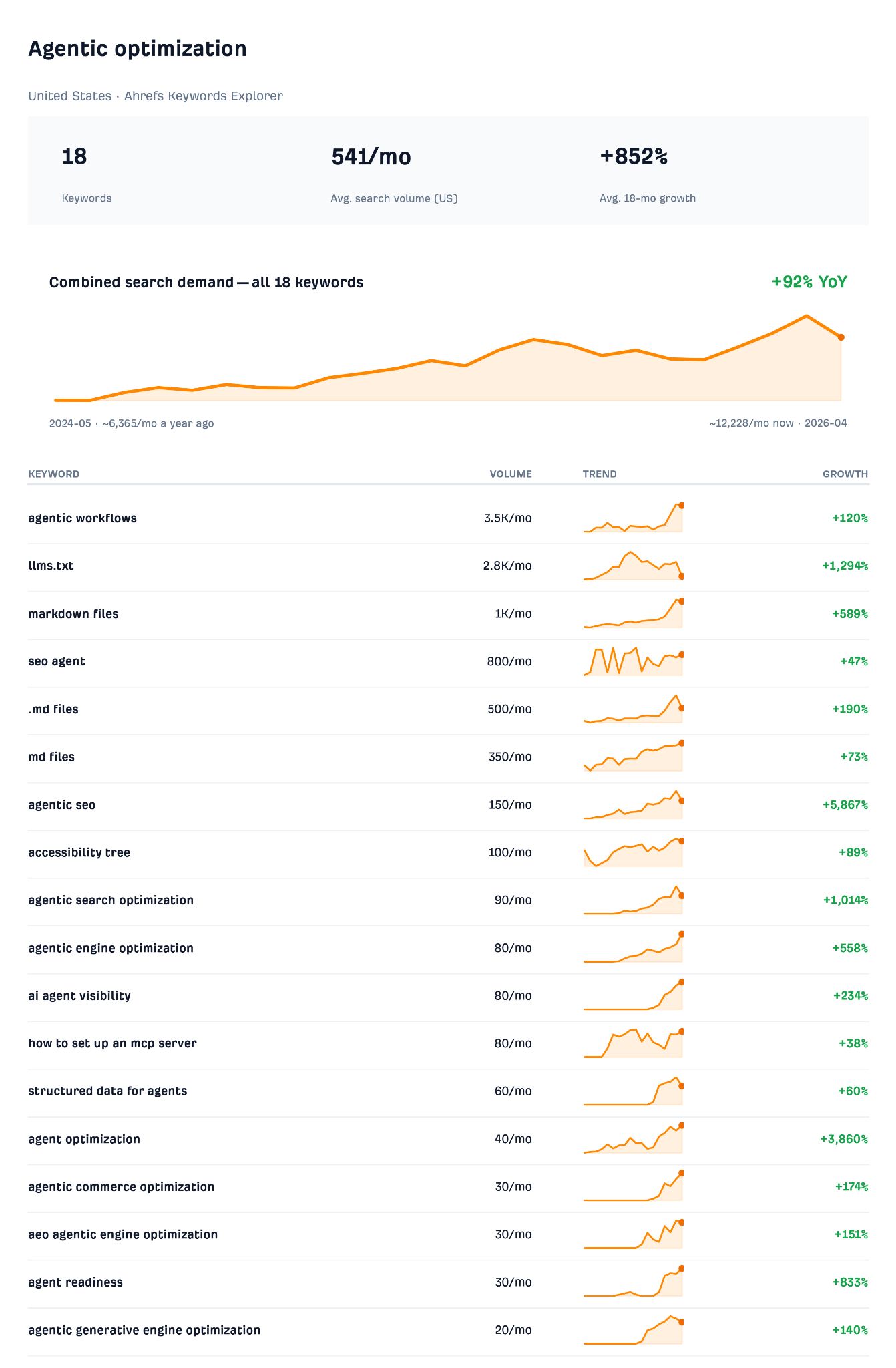
A significant portion of online interactions are now being mediated by AI agents acting on behalf of users. In June 2026, Cloudflare CEO Matthew Prince reported that agentic traffic (bots, crawlers, and agents) had surpassed human traffic for the first time, exceeding 50% of all internet activity. This growth in agentic AI has spurred a new category of searches focused on optimizing web pages for these agents. Terms like "llms.txt" and "agentic SEO" are gaining traction as marketers seek to ensure their content is readable and actionable by AI.
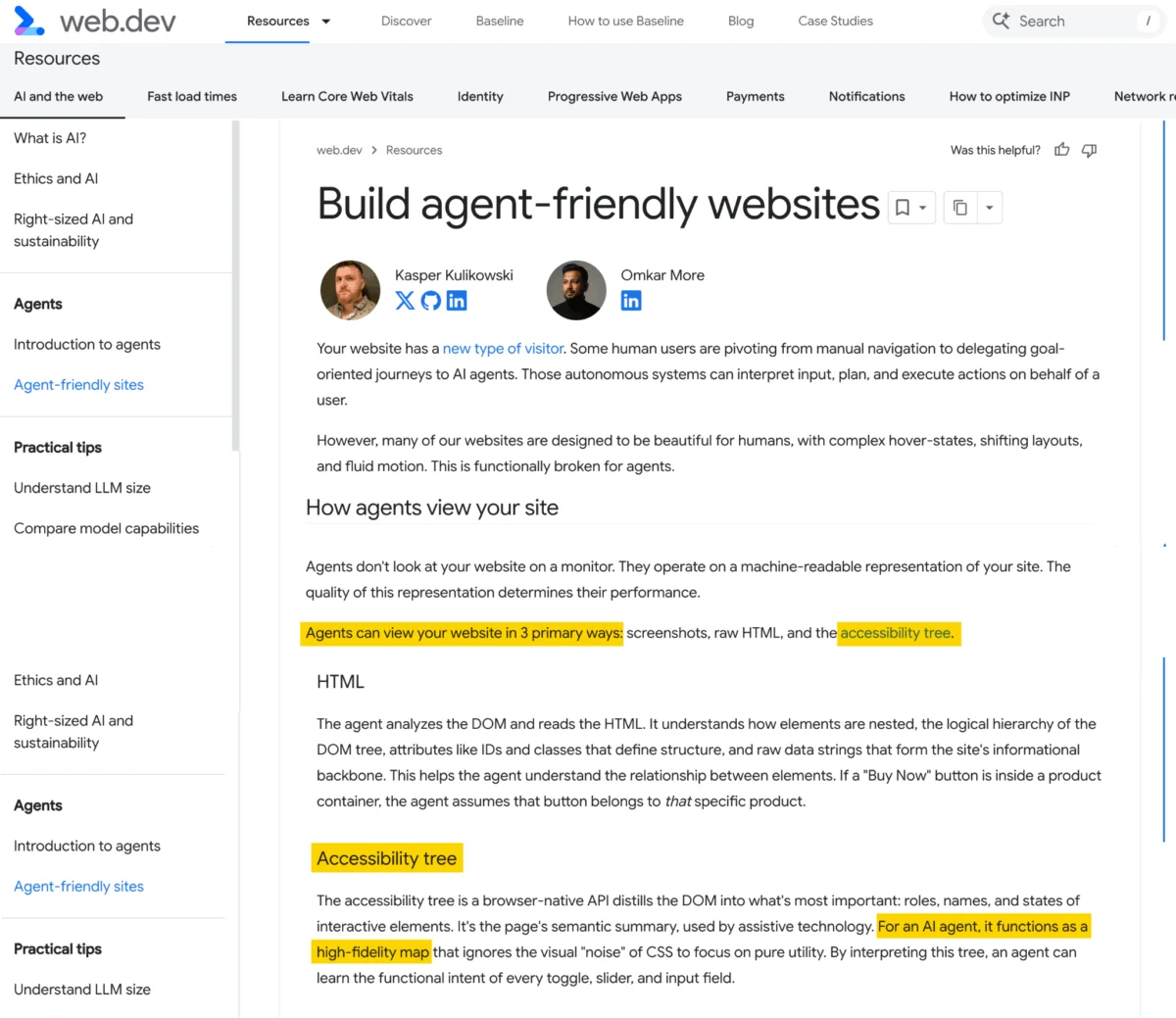
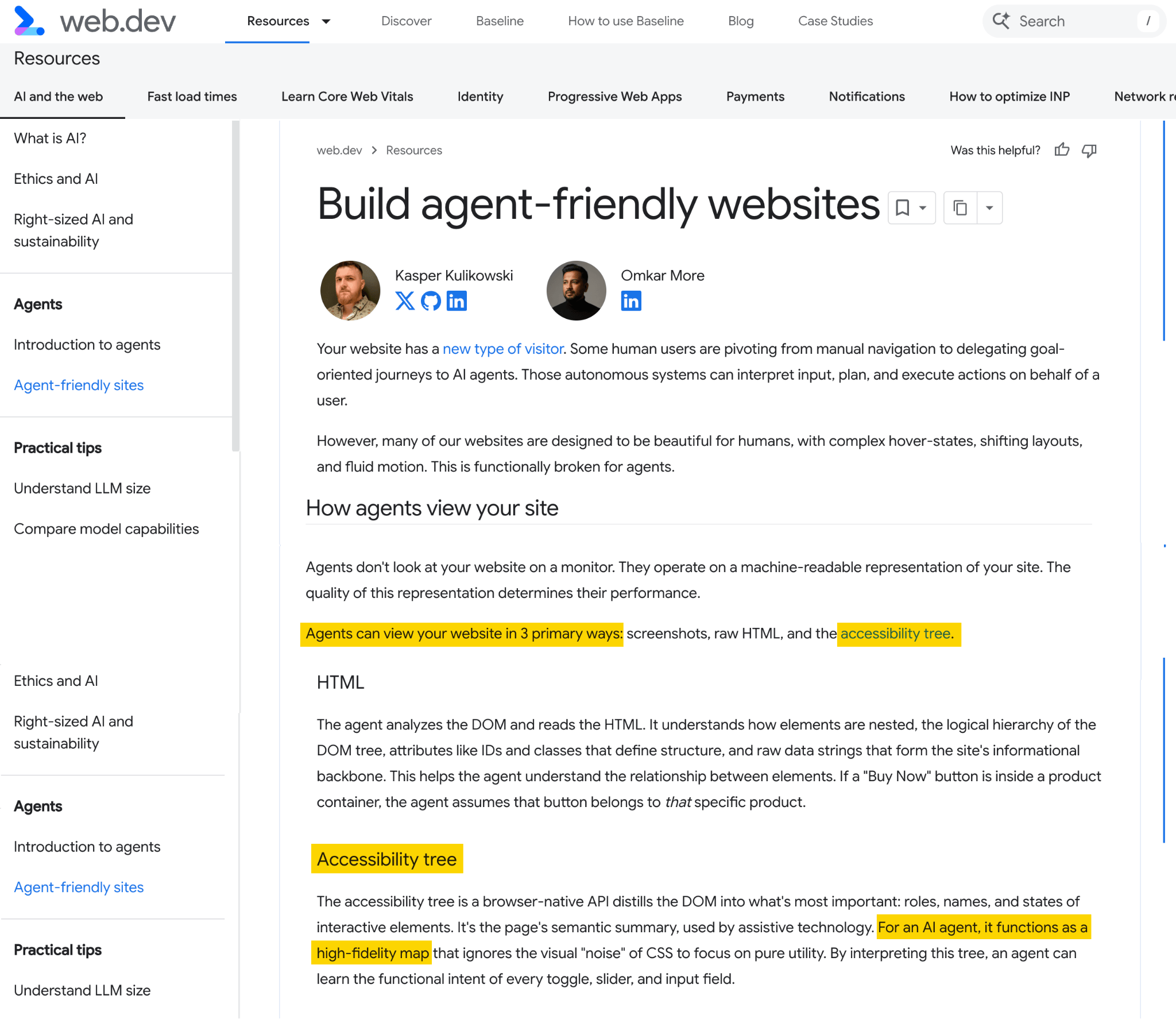
The rise of agentic optimization is driven by several factors. Techniques such as utilizing llms.txt files, markdown formats, and the accessibility tree are being explored to provide agents with structured text that is more reliably parsed than JavaScript-rendered content or inferred from visual layouts. The llms.txt file, in particular, has been a subject of industry debate regarding its impact on AI visibility, with studies investigating its effectiveness. Cloudflare’s popularization of serving plain-text versions of pages aims to streamline the agent browsing experience by bypassing rendering complexities. Furthermore, Google’s recommendation to optimize for the accessibility tree in its web.dev guides has also increased interest in this area, as this feature is designed to aid screen readers and can be leveraged by AI agents for better page comprehension.
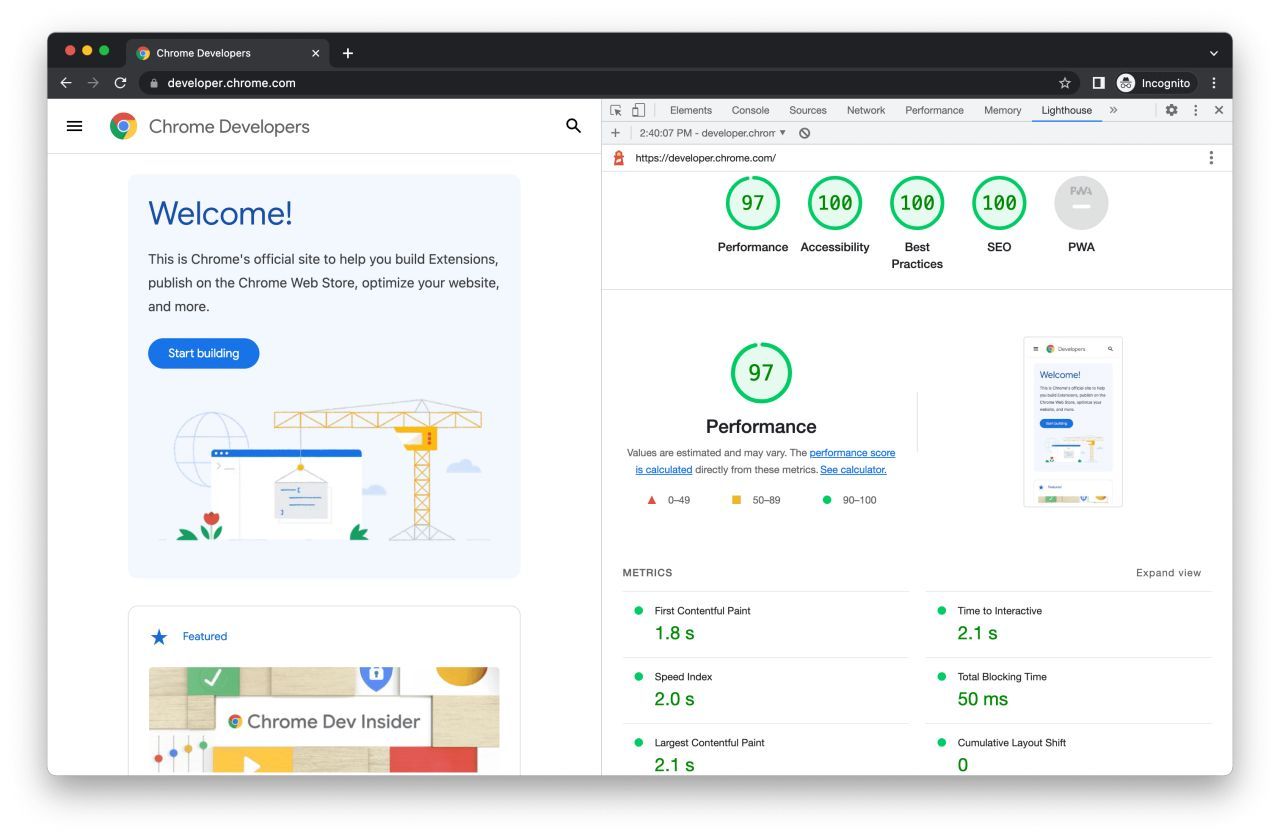
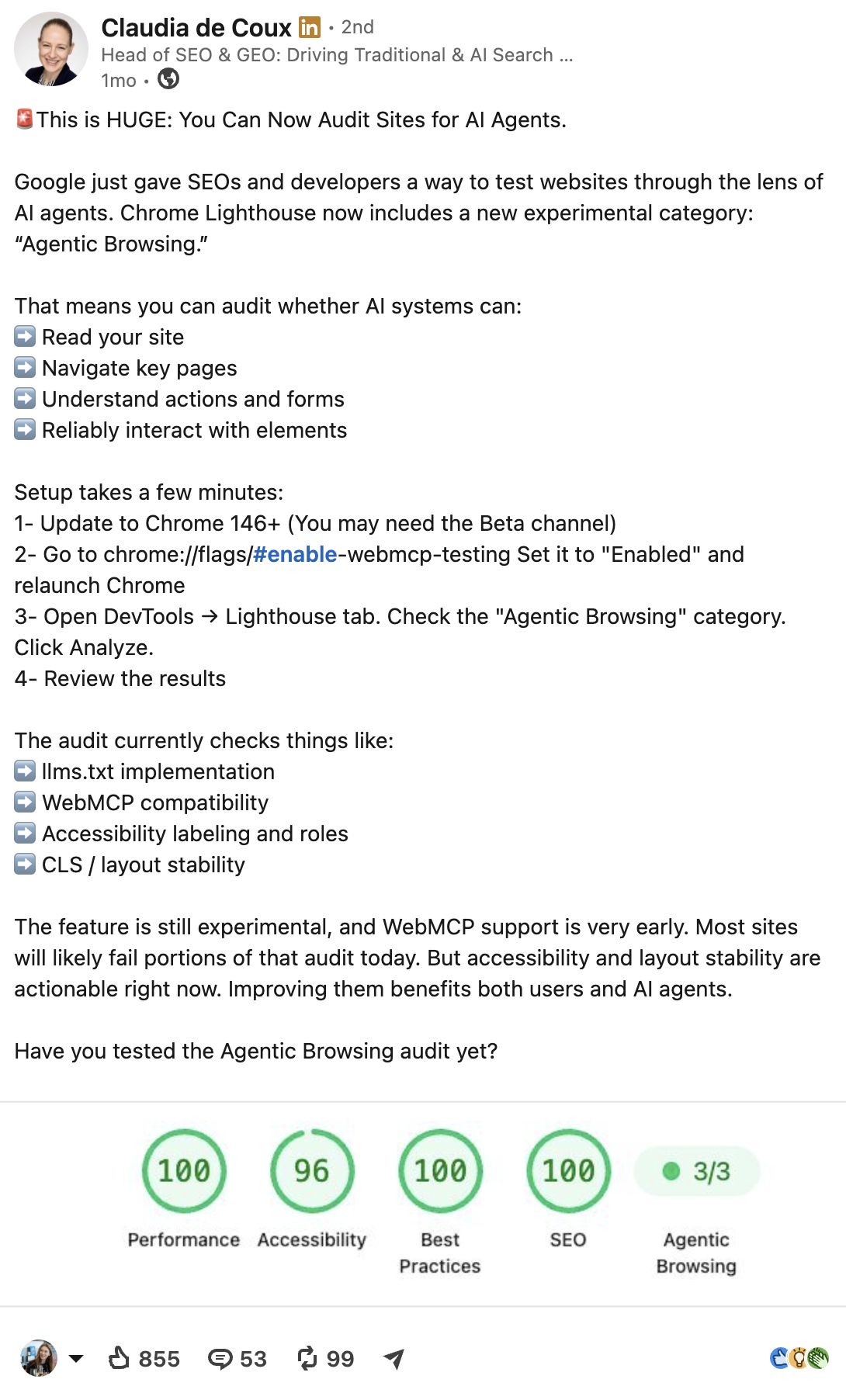
Adding to this momentum, the Chrome team has introduced an experimental "Agentic Browsing" category in Google I/O, which includes agent readiness checks within Chrome Lighthouse and PageSpeed Insights. This audit panel functions similarly to existing performance audits but specifically scores how well an AI agent can interact with and understand a page. This development has generated considerable discussion on platforms like LinkedIn, with many posts detailing the new audit receiving significant engagement. A central question emerging from these discussions is whether agentic readiness will follow the path of Core Web Vitals, transitioning from a Lighthouse audit to a ranking factor. The uncertainty surrounding this potential shift is driving continued growth in search volume, forum discussions, and social media conversations related to agentic optimization. Tools like Ahrefs Bot Analytics are now available to help website owners identify which AI agents are accessing their pages and with what frequency, providing a crucial starting point for optimizing AI visibility and assessing the impact of agentic traffic on their own sites.
3. From Panic to Planning: Addressing AI Search Traffic Loss
As AI search increasingly provides direct answers on search results pages, the clicks that previously directed users to websites have begun to diminish. Over the past year, the industry’s reaction has evolved from widespread concern to a proactive approach of diagnosis and strategy development. Search queries related to "zero-click search strategy," traffic-loss audits, and the underlying cause of "why is my website traffic dropping" are all on the rise, reflecting a concerted effort to find solutions.
The current paradigm, where search engines leverage website content for AI answers with a perceived reduction in traffic referral, is facing scrutiny from regulators and legal bodies. Chloe Smith, Strategy SEO Lead, noted that the simultaneous release of Google’s Generative AI report in Search Console coincided with the UK’s Competition and Markets Authority (CMA) outlining plans to challenge Google’s market dominance, including potentially requiring Google to offer site owners an opt-out option for AI Overviews and AI Mode. In response, Google has developed a toggle within Search Console, allowing users to opt out of AI search features. However, many interpret this move as a reaction to regulatory pressure rather than a voluntary concession.
The fundamental challenge remains: opting out of AI search means forfeiting potential traffic, the precise volume of which is still largely undisclosed by Google. Ahrefs’ own estimates suggest that AI Overviews can lead to a click loss of approximately 58%. Most website owners are hesitant to disable these features without clear data on the actual CTR impact, a metric the CMA is advocating for Google to provide.
Parallel to these developments, a significant ruling in Munich declared that AI Overviews represent Google’s own content, not neutral search results, thus holding the company liable for any inaccuracies. This ruling implies that if search engines aim to provide direct answers rather than simply indexing content, they must assume responsibility for the accuracy of those answers. This has led to speculation about potential accompanying disclaimers for AI-generated content. The current legal and regulatory landscape, while offering some relief regarding Google’s interception of website clicks, still leaves marketers grappling with strategies to recover lost traffic. Tools like Ahrefs Site Explorer and Search Console data within Ahrefs can help identify pages that have experienced the most significant organic traffic decline. A key pattern to look for is a "crocodile mouth" graph, where rankings and impressions remain stable while clicks plummet, a strong indicator that AI Overviews are absorbing traffic rather than a decline in search performance. These pages serve as a starting point for recovery, whether through content updates, re-optimization for queries that AI cannot fully answer, or repurposing content for alternative channels.
4. The Unresolved Debate: GEO, AEO, and SEO Definitions
The long-standing debate between GEO (Geographic Optimization) and SEO (Search Engine Optimization) has resurfaced with renewed vigor in the context of AI search. Marketers continue to disagree on the terminology and definition of efforts aimed at achieving visibility within AI. Over the past year, the vocabulary has fragmented further. Addy Osmani, Director at Google Cloud AI, has introduced a new meaning for AEO, shifting it from "Answer Engine Optimization" to "Agentic Engine Optimization," a term now generating 80 monthly searches.
Regardless of the specific terminology, search volumes for this cluster of terms are increasing. "Generative engine optimization" has seen a 997% rise over the last 18 months, while "geo vs seo" has grown by 982%. This indicates a broad industry interest in understanding and defining how to achieve visibility in AI-driven search environments. Discussions on platforms like Reddit reflect this confusion, with threads questioning whether AEO is truly replacing traditional SEO or if it’s merely hype.
One prevailing viewpoint suggests that AEO and GEO are not replacing SEO but rather repackaging its core principles. Suganthan Mohanadasan, AI SEO Researcher at Snippet Digital, argues that the novelty lies in the protocols rather than a complete renaming of fundamental SEO practices. Conversely, some, like Jan-Willem Bobbink, contend that "GEO tactics" are ineffective. He cited a study where a page optimized with typical GEO checklist items performed worse across multiple AI engines than an unoptimized version, suggesting that in some cases, doing nothing might be more effective than applying certain perceived AI optimization strategies.
As AI search remains a nascent discipline, marketers are actively experimenting with both novel and established strategies to enhance their AI visibility. This ongoing experimentation ensures that the debate surrounding AI search optimization will continue.
5. Resurgence of Programmatic SEO
While not a new strategy, programmatic SEO has experienced a significant revival, largely driven by advancements in AI. The ability to generate scaled content more efficiently and cost-effectively has led to a renewed embrace of programmatic approaches. Search volume for "programmatic SEO" has increased by 124% over 18 months, with related terms like "content automation," "automated content creation," and "programmatic SEO AI" also showing growth, with combined demand up 26% year-on-year.
While this trend may not exhibit the highest search volume growth, anecdotal evidence suggests a significant increase in discussions around programmatic content across social media. However, much of the current attention is focused on cautionary advice. Google’s recent crackdowns on content scaled for volume rather than user value, including the March and June Spam Updates, have prompted warnings on LinkedIn. Lars Lofgren, Fractional VP of Marketing, has urged caution, citing numerous companies whose rankings were severely impacted after scaling their content to thousands of pages. Lily Ray, Founder of Algorythmic, has observed a similar pattern, with certain page types becoming liabilities at scale and tracing over 70 companies penalized in early 2026 algorithm updates.
Despite these warnings, not all perspectives view programmatic SEO as inherently negative. Ryan Law, Ahrefs Director of Content, advocates for scaling interactive tools rather than just written content, citing the success of Ahrefs’ free tools which consistently rank high and maintain traffic even as AI answers impact click-through rates. His argument centers on the idea that users often seek to perform actions rather than simply read content, making tools more resistant to being summarized out of existence by AI. The continued accessibility of scaled content generation through AI suggests that interest in programmatic strategies will persist, with both success stories and cautionary tales feeding ongoing industry conversations.
Final Thoughts
A common thread weaving through all these AI search trends is the marketer’s fundamental desire for proof. Proof that AI citations lead to conversions, that AI agents can effectively parse web pages, and that scaled content strategies do not ultimately harm a domain’s online presence. Each of these trends originated in informal discussions on platforms like Slack, Reddit, and LinkedIn, eventually coalescing into distinct search clusters. The topics currently gaining traction in these niche discussions are likely to become the dominant trends of the following year, underscoring the importance of closely monitoring these evolving conversations.