 11

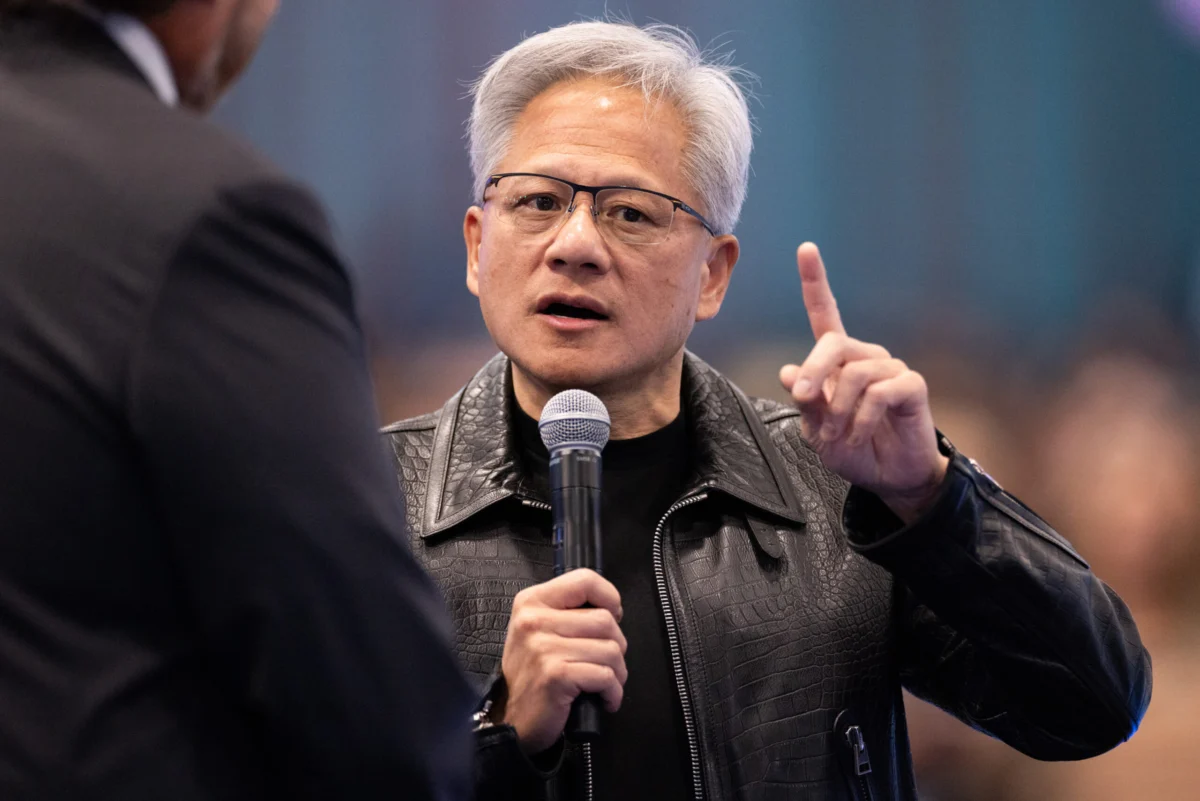
A significant debate is currently unfolding within the artificial intelligence sector, polarizing leaders on the crucial issues of AI safety and the pace of technological development. On one side, Anthropic CEO Dario Amodei has proposed a strategy to "pace the frontier," advocating for a more measured approach to AI advancement to ensure safety. Conversely, Nvidia CEO Jensen Huang, echoing sentiments from former President Donald Trump, has dismissed concerns about AI backlash as a "hoax" and argues against the necessity of regulation, emphasizing the need for unhindered innovation. This stark divergence in viewpoints formed the core of a recent discussion on TechCrunch’s Equity podcast, where hosts Kirsten Korosec, Sean O’Kane, and Anthony Ha delved into the sincerity and implications of calls for a slowdown from prominent AI executives.
The debate stems from growing anxieties surrounding the rapid progression of AI technologies. While the original source does not explicitly detail these risks, the "AI safety community" referenced is often concerned with potential harms such as algorithmic bias, misuse of powerful AI systems, job displacement, and even long-term existential risks associated with advanced general AI. It is within this context that Amodei, whose company Anthropic was founded with a strong emphasis on AI safety, outlined a plan to temper the speed of development. His proposal, detailed in a blog post, suggested a series of measures aimed at ensuring responsible innovation without necessarily halting progress entirely. The term "pace the frontier" itself implies a controlled, deliberate advancement rather than an outright moratorium, seeking to build safeguards concurrently with development.
Anthony Ha expressed surprise at the swift and widespread support Amodei’s plan garnered from various industry leaders, including, to some extent, OpenAI CEO Sam Altman and even Elon Musk. Ha noted that these suggestions were not new, having "been percolating for a while" within the AI safety community, but the rapid consensus around them was notable. While this alignment could be seen as encouraging, it also sparked a degree of skepticism regarding the true depth of commitment to "genuine, major steps towards a slowdown."
Sean O’Kane, however, remained more skeptical from the outset. Reflecting on previous comments, he reiterated his doubt that the industry was genuinely headed for a slowdown. O’Kane argued that the fundamental structure of these AI companies, often driven by intense competition and venture capital, does not inherently lend itself to deceleration. He pointed out the lack of specific details in Amodei’s blog post and similar pronouncements from other leaders. "We’re still missing a lot of specifics here," O’Kane stated, "not only on some of the claims about why these people think there are dangers and risks, but also specifics on what they mean by slowing down." He questioned whether the proposed measures would truly translate into a tangible reduction in the pace of AI development.
Kirsten Korosec further explored the implications of this emerging consensus, posing a critical question about its nature. While acknowledging that consensus can be beneficial, she also cautioned that it "can be the beginnings of forming a cartel." She emphasized that the discussion primarily involved "frontier AI labs," underscoring the exclusivity and potential anti-competitive aspects of such coordinated efforts. Korosec then detailed the general ideas outlined in Amodei’s plan: the establishment of independent third-party evaluators to monitor AI safety practices and incidents within companies like Anthropic and OpenAI; a coordinated effort among major AI companies in democratic countries to agree on safety standards and limits; and broader international coordination on these issues. While these proposals aim to foster responsibility, the vagueness surrounding their implementation and enforcement raised further questions.
The most vocal opposition to these calls for pacing came from Nvidia CEO Jensen Huang, who has become a powerful voice against any form of AI slowdown or regulation. Huang’s stance is particularly impactful given Nvidia’s critical role as a primary supplier of the specialized hardware (GPUs) essential for AI development. His public comments, including a notable on-stage call with former President Donald Trump at the All-In Summit, signaled a strong rejection of the "slowdown" narrative. Trump, who has previously dismissed AI backlash as a "hoax" and even suggested rebranding AI to mitigate negative perceptions, found an ally in Huang, whose company stands to gain immensely from an unfettered acceleration of AI research and deployment.
Sean O’Kane commented on Huang’s perceived role in the industry, suggesting that Huang is increasingly seen as "the adult in the room," a dynamic that has shifted from Microsoft’s Satya Nadella. O’Kane posited that Huang aims to please a broad audience and serves as a crucial liaison between the tech industry and the political administration, exemplified by the staged call with Trump. This public display allowed both leaders to align their positions against perceived impediments to AI progress.
Kirsten Korosec, while acknowledging Huang’s influential position, viewed his appearance with Trump as "a step too far," highlighting the clear alignment of interests: Nvidia greatly benefits from AI moving forward in an "unpaced manner." Anthony Ha echoed this sentiment, noting that "Trump’s and Huang’s interests are aligned," and that Huang was effectively "telling [Trump] what he wants to hear." Ha also highlighted a linguistic nuance: while Amodei and Altman prefer "pace," Huang and Trump explicitly use "slowdown." Ha suggested that the proposals for independent evaluators and coordination, while designed for safety, do not inherently dictate a slower pace, leaving room for interpretation.
A critical point of contention in the discussion revolved around the efficacy of existing regulations and free market mechanisms as safeguards. Kirsten Korosec asked Sean O’Kane whether, in a free market society, existing regulations combined with competitive pressures would suffice to hold companies accountable if they released unsafe AI. She suggested that a company releasing unsafe AI might face market repercussions and regulatory action.
Sean O’Kane largely rejected this optimistic view, citing several practical barriers. First, he pointed to the current federal government’s apparent reluctance to enforce regulations broadly, let alone specifically in the nascent and complex field of AI. "We have a federal government at the moment that certainly does not seem eager to enforce regulations broadly speaking, let alone specifically speaking here," O’Kane asserted. This perceived regulatory vacuum weakens the deterrent effect of existing laws.
Second, O’Kane highlighted a crucial absence of consumer choice and market pressure in the AI landscape. He argued that the market is not driven by the kind of consumer feedback that would penalize a company for doing "something really bad" through cancellations or boycotts. This is particularly true, he explained, as AI companies increasingly shift their focus to enterprise clients. Corporations, unlike individual consumers, are less likely to "pack up and move" from one AI provider to another, such as switching from OpenAI’s Codex to Anthropic’s Claude Code, purely based on ethical disagreements. The costs and complexities of integration, data migration, and potential vendor lock-in make such shifts prohibitively difficult.
Finally, O’Kane underscored the impact of substantial investment money flowing into these AI companies. This financial cushion, he argued, allows them to absorb potential losses or reputational damage, insulating them from the immediate financial consequences that might otherwise force a change in behavior. "They’re also just being floated by so much investment money that it makes it easier for them to absorb any of those losses if they actually do face them," he concluded. In O’Kane’s view, while the idea of market and regulatory safeguards is appealing in theory, practical realities currently prevent them from being effective in the AI sector.
The ongoing debate thus reveals a complex interplay of technological ambition, economic incentives, safety concerns, and regulatory challenges. While some industry leaders call for a more deliberate, safety-conscious approach, others vigorously push back against any perceived hindrance to innovation, highlighting the deep divisions that will shape the future of AI development and its societal integration.






