 11
11
A prevailing belief within the content marketing sphere is that Artificial Intelligence (AI)-generated blog posts are inherently of lower quality and inferior to those produced by human writers. Companies that have scaled their AI content production often acknowledge this as a necessary trade-off, prioritizing speed and volume over nuanced quality. However, this perspective is rapidly becoming outdated. Generative AI has advanced to a point where its output is virtually indistinguishable from the vast body of human-written content previously produced by seasoned content marketers.
AI has evolved into a more meticulous researcher, a more compliant adherence to brand guidelines and voice, and a more flexible respondent to feedback, all while significantly increasing speed and efficiency. Consequently, the perceived trade-off between using AI for content creation and maintaining quality no longer exists. This does not imply that all AI-generated content is inherently superior, but rather that the barriers to producing high-quality AI content have been dismantled. While access to world-class writing capabilities through Large Language Models (LLMs) may still be uneven, this disparity is unlikely to persist. Functionally "perfect" AI content is on the horizon, and acknowledging this shift is crucial for industry stakeholders.
The Mechanics of Great Writing: Demystified by AI
The notion that human writing possesses an ineffable creative spark unattainable by AI is a common misconception. While AI may not replicate the profound artistic genius of figures like Shakespeare, the fundamental components of "great writing" are more mechanical and less abstract than often assumed. LLMs are exceptionally capable of executing these core elements.
Through years of introspection into the writing process, analyzing what makes content effective, a clear understanding of writing mechanics and guiding principles has been developed. These principles, which are applied consistently in writing, editing, and teaching, are remarkably simple. When executed in unison, they contribute to content that is consistently good, even "great." The simplicity of these principles allows LLMs to perform them flawlessly, often surpassing human consistency due to factors like fatigue, boredom, or laziness. For an LLM, these principles can be established once and applied indefinitely, scaled across vast volumes of output through system prompts and specialized files, such as SKILL files. The existence of a discernible recipe for great writing, coupled with the advanced capabilities of LLMs to follow it reliably, enables the construction of exceptional AI writing processes. The current technological landscape facilitates this integration.
AI Sophistication: Beyond the Chatbot Facade
The common perception of AI remains anchored in basic chatbot interactions. However, LLMs and their surrounding infrastructure have undergone significant advancements. Early LLMs exhibited flashes of brilliance in specific areas, akin to a precocious child mimicking adult behavior without full comprehension. It was difficult to envision these isolated sparks maturing into genuine writing prowess capable of producing thousands of words of accurate, helpful, concise, and on-brand content. This includes identifying and filling topic gaps, understanding search intent, and differentiating from competitor articles.
In previous explorations of AI writing processes, which relied on custom GPTs informed by editorial principles, instances of brilliance were evident, but human intervention was still required for final output. This limitation has since been overcome. The capabilities now accessible through subscriptions like Claude’s, for a modest monthly fee, approach the realm of science fiction. These advancements include the ability to:
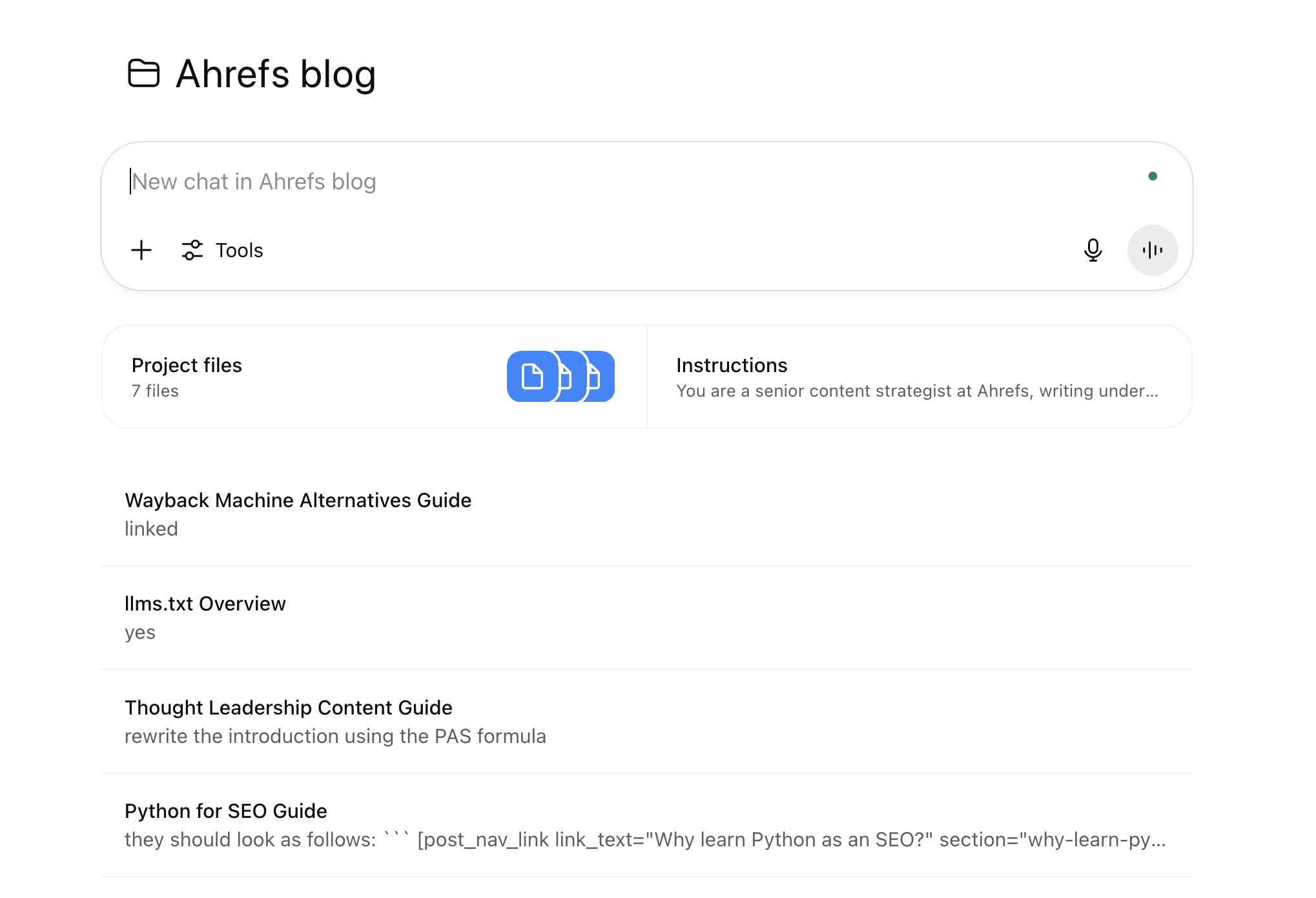
These capabilities are complemented by significant improvements in the flagship models themselves. The infrastructure developed over the past year has profoundly enhanced the utility of LLMs. While still sophisticated autocompletes and not yet Artificial General Intelligence (AGI), companies like Anthropic and OpenAI have succeeded in harnessing their behavior in a manner that significantly exceeds the sum of their individual components. Crucially, the task at hand – content marketing – is not inherently complex.
Content Marketing: A Formulaic Approach Amenable to AI
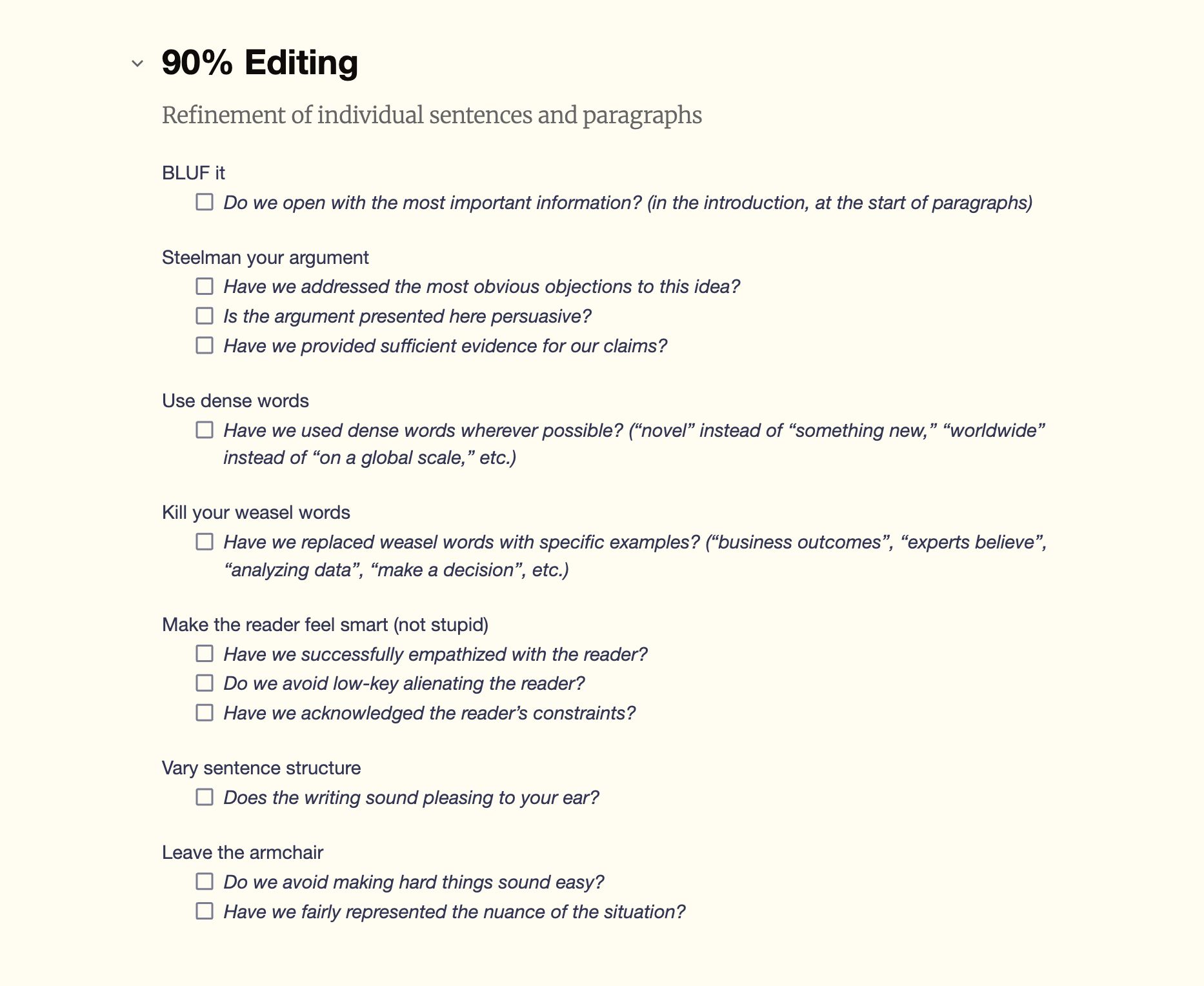
The majority of content marketers focus on creating informational, keyword-targeted content, such as instructional "how-to" articles and comparison lists. These are established archetypes of content marketing that are generally straightforward to produce. Effective search content adheres to a discernible set of core principles:
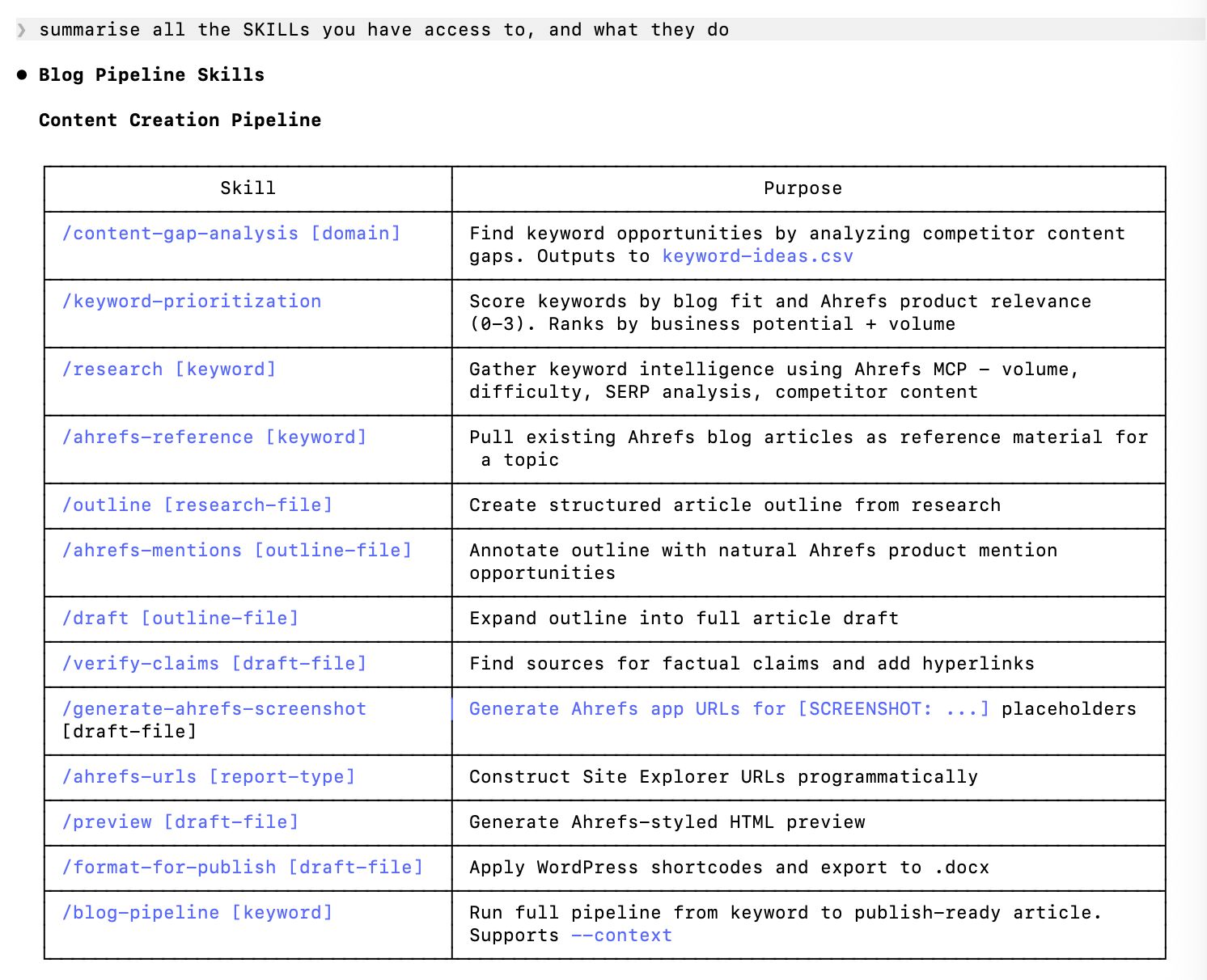
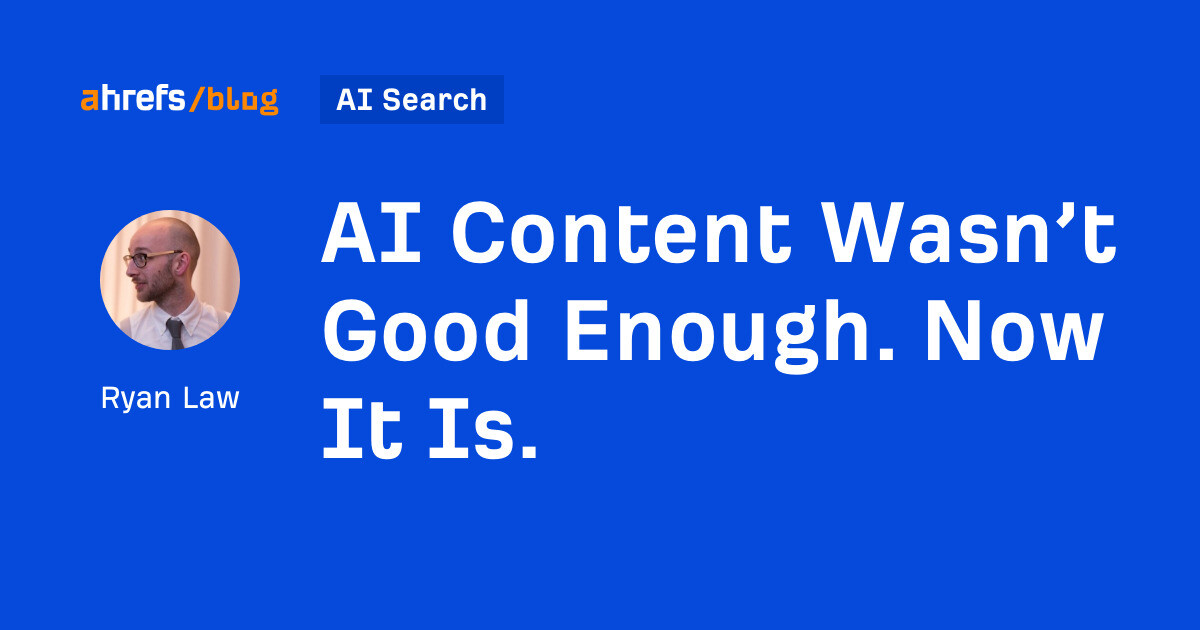
These principles, when applied consistently, lead to effective search content. LLMs are equally capable of following these processes. Whether through explicit instructions ("use WebFetch to run a site: search for ahrefs.com/blog and return the first three articles"), examples of desired output (like preferred article introductions), or access to trusted data sources (such as the Ahrefs MCP), LLMs can effectively execute these tasks.
The notion that effective search content requires great complexity or novelty is a misconception. While innovation and experimentation have a role, deviating significantly from established norms often diminishes performance rather than enhancing it, as demonstrated by numerous failed attempts to create overly "clever" search content. If an LLM can refactor a large codebase, it is reasonable to assume it can produce excellent, search-optimized content. While AI may not be capable of writing Shakespeare, it is not required to do so for effective content marketing.
Conclusion: Embracing the AI-Powered Future of Content
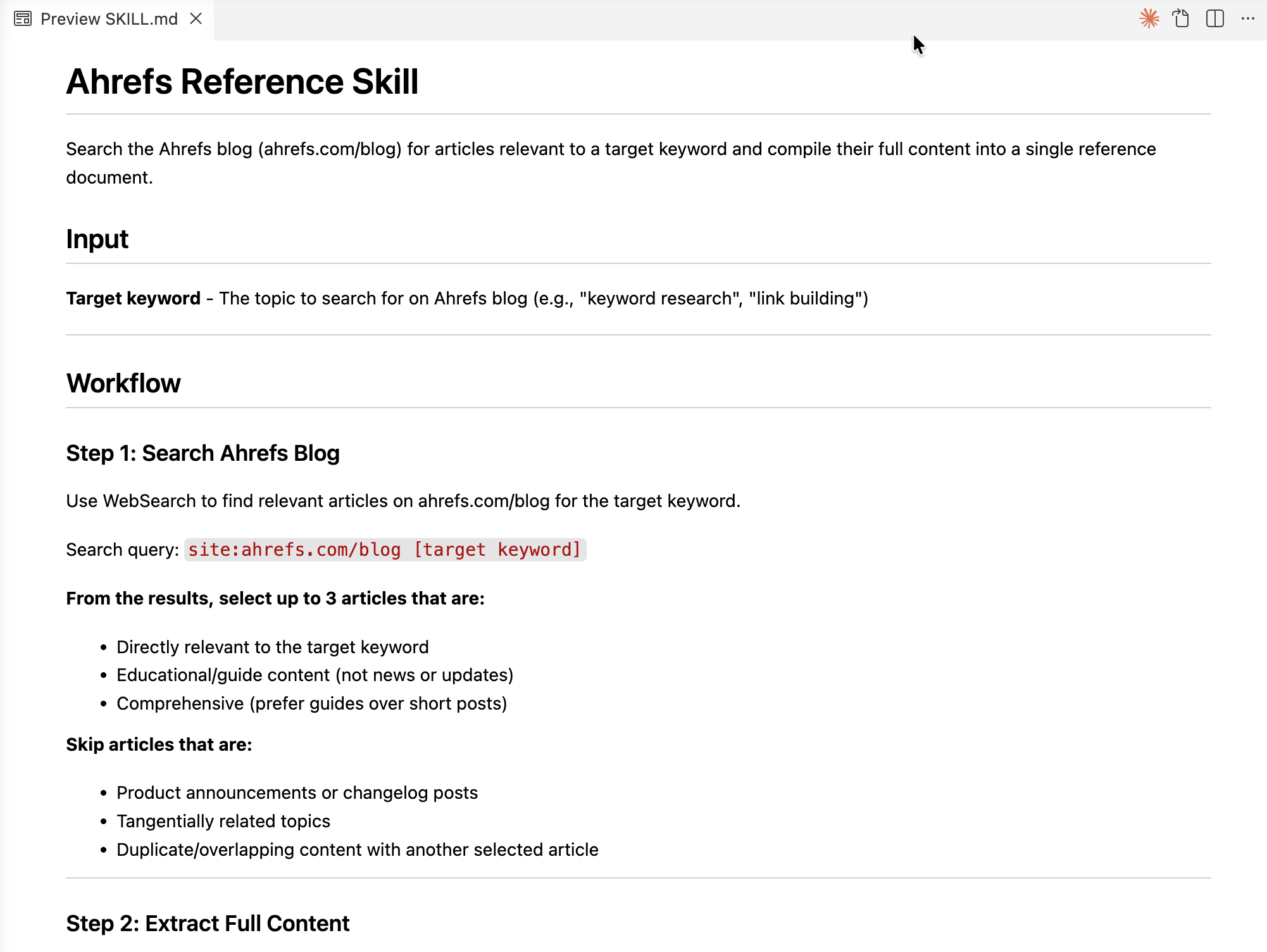
Regardless of individual persuasion, significant portions of content marketing roles are already being outsourced to generative AI. The integration of tools like Claude Code, the Ahrefs MCP, and a series of custom SKILLs, chained together to update existing articles and create high-quality content, demonstrates this shift. The resulting articles are consistent in tone and performance, incorporate personal experience and perspective, and are as good as, if not better than, what a human could produce within time constraints. The trade-off between speed and quality is no longer a relevant consideration.
A substantial quality gap still exists between a skilled writer leveraging generative AI to its full potential and an average user employing generic prompts with tools like ChatGPT. However, this gap is narrowing rapidly and is expected to close as AI platforms continue to democratize access to advanced functionalities. The role of the "content engineer" is poised to become a standard workflow within major LLM platforms. Functionally "perfect" AI content is within reach for everyone.
This argument is made with the understanding that certain aspects of a job remain beyond the current capabilities of AI, and others are intentionally reserved for human execution, such as the creation of this article. The path forward necessitates an honest assessment of where AI can and should be utilized. Previously, AI content was insufficient; now, it is. Embracing this reality allows for a greater focus on the areas of marketing where human expertise will continue to be paramount. The era of tedious skyscraper content creation is largely behind us.